Scott Taetsch/Getty Images
That is not at all how Sunday was supposed to go
It was supposed to be a Sunday with more competition and less riding in the NASCAR Cup Series at Talladega Superspeedway.
Actually, the better expectation was that it would be directionally better with a smaller spoiler and tweaked stage lengths. The fuel savings wouldn’t be eliminated, but hopefully they’d be mitigated.
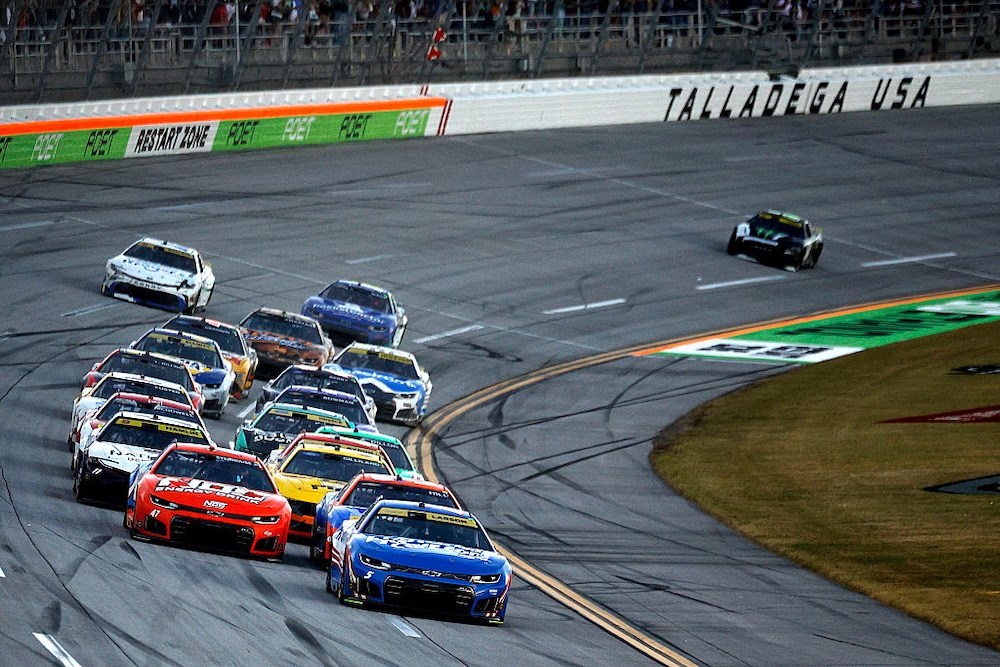
Instead, the criticism circulated on social media faster than cars circled the track. The scanners were less driver-and-spotter competitive communication and more agitated teams preaching to keep backing off. What happened in the first stage, with some reportedly using only 25% throttle, dropping to about 160 mph at times and the field slowing to near 59-second lap times, wasn’t racing.
It was frustrating. It was visually slow as hell to watch from a high vantage point above the track (which probably helped you see how much the pack appeared to crawl at times; it was that bad). And it was disgusting to have to swallow.
By now, everyone knows why Cup Series teams use their strategy. In this case, slower is indeed faster later on because it saves time on pit road and helps with track position. It is a strategy used to improve the chances of being at the front and potentially winning when it matters most.
So, yes, it’s understandable why it’s happening. But it’s not something that everyone has to be OK with. And this time around, it played out as extreme and infuriating as ever.
It’s hard to overstate how slow that field was for 100 laps.
“It sucks,” William Byron said. “We have to fix that. The cars are very draggy side by side, and in my opinion, that’s kind of what creates it. I just wish it wasn’t quite that bad, and I wish we could have a little bit more ability to make some moves and slingshot forward. Yeah, we’re stuck running two-by-two and 53-second lap times or whatever it was.”
The side characters, of course, were the RFK Racing trio who unexpectedly had a strategy that said to hell with the field. Ryan Preece, Brad Keselowski, and Chris Buescher proved that three cars at full speed beat a pack of thirtysomething cars lollygagging around, and they nearly lapped the field when they took off on their own. Suddenly, the mood shifted from fuming to funny as even the fans in the grandstands cheered their efforts and watched them build over 20 seconds of advantage.
“I don’t want to speak a whole lot on it other than, you’ll never see that again,” Preece said. “You see every team in this garage react and will not allow that to happen ever again. So, that was pretty neat. I hope you enjoyed it.”
The chain of events improved slightly in the second stage, but the hunger for real hard racing remained. The first big wreck of the day began to shake up the field. Then, in the final stage, business picked up with what, in hindsight, might have been championship-deciding events. Another multicar wreck eliminated some favorites and set up a run to the finish that will live on in highlight reels for decades.
NASCAR wishes it were that simple. NASCAR wishes it were a clean run to the finish that wiped away memories of what happened earlier in the day.
NASCAR is hardly that lucky, though.
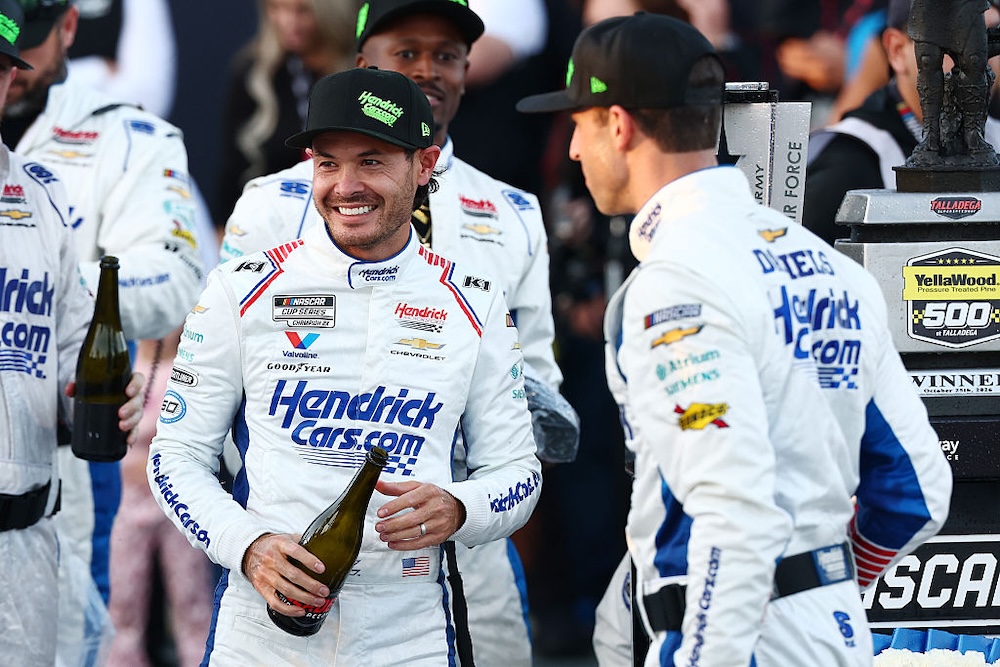
The emotions at the checkered flag swung from another week of the vicious cycle of trying to solve the fuel-saving issue to that plus two new discussion points. First, the yellow line rule. Second, and this is more conspiracy than fact, is that Chevrolet gave Kyle Larson the win.
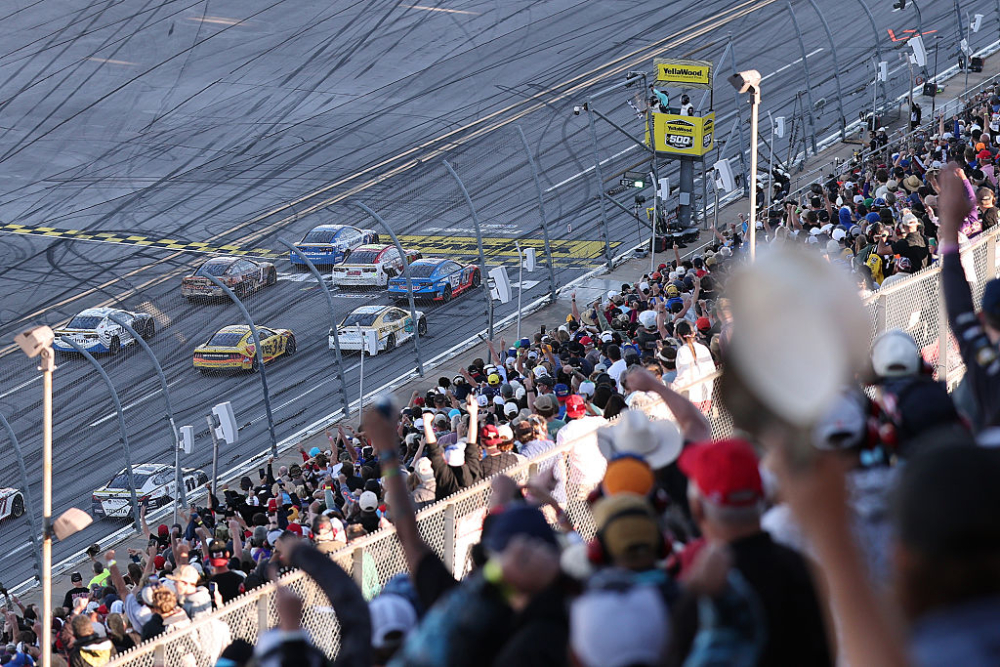
There is no denying Larson was close, if not on, the line. But was he over it? Was it clear enough? How clear is even the rule about two tires or four tires, and how much of the tire needs to be over?
As always, it depends on who you ask, but many wanted a penalty called. NASCAR said Larson didn’t have any tires below the line.
“I knew it was close,” Larson said. “I’d have been really pissed at myself if I did go below because we crossed the finish line first; I’ve never done that in a Cup car, and to get it called back would have sucked. I’m not sure. I knew it was close, but I haven’t seen a picture or video.
“I was fist-pumping already. When my momentum was taking me fast at the 47, I was fist-pumping before I ever got to the line. Yeah, that would have been embarrassing if we didn’t win.”
NASCAR would have been better off penalizing Larson to keep the Chase close. Instead, he could potentially clinch the championship a week early.
And as far as Larson winning, that was called a foul, too. It didn’t go over well when a SiriusXM NASCAR Radio broadcast posted on social media that Chevrolet drivers were instructed to help Larson, since he is the only one the manufacturer has still in championship contention. The deal is no different from any other manufacturer ahead of every superspeedway race: work together. Those meetings happen before every superspeedway race.
Maybe it was because it was in writing, or maybe it was the wording, but it was taken to mean that only Larson was allowed to win the race, which is complete buffoonery. Ricky Stenhouse Jr. and Austin Hill put Larson in the middle on the final lap, and William Byron didn’t jump out of line to pick him up. Neither did Austin Dillon.
At that point, the helping was over, and it was time to win the race. NASCAR also reviewed SMT data from the cars coming off the final corner; no one slowed down. HBO Max also provides in-car cameras for each driver that the public can easily access, showing that when they started racing each other, Larson had the best momentum.
Ricky Stenhouse Jr. responded on social media, saying, “Hyak Motorsports and NOS Energy Drink came to win, not run third. Wild they [NASCAR] even have to look [at SMT].”
Superspeedway races have a tradition of bringing out so many emotions. But what a cluster for NASCAR that so many of them are negative after this one and at this time of year.
That definitely wasn’t how Sunday was supposed to go.
Kelly Crandall
Kelly has been on the NASCAR beat full-time since 2013, and joined RACER as chief NASCAR writer in 2017. Her work has also appeared in NASCAR.com, the NASCAR Illustrated magazine, and NBC Sports. A corporate communications graduate from Central Penn College, Crandall is a two-time George Cunningham Writer of the Year recipient from the National Motorsports Press Association.
Read Kelly Crandall's articles
Latest News
Comments
Comments are disabled until you accept Social Networking Cookies. Update cookie preferences
If the dialog doesn't appear, ad-blockers are often the cause; try disabling yours or see our Social Features Support.