Mecum
A very special Plymouth Road Runner
Classic cars gather value and importance in a myriad of ways. Some reach their place on frenzied auction blocks because they have accomplished some mighty feat on the racetrack. Some of these iconic cars rose to stardom because they were built with the sole intention of being exclusive and valuable. But for many of us, it's the cars that were designed to be massive sales hits but tragically missed the mark. Cars that someone designed out of love and were met with disdain. Disappointment marred some of the most valuable and special collector cars before they became eye-searingly expensive collectibles. This 1970 Plymouth Road Runner convertible is one such massive flop.
A short history of the Plymouth Road Runner
The Plymouth Road Runner arrived in 1968 with a straightforward mission: deliver serious muscle-car performance without the premium price tag. While rivals piled on luxury features and increasingly elaborate trims, Plymouth went the other direction – a cooler direction. The Road Runner was a back-to-basics street machine built around big horsepower, minimal frills, and an irreverent cartoon bird that couldn’t be caught. Even its signature “beep-beep” horn made it clear Mopar wasn’t taking this car too seriously.
The formula worked. By 1970, the Road Runner had established itself as one of the defining muscle cars of the era, offering teens and other beautiful knuckleheads an affordable way into big-block V8 performance. The third model year brought evolutionary rather than revolutionary changes, with revised styling and the same emphasis on power over polish. The standard 383-cubic-inch V8 produced 335 horsepower, thanks to performance-oriented components borrowed from Chrysler's larger 440 engines. And if you were really trying to raise some hell, you could opt for the formidable 440 Six Barrel or the legendary 426 Hemi. Heavy-duty suspension components, a front anti-roll bar, and performance-minded instrumentation came standard, too. The Road Runner wasn't simply a cheap car with a big engine. It was a purpose-built performance package that didn't waste money on unnecessary decoration.
That combination made the 1970 model particularly appealing to enthusiasts who valued substance over status. However, if you wanted a little bit of flash, Plymouth offered a range of colors and appearance options that represent some of the coolest car colors ever shot on metal. Despite these kaleidoscopic paint options, the Road Runner's essential character remained unchanged: big power, relatively modest weight, and an accessible price. It was muscle-car culture in its most direct form, before tightening emissions regulations, rising insurance costs, and changing consumer tastes began squeezing the life out of the segment. More than half a century later, the 1970 Road Runner remains a snapshot of nascent American car culture at its most unapologetic. And when an example survives in an exceptionally rare factory color, that already desirable combination becomes something considerably more special.
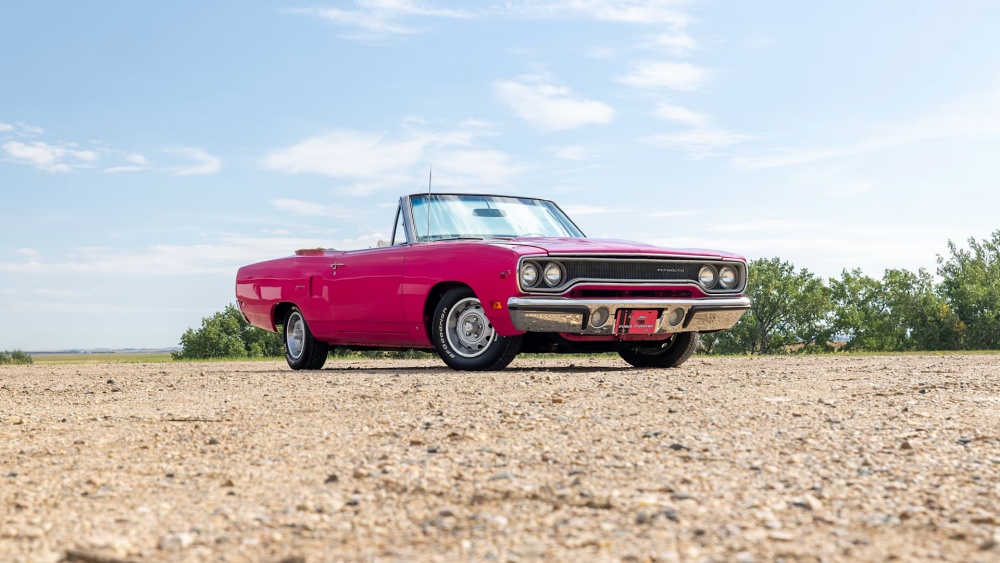
1970 Plymouth Road Runner convertible in Moulin Rouge
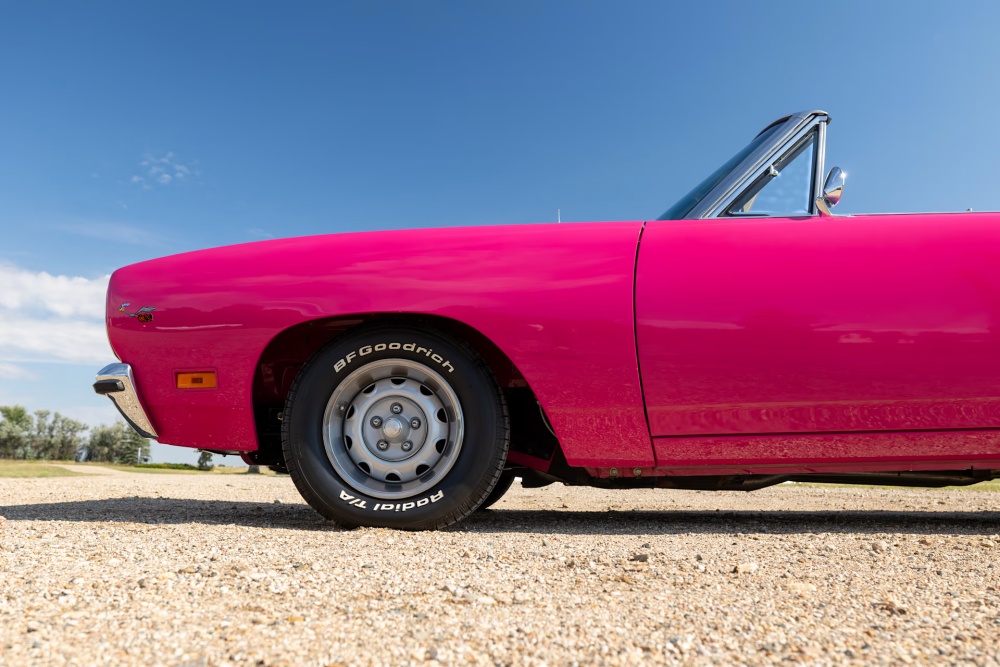
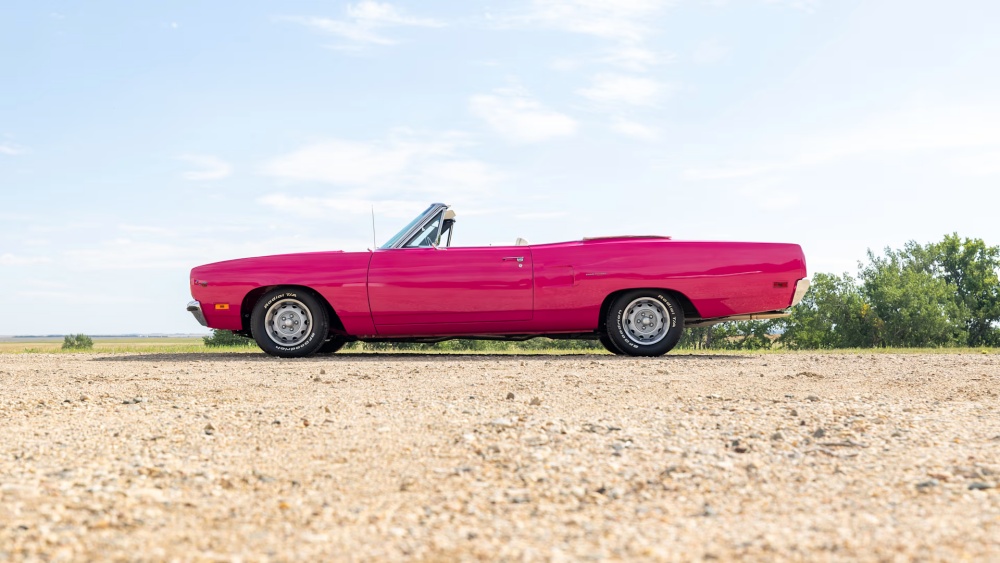
To be clear, the Road Runner was not a flop. The Road Runner sold nearly 50,000 units in 1968 alone. Following years didn’t do as well, but Road Runners were cheap, cool, and popular as hell. However, this 1970 Plymouth Road Runner Convertible finished in Moulin Rouge is believed to be only one of only 44 Road Runners painted in Moulin Rouge. Of those 44, only three were convertibles. Of those three, this is the only one left with a numbers-matching drivetrain. This factory color makes an already desirable muscle car an exceptionally rare bird today.
Courtesy of Mecum
That drivetrain starts with a 383-cubic-inch V8 sucking from a four-barrel carburetor and sending power to a matching-numbers TorqueFlite 727 automatic transmission. The car also retains its matching-numbers rear end, along with dual exhaust, power steering, and power-assisted disc brakes. In other words, this isn't just a rare paint job splashed on an ordinary muscle car. It's a remarkably specific combination of factory options, original mechanical components, and open-top Mopar charm.
Courtesy of Mecum
The details extend beyond the engine bay. The factory-code FM3 Moulin Rouge exterior is paired with a white convertible top and deluxe white vinyl interior, creating a high-contrast look that would have been difficult to miss in 1970. Rallye wheels add a sporting touch, while the original equipment list includes a MusicMaster AM radio with an 8-track player and a Muntz MPX-130 FM stereo cartridge system. The car also comes with its owner's manual and a car cover. Lord.
This car got a full restoration completed in 2021 by Hot Bodz and Custom Rods in Lewiston, Idaho. The odometer currently displays 38,493 miles, although Mecum notes that this figure represents the number shown rather than a verified total mileage. Offered as lot S178 from the Waters Mopar Collection, the Road Runner is scheduled to cross the block on Saturday, October 24, at Mecum's 2026 Dallas/Fort Worth auction.

Peter Corn
Peter Corn is an automotive writer and storyteller. Peter has spent nearly a decade writing about cars, trucks, and motorcycles for some of the best publications in the business. He believes the best automotive stories aren't really about the machines at all, but instead, the people who love them.
Read Peter Corn's articles
Latest News
Comments
Comments are disabled until you accept Social Networking Cookies. Update cookie preferences
If the dialog doesn't appear, ad-blockers are often the cause; try disabling yours or see our Social Features Support.