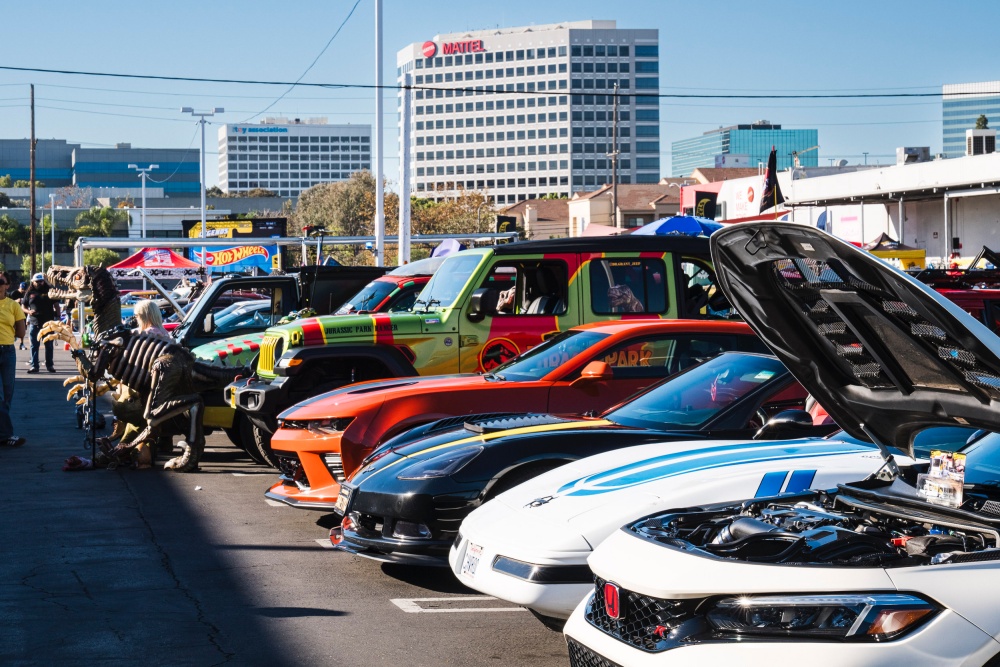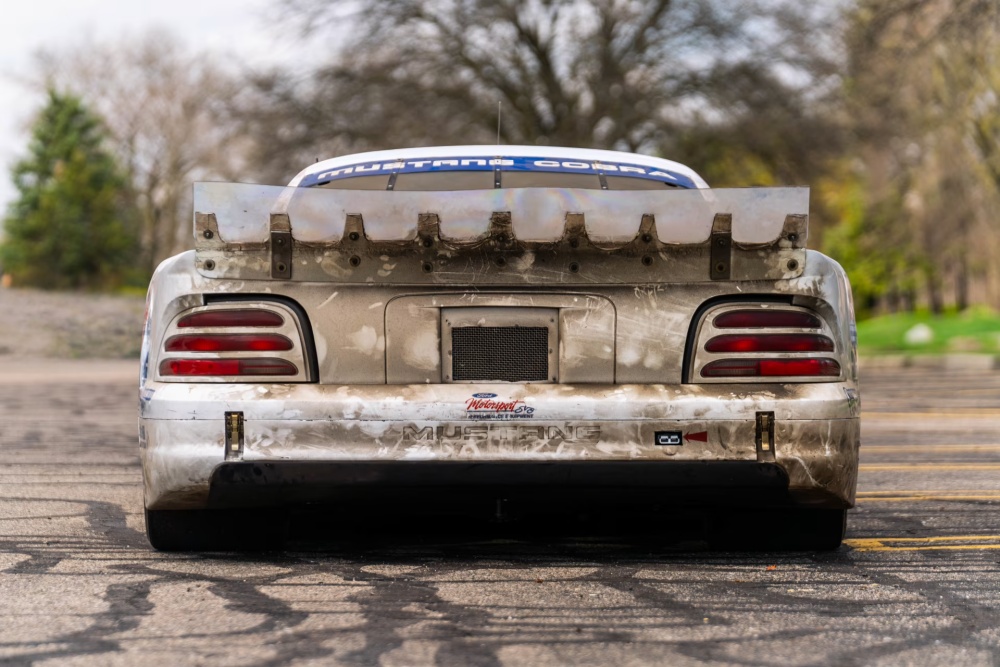
Motorsport Club of Clubs
The private racetrack is changing motorsport, and the Motorsport Club of Clubs is at the wheel
There is now a club for people who belong to private motorsports clubs, and it makes way more sense than you might think.
The Motorsports Club of Clubs’ existence is a pretty good indication of how far the private motorsports club business has come. What was once a handful of wealthy enthusiasts building their own places to drive their fast cars has matured into an international industry, with new facilities being developed across North America and around the world at breakneck pace.
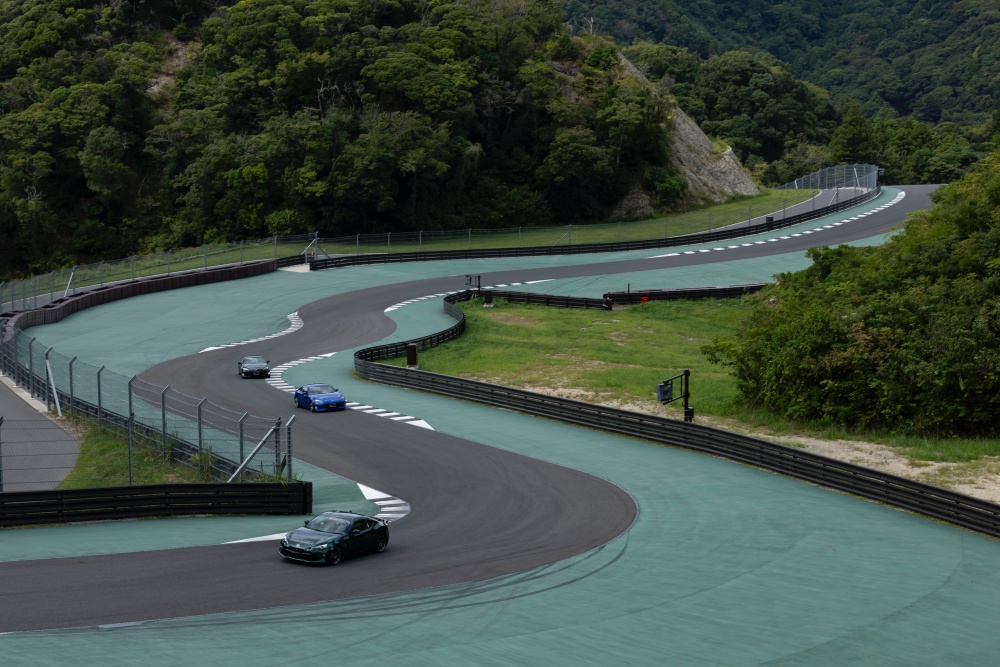
Motorsport Club of Clubs
The building engine behind this boom is Tilke Engineering & Architects. Its 2026 portfolio alone lists 50 motorsports club venues in various stages of development. A recent analysis from MRC Motorsports identified 67 private motorsports clubs – 53 operational and 14 in development – in the United States alone. If the name Tilke sounds familiar, good. It should. Tilke is responsible for some of the finest racing venues the world has ever known. Tilke has 18 tracks in the current F1 calendar. It begs the question: What happens to motorsport when the private track becomes one of its fastest-growing pieces of infrastructure, and on-ramps into the sport?
Racing is changing, but what isn’t?
For decades, the typical racetrack business model was relatively simple. Build a circuit, rent it to racing organizations, manufacturers, driving schools, and track-day companies, and host whatever professional events you can attract. The private motorsports club flips that model around. Instead of selling occasional access to a racetrack, it sells a network, belonging… and builds an entire community around all things racing.
“In seven years, MCC built the world’s largest network of private motorsports clubs. Now it is building the platform that will define the industry.” - Christian Epp
That matters because the economics are radically different. Private clubs sell memberships, garages, homes, hospitality, and other amenities while generating recurring revenue from annual dues from people who have a vested interest in driving their race cars and keeping the facility alive. Some of the most ambitious projects are backed by resources that many traditional racetrack developers, especially in the past, could never reasonably expect to have available, and because the older return on investment model is increasingly challenged.
The Motorsports Club of Clubs
The Motorsports Club of Clubs (MCC) is an effort to turn the growing collection of private motorsports clubs into something more like a network than a collection of independent racetracks. Developed by Tilke, who has also designed many of the world’s private club circuits, and helmed by managing partners Christian Epp, Hermann, and Dr. Carsten Tilke, brings clubs together to share resources, improve operations, marketing, and sales, and, most importantly for members, create ways to not only drive at more than one facility, but also to connect the many disparate pieces of the non-professional motorsport market.
Traditionally, joining a private motorsports club has meant committing to a single track. Even the best circuit can get repetitive when it's the only place you drive, creating a challenge for clubs trying to keep members engaged over the long term.MCC has a fix for that with plans to launch a race series with race dates that are only at private club tracks.
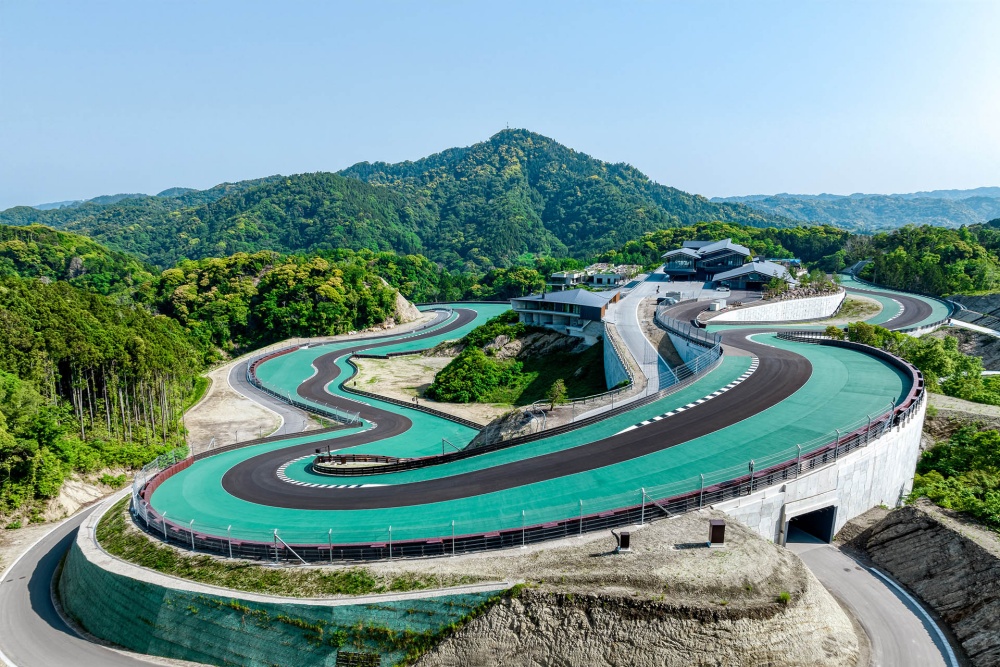
Tilke Engineers and Architects - Magarigawa
Christian Epp talks excitedly about connecting these disparate arms of the motorsport industry: “When we founded MCC in 2019, private circuit venues were thriving — but isolated. World-class facilities existed on every continent, each built with extraordinary vision and significant capital. Yet they operated alone. No shared standards. No common voice. No way to leverage what they had in common.”
If you’re still wondering if all of this is a flash in the pan or a proper sea change for the industry, it’s the latter. And it is accelerating. This month’s sixth annual Motorsports Club of Club conference at The Motor Enclave in Tampa, FL, will have in attendance executives from 53 clubs, including 32 in planning, as well as Maserati, Porsche, BMW, Mercedes AMG, Dallara, Tatus, Ginetta, Revolution and Flis Motorsports (official Mazda MX-5 Cup Car manufacturer), with 35% of the attendees traveling from abroad. There are even a few traditional track operators attending, interested in exploring this new shift. Epp goes on to say, “We saw an industry on the verge of the same inflection point that golf, skiing, and marina hospitality had already lived through. And we believed that the people building these venues deserved the same thing those industries had found: a platform that made them stronger together than they could ever be alone.”
MCC’s vision is clear: to become the defining platform of the private racetrack industry. It’s not just another club. It’s more than just another conference — instead, MCC will build the global infrastructure that connects private drive resorts with the brands, capital, management expertise, buying power, and members' experiences they need to grow.
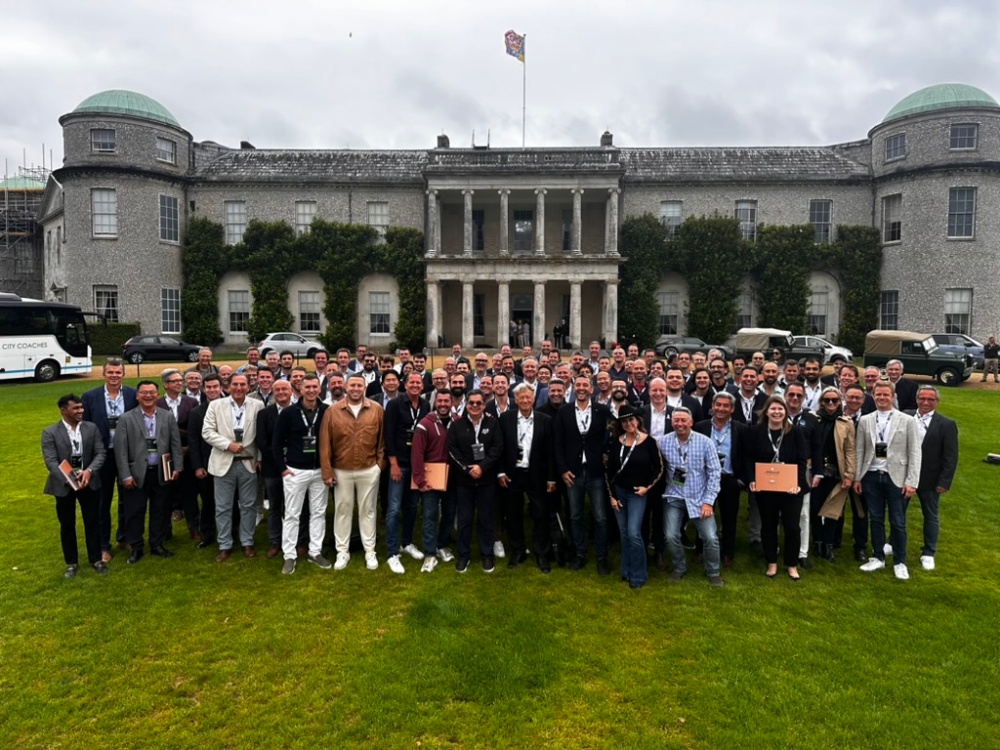
In 2024 the 4th Annual Motorsports Club of Clubs was held at the Goodwood Revival
Epp points to evidence that this ambitious model is already proven: Troon transformed golf club management. Ikon redefined ski resort access. IGY built a global marina network. Each fragmented passion industry found its platform and professionalized the passion. Private motorsport is next. MCC is that platform, the connective tissue binding everything from the track to the cars, tires, maintenance, real estate, and hospitality. MCC's goals are as colossal as the needs they meet for private track owners, members, and the supporting industries that sustain them.

Christian Epp and Dr. Carsten Tilke
And there is a compelling argument for that model. More people participating in motorsport means more money flowing into circuits, instruction, racing programs, engineering, performance parts, hospitality, racing leagues, and automotive businesses. Private clubs can bring people into the sport who might otherwise never have found a comfortable way in.
The trade-off is obvious: access to these facilities can cost moderate to serious money, because building them costs eye-searing numbers, and the traditional public-facing racetrack remains an important part of the sport's culture. But perhaps the private-club boom isn't replacing that world so much as adding another layer to it.
The race tracks are exquisite
Facilities such as Thermal Club, Autobahn Country Club and Atlanta Motorsports Park demonstrate what happens when the circuit is designed with expanded capital around members rather than the needs of a professional race weekend. New projects are pushing that concept even further, with substantial circuits (Spring Mountain Motor Resort, for example, has nine miles of track surface -- the most in the U.S. -- and four totally separate circuits), large clubhouses, car storage, residences, karting facilities and other amenities – even wave pools – becoming standard parts of the formula.
This is where the private-club model starts to resemble golf or skiing. A golf course isn't simply somewhere to hit a ball. It can be the center of an entire live-in community, surrounded by homes, restaurants, and other amenities that blur the line between resort and an entire neighborhood. Ski resorts figured out a similar equation: the mountain attracts the customer, but the larger ecosystem creates the business.
This is where the private-club model starts to resemble golf or skiing. A golf course isn't simply somewhere to hit a ball. It can be the center of an entire live-in community, surrounded by homes, restaurants, and other amenities that blur the line between resort and an entire neighborhood. Ski resorts figured out a similar equation: the mountain attracts the customer, but the larger ecosystem creates the business.
Motorsport can do the same thing, with one particularly attractive addition: residences, garages, and community spaces. A private motorsports club can give someone a place to keep, work on, socialize around, and drive the cars they love and even beyond. The automobile isn't merely the activity. It becomes part of the real estate, the social life, and the identity of the community. It changes everything when the race weekend spills out from the track and is now where friends hang out in the garages working on cars, talking shop, eating dinner with families, and even crashing for the weekend. This step brings amateur racing from a weekend hobby to a lifestyle.
That creates opportunities for motorsport that didn't exist in the traditional track-rental model. It also creates a much easier on-ramp for people who want to learn how to drive quickly but aren't ready to throw themselves into wheel-to-wheel racing in an open series.
For a newcomer, joining a club, taking instruction, and gradually building experience can be considerably less intimidating than arriving at an amateur race weekend and trying to figure out licensing, preparation, competition, and everything else that makes the barrier to entry in racing so high. Many clubs also run their own competitive events and racing series, meaning the distinction between a driving club and a racing organization is becoming increasingly blurry.
What does this mean for established racing leagues?
The blurring of these lines could be an important development for the broader sport. The question is whether private club racing is pulling participants away from other racing leagues, or whether it is creating more drivers who eventually find their way into those leagues and other forms of competition.
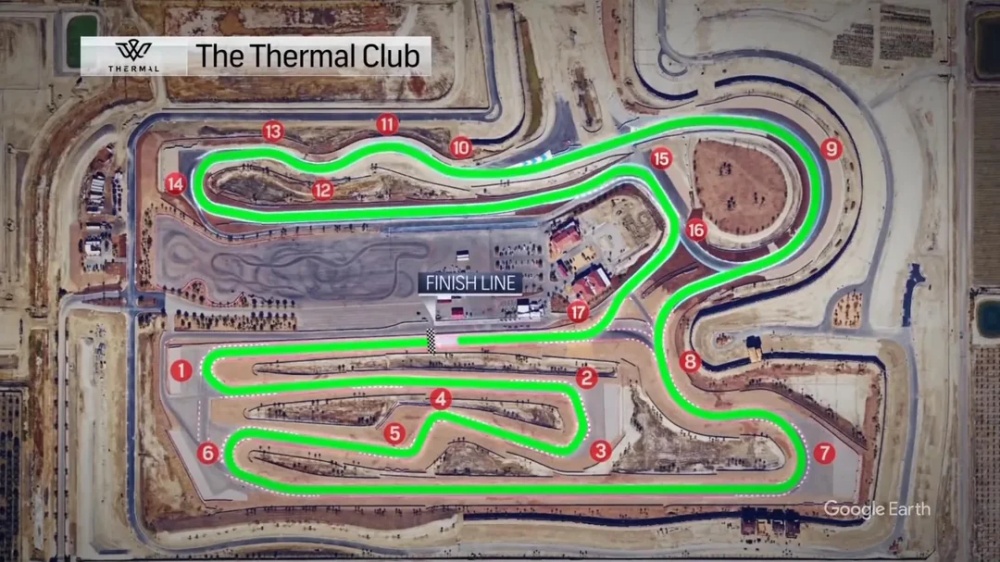
The Thermal Club
There is probably some of both happening. However, visit any club, and you’ll find a large portion of members, who like many of us, had never owned a race car, never driven a race car, and only dreamed of racing one day. Turns out joining a club can be the unlock, proving clubs to be a top-of-funnel feeder that’s increasing the number of participants. Many of whom build the skills necessary to race beyond their club.
The same question applies further up the ladder. If private clubs continue to proliferate, could they eventually become important venues for professional racing or make traditional track operations even more challenging? Some already have the facilities to host serious competition, and private ownership can provide the financial resources necessary to build circuits to extremely high standards. The most notable being Thermal hosting exhibition IndyCar Rounds in 2024 and 2025, along with its $1 million Challenge. The best private tracks can arguably compete with, and in some cases surpass, traditional racing facilities in terms of pavement, facilities, and overall experience.
What comes next?
Motorsport has spent much of its history trying to figure out how to keep racetracks financially viable. The private motorsports club may be the industry's most interesting answer yet. It turns the racetrack into a membership business, a social community, a real-estate development and, increasingly, a place where people actually learn to race.
“In seven years, MCC built the world’s largest network of private motorsports clubs. Now it is building the platform that will define the industry.” - Christian Epp
Private clubs could become feeders for more traditional racing series. They could compete with amateur sanctioning bodies. Traditional tracks could adopt the model. Professional racing could find new venues. Clubs could consolidate into larger networks. Or all of those things could happen simultaneously or not at all. That’s what the Motor Club of Clubs is trying to figure out. What's clear is that the boom in private race tracks has exposed a massive and disconnected market busting at the seams with impassioned participants looking for a throughline. This, at the end of it all, is what MCC is about: connecting all the disparate threads of car and motorsport culture into an organized and highly interfaceable market where car lovers can get everything they need to start or continue racing, soup to nuts.
Private motorsports clubs are no longer a curiosity sitting at the wealthy edge of car culture. They are becoming part of the motorsport infrastructure. And that will likely move the needle on what mature racing and on-track driving looks like in the broader sense.
One thing is for sure: the world is changing fast. We don’t know what the future will look like. We’ve never known, but in 2026, even hazarding a guess feels foolish. That said, MCC is clearly hedging its bet that regardless of what the future of motorsports looks like, a community of people who love throwing their cars around a race track, drinking beers in the garage, and trading racing stories will always be a necessary part of the deal, and they are building exactly that.

RACER Staff
Read RACER Staff's articles
Latest News
Comments
Comments are disabled until you accept Social Networking Cookies. Update cookie preferences
If the dialog doesn't appear, ad-blockers are often the cause; try disabling yours or see our Social Features Support.