Courtesy of Mecum
Jack Roush opens the garage at Mecum Nashville
There are worse problems to have than too many cars. Jack Roush has apparently reached that point and is doing something about it.
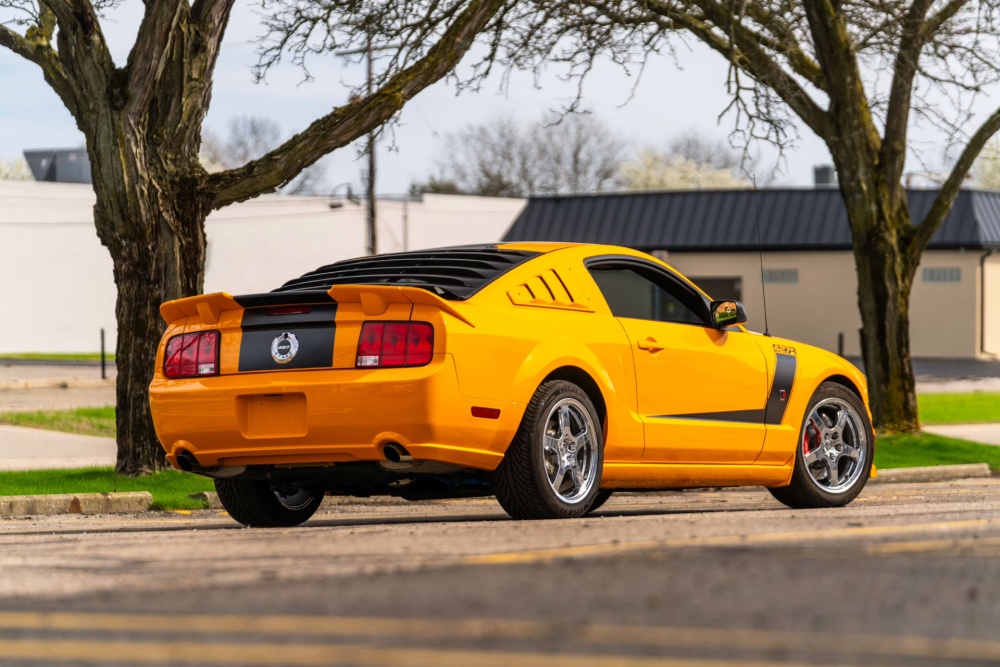
Selections from the legendary Roush Automotive Collection are heading to Mecum's inaugural Nashville auction, Sept. 22nd-26th, bringing some remarkable pieces of American racing history to Nashville Superspeedway, an equally remarkable piece of racing history itself. Among them are race cars driven by NASCAR Hall of Famers, championship-winning Trans-Am machinery, an IMSA Mustang that won its class at the Rolex 24 at Daytona, and a sentimental Boss 429 Mustang with a hot engine built by Roush himself.
It would be easy to look at the collection and assume this is another story about a wealthy collector thinning the herd, but it isn't quite that simple.
Roush has spent half a century building, racing, and collecting cars, and his collection now numbers more than 150 vehicles. But according to his team, there is a story behind every one of them. We spoke with Maureen Crowley and Kevin Woods from Roush, and they were able to shed some light on why these cars heading for Mecum are special, and the Ethos behind what makes it into Roush’s collection.
Each car has some sort of personal or professional connection to Roush, whether it is tied to a race, a driver, an engineering project, a business relationship, or simply a particular moment in his life. With the money and access that someone like Roush has, it’s nice to see that his collection isn’t comprised of white-glove, don’t-even-breathe-near-it cars. In fact, Roush is known to “hop in these cars” and take off, according to his team.
In fact, that's part of the reason he's selling some of them now. There are too many cars, and he wants to make room for cars he might actually drive more often. A valiant reason to sell, indeed. That makes this a somewhat unusual auction for a collection of this significance. These aren't simply cars that have been accumulated because they were valuable, famous, or historically important. They are cars Roush has lived with, built, and loved. And now some of them are going back out into the world.
The Nashville Superspeedway is a fitting venue for the Roush Collection
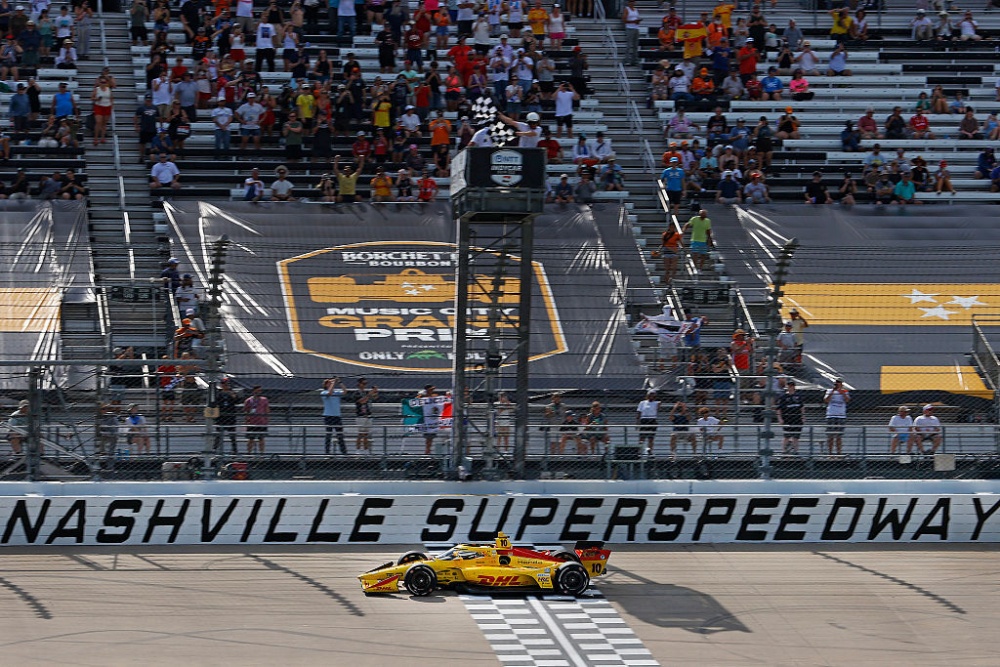
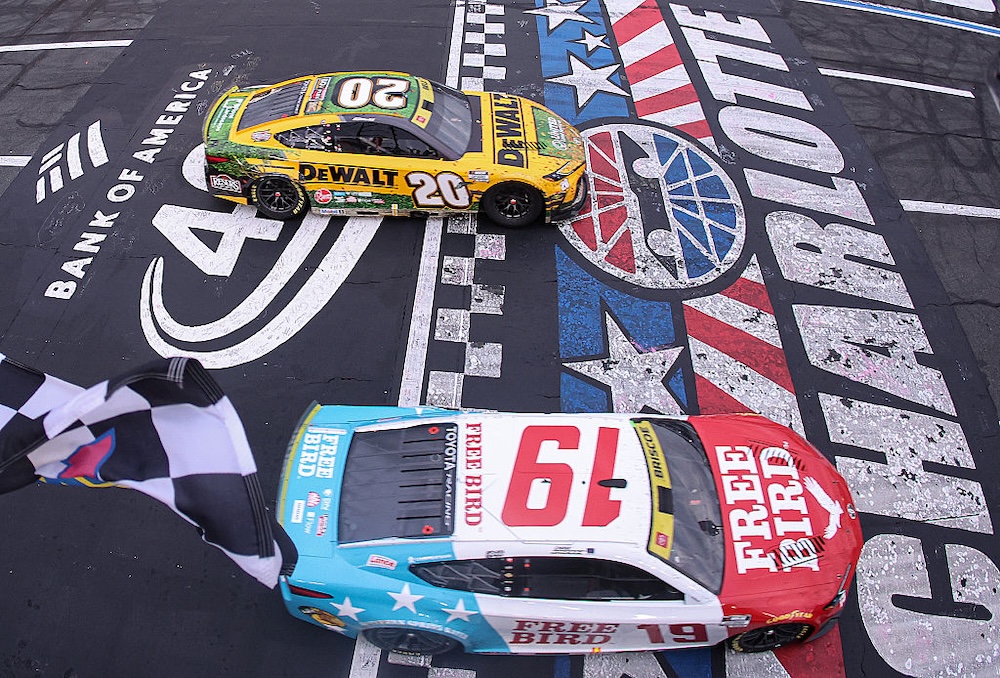
The location is particularly appropriate for Roush. Nashville Superspeedway has been part of Roush's racing story for more than two decades. In 2001, Roush Racing and Greg Biffle won the inaugural NASCAR Busch Series race at the track. It was Biffle's first NASCAR national-series victory and part of a championship season that helped launch one of the most successful driver-development programs in modern NASCAR.
Perry Nelson/Getty Images
Roush-owned teams would eventually win eight NASCAR races at Nashville Superspeedway across multiple series, while Roush himself became a familiar presence above the track, performing ceremonial flyovers in his P-51 Mustang. Yeah, he flies warplanes, too.
Now some of the machinery connected to that larger legacy is coming back to Nashville, albeit without a starting grid or a race to follow.
The auction is being held as part of Roush Industries' 50th anniversary celebration, and it represents the first time vehicles from the private collection have been offered publicly. For anyone interested in the history of Roush Racing, or NASCAR history in general, it is an unusually concentrated snapshot of the company's five decades in motorsports and performance engineering.
The cars tell the Roush story
The list is the kind of thing that makes it difficult to pick highlights.
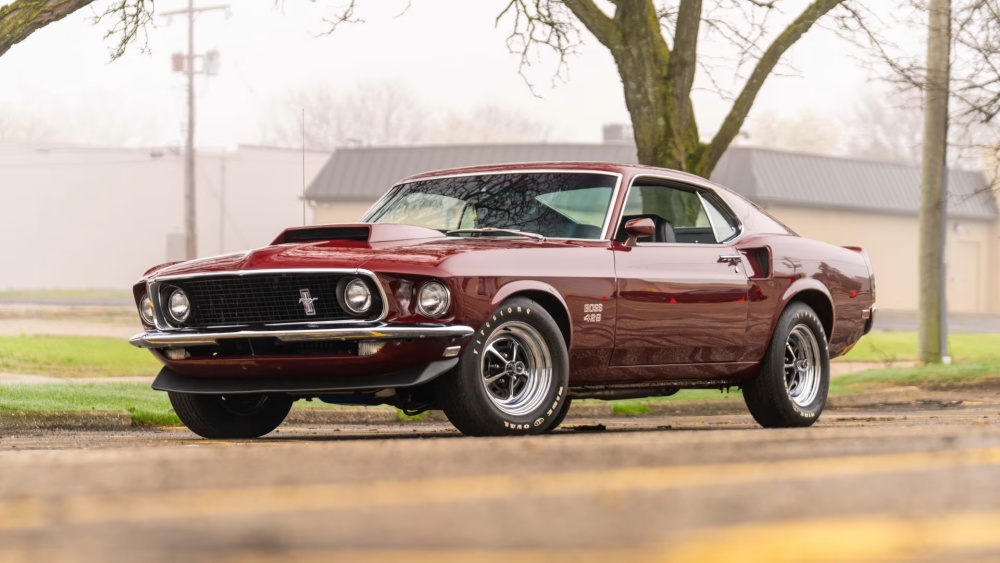
The 1969 Ford Mustang Boss 429 Fastback is particularly interesting because its connection to Roush goes beyond the badge on the car or some rarity value. Roush bought this car in 1971 from a hard-up drag racer for $1,100. It features a 460-cubic-inch short-block Pro Stock V8 hand-built by Roush, bringing together two of the subjects that have defined his career: Ford Performance and racing-engine development. This is said to be one of his favorite cars in the collection. It’s personal and fast.
Courtesy of Mecum
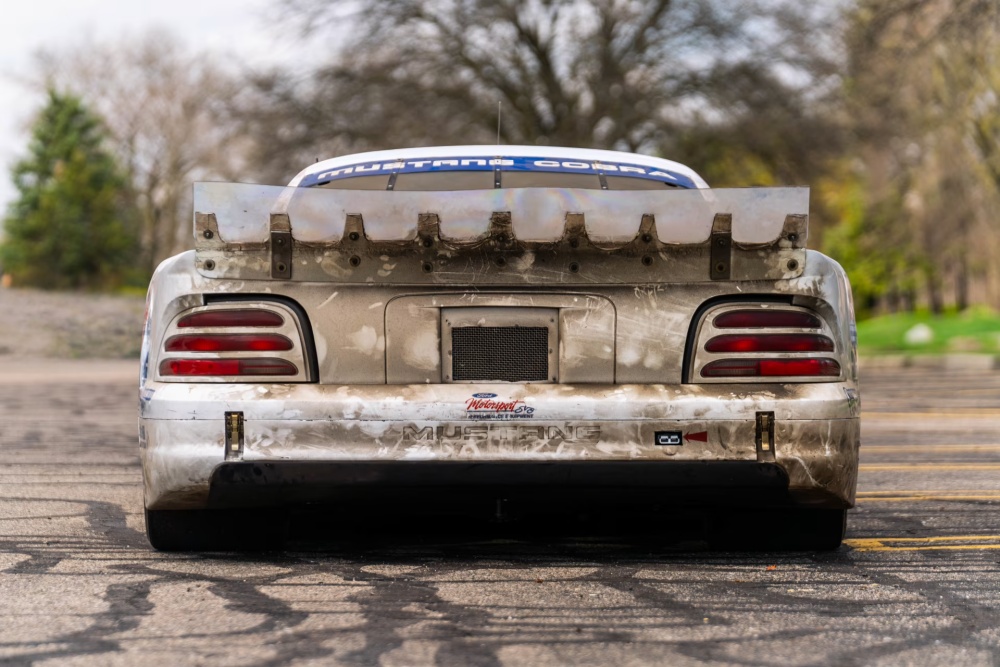
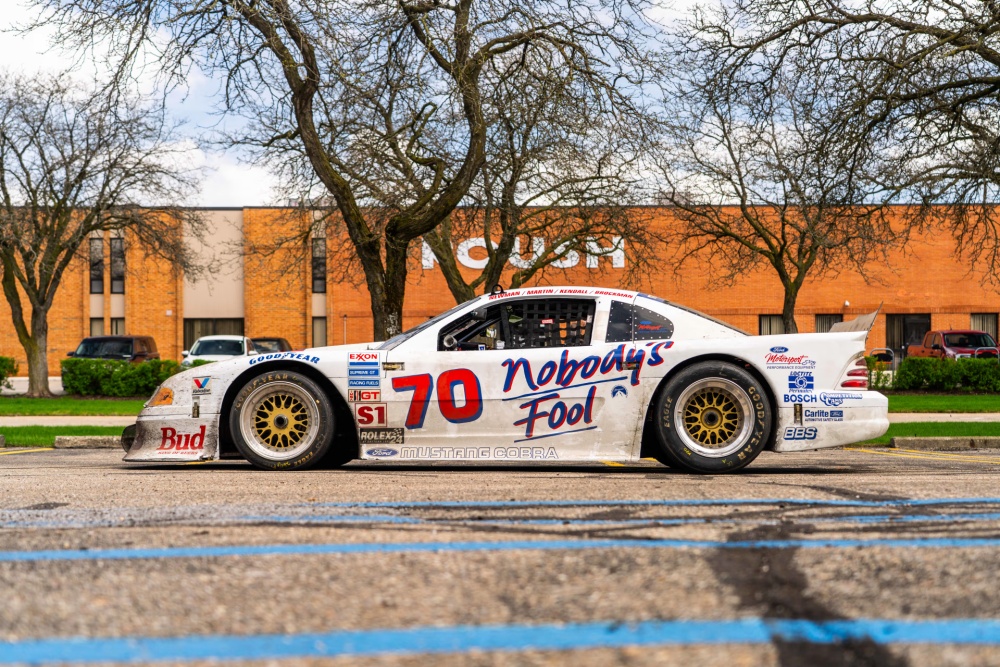
Then there is the 1995 Ford Mustang Cobra “Nobody's Fool” IMSA road-race car, which earned a class victory at the Rolex 24 at Daytona with a driver lineup that included Paul Newman, Tommy Kendall and Mark Martin. That is an almost comically dense collection of famous names and famous races to fit into one Mustang.
Courtesy of Mecum
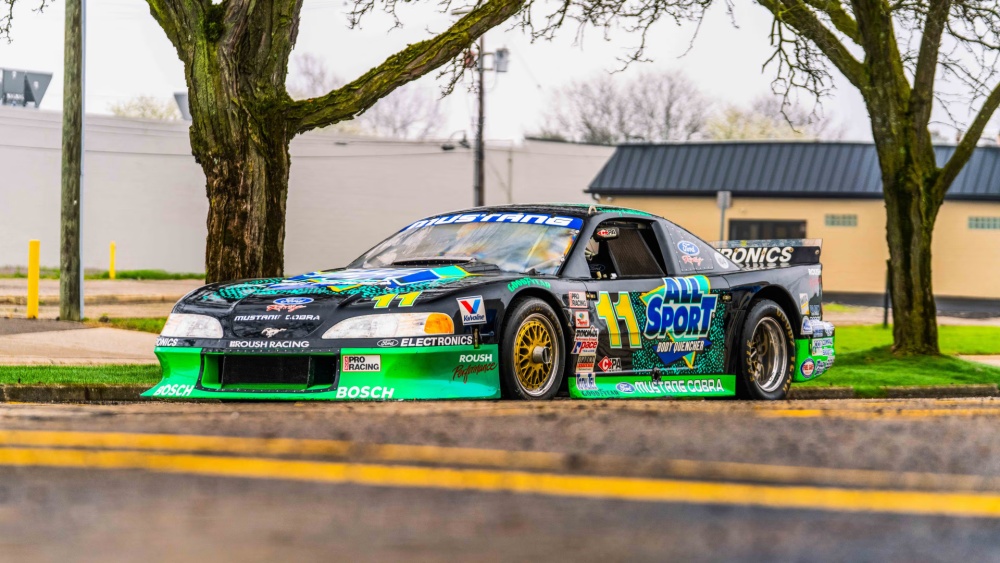
The 1997 Mustang Cobra SCCA Trans-Am car has an equally serious résumé. Tommy Kendall drove it to 11 victories and a championship during a dominant season for Roush Racing.
Those cars are joined by NASCAR machinery driven by Mark Martin, Matt Kenseth, Carl Edwards, Kurt Busch, and Jeff Burton, along with Roush Performance vehicles, specialty concepts and vintage cars connected to Roush's personal automotive history.
Courtesy of Mecum
Two of the NASCAR cars are also being offered for charity. Greg Biffle's 2004 Ford Taurus will benefit the Biffle Family Fund, while Matt Kenseth's 2012 Ford Fusion will benefit the National Breast Cancer Foundation.
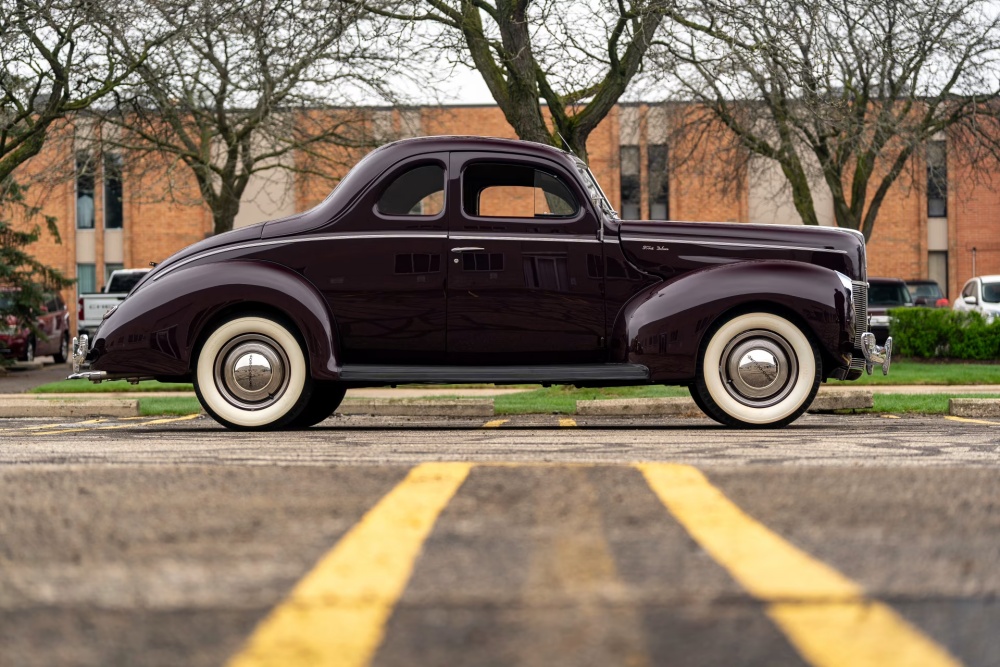
In a different context, the list might read like a museum inventory. In Roush's, the cars are more like a timeline. Outside of the historical significance of the racing cars, the collection is so expansive that virtually anyone could walk through the lineup and find something interesting to them. Crowley singled out the Boss as the one that most speaks to her. It’s personal and developmental all in one car. It’s easy to see how the Boss would speak to her. Woods singled out a slightly less heralded member of the group, a 1940 Ford Deluxe Coupe, because it stood out as unique among the racers and performance monsters. This range and scope seen in Roush’s collection is what makes this collection feel so personal. If it meant something to JRoushack, it was in. That was the criteria.
Jack Roush collects cars with a reason
Roush is, after all, not someone who needed to collect racing cars to get closer to motorsports. He spent his career building the things. His company and racing organizations have earned more than 30 national championships across various disciplines, while Roush himself became one of the most recognizable figures in American racing and performance engineering.
Courtesy of Mecum
The collection grew alongside that career. A race car would have a story because Roush had built it. Another might have mattered because one of his drivers raced it. Another could represent an engineering experiment or a particular period of Ford performance. The cars weren't necessarily trophies acquired after the fact. They were artifacts of a sport and a life; reminders rendered in metal.
That seems to be the philosophy behind the collection. Roush has said, “I've always believed cars are meant to be driven, experienced and appreciated.” Selling some of them, then, isn't necessarily a rejection of the collection. In a strange way, it is consistent with it.
Courtesy of Mecum
There are more than 150 cars in the building. Roush can't drive all of them. If some cars are sitting around because there isn't enough time to use them, there is an argument for putting them somewhere they can be enjoyed again.
And that is a refreshingly simple reason to sell a collection. Not because the cars aren't important. Not because they aren't valuable. Not because the collector has suddenly stopped caring, but because there are too many of them for their purposes to be fulfilled. I like that.
For a car lover, that's a problem with a fairly obvious solution: sell a few, make some space, and find another car to drive. The Roush Automotive Collection isn't disappearing. Much of it will remain together, preserving the history of the company and the racing programs that built it. But the cars coming to Mecum Nashville are about to acquire another chapter in their histories.
For decades, they belonged to Roush. Now they're going back to people who, presumably, have their own reasons for wanting them. And if Roush's philosophy holds true, that’s the best thing that can happen to these cars.

Peter Corn
Peter Corn is an automotive writer and storyteller. Peter has spent nearly a decade writing about cars, trucks, and motorcycles for some of the best publications in the business. He believes the best automotive stories aren't really about the machines at all, but instead, the people who love them.
Read Peter Corn's articles
Latest News

Comments
Comments are disabled until you accept Social Networking Cookies. Update cookie preferences
If the dialog doesn't appear, ad-blockers are often the cause; try disabling yours or see our Social Features Support.