ECR becomes first IndyCar team to buy driver-in-the-loop simulator
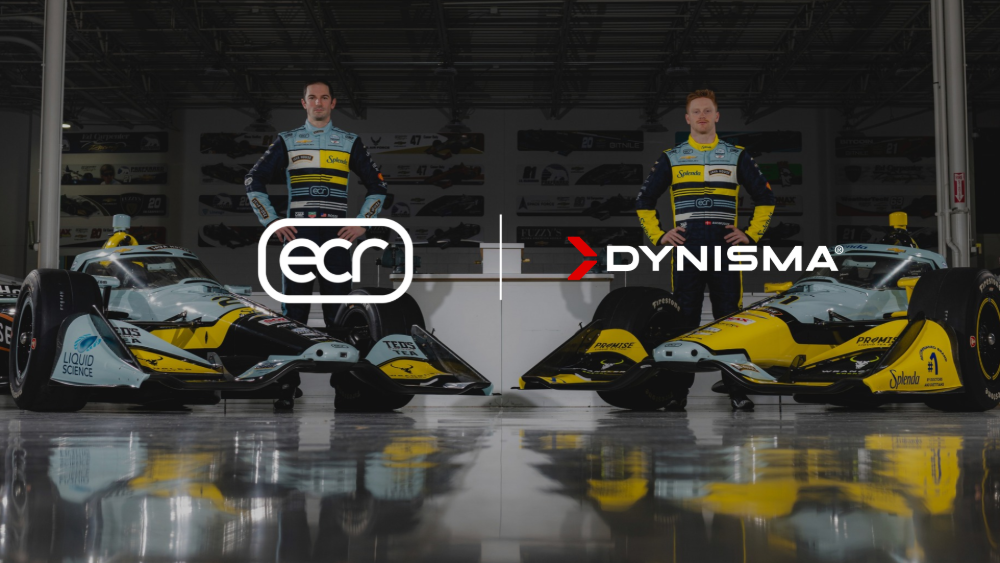
Ed Carpenter Racing (ECR) has made a massive statement of intent by becoming the first known team in the IndyCar Series to purchase a Driver-in-the-Loop (DIL) simulator.
Due to the exceptional upfront costs—at least on an IndyCar level—that demand more than $1 million for a full-motion DIL rig, the price of each track simulation which can command upwards of $100,000 apiece and the six-figure salaries for the full-time staffing needed to run the DIL, IndyCar teams have shied away from acquiring units of their own until ECR decided to step forward.
After visiting multiple DIL vendors across the globe and sampling their offerings with ECR’s Alexander Rossi, the team selected England’s Dynisma and its DMG-1 model, which will be installed within the two-car program’s new base in Westfield, Indiana, that is due to be completed in early 2027.
The purchase gives ECR an extraordinary advantage over its rivals and brings a newfound ability to develop its drivers and chassis setups at a previously unattainable level.
“If you want to catch the other teams, you’re not going to just make up that ground and get all the way there in 18-24 months by doing the same things they’re doing,” Rossi told RACER. “Something like this is a big statement from our leadership. It’s not a small investment.”
Owing to the imposing costs of ownership and facilitation, IndyCar teams have relied on DIL access made available by their engine suppliers at Chevrolet and Honda to prepare for races and refine their setups. But that access has been weighted towards the most competitive teams where IndyCar’s Big 4 programs in Arrow McLaren and Team Penske with Chevy and Andretti Global and Chip Ganassi Racing with Honda are most frequently found on their respective DILs in North Carolina (Chevy) and Indiana (Honda).
With ECR’s purchase of a DMG-1, the team founded by veteran driver Carpenter – which welcomed Heartland Food Products CEO Ted Gelov as its new co-owner and chairman late in 2024 – has eliminated any concerns about DIL access and given itself the opportunity to commit as much time as it wants to ready Rossi, Christian Rasmussen, and Carpenter with a system of its own.
“It's something we started talking about a little over a year ago,” Carpenter said. “We've really used the GM simulator as much as we possibly can. With how little track time is available during the off-season, and in-season, it's really a critical tool that we have available. Looking at all the ways that we can continue to improve, it seemed like a great opportunity just to just get more efficient, have more time, and make it more convenient.
“Right now, our guys are taking a lot of trips to Charlotte, so we’re trying to level up and do it better, quicker, and more efficiently. So we explored options, and we're really excited about what Dynisma has to offer.”
For an organization that ranked as the seventh-best IndyCar team last season with Rossi who placed 15th in the Drivers’ championship, ECR’s considerable investment in technology to bridge the gap in the short term, while also having a new-for-2028 Dallara IR28 chassis to develop when they arrive next summer, is a remarkable step in its quest to compete with the series’ most dominant teams.
The value of an in-house DIL also goes far beyond strapping drivers into a full-motion chassis and letting them turn laps in a large and glorified sim rig. Thanks to the accuracy of today’s track and tire models, DILs allow teams to take chassis tuning to the next level where setup options can be optimized well before an event.
READ MORE: Behind the wheel of a Dynisma DIL simulator
As Rossi explains, rather than waste valuable time sifting through setup changes during a practice session to find whatever might be the best solution, ECR will have the ability to try most of its ideas in advance through the DMG-1 and open each track session with a firmer grasp of the best setup path to pursue.
“Teams these days are using a lot of what we call ‘offline’ sim programs, where you're basically using a computer to generate an optimum setup based on prior historical knowledge, and what the drivers want and have experienced throughout the year up into a certain point,” the 2016 Indy 500 winner said.
“This is a (purely computer-based) sim that's doing laps without a driver, and it's generating and putting out options and packages that you might not have otherwise considered. But in order to get that working to a level that’s useful, because it's very easy for an offline sim to produce a setup that is trash, you need to have a tire model that is effective and a tire model that you can trust and you believe is accurate. And the only way to generate and create that is by putting drivers in a DIL and really focusing a lot on the correlation side of things.
The move will allow ECR to reap all of the pre- and post-event engineering benefits that come from exploring chassis setups and doubling back to have its drivers reassess the setup changes that were made during a race weekend, all without DIL time constraints.
“I would say even more than that, so much of our time is spent post-event going back to the sim, running through all of the changes that we made,” Rossi continued. “Are the changes that we made in real life that we know to be true, are they representative in the sim? Is the tire modeling behavior in high speed versus low speed corners accurate to what we felt on the weekend? And so by doing that in the DIL, you're creating a tire and aero model that you can trust, which is then elevating the offline sim, which is then hopefully giving you a much better starting point. It’s a circular value.
“So instead of chasing geos (suspension geometry changes) and diffs (time-consuming transmission differential settings) and all these sort of things on a weekend, you're maybe now adjusting a rear spring here and there, some camber, some toes, some front wing angle, and the rest is history. So it's a long-winded answer, but the DIL is so much more of an engineering tool than it is a driver tool.”
For Matt Barnes, the veteran race engineer who was promoted to ECR’s VP of Competition in 2026, the investment by Gelov and onboarding of Dynisma’s DMG-1 are game changers for a team that needs to find a breakthrough in on-track performance.
“In any sport, it's the difference between watching some video and actually getting some reps in,” Barnes said. It's going to bring more consistency to our preparation. The driving simulator is a tool that we use currently, and I'd say every IndyCar team uses to varying degrees, but for us, the access to that is limited, and the schedule is not our own. I think a big part of being able to be successful and consistent is to have a routine, and so being able to get the drivers in, do our preparation ahead of time, and then do our correlation after the event on a regular schedule, is going to be really beneficial.”
Unlike stick-and-ball sports where teams have permanent access to fields and courts to practice and scrimmage between games at facilities they own, IndyCar teams are not allowed to freely practice on the tracks where they race.
And with the series’ highly restrictive testing policy, only a handful of days are provided for open use throughout the year, which has led to an increasing reliance on expensive virtual solutions with offline sims and manufacturer-allocated DIL use to replace what they’re missing in the real world.
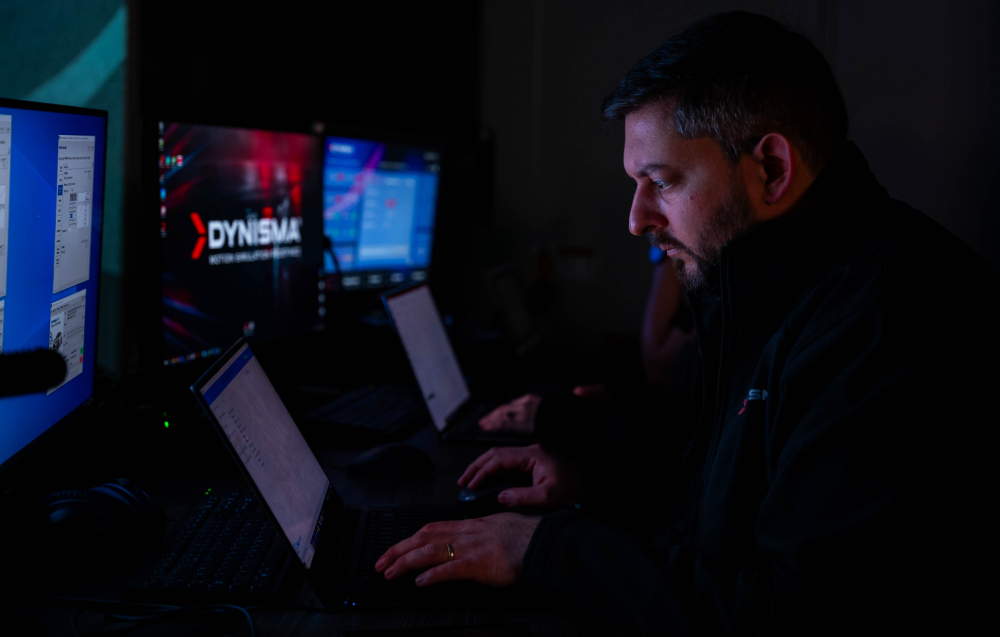
“This is a team sport, and that goes for the driver and the engineer, and being able to go and actually drive the track for the driver and the engineer, get the feedback and make the changes, and be able to go through that process together, and evaluate those changes ahead of time. And a DIL just gets you that sort of preview and lets you get those reps in,” Barnes added.
“So then, when you get to the track and you're doing it in real life, the driver and the engineer both are prepared for what we expect to happen. And when it goes the way you expect it to, it just feels like it's all part of the plan. And when it doesn't, then you have a tool to go back and diagnose why. But imagine every other sport. Basically, you hold practice and you're going to run through some plays. Let's say it’s football.
“You're going to run through the plays and get those reps, and getting that muscle memory for the play caller, for the for the quarterback, for the whole team, makes that those practice reps really important. And we don't have a chance to do that in motorsport.
“So seeing that we only have a few chances to hit the track and actually test, being able to use a tool like this to a greater extent lets us get those reps in and makes it feel like everything's going according to plan when you show up at the track and you've already done it before. Then, you're just executing.”
Rossi loves the self-reliance aspect of ECR having its own DIL. And as Formula 1 teams have grown accustomed to doing for many years, ECR will be able to deploy a test driver like Hunter McElrea or others during race weekends to extend their track time—at least in a virtual world--to try setup changes back at ECR’s shop and report back with new directions to follow and those to avoid.
“To be our own model, our own tire development, our own aero development, and all of this sort of thing, is an important step for us,” he said. “Being able to rely on drivers outside of Christian and I, not only on a race weekend, but, ‘Hey, there's something that we want to test, and it's Wednesday, can one of you pop down to the DIL and drive it for two hours?’ Currently that's not an option. If you have to fly to Charlotte, you have to book time. You're sharing it with other teams, other suppliers, and that sort of thing.
“So for us, it'll just open up the availability on the development side of things, and also just give us more opportunity to get better at the details and to really refine what is already a very improved car and package. And we’ll really try and take that next step as quick as we can. And obviously, there's a new car coming in 2028, and hopefully, this can give us another leg up on others as they're all fighting to get time in the sim, whether that be a Honda sim or a or a Chevy sim. We can be pounding in as much virtual rock as we want to in our own city.”
ECR’s bold step to become the first IndyCar team with a DIL of its own will likely come as a surprise to its rivals and IndyCar’s fans. Andretti’s base in Fishers, In., is expected to receive a DIL in the near future, but RACER understands it’s for the Andretti-led TWG Motorsports Cadillac F1 program and will be off limits to the Honda-powered Andretti IndyCar effort. Arrow McLaren’s parent company has a DIL at McLaren Racing’s base in the U.K., but the IndyCar team does not have one in place and relies on Chevy’s DIL. Team Penske, which is located on the outskirts of Charlotte, is understood to be the most frequent guest on the Bowtie’s DIL, and the same can be said for Chip Ganassi Racing with Honda’s DIL just outside of Indy.
It’s too early to tell if ECR’s investment will trigger DIL purchases by the other 10 IndyCar teams, but for now, Carpenter and Gelov can take pride in showing their commitment to improving a program that’s been stuck in the midfield for the last 10 seasons.
And with ECR’s newly-developed junior open-wheel ladder that just produced an Indy NXT champion in Nikita Johnson with the Cape brothers, there’s a wide array of future benefits available for the team and its affiliates once Dynisma’s DMG-1 is up and running.
“We obviously make some decisions with a short-term view in mind, but everything for the most part that we're doing is with a long view, building step by step, towards hopefully becoming the standard for the sport,” Carpenter said.
“And people can laugh at that now because our results obviously aren't good enough, but the commitment and dedication to climb the mountain is there, and we're not just saying it. We're trying to do it and make steps each season, and each day, to continue improving and climbing up the grid. The commitment's real, and it's a fun time to be a part of the ECR organization.
“It's going to take a little time to get it going, and there'll be an emphasis on our full-time IndyCar guys, but longer term, we'll find ways for it to be an asset to our partners at Cape in NXT and Jay Howard in the USF Championships, and making it an asset for the whole group from those partners all the way up.”
Marshall Pruett
The 2026 season marks Marshall Pruett's 40th year working in the sport. In his role today for RACER, Pruett covers open-wheel and sports car racing as a writer, reporter, photographer, and filmmaker. In his previous career, he served as a mechanic, engineer, and team manager in a variety of series, including IndyCar, IMSA, and World Challenge.
Read Marshall Pruett's articles
Latest News
Comments
Comments are disabled until you accept Social Networking Cookies. Update cookie preferences
If the dialog doesn't appear, ad-blockers are often the cause; try disabling yours or see our Social Features Support.