The underground world of Daikoku NYC
Car culture is an elusive and amorphous thing indeed. It's hard to nail down because there is a never-ending stream of writers, photographers, videographers, brands, influencers, and on and on forever, trying to nail down its shape and meaning. I am one of these culture hunters. "Culture" has been an interest of mine for a long time. In fact, I got my degrees in Anthropology and Poetry. To put it plainly, Anthropology is the academic study of culture, and Poetry, well, poetry tries to put into words the heart and meaning behind culture.
So when I first heard about Stan Yeung and his nonprofit organization, Daikoku NYC, I was instantly interested in what he meant by – and I'm paraphrasing – harnessing NYC car culture for the good of the wider community. Daikoku's internet presence is mysterious and shrouded by design (there are even puzzles to solve to find certain meet locations). Still, when you see a Daikoku NYC meet in person, the meaning and power behind Stan's group of dedicated car freaks becomes clear.
DaikokuNYC
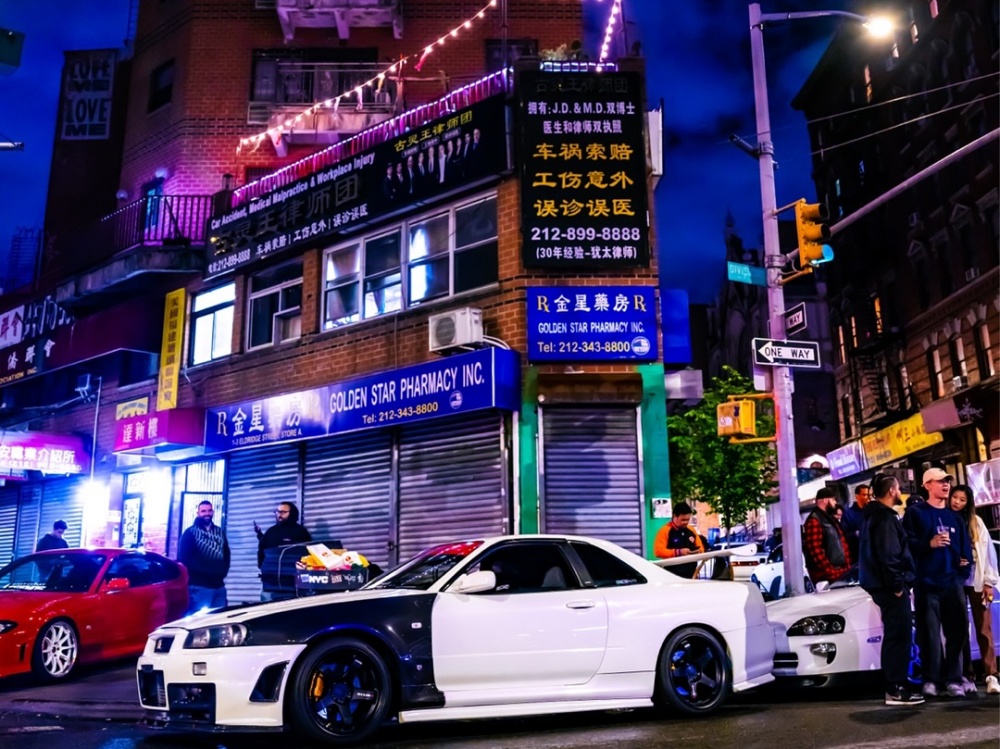
Fast forward to October 2026. Daikoku has been around since 2022, and it's no longer Stan and the pigeons waiting to see if anyone would respond to his Facebook group. No. It's different now. When I heard about one of these word-of-mouth-only car meets in Chinatown, I immediately cleared my schedule, put the kids to bed, grabbed some friends, and went downtown. The spot on the map was in one of an endless number of strange corners of Chinatown that I'd never been to. That's the point.
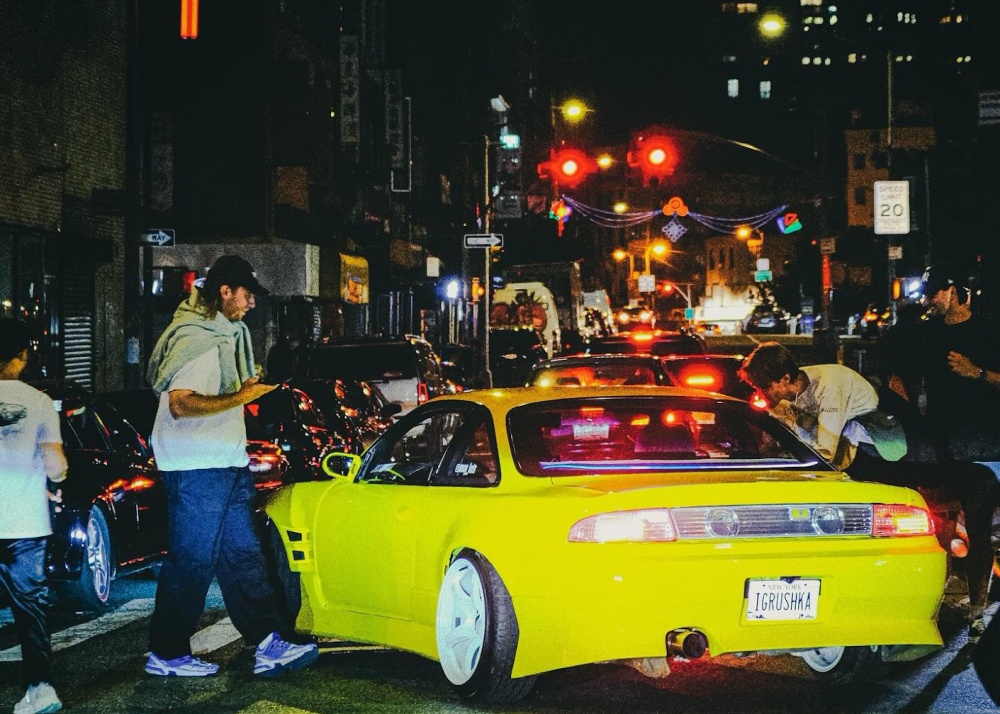
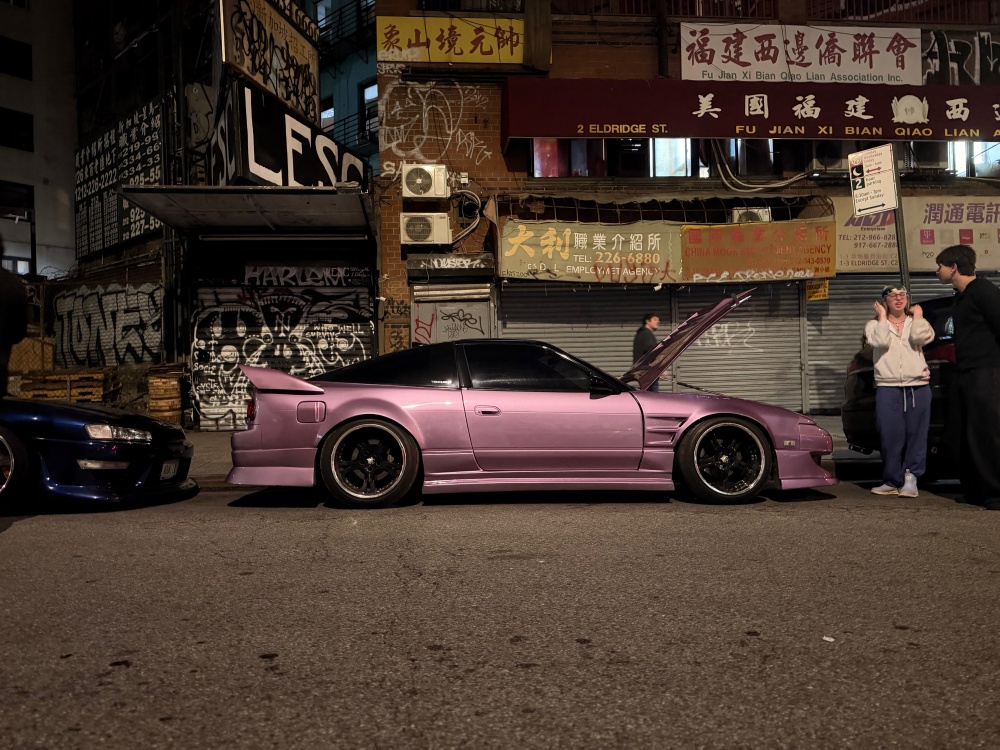
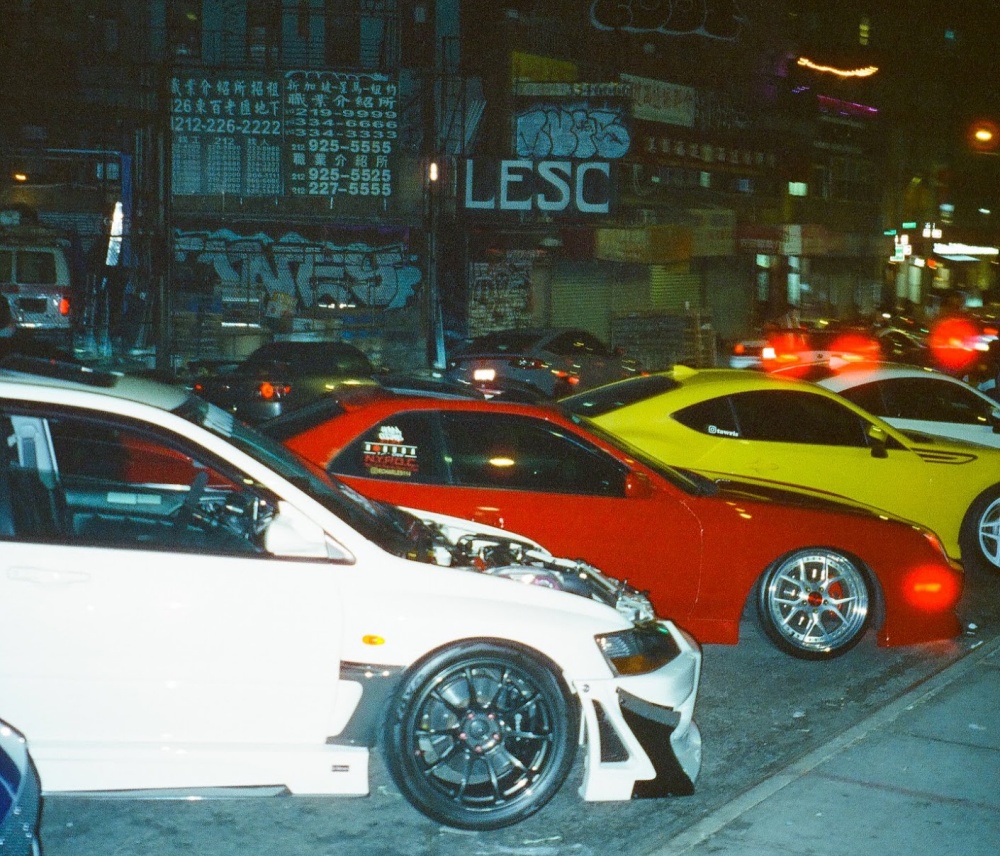
We rounded another quiet corner in Chinatown, and suddenly, the street along the bridge was lined with a bouquet of neon-lit, candy-painted Nissans, Toyotas, Mazdas, Hondas, and on and on they went. As cool as the cars were, it was the spectacle of all these cars backdropped by the nearly cartoonishly New York scene of checkered, failing signs in Chinese lettering reflecting off the rainy street; the "chep chep chep" of the subway hitting the tracks, coming from under the city, up, and across the Manhattan Bridge; the street vendors; late-night dumpling houses; graffiti. After 13 years of living in this city, this was one of the most essential NYC moments I'd ever had.
DaikokuNYC
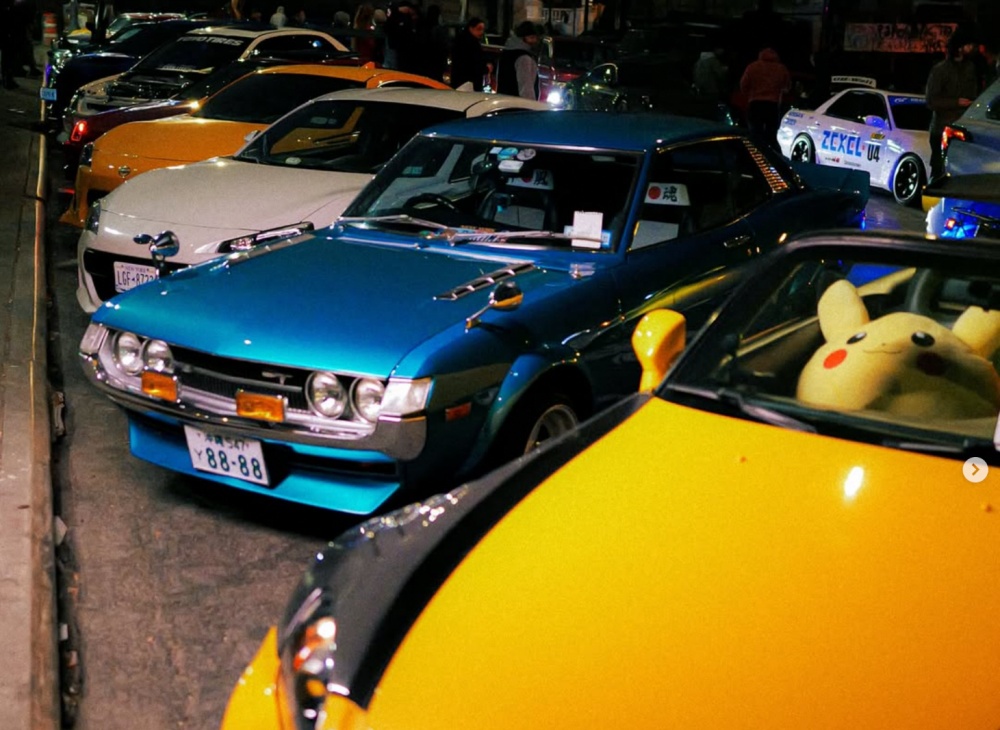
Despite the rain, there had to have been nearly 50 cars: right-hand drivers, strange license plates, kei trucks, underglow, paint schemes that felt more cinematic than real, and at least one beautifully anachronistic '80s Cadillac Fleetwood. The drizzle and standing water reflected the street scene in a way that gave the entire event a decidedly fictitious lean, like we had walked onto the set of an underground racing film and soon the plot would start to unfold.
Again, in spite of the rain, not only were the JDM cars out in impressive numbers, but the foot traffic was dense. There were people. Lots of people. Businesses stayed open later; people ate; people shopped. It was mellow and buzzing all at once. It was immediately clear that this wasn't just a gathering of cars.
What is Daikoku NYC?
Daikoku NYC is a registered 501(c)(3) nonprofit, but calling it a car club doesn't quite capture what it's trying to do. Its mission is to preserve and promote Japanese automotive culture while using cars as a way to bring people together through community events, education, and creative collaboration. That means celebrating everything from carefully restored JDM classics to track-focused builds and VIP cruisers, while creating space for artists, builders, racers, and people who might simply be curious about the scene. There's also a practical side to the organization: promoting safe driving and track-based alternatives to reckless street activity, supporting mental health through creative expression, community, and belonging. They also work with independent shops, artists, and local small businesses, particularly those owned by AAPI, BIPOC, and immigrant entrepreneurs. The idea is that automotive culture should be accessible, welcoming, and useful to the communities around it, not just another scene built around who has the most expensive car or the biggest social media following.
The name says it all. The Daikoku parking area, or rest stop, is a famous hub of local car culture in Yokohama, Japan. Since its opening in 1989, it has bloomed into a world stage for JDM cars and Japanese car culture. This isn't an event space, convention center, or anything else commercial or corporate. It is little more than a massive parking lot where car lovers naturally congregated over the years and still share their love of cars and car culture with anyone else who cares about these machines and their people.
Stan and his Daikoku NYC nonprofit cohort have brought this spirit to NYC, a decidedly more difficult environment for this sort of thing. But to understand how it got here, I spent nearly two hours on the phone with Stan, talking about how the whole thing started and what he hopes it can become.
DaikokuNYC
"Simply put, a lot of this formed as an outlet and a search for a place to be. After building my MR2, putting countless hours into it, I wanted to share it with people," Yeung says. He goes on to speak to something many grown folks find as they move through life, which is that making friends, and more specifically being a part of community, gets harder the older we get. "Right after the pandemic, a lot of us were looking to find people to connect with. I wasn't trying to create a community or anything; I was just trying to put myself out there first, seeing if anyone wanted to get together and talk about cars."
The first meet, following a Facebook post, before Daikoku existed, consisted of Stan in his Toyota MR2 and pigeons. Pigeons are fine but notoriously not into JDM cars. He tried again. The next meet grew exponentially; Stan in his MR2 and one guy in a Nissan 350Z. He said that after the only other guy left, the meet was over. It had lasted about five minutes. But instead of giving in to his discouragement, he posted a third meet to Facebook during the day in a park in Queens. Despite two flops in a row, he simply kept doing it—good old-fashioned tenacity. On the third shot, seven or eight people showed up. "I was just overly excited that people were there. I just kept doing it. Every week more people would show up."
How Daikoku NYC uses car culture to support its community
One of Stan's goals for DNYC is to harness the power of car culture for the good of the wider community. He figured this out in a really simple and elegant way. These meets happen in areas like Chinatown that were particularly hard-hit during COVID. Chinatown, like most NYC neighborhoods, relies on foot traffic for many of its businesses. With the decrease in tourism and local foot traffic during COVID, not only were many of Chinatown's businesses struggling, but empty streets made way for more crime and drug use, causing a second wave of struggle for these businesses and the folks who live in the neighborhood. Naturally, the only option was to bring in a bunch of Skylines, RX-7s, and MR2s.
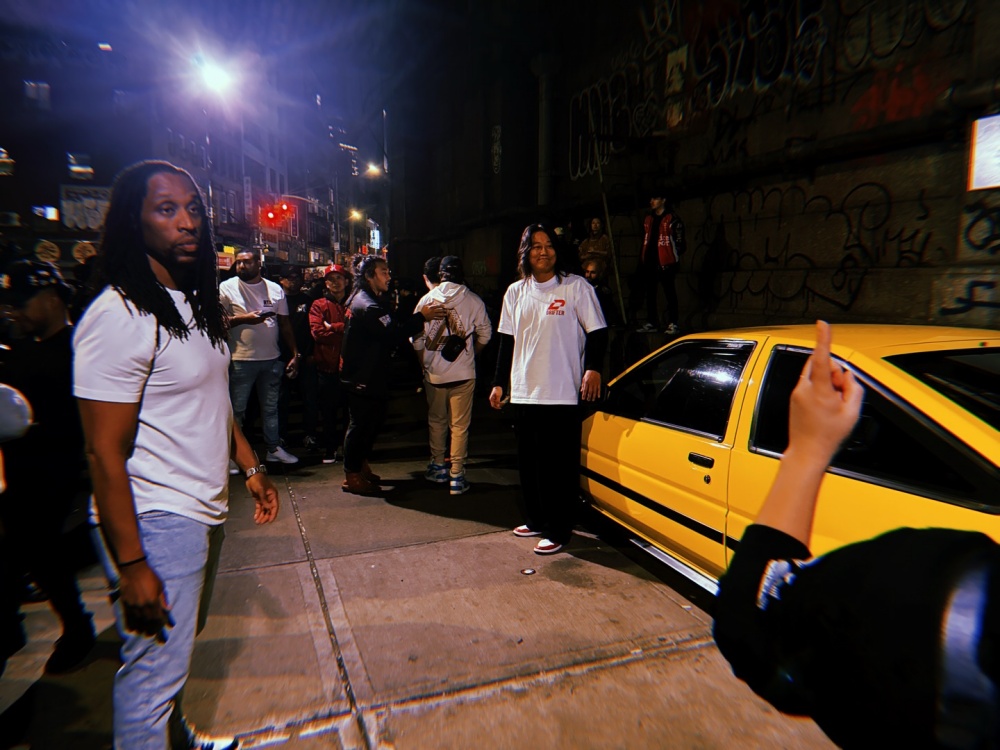
Sung Kang at DaikokuNYC
Stan started Daikoku to find like-minded car nerds and build a community to serve them. In doing that, he realized that Chinatown suffered due to a drop in people on the street, and he and his mob of kind-hearted car nerds needed a place to be with other car people. This could work.
One of Stan's points of focus is tamping down all the annoying and troublesome tropes of car culture like loud revving, burnouts, and other such, admittedly fun car things, but that tend to get things like Daikoku shut down. Aside from banning the more disruptive car people habits, Stan has gone as far as to work alongside the NYPD to host better an event that benefits the community, not aggravate it.
Daikoku NYC is spreading. Its reach is growing and its reputation blooming. Daikoku does monthly events, major celebrations like the AAPI Heritage parade and the Lunar New Year parade. After talking with Stan and seeing the event for myself, it's easy to see why. Stan and his merry gang of volunteers are putting their time and hearts into this thing. Daikoku is no one's full-time job; even Stan is working a day job like the rest of us, but by night, he's the maestro of a proper car culture movement in NYC.
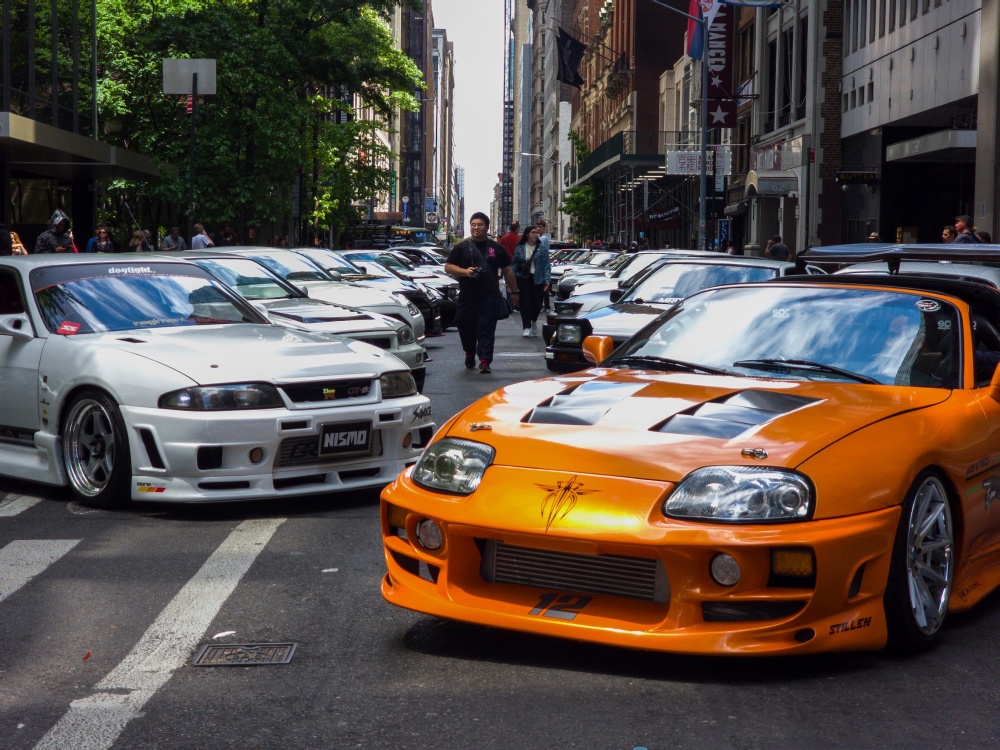
AAPI Heritage Day Parade
As if it were staged, the day I spoke with Stan on the phone, on the way to the coffee shop, not 10 minutes before, I saw a white kei van of some make unknown to me buzz by as I crossed the street, wearing a rear-window-width Daikoku NYC decal. Honestly, JDM cars have never been my lane. I'm from Alabama, and I grew up driving and loving old American sleds. However, since Daikoku, I find myself sneaking peeks at right-hand drivers on Facebook Marketplace, wanting to understand a little bit more about Skylines, and dreaming of running a Suzuki Carry with some big ol' tires.
Car culture is wide and still expanding, no different than any other corner of culture. People like Stan Yeung are the engines, and we're grateful to have people like him in NYC.

Peter Corn
Peter Corn is an automotive writer and storyteller. Peter has spent nearly a decade writing about cars, trucks, and motorcycles for some of the best publications in the business. He believes the best automotive stories aren't really about the machines at all, but instead, the people who love them.
Read Peter Corn's articles
Baja-bred: How Ford Racing is making its production Raptors even tougher

Latest News
Comments
Comments are disabled until you accept Social Networking Cookies. Update cookie preferences
If the dialog doesn't appear, ad-blockers are often the cause; try disabling yours or see our Social Features Support.