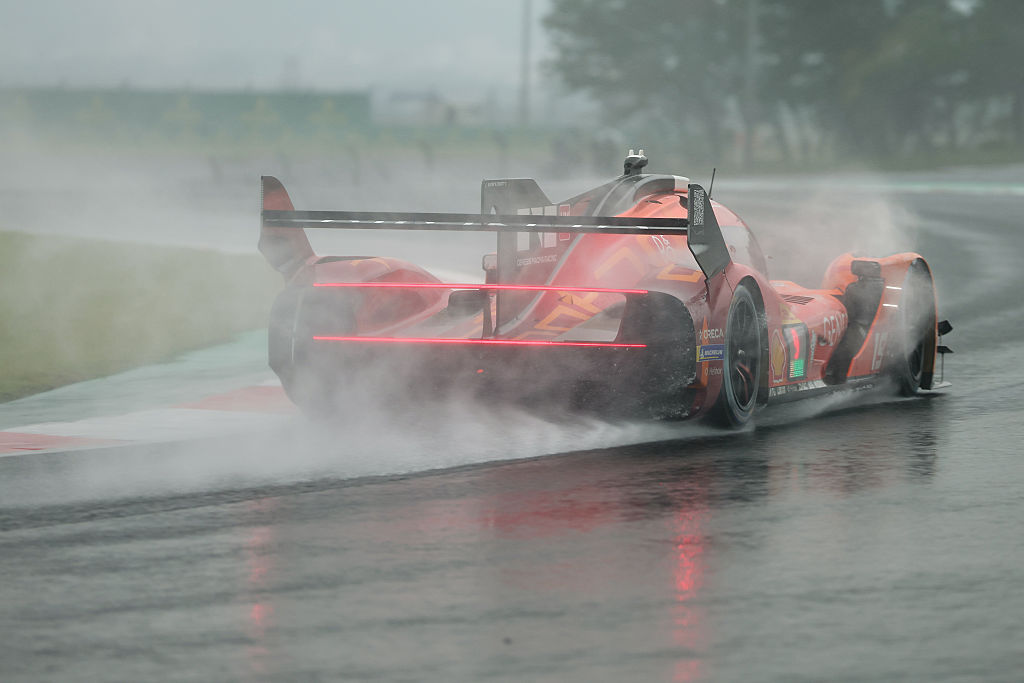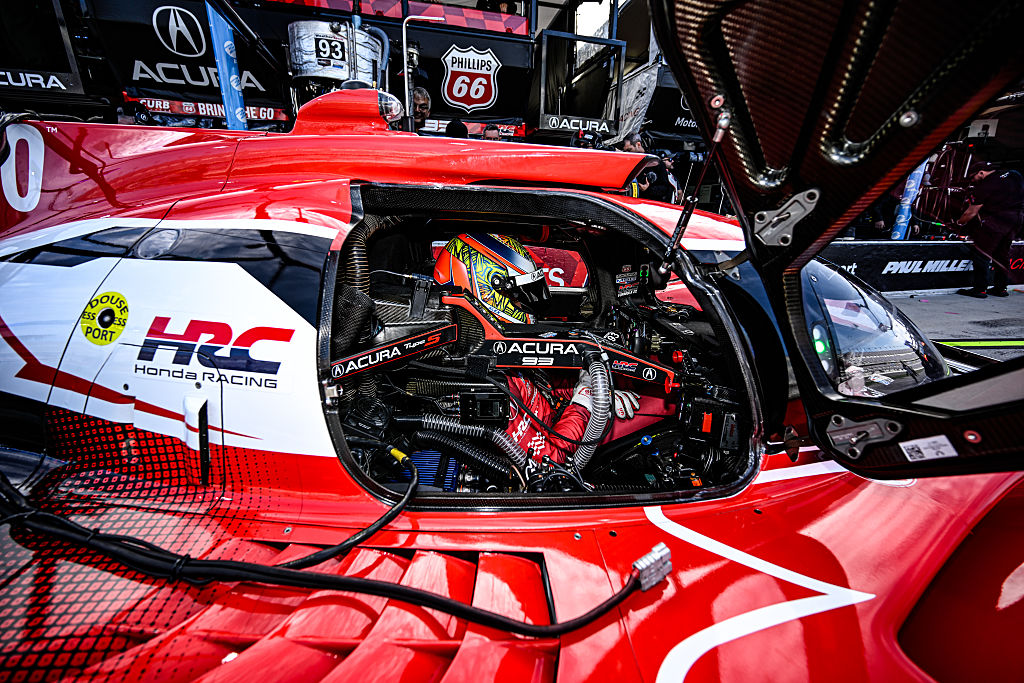
Brandon Badraoui/Lumen via Getty Images
How IMSA Labs aims to drive sports car technology forward
For almost 60 years, IMSA has been a laboratory in all but name. Now though, following the launch of IMSA Labs earlier this year, there’s a formal space for manufacturers, teams, drivers, suppliers and the wider tech industry to come together and drive the sport, and the technology that underpins it, forward.
Manufacturers have long used the pressure and unpredictability of racing to improve component reliability and develop technologies ranging from turbocharging and anti-lock brakes to hybrid systems and all-wheel drive. But the arrival of the GTP era has changed the scale of what IMSA can offer: cars generating huge quantities of data, increasingly sophisticated computing, an open software development race and an environment where new technology can be tested under genuine competitive pressure.
IMSA Labs’ ambition was to take something that had evolved organically and turn it into a structured innovation ecosystem. And just six months in, it attracted its first big name: Oracle, which signed on as a founding partner, launching the Oracle Cloud Innovation Studio as the first initiative within IMSA Labs. Startups can use Oracle's cloud and AI technology alongside IMSA's live race operations, telemetry, and data, effectively turning the paddock into a development environment.
For IMSA President John Doonan, Oracle's decision was an important early validation of the idea.
"To be able to announce a partnership with Oracle just six months and a few weeks after we announced IMSA Labs, I think for all of us was a bit, you know, a set of goosebumps," Doonan tells RACER. "That's what we wanted the whole time: the automakers have done it here, tire companies, lube companies and fuel companies. That whole space for innovation and tech is something that we've believed in for a little while here, especially with the advent of the GTP cars.
"Frankly, even the GTP cars, the amount of data that we're collecting in every session is monumental. We have over 400 channels of data being logged. So for a company like Oracle to say 'yes' and then use it as a place where startup companies can come into the Oracle Innovation Studio, use Oracle Cloud Infrastructure, use enterprise AI to develop their own products, is great. Companies that are either customers of Oracle or just startups in general, they've created a space for companies to come and use the data."
That is the fundamental proposition behind IMSA Labs. It is not simply about making the cars better. It is about making the environment around the cars useful to a much wider community. When the program launched, it cited AMD's progress in telemetry, AWS’s use of cloud systems and Bosch’s advancements in sensor integrity and hybrid systems as relevant case studies.
“This program is a place where tech and innovation companies can come in and innovate in the same manner that automakers and tire companies and fuel companies and lubricant companies have done for years,” Doonan says. “Now, it's a different discussion. It's about cloud storage, cloud computing, data analysis. It's about, you know, computer intelligence, of course, AI. It's about hardware, devices, and developing hardware. It's about networks and keeping data secure. It's about using simulation. It's about having digital twins where you can run simulations off of existing or already logged track data.”
The Oracle program builds on these examples. It will have a presence in the paddock at future races and take a similar path, but spread the wealth, giving startups the opportunity to work with live race operations and high-volume telemetry on problems involving data routing, real-time decision-making, AI-assisted analysis and fan-facing applications. The hope is that the solutions and key learnings eventually find uses beyond motorsport, in sectors such as manufacturing, transportation, logistics, energy and telecommunications.
“Oracle has created a foundational place where these startup companies can come and do their work that’s not just motorsport-related,” Doonan explains. “It’s a place to test software and hardware in an extreme environment. And ultimately, we want this to develop; we want an IMSA Labs unit that travels to events to go along with the new Oracle IMSA engineering trailer so we have a bigger hub that travels to all our events for the data we’re collecting.
“And it’s important that we’re not in any way using IMSA Labs to share proprietary data, just timing data, vehicle performance data, nothing that would compromise the sport or any of IMSA’s manufacturer relationships.”
IMSA believes its platform creates the perfect environment for the Labs initiative because of the nature of racing itself. At the IMSA Technology Symposium in January, Microsoft Research's Siddhartha Sen described motorsport data as unusually valuable because of its quality and diversity, while NASA chief engineer Ian Maddox highlighted how quickly racing can move through a cycle of design, testing and iteration.
NASA's interest has led to a multi-year Space Act Agreement with IMSA, another key element of IMSA Labs that promises to bring both visibility and credibility. Maddox put it well: NASA's "race days" can be years apart, whereas IMSA gets to test, learn, and try again throughout a season. That rapid feedback loop is one of IMSA Labs' greatest assets.
But Doonan's vision goes far beyond creating a technology playground for existing companies.
“I think for me, having more companies come into the space, not just as sponsors but as participating partners, that can actually use what we have here to develop," IMSA's president says when asked about the short- to medium-term plan. "So I would say, you know, tack on another half dozen Oracles, or companies like that; and I think we can reach the next phase, which would be giving IMSA Labs a presence in the education sector.”
That could be the most significant part of the project and its legacy. Doonan sees IMSA Labs eventually becoming a way of bringing universities and students into the same environment, using the racing series as a teaching and research tool. This would build on IMSA’s longstanding commitment to STEM learning and its recent move to establish the National Advisory Board for Motorsports Education with the Collegiate Racing Series to bridge higher education and racing through internships.
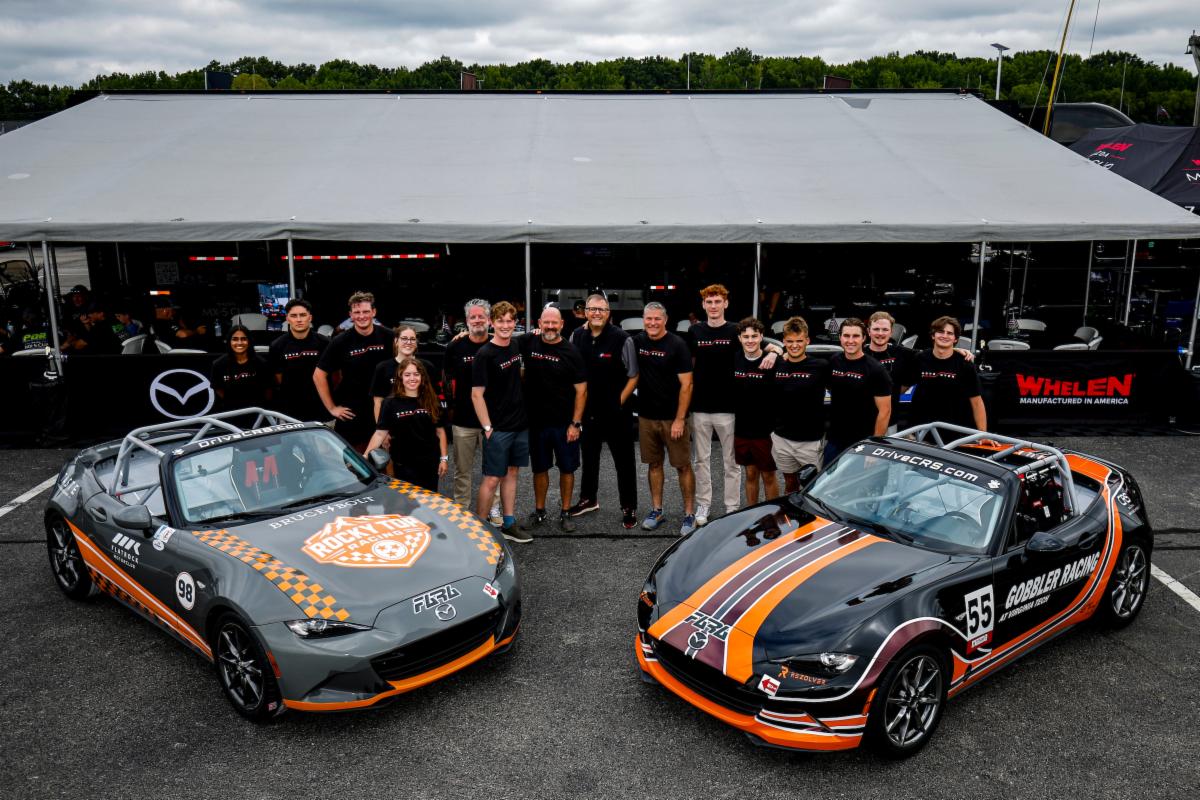
IMSA and Collegiate Racing Series recently announced the establishment of the National Advisory Board for Motorsports Education, a collaborative effort designed to strengthen the connection between higher education and the evolving needs of the motorsports industry. Jake Galstad/IMSA
"How can we bring future, not just motorsports engineers, but future talent in a variety of different disciplines to this space in the name of IMSA Labs?" Doonan asks. "How can we use this space as a teaching tool, as it has been for many years, but in a more formal manner under the IMSA Labs name? We’re working on answering both questions.”
He expects partnerships with major universities to follow. And then comes the bigger idea.
“Partnering with some major universities to take IMSA Labs to yet another level would be incredible. Could you imagine a university campus that had a brick-and-mortar building that was the motorsports degree program, whether that was engineering or something like physiotherapy? We know the drivers and the crew and the participants are going through a fitness and nutrition program like none other as athletes, so it’s not just engineering.
“Can you imagine the data analysis lab, a full motion driver-in-the-loop simulator to test and develop not only for race cars but for road car technology? That's the North Star for us."
A technology company joining IMSA Labs is not there simply to put its name on a car. It can use the racing environment to build something, test it, and find out whether it works when confronted with real-world complexity. IMSA believes it is offering a very different proposition from traditional motorsport sponsorship and investment.
Oracle is the first major demonstration of that model. Its Innovation Studio will operate from the IMSA paddock, allowing startups to develop and validate solutions against the speed, complexity and operational demands of endurance racing. And that may be the key to helping other organizations understand why IMSA Labs exists.
Motorsport has always been good at creating technology under pressure. What IMSA is now trying to do is open that pressure to people who have never previously been part of the motorsport ecosystem. Racing is still at the center of it. But the opportunity is increasingly about everything around the cars we see on track: the data, the computing, the simulation, the decision-making and the people trying to make sense of it.
IMSA has spent decades building the laboratory. Now it is trying to build an institution around it. If Doonan's vision becomes reality, IMSA Labs could eventually connect manufacturers, technology companies, startups, NASA, universities, engineers, researchers and students in one ecosystem around the world, with the racetrack providing a test environment for future products and solutions.
For now, Oracle is the first big step. But Doonan wants six more Oracles to come forward. Then he wants to find academic institutions to run with it. Ultimately, he wants a place where the next generation of technology can be developed, tested and taught.

Stephen Kilbey
UK-based Stephen Kilbey is RACER.com's FIA World Endurance Championship correspondent, and is also Deputy Editor of Dailysportscar.com He has a first-class honours degree in Sports Journalism and is a previous winner of the UK Guild of Motoring Writers Sir William Lyons Award.
Read Stephen Kilbey's articles
Latest News


Comments
Comments are disabled until you accept Social Networking Cookies. Update cookie preferences
If the dialog doesn't appear, ad-blockers are often the cause; try disabling yours or see our Social Features Support.