A2RL takes autonomous racing to the next level at Imola
The Abu Dhabi Autonomous Racing League (A2RL) will take its next big step this weekend with its first overseas event at the legendary Autodromo Internazionale Enzo e Dino Ferrari in Imola (above).
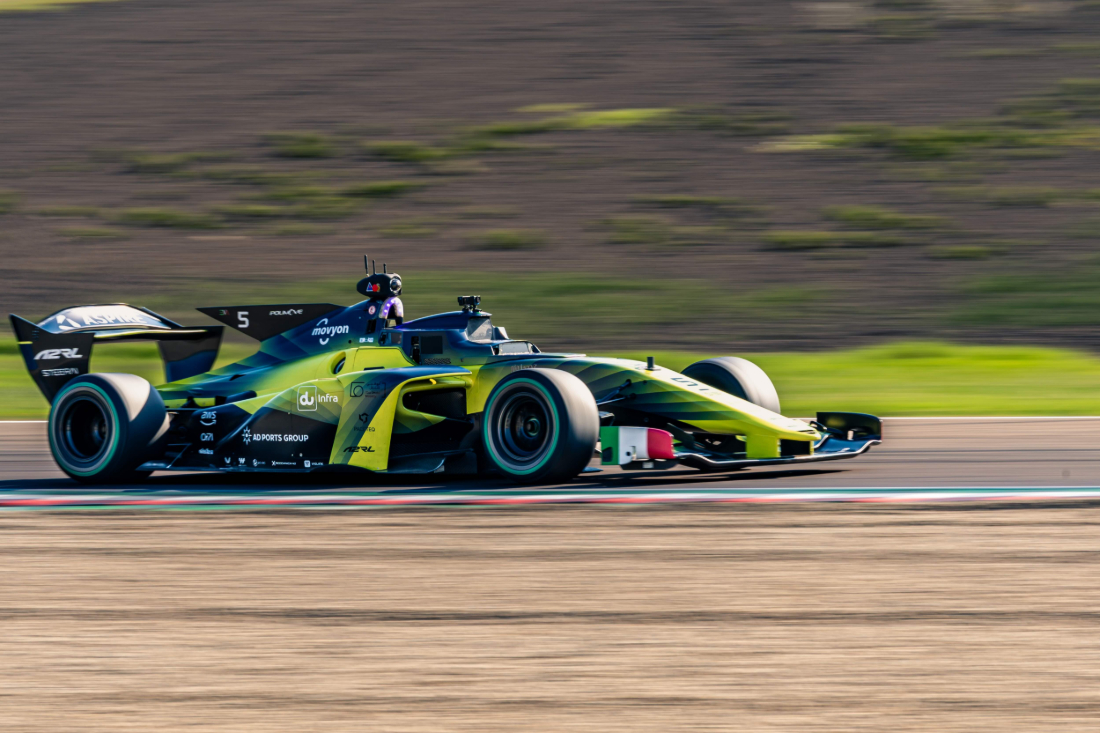
A2RL aims to push the development of autonomous driving technology through competition, with research teams from around the world developing “agents” – algorithms to control the specially adapted, driverless EAV-25, a purpose-built race car based on a Dallara Super Formula chassis powered by a turbocharged, 2-liter, inline-four Honda engine.
After its debut in 2024, A2RL ramped things up last year with a six-car race at Yas Marina Circuit in Abu Dhabi, with Germany’s TUM winning ahead of TII Racing from the UAE and PoliMOVE from Italy. Now, to ramp up the learning with a completely new challenge, it’s heading overseas for the first time, to one of Italy’s most storied tracks.
Why Imola?
As great a circuit as Yas Marina is, it’s a modern facility that’s flat and has plenty of space. For the next stage of its evolution A2RL wanted to enhance the challenge by going to a more traditional circuit, with narrower track width and undulating topography.
“We said after last November, ‘We need to push the boundaries now to the next step,’” Alessandro Tucci, the executive director of the House of Grand Challenges at A2RL organizer ASPIRE, tells RACER. “And we decided to go international, to a famous, legendary track – a track that is extremely challenging.
“Imola is an old-style track compared to the new tracks from around the world that are much wider, much more modern, but also simpler, where there are several points for overtaking on the track. Imola’s narrow, it's difficult, it has ups and downs over the hills, so it was already challenging for humans, and we said that this is the challenge we want to pose to the teams in order to push the limits of autonomous driving and autonomous racing to the next level.”
Of course, Imola isn’t the only traditional facility that could deliver the challenges A2RL is looking for, but it’s one that’s appropriately placed.
“There are two Italian teams, so there is a strong connection between the teams and Imola,” says Tucci. “Within 100 kilometers [60 miles] around Imola you have the likes of Ferrari, Maserati, Ducati, Lamborghini, Dallara and Pagani, so you are at the heart of Italy’s traditional ‘Motor Valley.’ And we thought that there was no better place from a technology challenge point of view and from a motorsports point of view than this, because it puts together the tradition, the history of motorsports, and the challenges that they have been facing in these 50-60 years with the future that we are trying to test and to bring.”
Being in one of motorsports’ traditional heartlands was always going to invite some skepticism. Tucci says that initial reactions were “nothing unexpected,” but people soon began opening themselves up to the idea of autonomous racing.
“There was some skeptical reaction at the beginning,” he admits. “Even here at the track, when they saw A2RL autonomous driving, they started seeing the cars testing, and as we tested, even people familiar to the motorsports world were saying, ‘Oh, hold on a second, what's going on here? What is this about?’ They are getting more and more curious and more and more interested in A2RL.”
One challenge, different solutions
New track, autonomous cars, so what? Press play and watch things happen, right? While that may be the thinking of many, it’s way wide of the mark. Tucci stresses that the human element is as key as ever.
“The normal thinking is this is an autonomous car, this is an autonomous agent riding and racing, so they are all the same. No, that is a huge mistake,” Tucci insists. “These agents are made of algorithms, but the algorithms are made by humans. And if you look at the style of racing of each of the cars and of each of the teams, they bring different solutions.
“In November we tested that in Abu Dhabi. TUM, the German team, has a racing style that is totally different from Unimore. One is German consistency – looking for the perfect line, looking for repetition of the best line possible. The other, Unimore, is much more made of instinct, of immediate decision and taking the opportunity.
“So, the way of racing is different because the people, the engineers that are coding it, are different people, and the code is different. And again, transferring that into real life will mean also transferring those learnings, those approaches into real life in different ways, because no one will follow the same path. Otherwise, we could say the fastest will start first and there is no story. Then we’ll probably have to change the format to the fastest lap, because ultimately that will be the race.”
As for the technical element, that will be challenged in its own way due to Imola’s undulations.
“Every track is like a new adventure because it's totally different,” says Tucci. “In A2RL the agent is the driver. There are no sensors around the track, the car is the only place where sensors, LiDAR, radar, GPS acquisition are.”
Check out the EAV-25, and all the components needed to contain a driver, such as the seat, Halo and pedals, have been replaced with the autonomous stack (below), which is a system of various cameras and sensors that enable the vehicle to “see” what is ahead of it and around it. Primary components include seven Sony IMX728 cameras, three FK1 LiDAR readers and four ZF ProWave radars. All teams use the same hardware, so the challenge for them is to create AI software that makes the car go as quickly as possible.
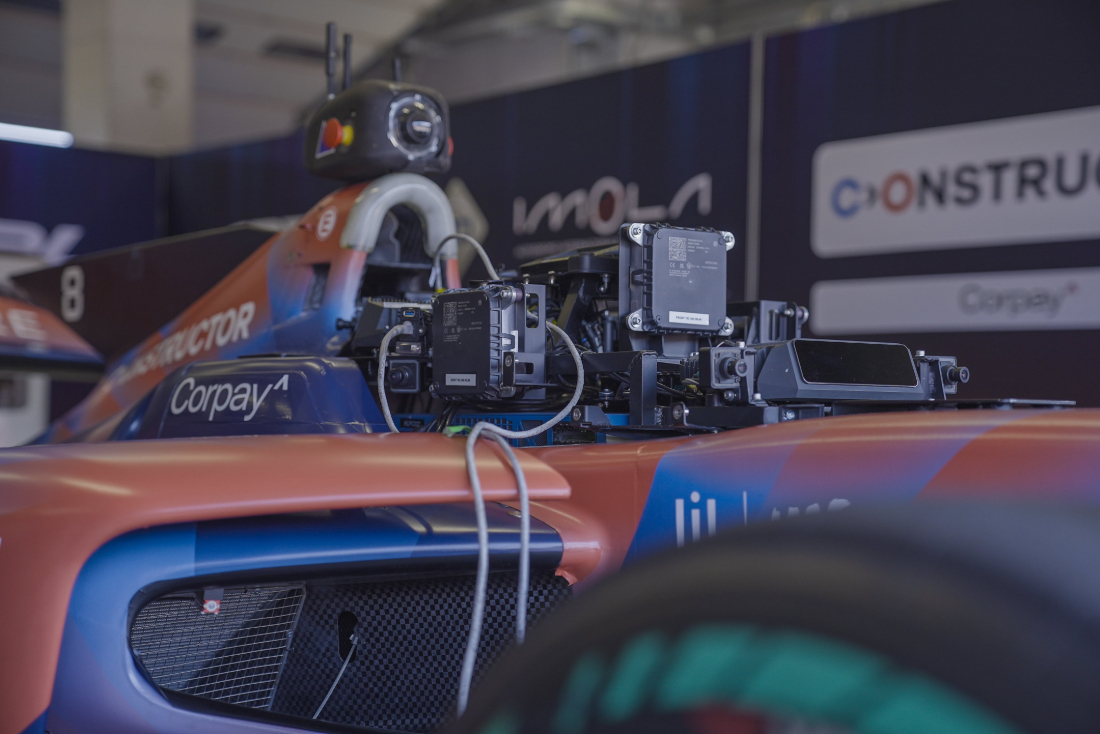
“The team’s agent needs to drive and to race based on the data it receives,” explains Tucci, “and the decision making is from that data, so going into any new circuit, there is a brand-new page to add to the book of already acquired data and objects processed in the past. In some cases, it is like turning the page into a book and writing from scratch.
“To do all that, we gave the teams very strict limitations with only two months to test. To help the development, we provided a digital scan of the track that we also put it into our simulator, allowing the teams to test and race there, and then they only had 10 days on track, physically on track, split into open pit lane sessions, at the end of July and beginning of August, to test and to be ready for the race on Saturday.”
From the track to the streets
The idea of autonomous car racing might seem futuristic, but there’s some traditionalism in there. Like disc brakes, fog lamps, fuel injection and energy recovery – technologies that were either devised or refined in motorsports – A2RL is just the latest in that lineage of racing improving the breed.
“I think each of the situations will be a learning [experience] for the teams and for the agents, and ultimately a learning for the autonomous systems that very soon we'll see on the roads in our cities,” says Tucci. “We need all those elements because in real life you will have behaviors and situations that will be a mix of so many situations – narrow streets, wider streets, people overtaking where you should not overtake – and the autonomous vehicles will have to respond to all of these situations in the most appropriate way.
“That's exactly the ultimate concept of A2RL – each agent reacts in a different way,” Tucci adds. “In real life, it could be a pedestrian, could be a bicycle, it could be a non-correct driver in another car. The autonomous car will have to respond to these situations. We are giving the teams the perfect test bed for that future by building a motorsports competition, because I still believe that as we progress, as we continue, as the teams continue improving their agents, A2RL could become another motorsports competition, and that's the way we want to push it.”
While technological development is at the heart of A2RL, it remains a competition. As such, there are limits, restrictions and timeframes in place. The latest race takes place less than a year after the previous one in Abu Dhabi – longer time would give teams ample opportunity to make everything perfect, but putting them under a time constraint increases the pressure, and thus the competition.
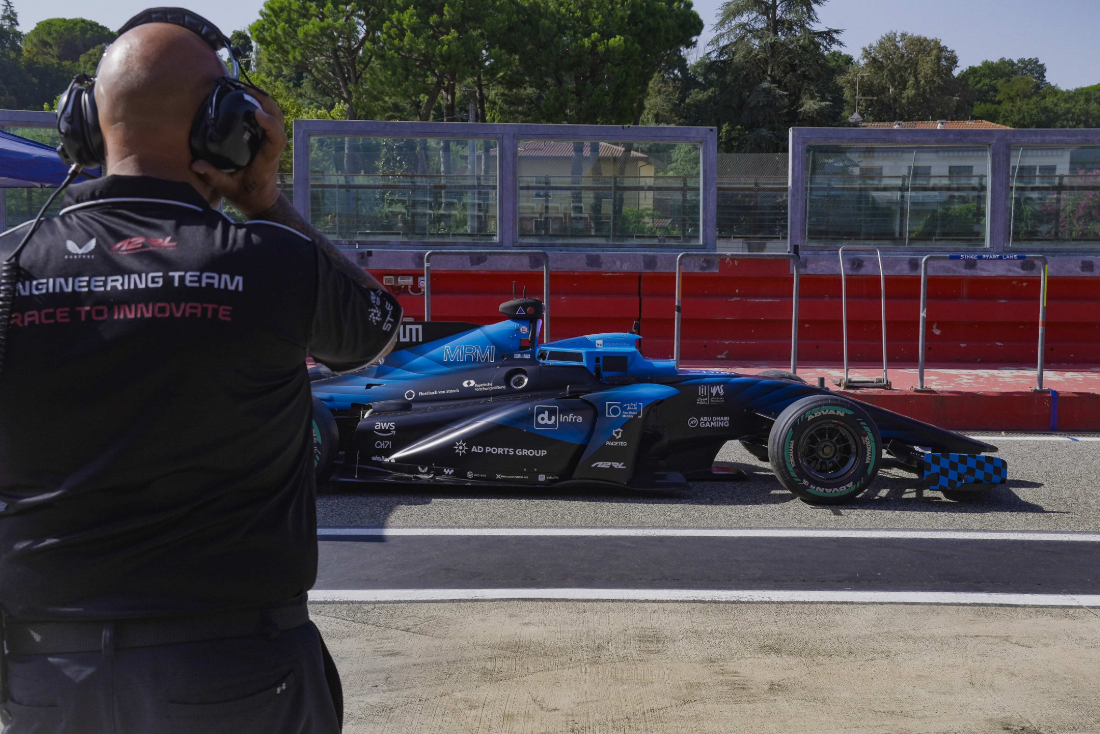
The challenge for the teams is obvious, but as an emerging property, A2RL wants to put similar pressure on itself to prove its worth. What’s more, it already has an eye on what’s next, even before this weekend’s race has happened, as a way of continuing to ramp up that pressure for all involved.
“It has created challenges at all levels, but this was done on purpose for A2RL because we want to test the organization, the competition management, that we are able to travel and we are able to manage competitions away from our home,” Tucci says. “We are at Imola right now, but we are already thinking 2027 and where the new race will be for the teams – still with limited time of testing digital, and then very limited time of testing on track again, because they need to be able to adapt and develop their agents in order to be ready to race with a very short lead time at a new track.
“And for the next track, we are already considering maybe to shorten the time more because it's part of the technology challenge. It's too simple if I give them six months of testing on track. It's not simple, it's complex, but the technology and the agents are at a level today that within 10 days they are already ready to race.”
Tune in and experience it
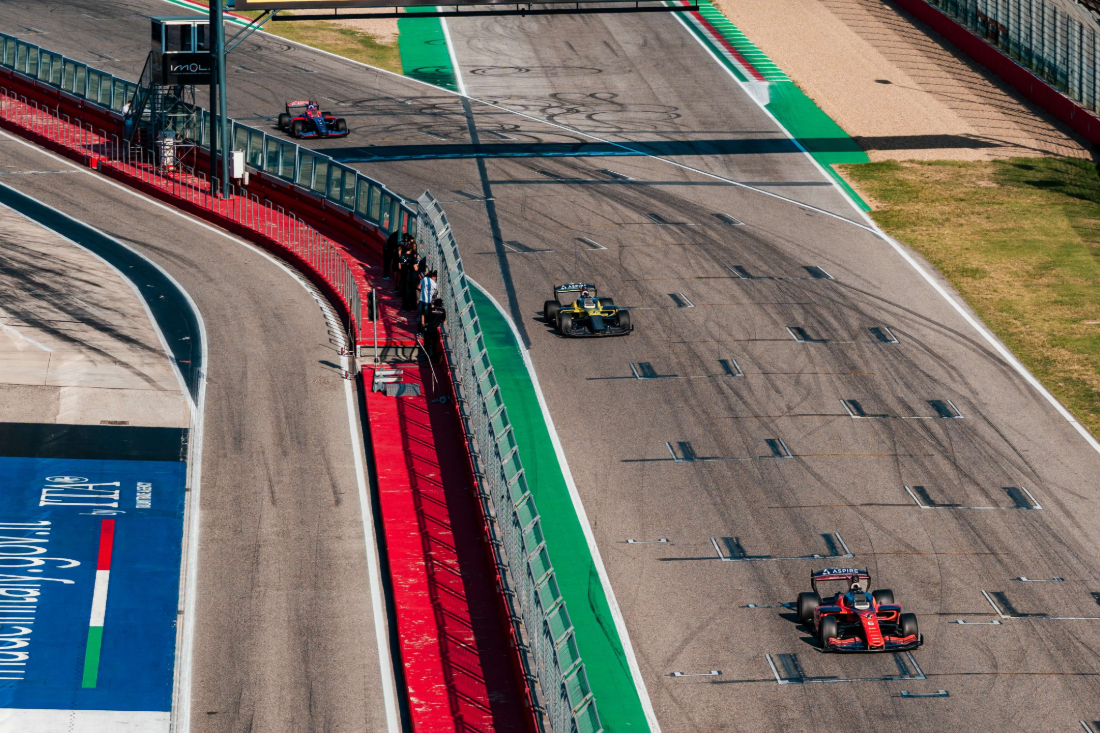
The next race for A2RL will take place this Saturday, Sept. 5, at 12:30pm ET as part of Imola’s ACI weekend which will include the Formula Regional European Championship, Italian F4 Championship and Italian GT. The A2RL race will run over 12 laps of the 3.05-mile track, with five international elite research teams competing (below), and you can watch it on the Abu Dhabi Autonomous Racing League YouTube channel on Monday, Sept. 7. Plus, stay connected with the latest from A2RL at a2rl.io.
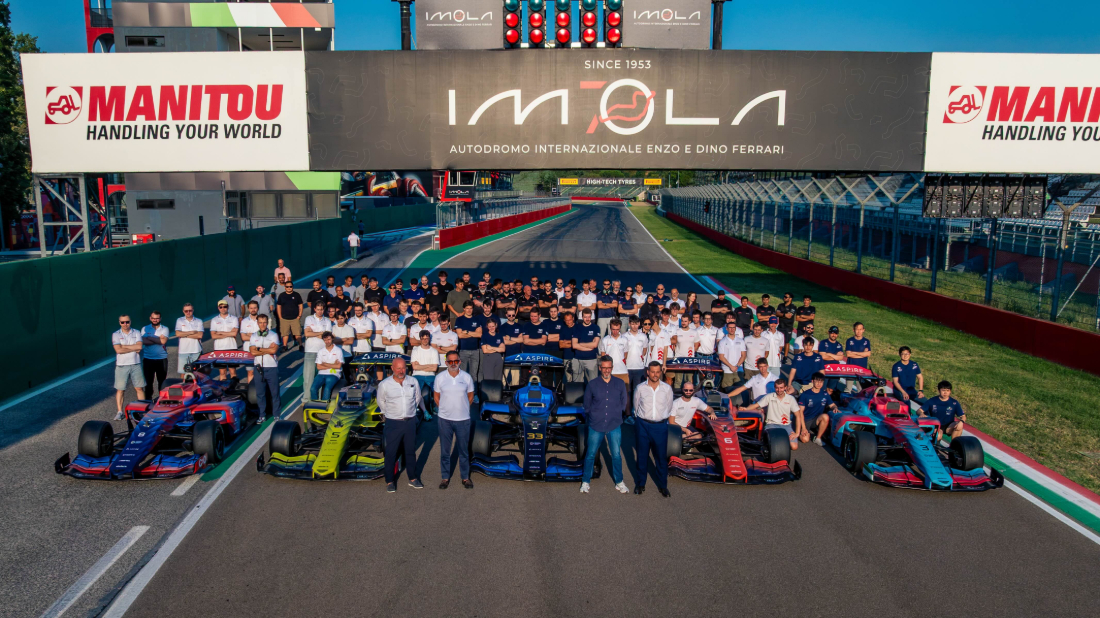
“There are five top teams racing on a very difficult track at full speed,” says Tucci. “I remember that, when I came here in July and the teams tested for the first time physically, I said to myself, ‘That will be tough,’ and 10 days later, when I was seeing them doing laps, I was impressed. So that's the first achievement.
“I'm expecting an entertaining race,” he adds. “It's something totally new because we have never been to Italy before until now. On Saturday, Italian motorsports fans will be able to experience this race in person, live. But I’m pleased that motorsports fans around the world will get to see it, too, on our YouTube channel.
“The first time you experience it, it's a ‘wow’ effect. It's only seeing the cars running in front of you when you realize that, wow, there is no driver.”
Dominik Wilde
Dominik often jokes that he was born in the wrong country – a lover of NASCAR and IndyCar, he covered both in a past life as a junior at Autosport in the UK, but he’s spent most of his career to date covering the sliding and flying antics of the U.S.’ interpretation of rallycross. Rather fitting for a man that says he likes “seeing cars do what they’re not supposed to do”, previously worked for a car stunt show, and once even rolled a rally car with Travis Pastrana. He was also comprehensively beaten in a kart race by Sebastien Loeb once, but who hasn’t been?
Read Dominik Wilde's articles
Latest News
Comments
Comments are disabled until you accept Social Networking Cookies. Update cookie preferences
If the dialog doesn't appear, ad-blockers are often the cause; try disabling yours or see our Social Features Support.