Malcolm Griffiths/Getty Images
Way off road: E1 gets race car drivers’ feet wet in boat racing
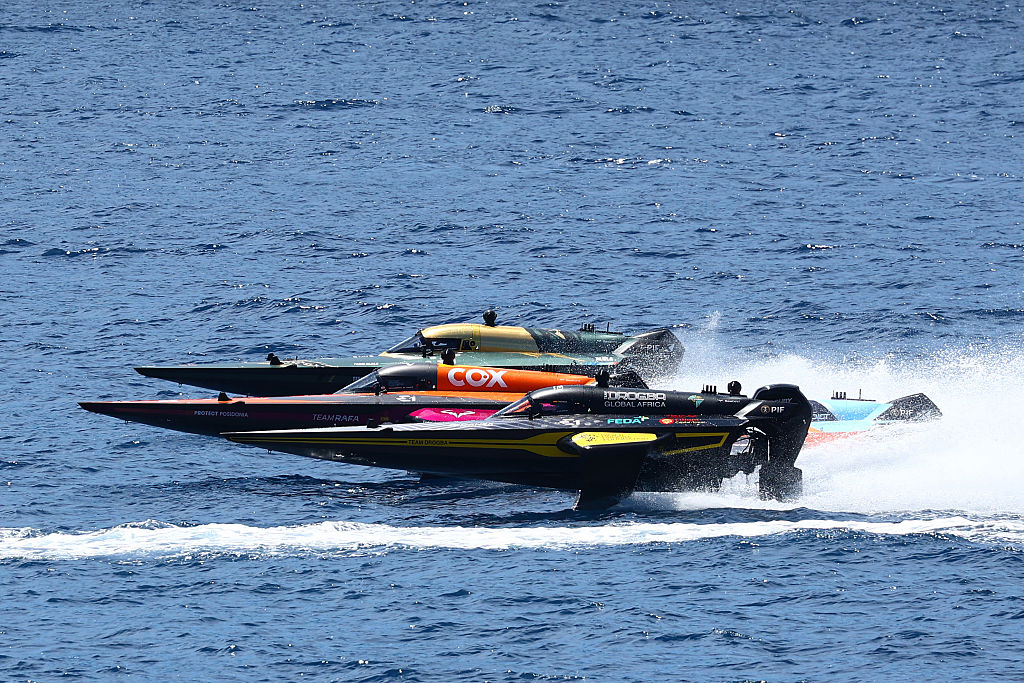
The unusual world of E1 electric boat racing doesn’t just have tenuous links to the world of four-wheeled motorsport through its founding father Alejandro Agag, the man behind Formula E and Extreme E and H. Half of its 20 pilots have dry land motorsport experience too.
RELATED: E1: Boat racing’s bolt from the blue
But while you’ll see drivers adapt from one discipline to another all the time – Timmy Hansen, for example, started off in single seaters, transitioned to rallycross, and has also done Extreme E and Porsche Supercup – moving off dry land has been a whole different ball game.
“It’s completely different to drive; there’s no wheels and it’s like no brake pedal,” Hansen, who has been in E1 since its inaugural season, tells RACER, ticking off the most obvious differences. “You’ve got to trim, get the nose up and down, lift, boost, all of these things.”
For Sara Price, who started in motocross, then went desert racing on four wheels, culminating in what has now been three starts in the Dakar Rally and a factory seat with the Defender team and a full slate of FIA World Rally Raid events, taking on E1 was more of a natural next step.
“I love new adventures, and even in the four-wheel off-road racing, I’ve done absolutely almost every discipline you can do. And it was kind of almost a natural thing because in California, where I grew up, going to the river every summer and then going to the desert in the winter, that was my life. So water has always been a part of my life, but now it’s taking it to another level. I’ve never thought I’d be racing on water, but it was a natural progression, I guess. It made sense when the opportunity came.”
For Price’s Westbrook Racing teammate Lucas Ordóñez, moving into E1 meant extending his racing career. The Spaniard got his break after winning GT Academy, a competition with the Gran Turismo Playstation game and Nissan which put him in a GT4 European Cup seat in 2009, and later the European Le Mans Series and 24 Hours of Le Mans, but he later stepped back around the time of the COVID pandemic to spend more time with his family. E1, however, piqued his interest.
“It’s a dream for me,” he says. “I keep looking for new adventures, exploring new things that make me excited.
“When I stopped the car racing after COVID, I decided to spend more time with my family, but then this opportunity came. I loved sailing, I loved the sea, and then I heard about Rafa Nadal joining the series with Alejandro Agag, and then I started to make calls and then a few months later I was in Italy doing the training course with other drivers.”
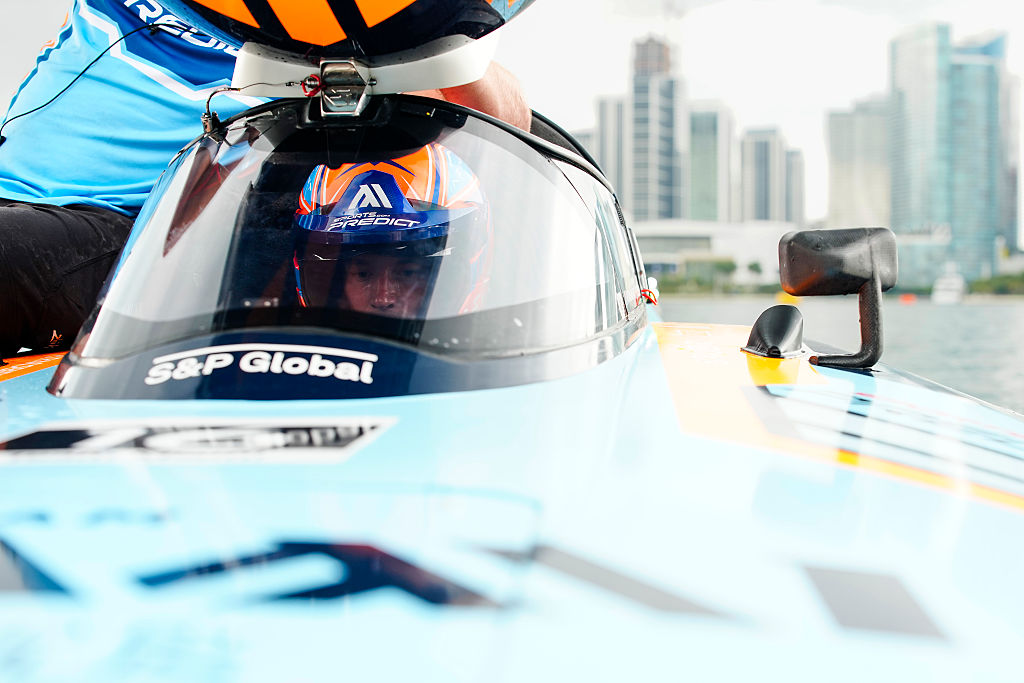
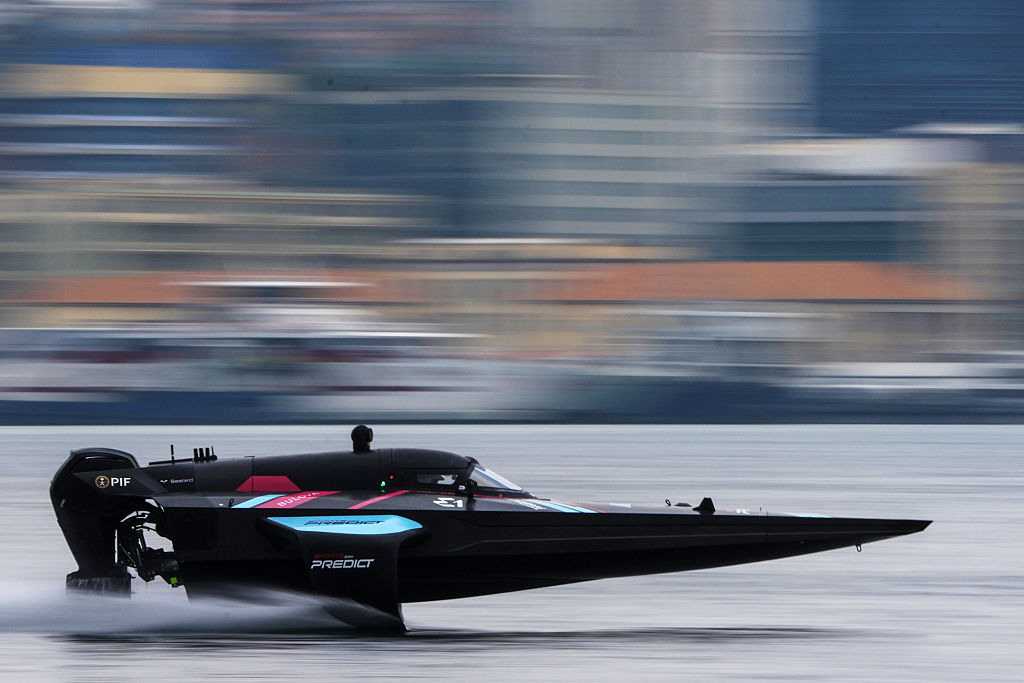
Timmy Hansen has plenty of seat time in various types of race cars, but found the E1 Racebird a whole different kettle of fish. Malcolm Griffiths/Getty Images
E1 has an academy training program that all pilots – the term the series uses for its drivers – must go through, regardless of their experience level. The learning experience from the training to throughout his now three years in the series, has been something Hansen has embraced.
“You can’t just jump into the boat,” explains Hansen, who this year competed for Team Miami, backed by singer Marc Anthony. “It’s taken a lot of learning, and I’m quite nerdy. I love physics and engineering and all of these things, so it’s been super cool to figure out.
“And we’re still figuring out a lot of stuff, even though we’re in season 3. But it’s always the next thing that we learn [that makes] it better and better. And then the conditions change, so then it’s like a whole new class to drive in waves or flat.”
Like Hansen, much of Price’s background has been on loose surfaces, and she says that understanding dirt draws parallels with understanding water.
“I think my background in off-road and dirt racing, with motocross, it teaches you to read terrain,” she says. “We never know what’s coming – we don’t normally race on courses in off-road. At the Dakar Rally, it’s open terrain and everything’s kind of coming at you as it’s coming. That’s the same here. It’s forever changing. It’s never the same in every single corner, and so it’s kind of just a little bit different, but the same.”
Hansen too feels that despite the obvious differences between boat and car racing, the two have their parallels and that coming from cars has helped him settle in.
“I’ve come from back-to-back RallyX races, Porsche Carrera Cup – I’ve been racing a lot– and then there’s still like that race focus somehow,” he says, alluding to his schedule before last weekend’s E1 finale in Miami. “It’s exactly the same, so I feel like with the pressure and like the build-up and everything, I feel that’s very normal.
“Driving cars definitely makes me better here, even though this is a special skill.”
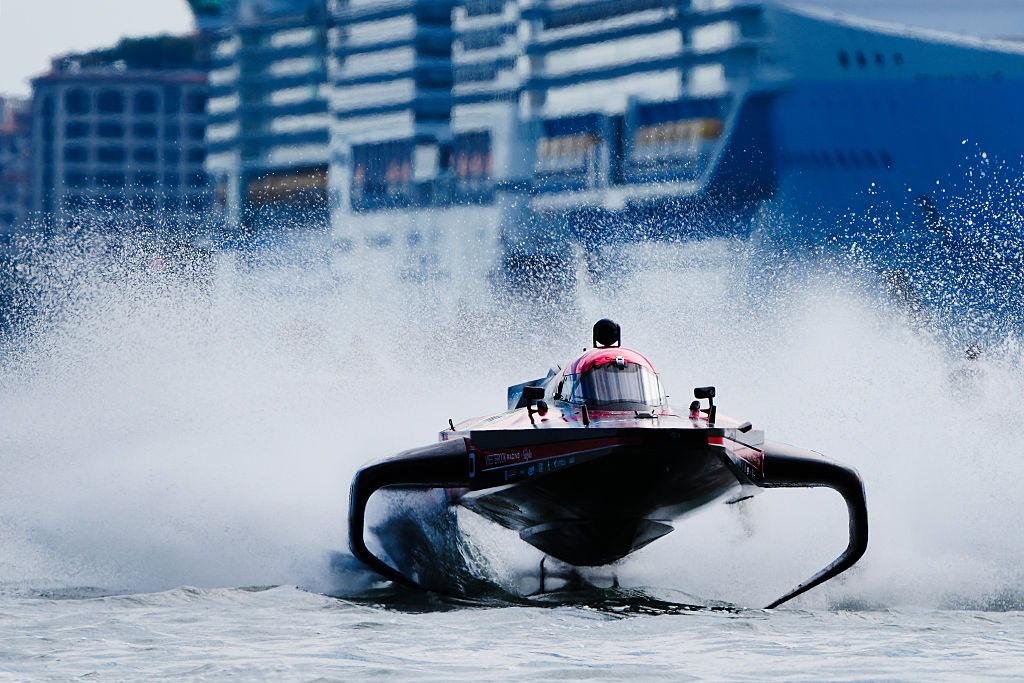
Sara Price demonstrates how the trick to going faster is to be on the water, not in it. Malcolm Griffiths/Getty Images
One thing no cars have had is foils, though. Price points out that “the less in the water, the faster they are.”
“These are very hard to stay on a foil, so when you’re on a straightaway, it’s the hardest time for us,” she says. “We dread those straightaways. “It’s a lot of work, it’s a lot of feel. My background gave me that feel to progress and see things and feel things from hopefully before they happen, and that’s what you have to rely on.
“There’s so much finesse with it all, and the whole thing is trying to stay out of the water, but you have to drop it in the corner. So we have so many things we can be doing inside to help it, but it’s just all by the seat of your pants, and so it’s a lot of chance.”
For Hansen, learning how to use the foils to their maximum was the biggest learning curve, and he likens driving a straight in E1 to like being on the limit in a corner in a race car.
“It’s like you drive, and then just the boat won’t foil,” he says of his early experiences in E1’s RaceBird boat. “And then you slowly learn, little mistake by little mistake.
“And now like driving down the straight at absolutely max speed, as fast as the boat can go, and it’s all twitchy under you, and it’s all like balancing at the edge of grip in a super long corner. That’s what it feels like on the straight. You’re just f*****g on on the edge whole way, and then you have to get the boost turned off, which changes the input, and then you slam the boat into the corner, and the whole thing just connects. I definitely sucked in the beginning, but now [after] learning, it’s so rewarding when it just flies.”
Ordóñez adds, “On the straights [in cars], you are relaxed at 300 kilometers per hour (186 mph), but here on straights, it’s really demanding. You are trimming up, trimming down to manage the pitch of the boat, the balance of the boat, because it’s constantly moving. And if you lose control of the foil, you crash into the water and you lose a lot of seconds.”
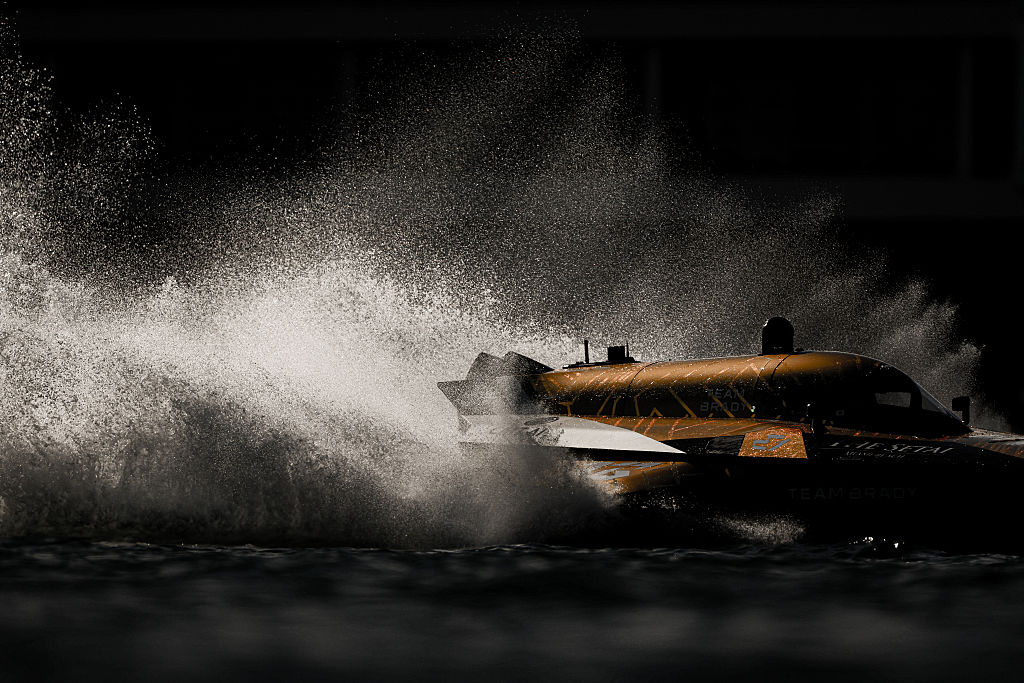
Water might all be wet, but that doesn’t mean it’s all the same to race on. Alex Pantling/Getty Images
Straights being like corners isn’t the only quirk that E1 has thrown at car racers. As it turns out, water isn’t just water. The variety of water the series races on is akin to different track surfaces too.
“The water – salty water, fresh water – makes a huge difference,” says Ordóñez. “We were in Angola, and it was salty water. Here in Miami, salty water, but the salinity, the density is completely different. So, the amount of time that takes you to take off from the water to be on the foils is different.
“So understanding the salinity and how salty or fresh water is is incredible. The difference of speed, drag, corner speed and also the trim adjustment is different on a lake than in [somewhere like] Miami.”
Ordóñez, coming from a sim racing background, albeit a relatively early one, knows all about the tools that drivers can use to prepare for a race. Simulators are vital tools in modern motorsport but with E1, applying the same thinking isn’t quite as easy, and real-world testing is also extremely limited.
“Yeah, it’s very tricky,” he concedes. “We are working on it, but we don’t have a proper simulator to practice and to adapt to it.
“We have a very low amount of hours in the boat in Jeddah in January. Normally, it’s where we have one week of testing. We have four days of testing, and then we go on the race weekend, and we go all around the world just doing practice and qualifying and races. It’s the same opportunity for everyone.
“No one can test outside a race, so you have to be quick, adapting and understanding all the conditions.”
As E1 continues to grow, for its drivers-turned-pilots, it’s another string to their bow – and one they see gaining a wider following.
“I think honestly, the way that they structured this really grows excitement,” says Price. “For us as pilots, the boat is very challenging to drive, and so it makes it fun. And the racecraft is really good, so you never know who’s going to win. Anyone could win any single day, and that’s what’s really cool about it too.
“So I think it honestly has a lot of room to grow, and it’s going to be successful.”
Dominik Wilde
Dominik often jokes that he was born in the wrong country – a lover of NASCAR and IndyCar, he covered both in a past life as a junior at Autosport in the UK, but he’s spent most of his career to date covering the sliding and flying antics of the U.S.’ interpretation of rallycross. Rather fitting for a man that says he likes “seeing cars do what they’re not supposed to do”, previously worked for a car stunt show, and once even rolled a rally car with Travis Pastrana. He was also comprehensively beaten in a kart race by Sebastien Loeb once, but who hasn’t been?
Read Dominik Wilde's articles
How the Blue Oval tamed the Green Hell
Latest News
Comments
Comments are disabled until you accept Social Networking Cookies. Update cookie preferences
If the dialog doesn't appear, ad-blockers are often the cause; try disabling yours or see our Social Features Support.