After getting the opportunity of a lifetime under the worst possible circumstances, Austin Hill's carving his own path at RCR
Austin Hill lay in bed after Kyle Busch's death in late May, with many questions and no answers.
“I don’t know if I want to do this,” was one of them, Hill tells RACER, about being the one to take over Busch’s car beginning days later at Charlotte Motor Speedway. “I don’t know if I’m capable of doing this, and if I’m mentally strong enough to do this.”
Ashlyn Hill, Austin’s wife, did her best to help him work through those questions and emotions. In the end, the thought that won out was that someone was going to have to drive the car for Richard Childress Racing even if Hill chose not to. And he certainly had thoughts of turning it down.
“I said, ‘Well, if someone has to do it, it might as well be me,’” says Hill. “I’ve been here at RCR for five years now, I’ve gotten to know everybody at RCR very well, I’ve gotten to know Richard Childress at a fairly personal level, I feel like. So, I thought if anyone was going to do it, I thought maybe I was the guy to fill in and do it.
“I don’t think anyone could ever fill Kyle Busch’s shoes. I’ve heard that a lot, that I have big shoes to fill, and I always tell everyone, ‘You can’t fit into his shoes.’ All the accolades and what he did as a driver, the person he was, all he did for the sport. You’ll never get to that level. So, I always tell everybody that I’m not trying to fill anyone’s shoes; I’m just trying not to trip and fall.”
Busch died on May 21 when the pneumonia he had developed into sepsis. He was 41 years old. It was two days before cars were due to be on track at Charlotte.
It all happened very quickly that week as Busch's condition grew progressively worse and was eventually hospitalized. Hill recalls that it might have been Tuesday night when he was told he might be needed for the race that weekend, but initially the conversation was about Hill either running the entire race himself or getting in the car after Busch started the race. Or, perhaps Hill would be in the car for a few weeks before Busch returned.
“When everything progressed into what it ended up being, my mind was going everywhere,” Hill says. “The first thing I was thinking about had nothing to do with racing; it was about Samantha, Lennix, Brexton, and the entire Busch family, what they were going to do going forward and how they were going to handle things. Really, the racing came second or third. It was nothing I really thought about.
“Then going into that weekend, once we were there and I was getting in the car for the first time, reality started hitting me like, ‘Hey, I still have to go do a job. I still have to fill in and run his car.’ That started hitting me pretty hard leading up to it.”
The emotions escalated with the celebrations of Busch’s life during pre-race, which featured the Busch family. Hill was among the crowd gathered by the memorial logo in the grass near the exit of pit road.
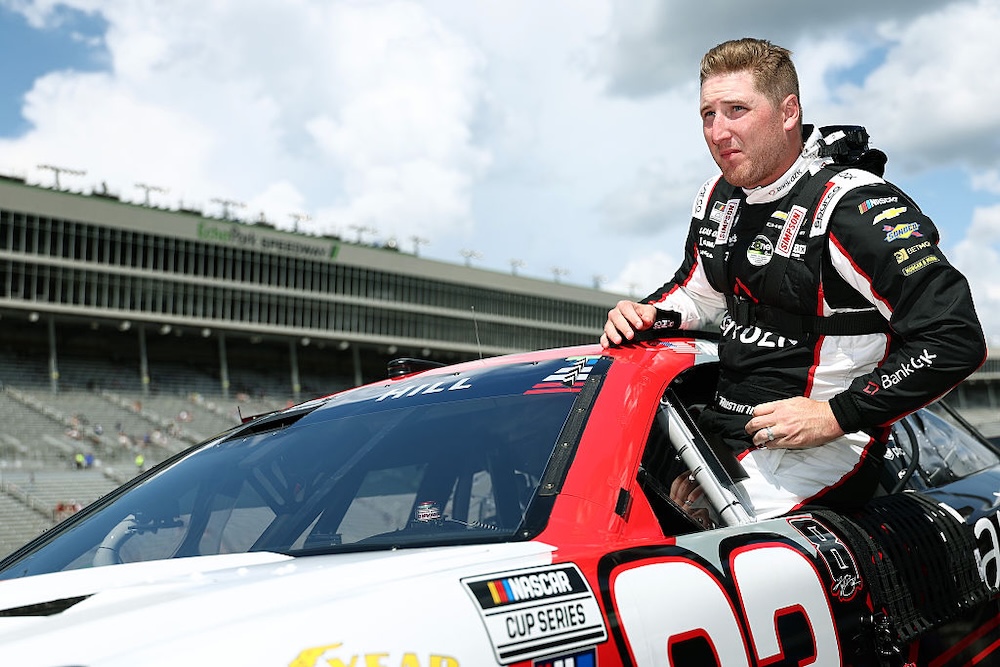
Hill got the call-up to replace Busch at Charlotte just a couple of days after the two-time champion's unexpected death. David Jensen/Getty Images
“It was very emotional for all of us, and it was hard to keep your composure getting into the race car because afterward you go over there and are standing right by what should be Kyle Busch’s car,” says Hill. “A lot of emotion kind of started going into me, and I’m thinking of all of these different things.”
Hill usually takes a moment when he’s strapped in to close his eyes and think about the race ahead. He did the same before the Coca-Cola 600, reminding himself to go to work and do the best he could.
“But it was always in the back of my mind that I need to go perform,” Hill says. “I need to do this for the Busch family. It was very tough. It still is tough because I know all these races that we’re running right now, I technically shouldn’t be the one in the car. So, all of that is still very weird and odd to me. I think until 2027 gets here, it will be very eerie, but we’re working through it one weekend at a time.”
It is never easy to be the replacement driver for a race team. But it’s even harder when the driver passes, and especially one with a legacy like Busch left behind. The one person who knows what Hill is going through, including trying to grieve while still doing a job, is Kevin Harvick. Harvick had to step up for Childress in 2001 after the loss of Dale Earnhardt.
Hill reached out to Harvick “pretty quickly” after Busch’s passing. Chad Haney, who is Hill’s crew chief on the O’Reilly Auto Parts Series team, had worked with Harvick and shared his number. Harvick was immediately receptive to the idea of a conversation, and said he would be there anytime Hill needed to call.
One of the main things Hill wanted to hear from Harvick were the dos and don’ts from his experience, what he would have done differently, areas to stay away from, and areas to take the reins on. Hill did not want to step into a situation where the car isn’t his and have it appear like he was taking control. Harvick told him to be humble, remain true to himself, and rally the troops.
“That was the biggest thing that I took away from it - make sure the entire 8 team is OK, first and foremost,” says Hill. “Secondly, what do we have to do to go perform at the highest level and do the best job that we can for Kyle Busch for the rest of the season?”
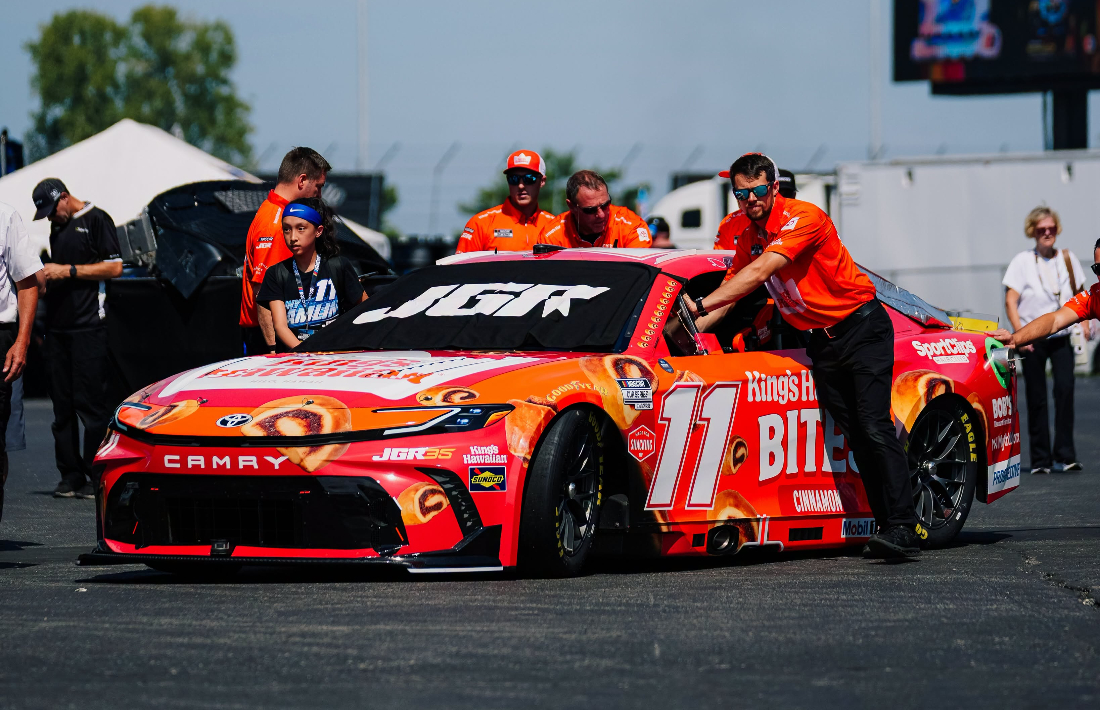
A company-wide meeting was held in the shop before the weekend. Hill, who doesn’t believe he’s a good public speaker, did the best he could to relay where his head was at and that he didn’t want to step on anyone’s toes. Since then, Hill has gotten to know the team well, and the push for performance continues. But the thoughts around the situation are hard to keep at bay every time Hill climbs in the car and sees the No. 8 decal next to the No. 33.
“One of the things that stuck with (Harvick) throughout his career was, you’re going to have time to grieve, but when you’re called upon to do something like this, you have to be the anchor,” says Hill. “You have to be the guy who is going out there and getting in the car, holding everyone to a high standard and getting the job done. That’s what I’ve tried to mentally focus on, which is being as mentally tough as I can. It hasn’t been easy.
“There have been races, even recently, when it’s very mentally taxing going between the two series and wanting to perform on the O’Reilly side, and then on the Cup Series side to show that I’m worthy to be a Cup driver. There has been a lot that has gone through my mind during the week. I’m working seven days a week now to race Saturday and Sunday. I haven’t had a ton of time to sit back and take a breath and let it all come flooding in, but our weekend off the first of August was really good to have off for me to take a break and hit the reset button, and I think that’s helped going forward.”
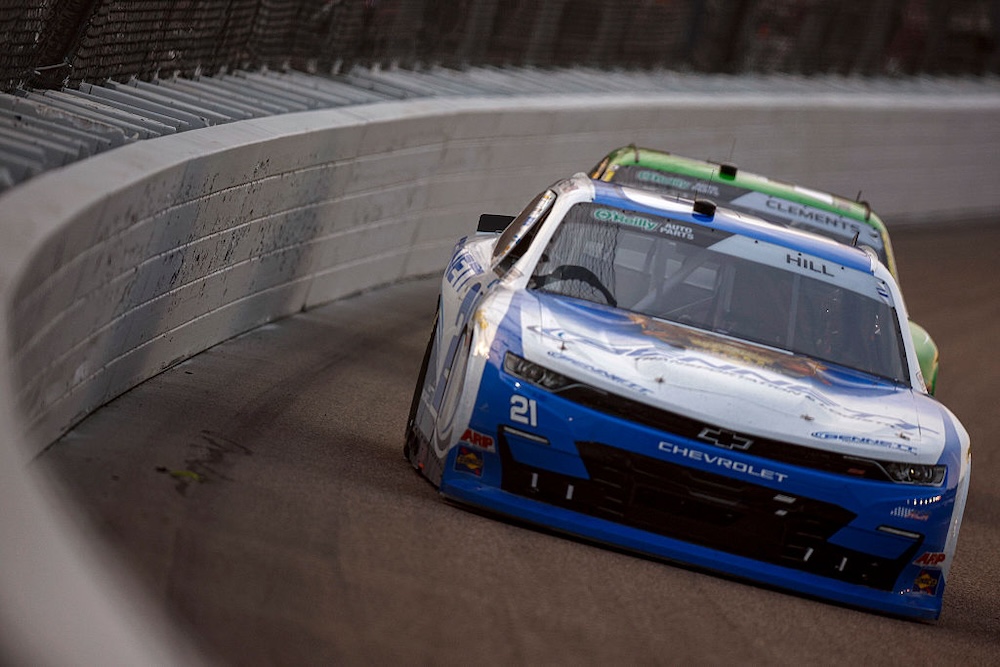
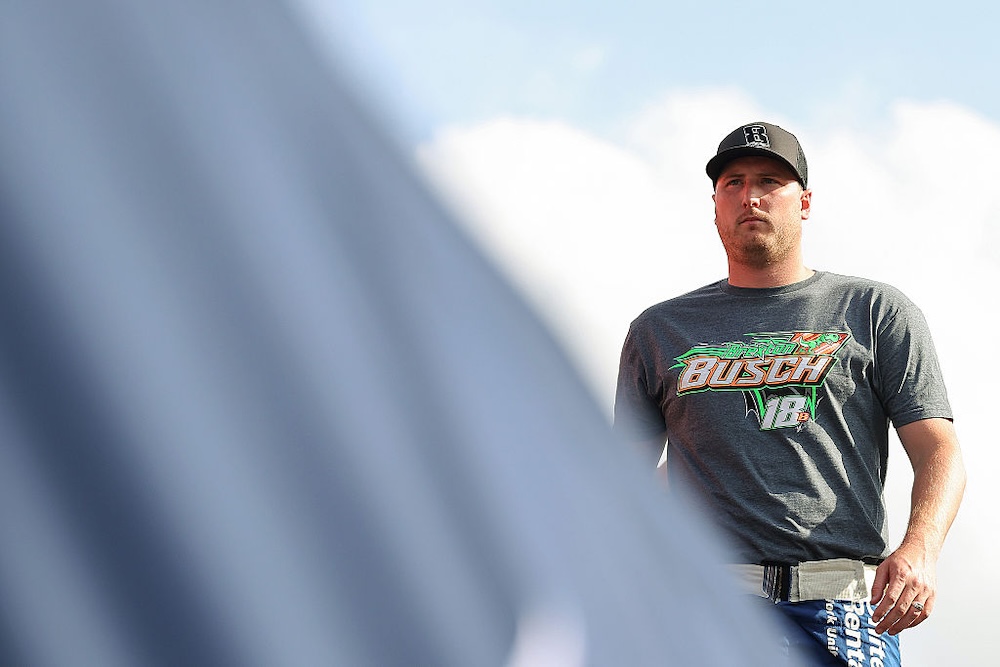
For Hill, the task of learning the Next Gen car is complicated by the fact that he's still also driving the very different O'Reilly Series car (above) every weekend. Sean Gardner/Getty Images
The racing of it all
Hill is the only driver in NASCAR running full-time in two series. The rules don’t allow it, but given the circumstances, that is the reality Hill is living. And it’s a tough one that not many understand.
The sport is much different than when Harvick did the same thing in 2001, not only with far less weekend track time and no testing, but also with the race cars. Hill’s ride on Saturday is familiar and comfortable. But the Cup Series car, radically different from anything the sport had seen prior to its introduction in 2022, is a puzzle.
“I could sit here and have a 30 minute to hour conversation on how much different they are,” Hill jokes.
"The way you lean on the rear tires, the way you lean on the front tires, the way the O’Reilly car gets in what we call yaw with a rear slide, and you have the right-side quarter panel that catches it with the air. You can drive off that right rear quarter panel and slide the rear of the car. You do that in the Cup car, you’re going to end up wrecked."
“The Cup car has a wider tire profile and a lot of grip, but when it oversteps that limit of tire grip, and that lateral tire grip goes away, you better be ready to catch the car. That is one thing I’ve been working on: where is that limit? Where is the limit of that right rear tire? Because I’m so used to driving off the right rear quarter panel, and now I have to really feel where the right rear tire is.”
Another challenge is aero, which Hill says is totally opposite between the two series. He used to complain about dirty air in traffic during the O’Reilly races, but it’s way worse in the Cup Series car. Hill having to get better at working dirty air in the Cup Series, though, is helping him in the Saturday races.
In the simplest terms, what Hill can do in one car, he cannot do in the other. And from what Hill has been told by drivers who came before him, it was a bit easier to go back and forth between garages before the Next Gen car was introduced.
“It’s been nice the last few weeks only running the Cup car because I can focus on one (series),” says Hill. “When I get into the Saturday car and then (immediately) into the Cup car, I literally have to flip a switch and mentally change my brain on how I think about things.”
The organization is constantly working on ways to improve for both Hill and Austin Dillon, and Hill is in the simulator three days a week. It has been 13 races since Hill stepped into the car, and progression has been there even if the results don’t often show it. For example, Hill felt he had a top 10 car on speed at Richmond Raceway, but a bad early pit stop set them back.
There will be plenty of days ahead to show that when the team unloads into a good practice session and then qualifies well, they can put results on the board. Hill will be a full-time Cup Series driver in 2027 with a long-awaited official promotion from Childress.
Although there were opportunities for Hill to go Cup racing before now, he wanted to do it the right way and not take a job just to say he was a Cup Series driver. Plus, he has paid his dues with Childress, and he wanted to go to the premier level driving for them.
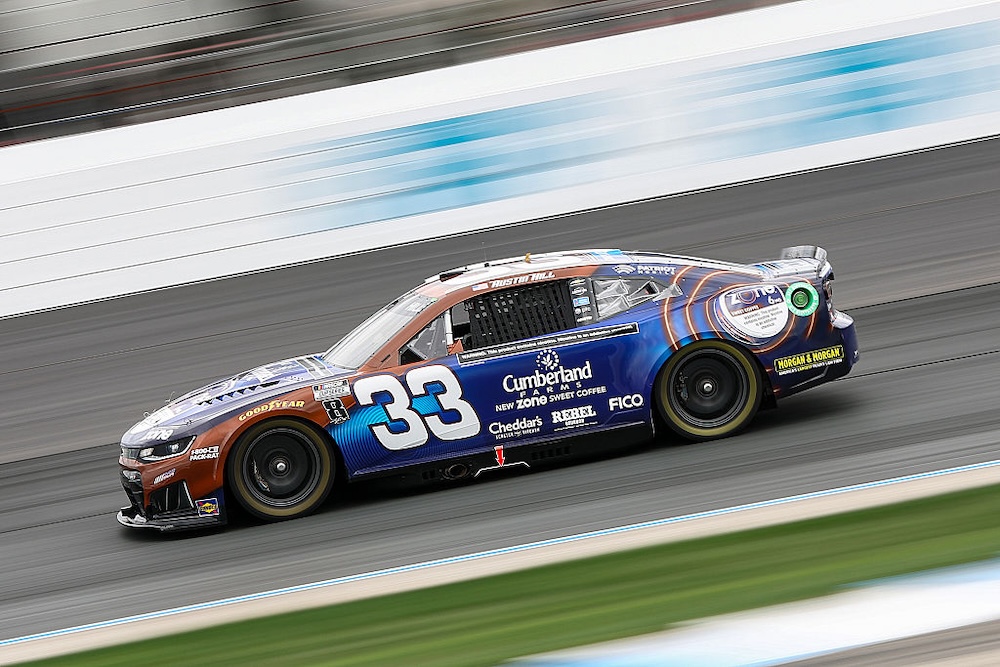
Hill has had other opportunities to move to Cup in the past, but the Childress seat felt like the right one: "I've always thought this is where I wanted to be long-term." Meg Oliplant/Getty Images
“I’ve always thought this is where I wanted to be long term, so I’ve been extremely loyal to them, and they’ve been loyal to me,” Hill says. “Then with this opportunity presenting itself, I wish it was in different circumstances to be able to get this deal, but again, I try to tell myself someone is going to be in the car, so it might as well be me.
“I am very excited for what’s to come. I’m excited to get to know everyone better on this 33 car and keep working hard.”
Hill admits he began to think in recent years he was going to be a lifer in the O’Reilly Series, and he would have been OK with that. But always in the back of his mind was the question of whether he could run with the guys on Sunday.
“I think I’ve proven that to myself even this year with this last several races,” he said. “The results haven’t shown, but we’ve had some speed. So, I’m starting to get a lot of confidence on the Cup side, and I’m really looking forward to what’s to come.”
Getting through the rest of 2026 and being able to close this difficult chapter is Hill's first priority as it pertains to the future. He hopes a new year will bring the feeling of it being his race team, which will help mentally. Of course, it will also be nice to only have to race on Sunday.
“I’m telling you, there have been times where I go from the O’Reilly car and get in the Cup car on that same Saturday, and I’ve confused myself on where I need to be with that car,” Hill says. “So, being able to only race on Sunday will make my job a lot easier. I’m going to be able to put 110% effort only on the Cup side.”
He also plans to get to know the team better in the off-season, when there is more time for those bonding moments. It has been full steam ahead since May, which also plays into how fast-paced a race season is from day to day and race to race. In turn, that should develop more communication and confidence in each other, which should lead to the ultimate goal of better race days.
“This is the hardest it’s going to be,” is the thinking from Hill and some of those around him. “Everything is going to get easier from here once we get through this year… There are so many things I’m doing right now that can drain you.
“So, it’s going to be nice next year, and I think it’s going to help me perform better. I truly believe that.”
Kelly Crandall
Kelly has been on the NASCAR beat full-time since 2013, and joined RACER as chief NASCAR writer in 2017. Her work has also appeared in NASCAR.com, the NASCAR Illustrated magazine, and NBC Sports. A corporate communications graduate from Central Penn College, Crandall is a two-time George Cunningham Writer of the Year recipient from the National Motorsports Press Association.
Read Kelly Crandall's articles
Latest News
Comments
Comments are disabled until you accept Social Networking Cookies. Update cookie preferences
If the dialog doesn't appear, ad-blockers are often the cause; try disabling yours or see our Social Features Support.