Karl Anderson/Getty Images
NASCAR warned teams to pick up the pace at Talladega
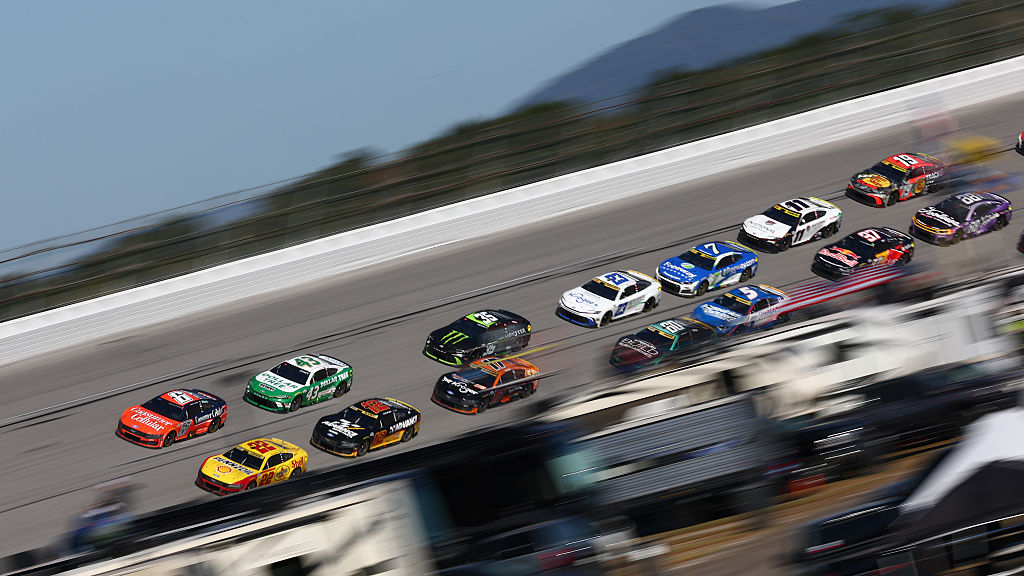
NASCAR told its Cup Series teams the sanctioning body was close to stepping in last Sunday at Talladega Superspeedway when the field dramatically slowed the pace down during the first stage.
Each race weekend has a minimum speed that NASCAR uses primarily for damaged or unsafe race cars and the DVP process. NASCAR does not like to use it to force drivers off the racetrack for other reasons, which they acknowledge takes away from competition and those who paid to see those drivers on track. If a team is warned about needing to meet minimum speed, NASCAR allows a lap or so to try to do that.
It was that minimum speed for Sunday’s race, which was estimated to be about a 57-second lap, that caught NASCAR’s attention. The result was a message from officials to every race team when the field began what has become the common practice of saving fuel.
“We can IM individual teams or the entire pit road,” explained NASCAR vice president of racing communications Mike Forde on Hauler Talk, “and so we IM’d all of pit road and said, ‘Hey, there are X amount of cars that have not reached minimum speed. If you guys don’t pick it up, we’re going to have to step in.’ Soon after, they picked it up. The message was delivered, and so that’s why we did not black flag anybody.”
RELATED: That is not at all how Sunday was supposed to go
Forde believes it might have been only a lap or two that about 75% of the field was below the minimum speed. At one point, the pace had slowed to a 59-second lap time. The pace was picked up after the message was sent, however.
The strategy remains a point of contention for many at the superspeedway tracks. Unfortunately for NASCAR, it wasn’t the only thing Forde was moved to try to provide clarity on following the eighth race in the Chase.
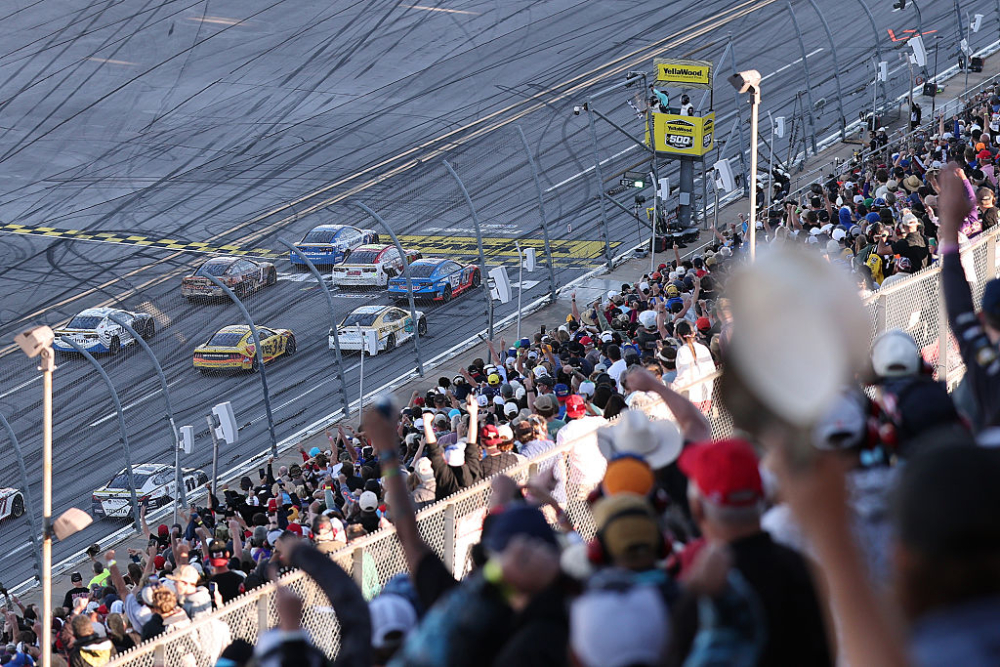
Kyle Larson’s victory came under scrutiny for two reasons. First, online speculation focused on how much help he received from his Chevrolet counterparts. The second, as NASCAR had to answer Sunday and Forde did on the podcast, concerned the yellow line rule. Larson was one of a handful of drivers whose final-lap moves were called into question.
NASCAR did not issue any yellow line penalties.
Forde admitted in hindsight a call should have been made on Austin Hill for his move underneath Larson coming off Turn 2. However, Hill finished as the last car on the lead lap when he lost power off Turn 4, and that is where he would have been placed if penalized.
NASCAR didn't penalize Ross Chastain and Carson Hocevar because it viewed them as being forced below the yellow line in the trioval by Todd Gilliland. However, NASCAR didn’t penalize Gilliland either, as the driver who forced them there.
As for Larson, here is what Forde said about the no-call and the rule:
“The tire has to go fully below the yellow line. So, if there is even a half inch that remains on that yellow line, we’re not going to call a penalty. In our judgment, we felt that was pretty clear. That’s kind of where the conversation ends as far as NASCAR goes. Do we feel that their tires were below the yellow line? No. OK, that’s it. … Let me give a full explanation of the yellow line, even though in this particular case it’s not needed.
“So, think about those graphics where you have a question and if it’s yes, go here. If it’s no, go here. So, in this case, we’ll go to reality and then hypothetical. Reality: was Kyle’s tires below the yellow line? No. … If it’s yes, then you have to look at did you improve the position. If that is also yes, then you look at was he forced down. If the answer is yes, that would be a penalty. If the answer is no, there is no penalty.
“To get a penalty, there are almost three different things that have to happen. You have to be below the yellow line, you have to improve your position, and in our judgment, did you get shoved down there? None of that played a part in this conversation. … In our judgment, his tire was still on the line, and we move on.”
Kelly Crandall
Kelly has been on the NASCAR beat full-time since 2013, and joined RACER as chief NASCAR writer in 2017. Her work has also appeared in NASCAR.com, the NASCAR Illustrated magazine, and NBC Sports. A corporate communications graduate from Central Penn College, Crandall is a two-time George Cunningham Writer of the Year recipient from the National Motorsports Press Association.
Read Kelly Crandall's articles
Latest News
Comments
Comments are disabled until you accept Social Networking Cookies. Update cookie preferences
If the dialog doesn't appear, ad-blockers are often the cause; try disabling yours or see our Social Features Support.