Mark Thompson/Getty Image
Leclerc has weathered the storm at Ferrari. Now the real work begins
Charles Leclerc is waiting. Like so many before him, he craves the seemingly inevitable, but ever-elusive, moment when Ferrari re-emerges as a title-winning force.
Now in his eighth season at Maranello, he has the misfortune of being its chosen one during its longest streak without a championship, with every chance that the 17-season drought will tick over to 18 this year. But that situation doesn’t allow for indolence, and his fightback against the resurgent Lewis Hamilton proves there’s more to Leclerc than the caricature suggests.
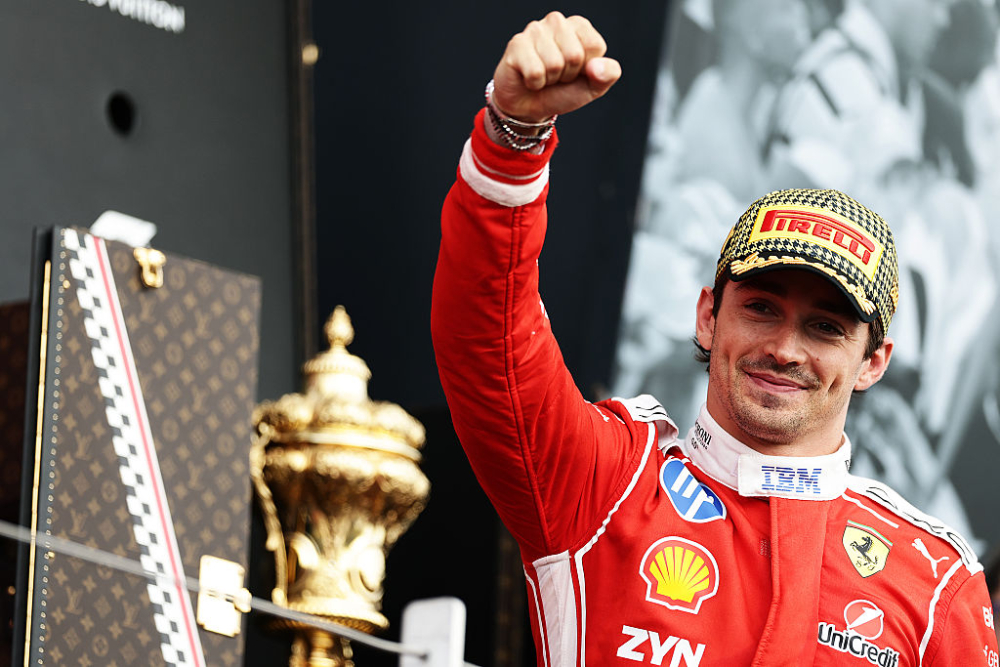
An eternal truth in Formula 1 is that you must outperform your teammate. During his long tenure at Ferrari, Leclerc has always done this, effectively ending Sebastian Vettel’s topline F1 career, then having the edge over Carlos Sainz from 2021-24 before comprehensively seeing off Lewis Hamilton last year. But recent months have tested him, fueling what he called the “negativity” only about his performances to the point where victory in the British Grand Prix represented redemption, such are the rapidfire narrative arcs in a social media age when a great driver will be cast as ‘washed’ after a difficult run.
Leclerc’s difficult spell started in Miami. Even that wasn’t about poor pace, far from it, although a major error when he clipped the wall in the sprint race undermined a weekend on which he was mightily quick in a limited Ferrari. Then came Canada, Monaco, Spain and Austria where he was all at sea while Hamilton hit a rich vein of form, a mini-slump that Leclerc only pulled out of thanks to what he characterized as a change of set-up ‘philosophy’ at Silverstone. And a strong performance across British GP qualifying and the race, outperforming Hamilton, who attributed his struggles to having a little too much understeer, isn’t in itself definitive proof that Leclerc has turned things around.
However, it is evidence of a capacity to adapt – both in terms of his own driving and set-ups – that belies the oversimplified idea that he’s nothing more than a very fast driver with little intelligence underpinning it. While he may not be the most deep-thinking of the drivers, certainly not compared to former teammate Sainz, he’s far from a brainless throttle-jockey and deserves immense credit for seemingly digging himself out of a hole.
“These cars are very specific, very different to the way we've been driving since we started racing, so it takes a bit more time to get used to it,” said Leclerc after that Silverstone triumph. “I was very strong for the first part of the season, then I lost a bit of feeling with the car. We changed quite a few things and it took a bit more time than what I had wished to get back to the level I wanted. And on top of that, we've had some issues on the Sundays that cost me quite a lot of points. So altogether, it wasn't a nice situation to be in, but I'm very happy to get out of this situation in this way.
“However, it's still the beginning. It's only one race and I must not get carried away thinking that the war is over. I mean, the battle with this car has been quite a lot recently and I cannot take it for granted that now it's behind me. So, I'll keep working and try to get that feeling more often going ahead.”
There has been plenty of focus on brakes, and that’s part of the story. Both Ferrari drivers tried Carbon Industrie discs and pads at Suzuka in April, but initially only Hamilton stuck with them while Leclerc reverted to Brembo.
Brake struggles blighted both his Canada and Monaco weekends, culminating in the lockup and crash in Monte Carlo that he blamed on the brakes rather than the disintegrating track surface at the entry to the final corner.
Next time out, in Barcelona, he made the switch to CI discs and pads, while retaining Brembo for the rest of the braking system. Despite going off in qualifying while trying to match Hamilton’s braking prowess at Turn 4, it was an improvement. He made it very clear what was troubling him with the Brembo when asked what he wanted from the brakes, saying “generally, it’s just you want consistency, that’s all I need” when asked about his requirements.
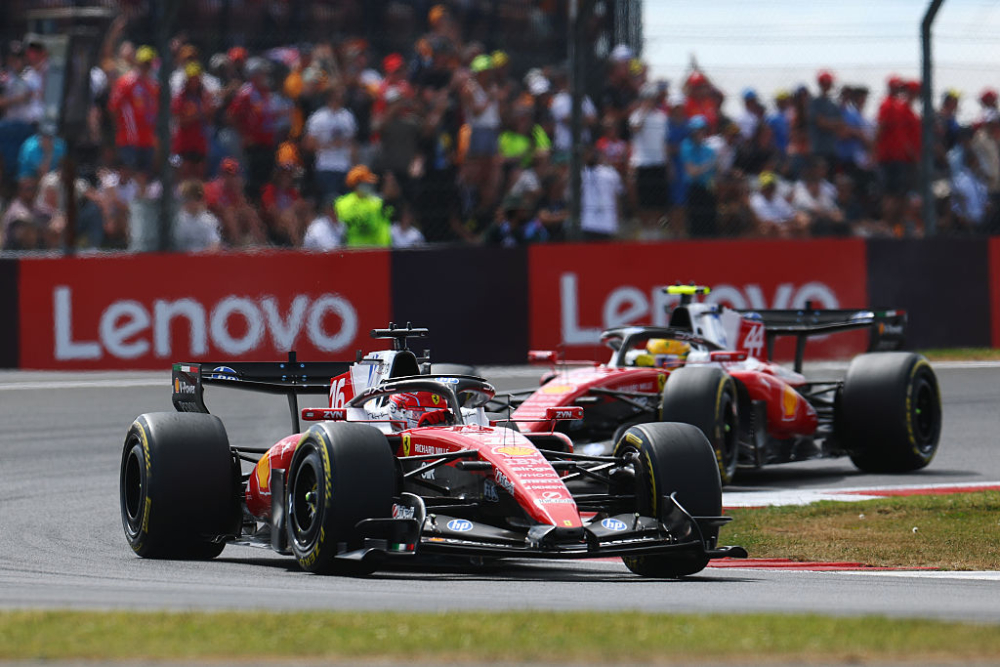
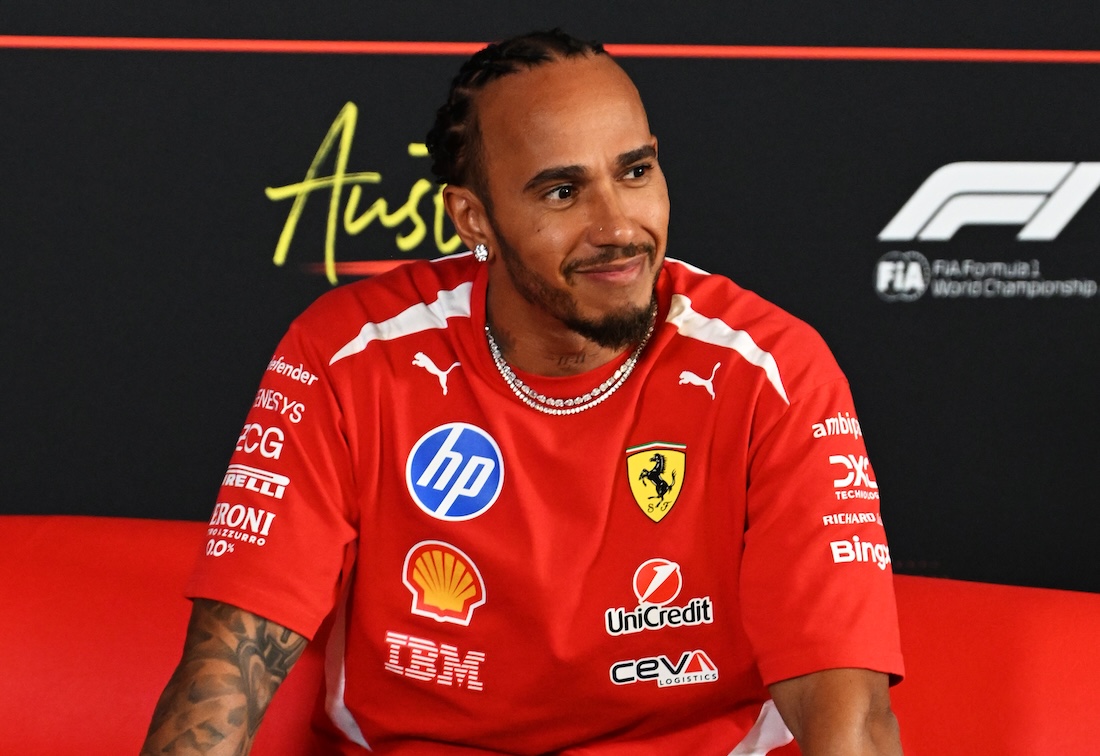
Leclerc has always got the better of his teammates at Ferrari but Lewis Hamilton's return to form this season has provided a new challenge. Simon Galloway/Getty Images
F1 cars today are enormously complex, and a multitude of details can add up to a cavernous deficit to your teammate. However, these differences are measured in fractions, for example the 0.327s that separated Leclerc from Hamilton in sprint qualifying at Silverstone before the set-up breakthrough. Pause to consider how minuscule that really is across a 3.660-mile, sub-90-second lap, and how that therefore can be eradicated by what from afar might seem trivial adjustments.
Leclerc hasn’t revealed the secret to his turnaround, implemented for main qualifying at Silverstone given that parc ferme restrictions prevented changes for the sprint race. But it will have been in such fine details related to the complex interplay aero balance, differential settings, power delivery, allowing him to get the car rotated sufficiently quickly to get into the corner, play with the throttle in the middle and find traction at the exit.
His exits improved, although that can also be down to not being under-rotated in this phase since traction will generally reduce by the amount of lock you have on. He certainly found the car more confidence-inspiring, suffering from fewer snaps and once again looked like himself. Deepening his understanding of the 2026 power units, which reward consistency in qualifying and don’t gel well with the way he teases the limit of rear grip when on a fast lap, has also played a part.
Leclerc is no stranger to such tough patches, which are a part of life for drivers. This means it’s not the first time he has had to search for a solution and been successful. Right back at the beginning in F1, during his stellar debut season with Sauber in 2018, he was outperformed comprehensively by teammate Marcus Ericsson. There were too many errors, notably a spin in qualifying in Bahrain and a trip through the gravel in the Chinese Grand Prix, before things turned around spectacularly in the fourth race of his F1 career in Azerbaijan, where he flew and finished sixth.
You could write that off simply as the process of acclimatizing to F1 cars, and that was part of the story. But it was what that familiarity and understanding allowed him to do, which was to recognize the need to ditch the more oversteery driving style that worked for him in F2 in order to calm a Sauber machine that suffered from rear-end instability. He thrived after adopting a more understeery setup, laying the foundations for that outstanding rookie season then promotion to Ferrari in ‘19.
That anecdote might come as a surprise to those familiar with the shorthand version of Leclerc’s technique, which is that he doesn’t like understeer. That’s certainly true, but the livewire style won’t work if he doesn’t have confidence in the car and rather than dancing on that limit with the rear end he just constantly slips off a narrow and inconsistent peak. In the Sauber 2018 context, it was about understanding the car problem and adapting the set-up and style. There’s another example from the middle stages of his 2022 season with Ferrari that went in a different direction.
There was a spell in the middle of the campaign when Sainz emphatically got on top of Leclerc, encompassing an outstanding fifth place in a Ferrari that wasn’t working well at Zandvoort, second from pole position at Monza, then a win in Singapore. While Leclerc’s race pace wasn’t a big problem, he struggled with an understeer-limited Ferrari in qualifying. That problem had been there for the whole first half of the year, but changes rooted in experiments conducted in practice at Zandvoort allowed him to get the car far more to his liking. It’s possible that experience played a part in how he improved the ‘26 Ferrari, considering there are similarities to the trajectory despite dramatically different cars.
What this illustrates is that Leclerc does have one of the most important characteristics for a great driver – adaptability. This is a multidimensional skill, as Hamilton has showcased. The driver’s job is to adapt to the car, but there’s more than one way of doing that. They can also influence the development direction, for example in terms of achievable aero balance and, in particular, how it might shift to help the car dynamically entering corners, and the set-up.
This is where it gets complicated: understanding how much the driver should change what they are doing and the extent to which it lies in the car. Leclerc was perhaps guilty, by his own admission, of focusing too much on changing how he was driving during the difficult spell, which is an easy mistake to make. But so, too, is the error of just demanding that the car does what you want and underperforming until you get whatever set of characteristics you need.
Solving these conundrums is not straightforward, yet that’s something Leclerc appears to have done. More evidence is needed given he’s only delivered it at one track, but winning the battle with Hamilton is currently central to his mission. Ferrari may yet be a title threat in 2026, in which case it, and Leclerc in particular, has some catching up to do.
But if he’s to fulfill his Ferrari dream he can’t afford to be the second-best driver at the team – even up against so illustrious an opponent as Hamilton. After all, amid the wait for glory, there are still battles that must be won.
Edd Straw
Edd Straw is a Formula 1 journalist and broadcaster, and regular contributor to RACER magazine. He started his career in motorsport journalism at Autosport in 2002, reporting on a wide range of international motorsport before covering grand prix racing from 2008, as well as putting in stints as editor and editor-in-chief before moving on at the end of 2019. A familiar face both in the F1 paddock, and watching the cars trackside, his analytical approach has become his trademark, having had the privilege of watching all of the great grand prix drivers and teams of the 21st century in action - as well has having a keen interest in the history of motorsport. He was also once a keen amateur racing driver whose achievements are better measured in enjoyment than silverware.
Read Edd Straw's articles
Latest News
Comments
Comments are disabled until you accept Social Networking Cookies. Update cookie preferences
If the dialog doesn't appear, ad-blockers are often the cause; try disabling yours or see our Social Features Support.