Brandon Badraoui/IMSA
How United Autosports' U.S. arm has built itself into an IMSA LMP2 powerhouse
After almost 100 days on the sidelines, IMSA's LMP2 class returns to action this weekend at Watkins Glen with a championship fight that's shaping up to be one of the most competitive in the paddock.
United Autosports heads to upstate New York with the advantage after a strong opening two rounds, but CrowdStrike Racing by APR, Inter Europol Competition, Tower Motorsports and AO Racing are all in the hunt.
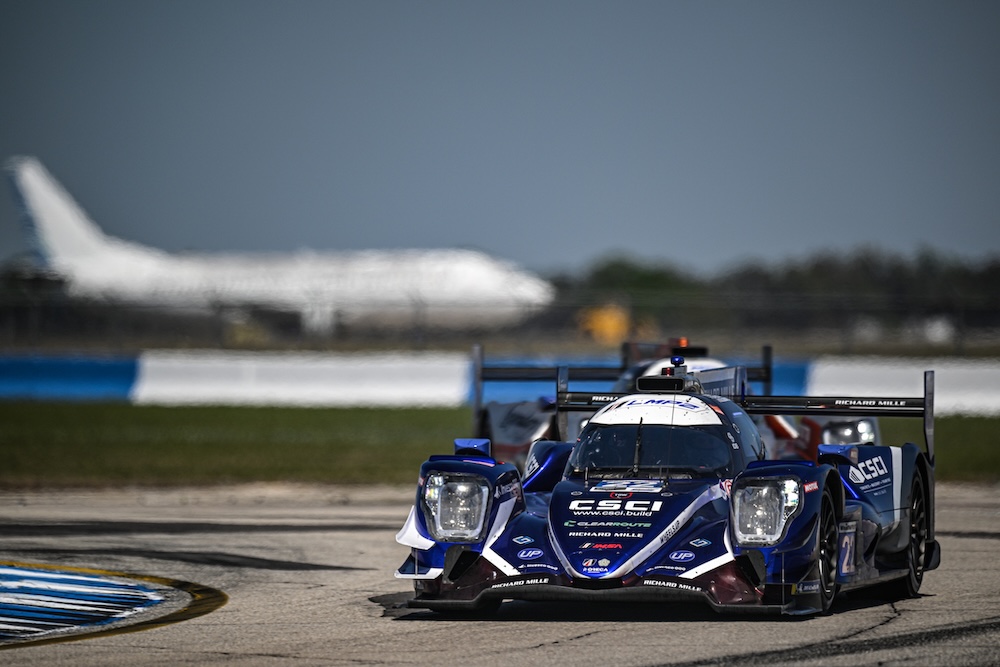
The No. 22 United Autosports ORECA of Dan Goldburg, Paul di Resta and Rasmus Lindh arrives at Watkins Glen atop the standings by just three points after following a top-five finish at Daytona with second place at Sebring. The team's sister No. 2 entry, shared by Phil Fayer, Mikkel Jensen and Hunter McElrea, sits third in the championship after leading United's dominant 1-2 finish at Sebring.
The results underline just how far United's Mooresville-based operation has come.
Led by general manager Billy Glavin, the American arm of the Anglo-American team has steadily evolved since launching in IMSA in 2024. A learning debut campaign yielded a breakthrough victory at Road America, year two delivered Rolex 24 success and a title challenge, and now, in its third season, United appears to have established itself as one of the benchmarks in the category.
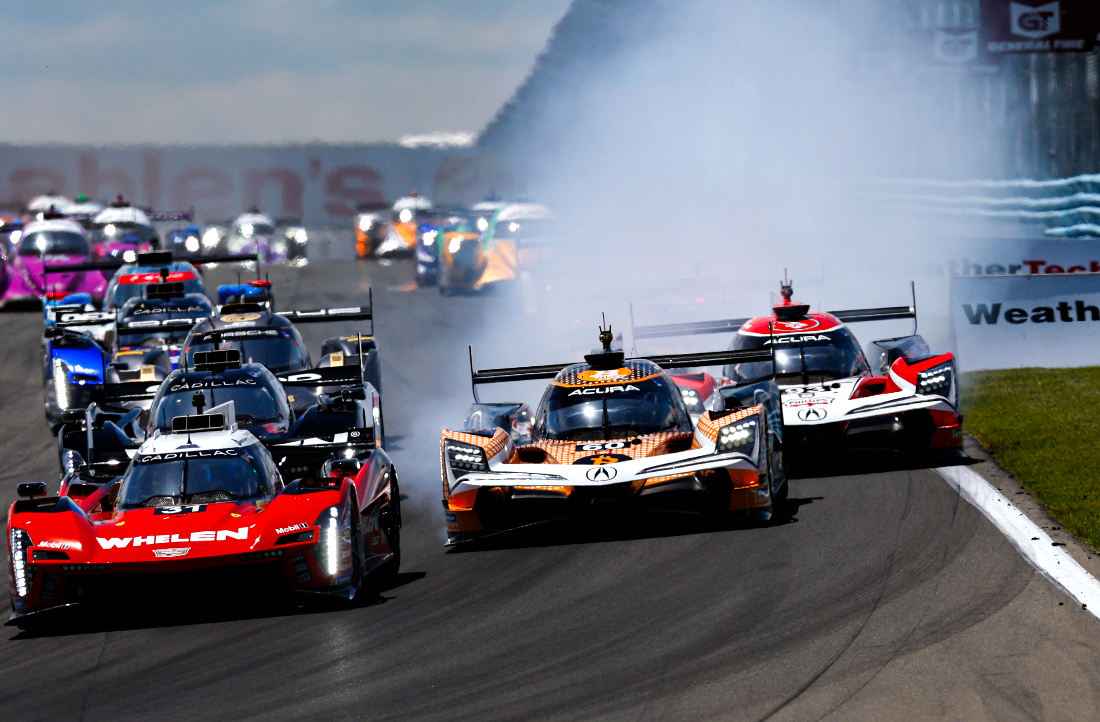
Perhaps most impressively, it recovered from what could have been a championship-ending disaster at Daytona. Both cars were caught in the lap one, Turn 1 multi-car accident that Glavin later described as "the worst case scenario" and "like watching a slow-motion train crash."
Instead of leaving empty-handed, United repaired both cars and salvaged fourth and 10th-place finishes, banking valuable championship points that now look increasingly significant.
According to Glavin, the gains over the past three seasons have come less from outright speed than from refining every aspect of the operation.
"Last year things were a big step up from the first year, and then this year has so far been another big step in terms of efficiencies and in terms of knowledge," he tells RACER.
"We are lucky we had a lot of guys returning from last year on the crew standpoint, running in IMSA and running in the U.S. is a very different program from anywhere else, and so, one of the challenges we faced in the early parts was just adapting to the procedures of running in IMSA LMP2. Now,starting our third year, a lot of those challenges have been reduced, and now we can focus a lot more energy on car prep and the race craft, if you will, versus just the operational side of things.
"We've had continuity, we've just improved how my core group of guys who have been with me since the start, and United, have integrated. We have actually added an additional employee this year, and we've added another mechanic to help with the work in between events. That's what it takes in IMSA now – even though it's not the longest calendar, you do a lot of testing, and the work you put in between races is so important, more than you realize, even with a car that's well-established like the ORECA.
"One of the biggest things that we've improved is just managing the sheer amount of workload. With two years under our belt, we know what the workload is leading up to an event, so we can schedule properly the guys coming out from Europe, the timing we need to get the work done, versus in the past, we kind of missed our targets sometimes, or were overly optimistic about what it would take.
"Now, three years in, we have a better sense of what the staffing levels we need are between events, what the staffing levels we need are, like the week or two before we leave for an event, and the staffing we need after an event. A lot of that has been streamlined and greatly improved, and reduced some of the wear and tear on the crew pre- and post-event."
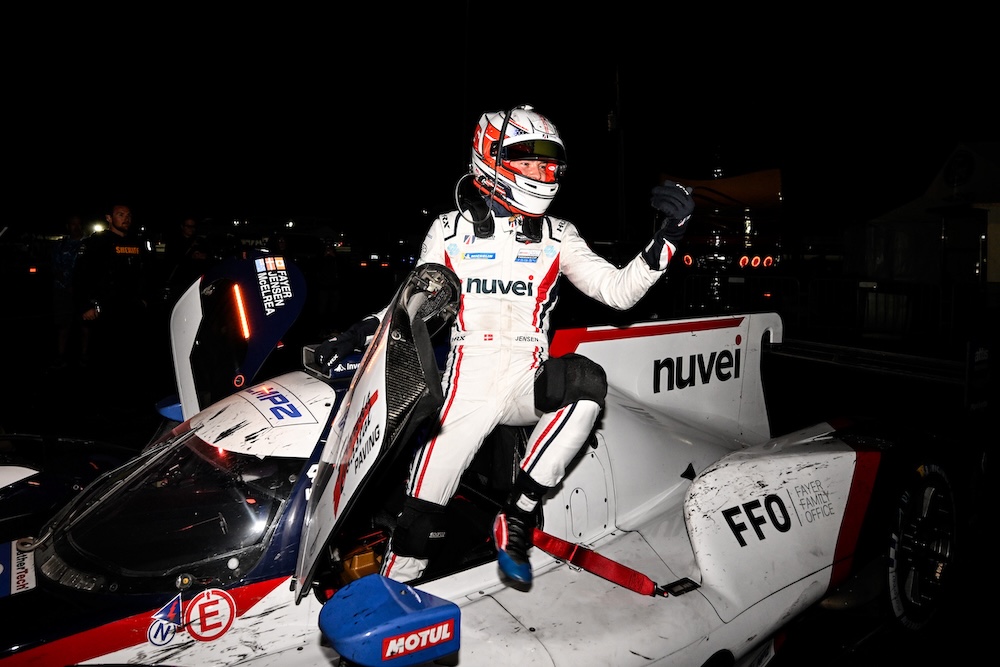
United Autosports' No.2 entry leads the LMP2 standings, but the sister No.2 car led a team 1-2 at Sebring (above). Brandon Badraoui/IMSA
United's consistency has also been helped by the work its Bronze-rated drivers, Goldburg and Fayer, have been putting in to improve. As the level of IMSA's LMP2 field has risen, so too has the expectation placed on amateur drivers, who now spend significantly more time in simulators, testing and studying data between races.
"It's just where the field has gone," Glavin says of the standard in IMSA LMP2. "And it's great, because everybody's pushing everybody to be better. The Bronzes are pushing each other, the pros are pushing each other, and the teams are certainly pushing each other to do it, because we do know the car so well. There is no BoP. It's just pure racing. And that's really enjoyable for us, and we like to spend the time and energy to find those, find all the speed we can."
For most teams, a title fight in an arena like the WeatherTech SportsCar Championship would take up all the available bandwidth. Not for United, though, as away from the IMSA melee, it is simultaneously pushing to win another title in the European Le Mans Series’ LMP2 ranks and preparing for one of the biggest projects in its history.
The team will operate McLaren's Hypercar program in the FIA World Endurance Championship from 2027. While the manufacturer has yet to announce plans to bring the MCL-HY to IMSA's GTP class, United's North Carolina base is expected to play an important role in the program's development.
Located just 20 miles from WindShear's wind tunnel, the Mooresville facility is well-positioned to support the homologation work McLaren undertakes before the car's debut.
"We've built this place in Mooresville so that we can sustain ourselves and take on more than just IMSA LMP2 race programs," Glavin says. "It's highly beneficial for the McLaren effort."
At the same time, United is already looking beyond the current generation of LMP2 machinery.
The team intends to continue competing in both IMSA and the European Le Mans Series alongside its Hypercar commitments and is preparing for the arrival of the next generation of the ruleset and the car it has publicly committed to: the ORECA 09. While IMSA will wait until 2029 to introduce the new chassis, United plans to begin racing it in ELMS when it becomes eligible in Europe in 2028.
Glavin understands IMSA's reasoning for delaying the transition but admits he's eager to start working with the new prototypes.
"It is always exciting to get a new car," he says. "The ORECA 07 is a great car, and I've got to know it pretty well over the last two and a half years, but you can tell that it's starting to show its age in certain areas, like the electronics package.
"Motorsports have come a long way since that car was first built. You know, think about your iPhone. You have no one who uses a seven or eight-year-old or nine-year-old iPhone. We're using a probably a 10-year-old ECU in that car. And at the top level of motorsports, that's an eternity, right?
“So while I'm fully focused on right now, I'm also excited for the new era, and we'll be ready."

Stephen Kilbey
UK-based Stephen Kilbey is RACER.com's FIA World Endurance Championship correspondent, and is also Deputy Editor of Dailysportscar.com He has a first-class honours degree in Sports Journalism and is a previous winner of the UK Guild of Motoring Writers Sir William Lyons Award.
Read Stephen Kilbey's articles
Latest News
Comments
Comments are disabled until you accept Social Networking Cookies. Update cookie preferences
If the dialog doesn't appear, ad-blockers are often the cause; try disabling yours or see our Social Features Support.