Joe Skibinski/Getty Images
Canada’s greatest tracks: Why Markham has much to live up to
This weekend, Markham replaces Toronto as the NTT IndyCar Series’s sole trip north of the border. Is this temporary course a permanent change? Well, it seems unlikely we’ll be heading back to Toronto, but Markham’s staying power – as with all street venues – is open to question. Remember how the Grand Prix of Baltimore felt like the Long Beach of the East for the first year? Then a change in local government saw promotion, attendance and enthusiasm die after just three editions.
So let’s wish the organizers of the Ontario Honda Dealers Indy at Markham the best of luck with its 2.19-mile course – it’s on a multi-year deal, which is good – and hope it further enhances the reputation of designer Tony Cotman of NZR Consulting. He always endeavors to inject his layouts with imagination, photogeneity and passing spots, despite the confines of city streets. It will also, hopefully, continue Canada’s reputation for great tracks. Here are our favorites.
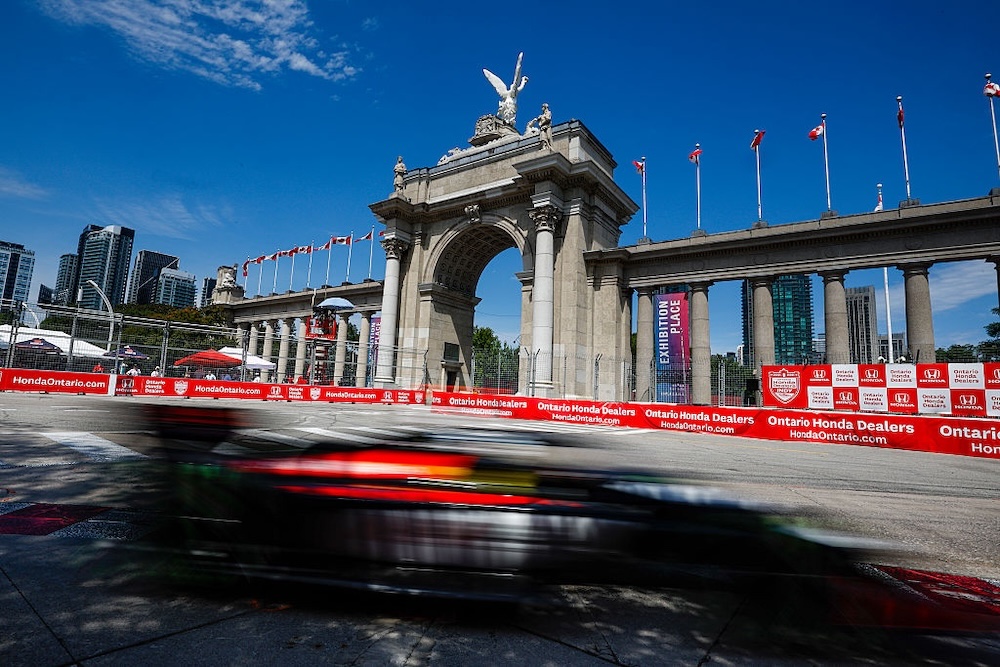
Toronto, Exhibition Place
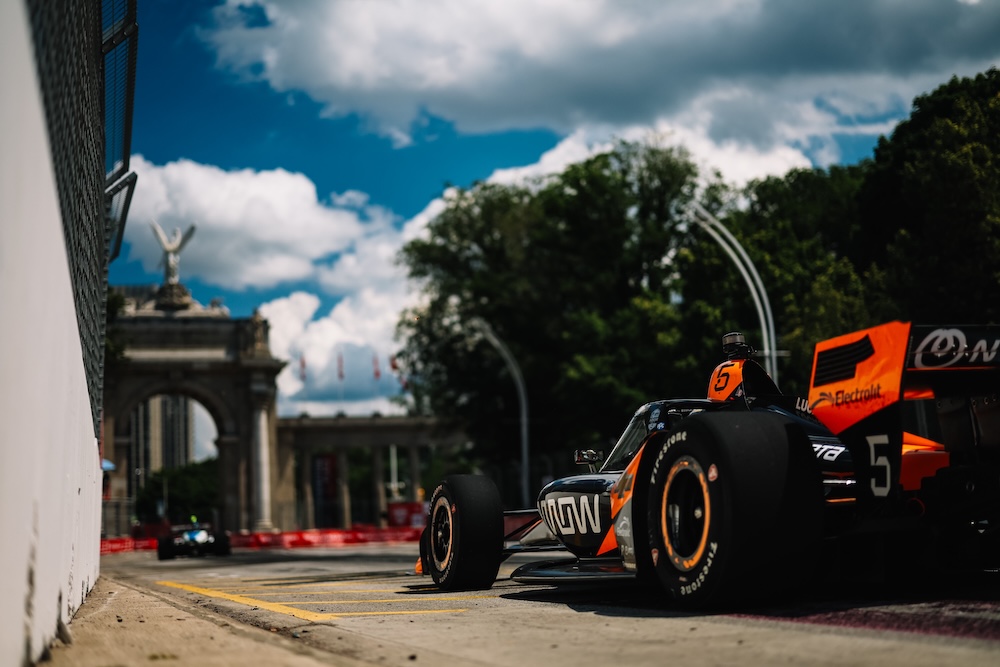
Twenty-five miles south of Markham and barely a mile from city center, the Toronto IndyCar race centered around Exhibition Place, and it usually put on a great show. Having the magnificent Princes’ Gate at the end of the pit straight made it truly feel like the race was something auspicious and integral to the Ontario summer. Which it was. The track surface usually comprised of three or four types of surface, which proved challenging for Firestone, and also the drivers should a patch have been filled in mid-apex.
Bobby Rahal won the inaugural event, while Scott Dixon, Will Power, Dario Franchitti, local hero Paul Tracy, Sebastien Bourdais and Al Unser Jr. were all multiple winners there. But king of these streets was Michael Andretti, who conquered it no less than seven times.
The messing around with Toronto’s pit lane configurations in its latter years was ominous: no amount of race-generated revenue was going to match the money that could be made by developing the surrounding real estate during the other 51 weeks of the year. The venue was squeezed, then the race was squeezed out.
Jonathan Ferrey/Getty Images
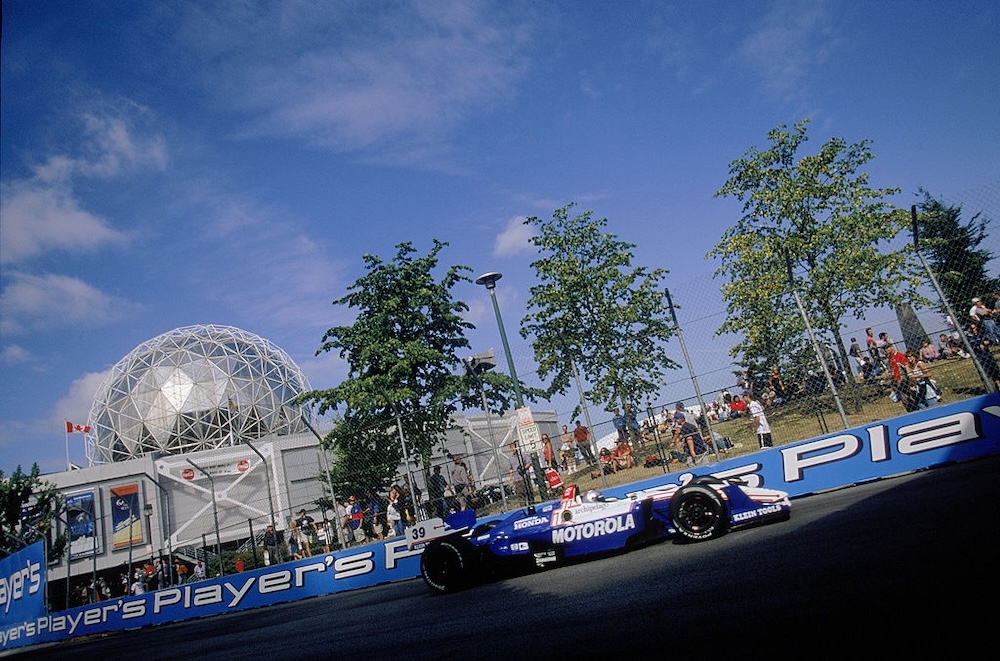
Vancouver
Fans on the west coast of Canada will have sympathized. Vancouver was an arguably even more charismatic venue but from the word go, it attracted more detractors. Grumbling local residents complained of rumbling engines, and traffic disruption in grand prix week.
Little Al won here four times, Michael Andretti and Paul Tracy took three wins apiece, but across 15 events the venue was seen in five different configurations, again due to ongoing construction.
“I know I won Toronto more times, but I think Vancouver was my favorite street course,” Andretti told RACER, “or at least in its early days. They gradually took away some of the track’s character with the changes in layout. But it was a great city with great restaurants for hosting sponsor events.”
Preparations and building work for the city to host the 2010 Winter Olympics finally pushed the Molson Indy Vancouver from its precarious position on local authorities’ list of priorities.
Jonathan Ferrey/Getty Images
Edmonton City Centre Airport
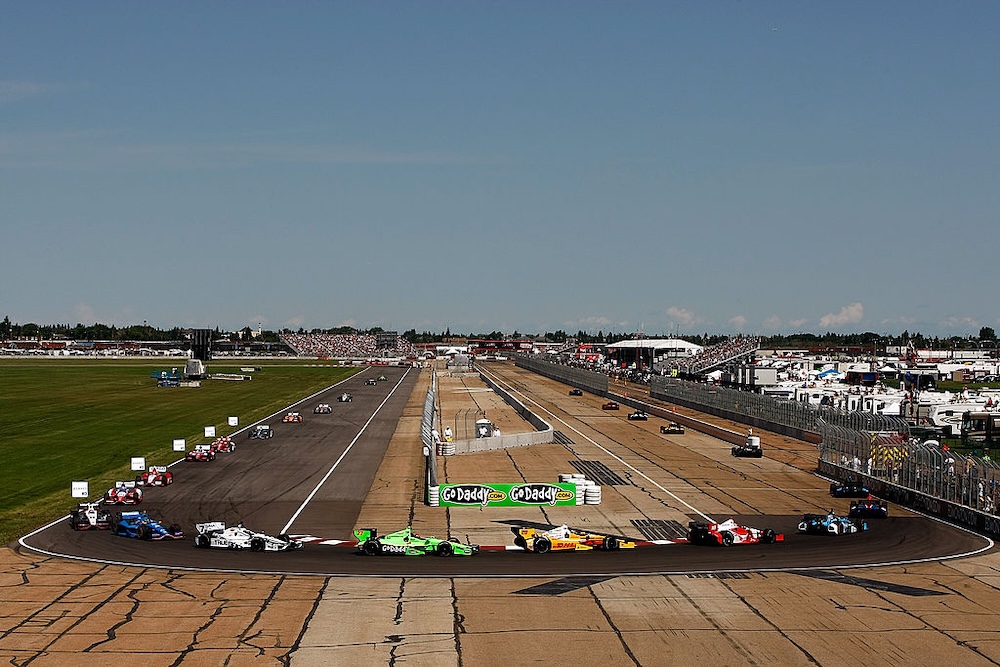
For CART-morphed-into-Champ Car, the British Columbian venue was replaced by a race 500 miles northeast, at Edmonton City Centre Airport in Alberta. The 14-turn 1.973-mile course was not pretty – unless a race is held in the airports at St. Moritz, Fiji or such, aerodrome-based venues are unlikely to be pleasing to the eye or camera lens – but the grandstands were sited where spectators could see most if not all of the track. And there wasn’t a single 90-degree turn on the course, despite its reliance on runways and taxi-ways.
But, as is often the case, after the typical virgin first-time curiosity, the novelty wore off for the spectators. The event wasn’t helped by the fact that it was launched after the Champ Car vs Indy car war had taken its toll. For any hardcore fan, battle lines had been drawn – but how does he or she explain to the family why they were watching supposedly North America’s top open-wheel series, but the guys who they saw fighting for the Indy 500 win six weeks earlier weren’t present.
Anyway, title sponsorship passed from West Edmonton Mall, to Rexall, to Honda, and for the final two years, to no one. That coincided with the layout shifting from the western side of the venue to an anti-clockwise layout on the east side in 2011, due to – you guessed it – airport redevelopment work. By then, despite the 2008 reunification of U.S. open-wheel, the local populace had demonstrated its overwhelming indifference to the sport.
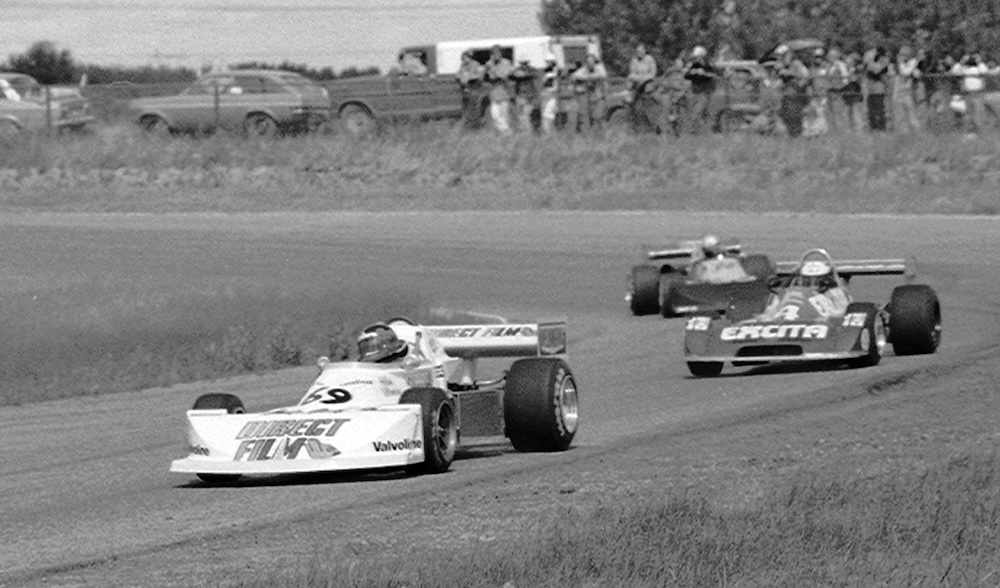
Image by Fred Young, used under CC BY 4.0, via Wikimedia Commons
Edmonton International Speedway
There is still a quarter-mile paved oval called Edmonton International Raceway to the south of Edmonton that hosts NASCAR Canada events, while also to the south of the city there is RAD Torque Raceway that has a dragstrip, a clay oval and a 1.68-mile road course.
But before that, there was Edmonton International Speedway, which again featured a dragstrip and oval, but also an excellent 2.53-mile road course. Packed grandstands vibrated to the bellow of Can-Am cars from 1968 to ’73, Denny Hulme capturing glory for McLaren for four races, with Mark Donohue’s Penske-run Porsche capturing the last two events. Donohue also captured glory in one of two Trans-Am races there, driving a Penske AMC Javelin in ’71.
But Canadian patriots looking for homegrown heroes found happier hunting in open-wheel. Eppie Wietzes scored two Formula 5000 wins (as did Britain’s David Hobbs), while in Formula Atlantic, the maple leaf flags flew for Bill Brack in 1974, Gilles Villeneuve in ’76 and ’77, and Tim Coconis in ’81.
The following year, the track was closed, and the bulldozers moved in. The area is now a housing estate.
Getty Images
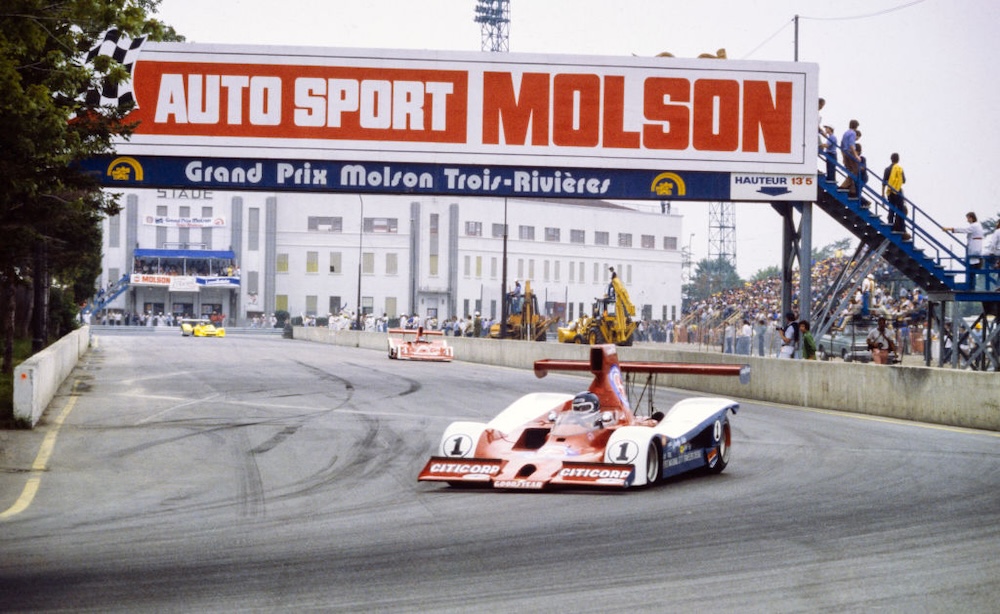
Circuit Trois-Rivieres
Talk of Formula Atlantic inevitably leads to memories of the Grand Prix Trois-Rivieres – or GP3R as it’s inelegantly referred to these days. It’s strange to recall that, as late as this century, this tight street circuit featured Grand-Am in 2000-’01 (Dyson Racing won both) and American Le Mans Series in 2002-’03 (Audi R8s won both). And since 2007, it’s held a NASCAR Canada Series event – usually won by Andrew Ranger, Alex Tagliani, Kevin Lacroix or Marc-Antoine Camirand.
Still, one shouldn’t regard it as too incongruous that such large-machines bounced around this classic course. Patrick Tambay and Elliott Forbes-Robinson and Al Holbert made the final-gen Can-Am cars (F5000 with bodywork) look deft on a layout that has elements of Belle Isle or that Houston around the Astrodome course.
Yet it is Formula Atlantic that made Trois-Rivieres world famous, thanks to Gilles Villeneuve kicking the butts of two future Formula 1 world champions, James Hunt and Alan Jones who were guest stars. Formula Atlantic graced this course from 1974 to 2009, its list of winners also including Jacques Villeneuve Sr., David Empringham, Michael Andretti, Pat Carpentier and AJ Allmendinger.
David Hutson/Getty Images
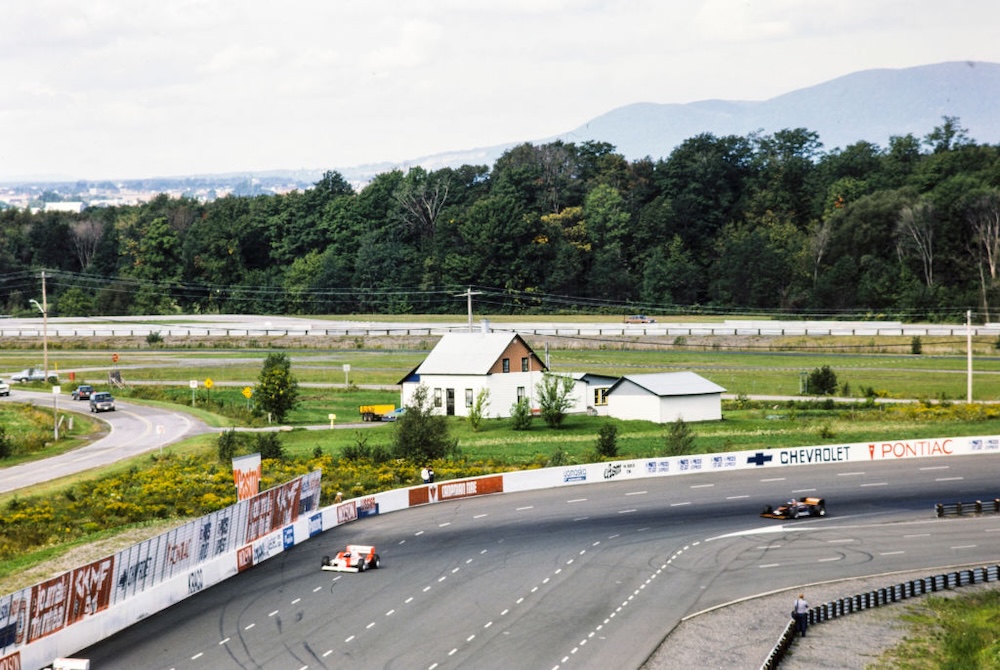
Sanair Super Speedway
Sadly, this venue will forever be associated with the hideous injuries suffered by Rick Mears during practice for the track’s inaugural Indy car race in 1984. Sure, the shunt was Rick’s fault, but guardrail on the inside? Who signed off on this as a suitable venue for fast open-wheel cars?
Of course, the 0.83-mile tri-oval in St. Pie, Quebec, was suitable in layout, because – as with the big tri-ovals such as Pocono – it’s impossible to have a car that’s perfect for all three turns, so car performance was highly variable across the tiny lap and the big stint. And in ’85, concrete walls had mercifully replaced guardrail on the inside. But sponsor Molson elected to focus its funding on the new Toronto street race, so the ’86 race was Sanair’s third and last Indy car race. But a line-up of winners comprising Danny Sullivan, Johnny Rutherford and Bobby Rahal suggests it was bringing the aces to the fore. By contrast, the 1.3-mile road course appears built to test cars rather than challenge drivers.
Anni Graf/Getty Images
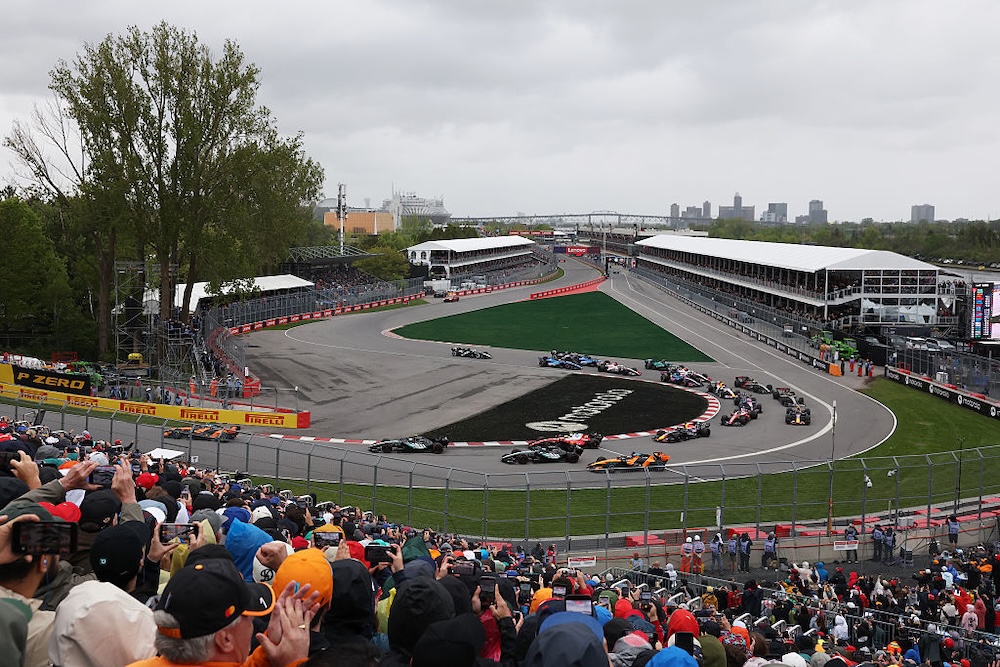
Circuit Gilles Villeneuve
We included Montreal’s course in our Dream Formula 1 schedule the other week, because it remains one of the best of the FIA’s 45 Grade 1 tracks. There is little to add. And assuming F1 can quickly return to a state where all horsepower is available all the time, Montreal will produce great racing because the cars are trimmed out for several flat-out blasts, leaving drivers to wrestle through the turns.
Sadly, Circuit Gilles Villeneuve never really proved a hit for Champ Car (2002-’06), so by the time of the U.S. open-wheel merger, no one was considering it for the restructured calendar.
Getty Images
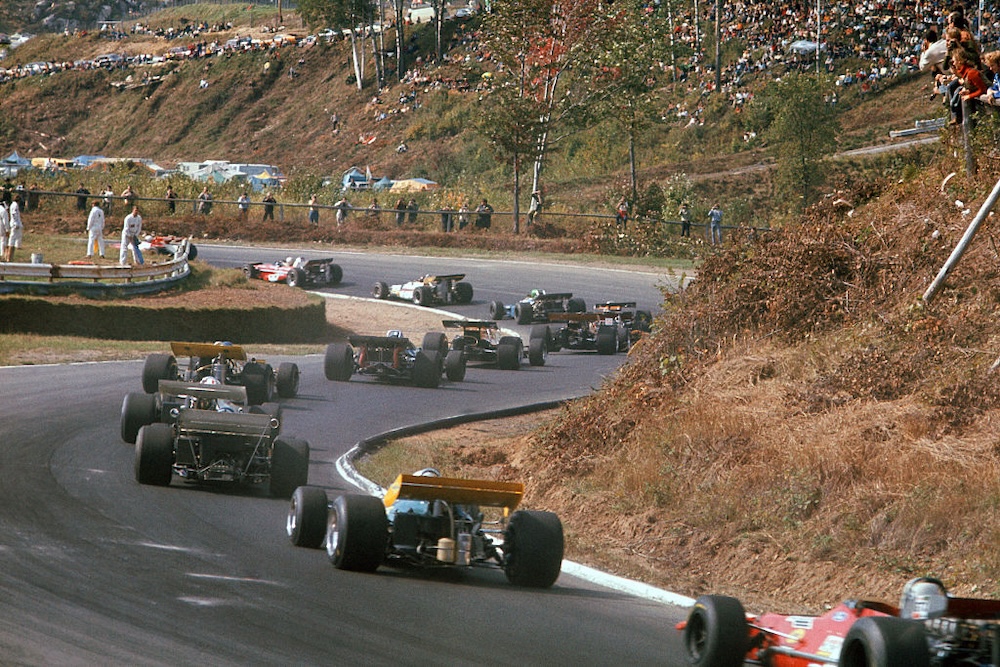
Mont-Tremblant
The track once named Circuit Mont Tremblant-St. Jovite was and remains an absolute classic, a beautiful blend of… well, name your favorite road courses. We see bits of Mid-Ohio, Watkins Glen and Brands Hatch in Mont-Tremblant, with dauntingly fast areas to match any of them. We can see why this Quebec course would have to be modified to be accepted by the major series in this more safety-conscious age – that chicane soon after the pit straight would no longer be enough! – but it would surely be worth figuring out if it could be tweaked without ruining its essence.
M-T is not perfect – its fast flowing nature means a dearth of passing places in the dry. Even the tight penultimate corner is on an odd and less than reassuring camber. But as a track that demands skill and commitment from drivers and skill and competence from a racecar’s engineers, it’s one of the greatest ever.
Formula 1’s Canadian Grand Prix was held there twice – in 1968 and ’70 – and the stars were Jacky Ickx, Jochen Rindt, Jackie Stewart and Chris Amon –– the Big Four of the time – although Denny Hulme won the first of these when Amon’s bad luck inevitably struck toward the end of the race. USAC Indy cars raced there in ’67 and ’68 – both events inevitably dominated by Mario Andretti. And in Champ Car’s final year, 2007, a one-off visit saw Robert Doornbos win a dry-wet-damp race for Team Minardi USA.
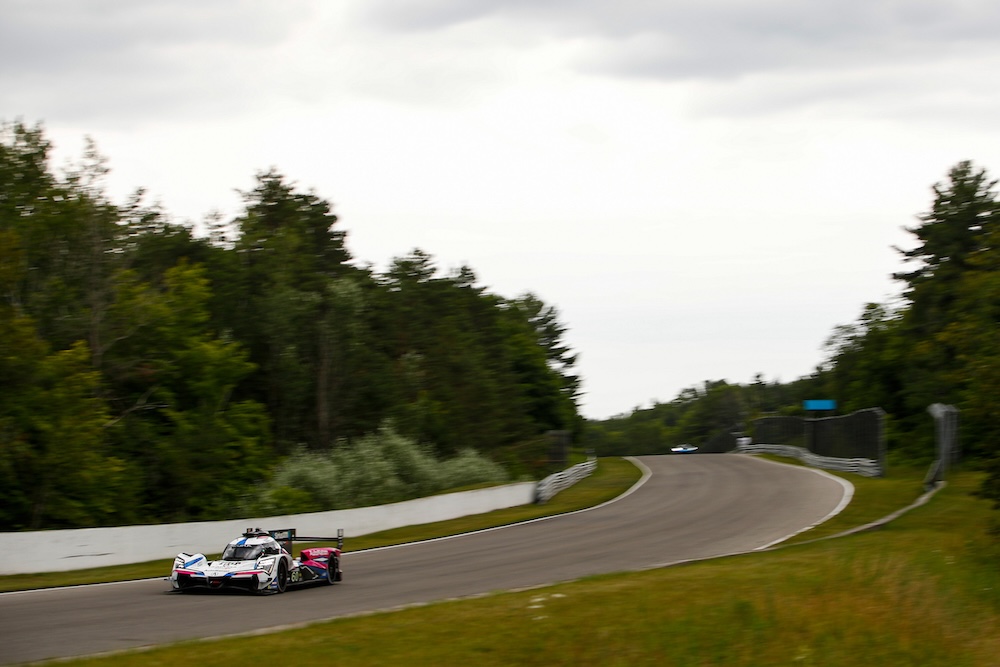
Jake Galstad/IMSA
Canadian Tire Motorsport Park (Mosport)
Three years before Mont-Tremblant held its first race, some 300 miles to the southwest, Ontario’s Mosport opened its doors to a design by Alan Bunting with a tweak by Stirling Moss – the double-apex Turn 5 Moss Corner.
Onboard cameras don’t do justice to the undulations of this wonderful course, but the bump entering Turn 3 and onto the pit straight certainly are conveyed. They can promote sphincter-tightening moments, especially when two hard-sprung prototype drivers are in close proximity and adding to their vertical movements by using all the curbs!
Sadly, the IMSA WeatherTech SportsCar Championship’s GTP cars haven’t raced there since 2023 (above), but when they do, they tend not to be held up by GTs when lapping them because the course is suitably wide. This also helps racing for another reason: blocking your class rivals into and out of corners will cost you a lot of lap time because it requires you to deviate so far from the ultimate racing line.
As for spectators, they are well served by the track’s topography – there are several desirable viewing points – and the fact that the fastest prototypes lap in under 70 seconds, so there’s almost always something to watch.
The track hosted the Canadian Formula 1 Grand Prix eight times between 1967 and ’77, with only Jackie Stewart winning it twice. Wonder how much would have to change to make it viable for F1 or Indy cars (which raced there only four times) these days?

David Malsher-Lopez
David Malsher-Lopez is editor-at-large for RACER magazine and RACER.com. He has worked for a variety of titles in his 30 years of motorsport coverage, including for Racer Media & Marketing from 2008 through 2015, to which he returned in May 2023. David wrote Will Power’s biography, The Sheer Force of Will Power, in 2015. He doesn’t do Facebook and is incompetent on Instagram, but he does do Twitter – @DavidMalsher – and occasionally regrets it.
Read David Malsher-Lopez's articles
Latest News
Comments
Comments are disabled until you accept Social Networking Cookies. Update cookie preferences
If the dialog doesn't appear, ad-blockers are often the cause; try disabling yours or see our Social Features Support.