Andy Hone/Getty Images
Wolff threatens to turn intensifying Mercedes teammate battle 'down a notch'
It doesn’t take long for opinions to change in Formula 1. Recently, much has been made of Max Verstappen’s comments relating to his enjoyment of driving the current generation of car, and how even across the Canadian Grand Prix weekend he went from stating he is set to continue in the sport, to threatening to quit again if changes aren’t made, to finding it more fun racing at the front.
The latter part didn’t supersede Verstappen’s frustrations, but it does highlight how each passing session can have an impact on what a team or driver is thinking and feeling.
Take Mercedes team principal Toto Wolff as another example. After a meeting with his drivers following the Sprint — when Kimi Antonelli was unhappy at George Russell’s defending — it appeared an understanding had been reached for the Mercedes pair to be allowed to race each other in the same way they do any rival car.
It was a stance that made sense in many ways. The McLaren example of last season was fraught with potential tripwires, where Andrea Stella’s team would have to keep coming up with solutions to different scenarios. By simplifying it, the drivers know how they go racing at all times and don’t have to remember special measures when it’s their teammate alongside them.
Then Sunday’s race happened.
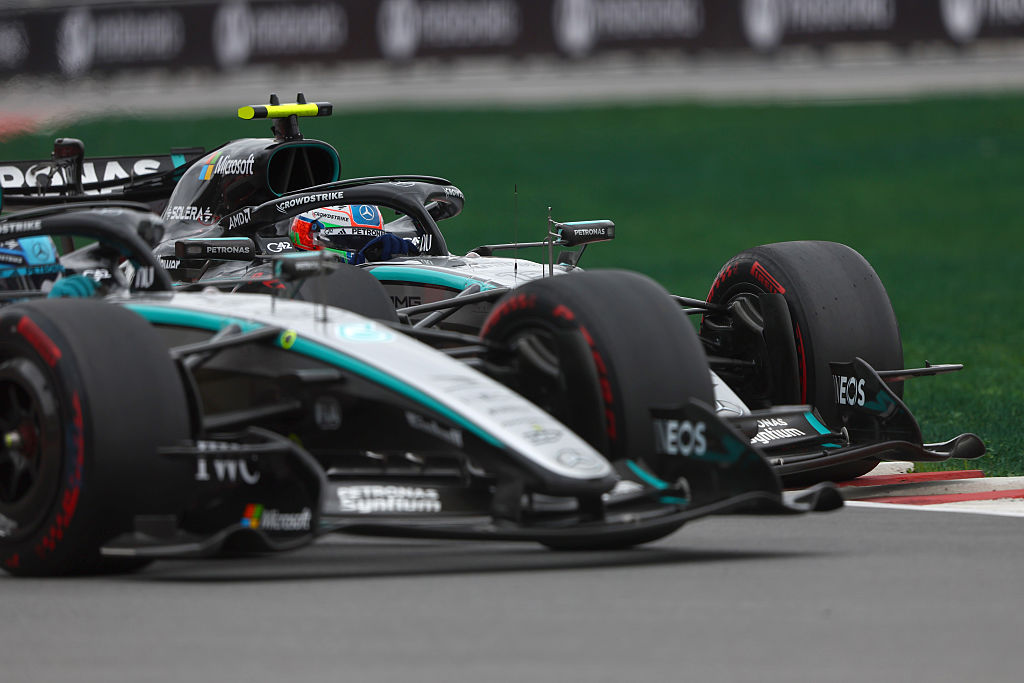
The first 30 laps were great to watch from an outsider’s perspective, as we saw Russell and Antonelli again fighting hard over the lead. At times they made mistakes, and once even made contact, but Russell was just holding on until his car failed him and he retired just before halfway.
Antonelli felt there were times where the pair got close to the limit, but said it was an enjoyable spell from the cockpit.
“It was a tough fight,” Antonelli said. “I think a couple of times was maybe a little bit on the edge, but we were going at each other. We were both pushing and we both wanted to win. And it was, I think, for everyone watching, pretty entertaining. So definitely I think the stint was a lot of fun because we were both pushing on the limit and going for it.”
Yet, after seeing the latest chapter of this year’s title battle between his two drivers, Wolff was torn on how to view it as the man with the most power over how they're allowed to go racing.
“Before talking about George's race or Kimi's race, it's always easy at the end now to say, ‘Well, that was great for the team and great for the sport, and didn't we all enjoy watching the battling?’” Wolff said. “And that is true to a degree, but there is another side which we need to look at it: that it was close a few times.
“Kimi tucking back in and locking the tires could have ended up in a double-DNF, and not because of over-aggressive driving against each other, simply by mistake. And the same through the last chicane, we had a situation.
“So it's important to analyze the race and discuss with the drivers whether they felt it was a bit close and if that is the case, how can we avoid these very, very tough situations or situations where we deem it a little bit too close.
“There is another angle that we had a pace advantage today and that when they were driving behind each other, we were going half a second quicker than everybody behind us. But when they were fighting, we were losing a second to all the others.
“So, we had the gap, we had the margin today, and then it's easy to accept that they are fighting to a certain degree, but obviously that's not going to be always the case. So, as much as we look very sportsmanlike today allowing it, there could be a situation where we would maybe turn it down a notch.”
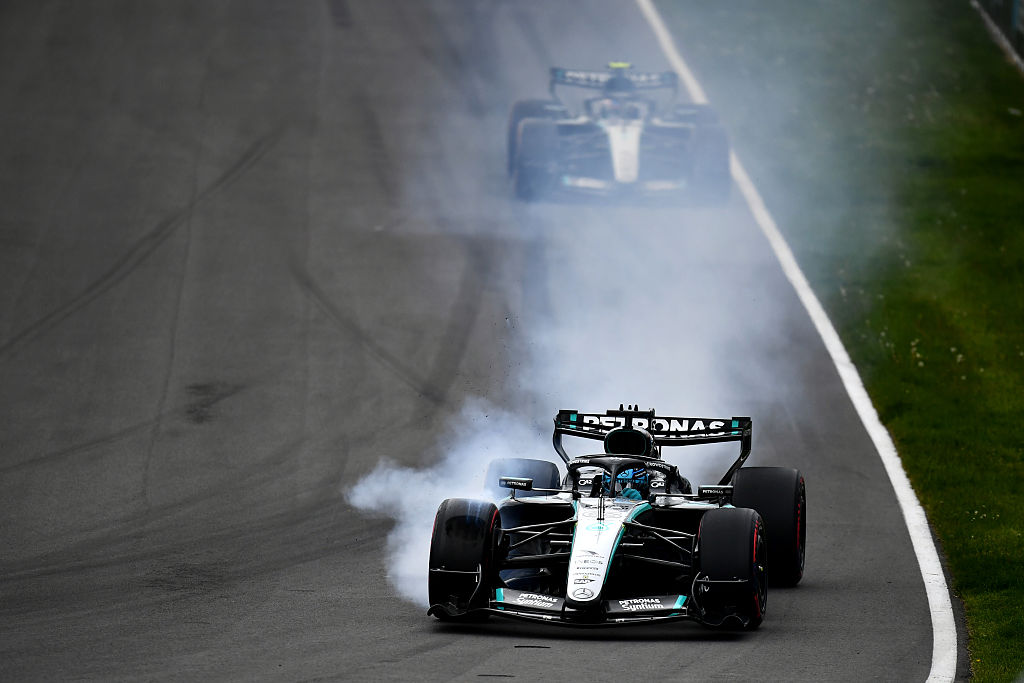
George Russell locks up while battling teammate Kimi Antonelli for the lead of the Canadian Grand Prix. James Sutton/Getty Images
There’s a certain honesty that should be applauded from Wolff in the fact that he didn’t want to simply take the plaudits as a result of the fact the two Mercedes drivers delivered entertainment, but acknowledged how he could also have been left looking stupid if the pair had taken each other out.
Radio messages did go to the drivers to try and get them to check themselves during Sunday’s race, but with Russell now 43 points adrift and in need of a strong response on track to reel Antonelli in, Wolff says he will allow freedom where possible, and rule with an iron fist when he feels it’s required.
“I think we want to look at the pictures today and have them come to the conclusions, to the right conclusions, in terms of saying do you think that was the level of fighting you think is right? And if that is, why is that? And we will say why we think one or two situations could have been avoided and what do you want to do to mitigate it?
“But definitely, more than ever, this fight is on. There's so much at stake for those. There's so much at stake that you have as a team. As a team, as uncomfortable the ride is sometimes, you have to accept that this is the fight they've been trained for.
“But equally, if there was a situation where we believe the team's points are at risk of losing or there was a situation where we were losing so much time to our competitors behind, then we would not be a millimeter hesitant of putting the handbrake on.
“I think when you ask them to tidy it up, it doesn't mean you should be stopping it. You allow actually the racing, but you're saying, ‘you’re on watch’. We had a few situations that could have ended in DNFs. As a driver, you're very well aware where you want to place your car and how much risk you want to take.”
The desire to let the drivers race and the reality of what that could look like is one Wolff is clearly wrestling with as Mercedes goes in search of its first drivers’ championship since 2020. On that occasion it had a clear number one driver, but this time round its more experienced race winner is facing a tough task to play catch-up after a fourth straight victory for Antonelli.
Giving both equal opportunities and seeing them operate at similar levels will only lead to more uncomfortable moments for Wolff and his team. But being restricted in how they go racing might similarly create frustrating situations for the drivers. It’s a tightrope that will only become tougher to tread the deeper into the season we go.
Presented by:

Chris Medland
While studying Sports Journalism at the University of Central Lancashire, Chris managed to talk his way into working at the British Grand Prix in 2008 and was retained for three years before joining ESPN F1 as Assistant Editor. After three further years at ESPN, a spell as F1 Editor at Crash Media Group was followed by the major task of launching F1i.com’s English-language website and running it as Editor. Present at every race since the start of 2014, he has continued building his freelance portfolio, working with international titles. As well as writing for RACER, his broadcast work includes television appearances on F1 TV and as a presenter and reporter on North America's live radio coverage on SiriusXM.
Read Chris Medland's articles
Latest News
Comments
Comments are disabled until you accept Social Networking Cookies. Update cookie preferences
If the dialog doesn't appear, ad-blockers are often the cause; try disabling yours or see our Social Features Support.