The best cars are slow cars. Here's the proof
It’s beyond cliché at this point. It’s as overworked and tough as an old mule. However, I wonder if, in all of its overuse, it’s been said too much and believed too little. People still line up and fork over millions for cars and trucks and motorcycles that can damn-near crack the sound barrier. Dodge still sells bucketloads of cars by offering buyers little more than horsepower. Speed and power still sell. So, how can so many of us agree that “driving a slow car fast” is more fun than driving a fast car at half trot be such a cliché, but the market still bends toward overpowered beast machines badged with hellish eponyms be so coveted?
Obviously both things are true. Fast cars are fun even if you're never able to drive them at their full potential. Burnouts and donuts rule. This is fact. But maybe we could all use a little refresher on the cars that made this car enthusiast cliché worth mentioning in the first place. Slow cars are the backbone of everything we love about car culture. These puny four-pots and overweight Detroit duds might not have the gravitas of the big power makers and fine-tuned, forced-induction sports cars, but they got spunk. They got style. They are approachable and mild. Above all else, the cars are fun to drive. Here are the best slow cars of all time.
MGB(GT)
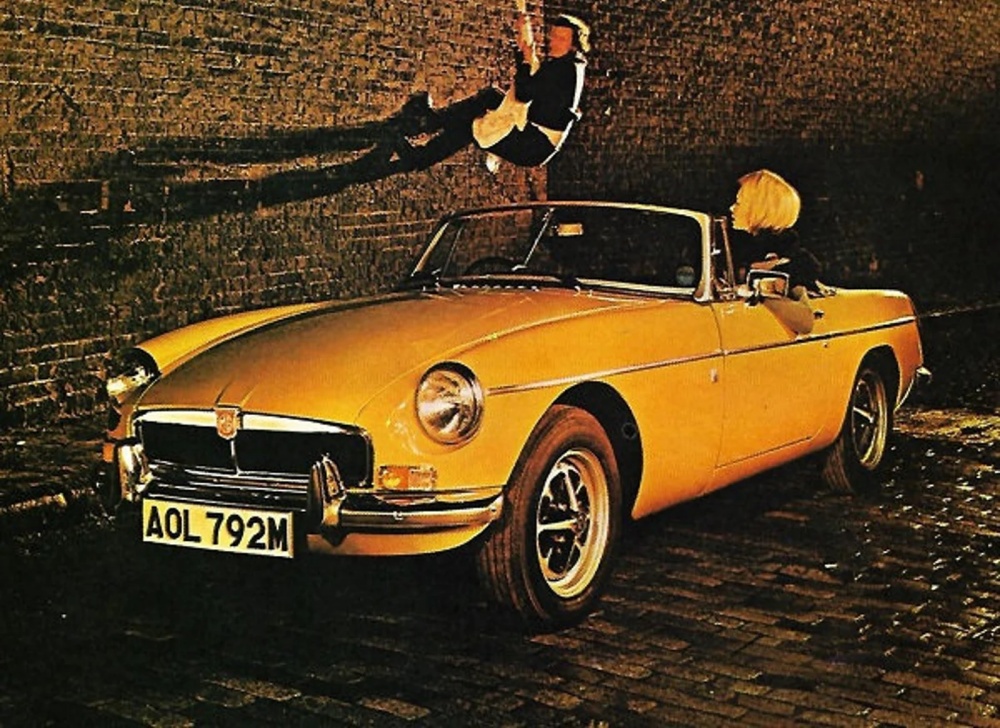
The MGB is one of the most charming, exuberant, and annoying little cars ever to hit the road. The MGB hit the scene in 1962 as the replacement for the MGA (another real joy of a car) and quickly became one of the definitive British sports cars. It introduced MG's first monocoque body construction, making it stiffer than its predecessor, which isn’t saying a ton, but still, it’s something. The newfound rigidness didn’t take away the MGA's proven mechanical foundation. Power, what little there was, came from an 1.8-liter four-cylinder, which was upgraded to a marginally stronger five-main-bearing design in 1964, making a whopping 95 HP. The range expanded in 1965 with the arrival of the properly stunning MGB GT, the fixed-roof coupe penned by the legendary Italian design house Pininfarina.
A revised Mark II followed in 1967, bringing a stronger all-synchromesh gearbox, an optional automatic transmission (barf), improved electrical systems, and a series of interior updates driven largely by evolving U.S. safety regulations. It’s worth mentioning that the improvements, while technically true, were pretty negligible until 1970.
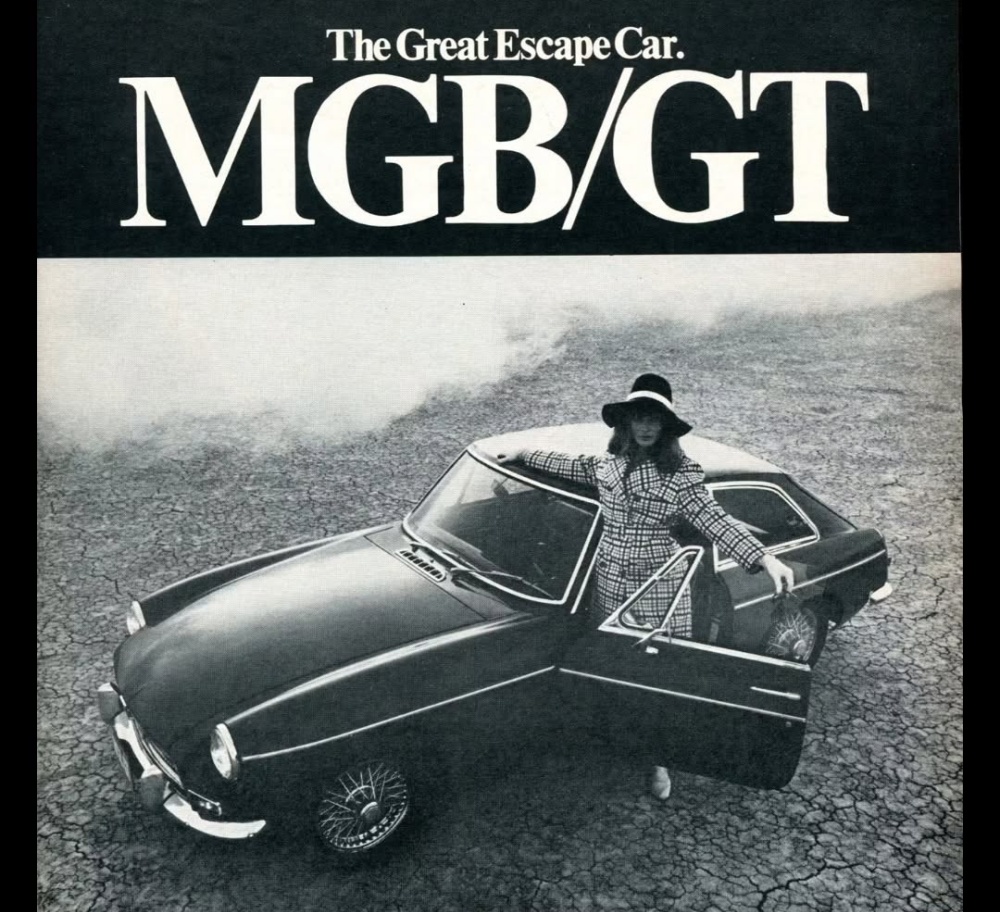
MG
The 1970s brought steady refinements rather than wholesale redesigns. A recessed black grille, Rostyle wheels, updated interiors, and mechanical revisions were introduced before MG returned to a chrome honeycomb grille in 1972. The factory-built MGB GT V8 joined the lineup in 1973. I know what you’re thinking: “certainly a V8 in such a tiny car has to mean a fast car.” It didn’t. It was now heavier, and because MG used the Rover V8, it still didn’t make much power. There was also a super-rare straight-six version borrowed from the Austin Healey, called the MGC.
No matter the configuration, the most power these ever made was the heavy V8 at 135 horsepower. But the biggest styling change arrived a year later when large rubber bumpers and raised suspension were added to satisfy U.S. crash regulations. While the changes dulled the car's sharp, nimble handling, later suspension revisions helped recover some of its original character. But there was nothing to do with those rubber bumpers but take them off and melt them.
MG
As a sort of mercy killing of sorts, production ended in October 1980 when the Abingdon factory closed, bringing the MGB's remarkable 18-year run to an end. By then, more than 512,000 examples had been built, making it the world's best-selling sports car at the time.
They were cheap. This was a major part of the selling recipe. Ask an MG owner about their car, and they’re likely to tell you all manner of electrical horror stories. They might mention thin, leaky gaskets, and puffs of power better suited for a children’s toy than a sports car. But when you get through the mandatory MG winge, you’ll see the other side of things—a bright and sunny gleam brought on by the good days. The days when the sun is out, the little four-pot is warm, the wiring smoke is all inside the electronics where it belongs, you’d be hard-pressed to find something south of Monaco money that looks this good and gets you this close to feeling like Mario Andretti. You aren’t likely to break 70 miles an hour, ever. But damn, if that 30 mph- 50 mph isn’t anything short of glory.
Mazda Miata
The Miata is kind of the pinnacle of this camp. It’s the great slow car – cheap, plentiful, and more fun to drive than a frog in a glass of milk.
The Mazda MX-5 Miata came to us in 1989 with a simple and profound mission: to capture the pure, lightweight driving experience of Mazda's "Jinba Ittai" ethos, or "horse and rider as one." Unveiled at the Chicago Auto Show before going on sale as a 1990 model, the original NA Miata weighed just over 2,000 pounds and, when properly equipped, made 128 horsepower. With the introduction of this model, Mazda revived the classic roadster style but with modern, Japanese reliability. Its instant success kicked off a resurgence of affordable convertibles, inspiring nearly every major automaker to develop its own lightweight sports car.
Mazda has carefully tweaked and tuned the Miata through four generations, all miraculously without losing sight of the original mission. The second-generation NB arrived in 1997 with special editions, including a turbocharged model making 142 horsepower, and a Japan-only coupe, and by 2000 the Miata had earned its place as the world's best-selling two-seat convertible sports car.
The larger NC generation debuted in 2005 with a 170-horsepower, 2.0-liter engine and later introduced a retractable hardtop to broaden its appeal. The current ND generation, unveiled in 2014, returned to a lighter, more compact design, and production surpassed one million units in 2016, canonizing the MX-5 as one of the best slow cars ever built. Yet, in the right hands, that slow car can be a real problem on the track.
Porsche 914
The 911 has ruled the Porsche coop with an iron claw since it first rasped out of Stuttgart. Because of its dominance, other interesting, slower Porsche models like the 356 and 912 fell to lesser spots. Still beloved, but ultimately second fiddles.
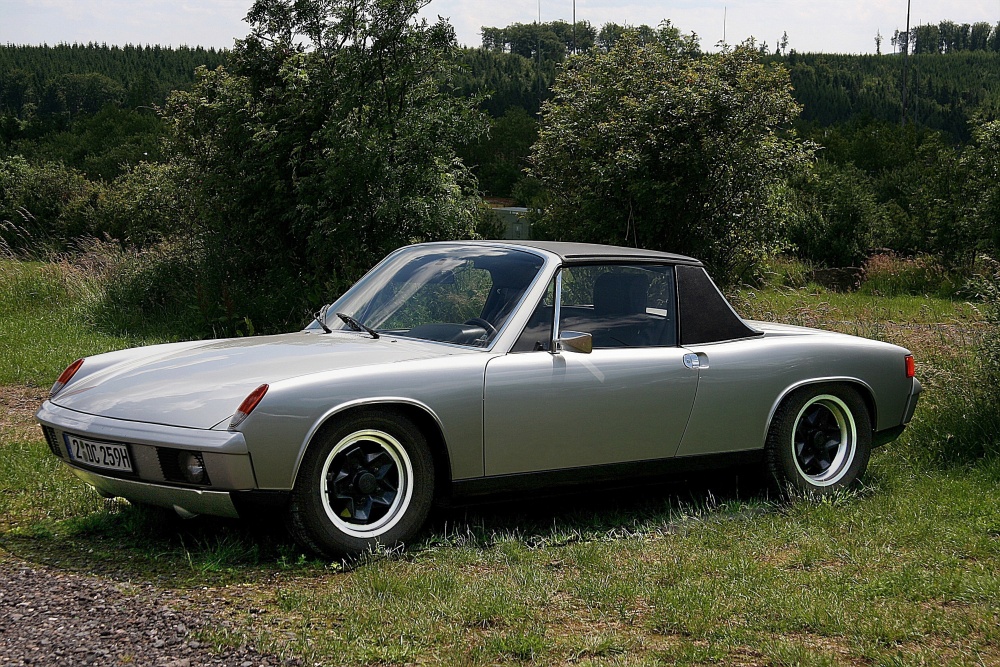
Of all of the non-911 Porsches, the 914 is one of the most interesting. The Porsche 914 has always occupied an unusual place in sports car history. Introduced in 1969 as a joint venture between Porsche and Volkswagen, it was created to solve two problems at once. Porsche needed an affordable model to slot beneath the 911 and 912, while Volkswagen needed a successor to the aging, also awesome and slow, Karmann Ghia. The result was this strange little alien car: a mid-engine, two-seat sports car that was sold as the VW-Porsche 914 in Europe and simply as the Porsche 914 in North America.
Volkswagen-derived flat-four engines powered most examples, although a more expensive six-cylinder version borrowed its engine from the 911T. Between 1969 and 1975, more than 115,000 four-cylinder cars were built, making the 914 one of Porsche's highest-volume models of the era, with the vast majority finding homes in the United States.
Wikimedia Commons
There was no getting out from under the shadow of the 911; still, the 914 carved out its own identity through balance and good times rather than brute force. Early buyers could choose between an 80-horsepower 1.7-liter flat-four or a 110-horsepower 2.0-liter flat-six, with later 1.8- and 2.0-liter four-cylinder models joining the lineup. On paper, those numbers look modest today, and they are, but the 914's lightweight construction, mid-engine layout, four-wheel disc brakes, and low center of gravity gave it handling that made it something of a real event to drive.
Its off-beat styling, removable targa roof, and pop-up headlights only added to its appeal, creating a car that never quite fit the traditional Porsche mold. That's precisely why enthusiasts have come to love it. The 914 isn't remembered for power and speed, but for style and the never-ending buckets of fun it offered.
Triumph TR3
The Triumph TR3 arrived in 1955, but its story really begins two years earlier with the TR2. This beautiful but woefully primitive precursor to the "3" needed some work to take it from a car-shaped thing to a proper sports car. Triumph’s goal for the TR2 was a simple, affordable British sports car aimed squarely at the booming American market, where returning servicemen had developed a taste for lightweight European roadsters.
The formula was refreshingly straightforward: a rugged ladder-frame chassis, rear-wheel drive, a lively 2.0-liter inline-four, and bodywork that looked fast standing still. Half of the equation here was basically a Land Rover despite the sporty bodywork and four-pot. The TR3 refined that recipe rather than reinventing it. Power climbed to an earth-ripping 95 horsepower and front disc brakes by 1956.
In fact, the spritely little TR3 is one of the earliest production cars in the world to offer them, and later updates culminated in the TR3A, which got a much cooler-looking wider grille, improved weather protection, whatever that means, and other more minor styling cues. By the time production ended on the TR3B in 1963, more than 74,000 examples had been built, with the overwhelming majority exported to North America.
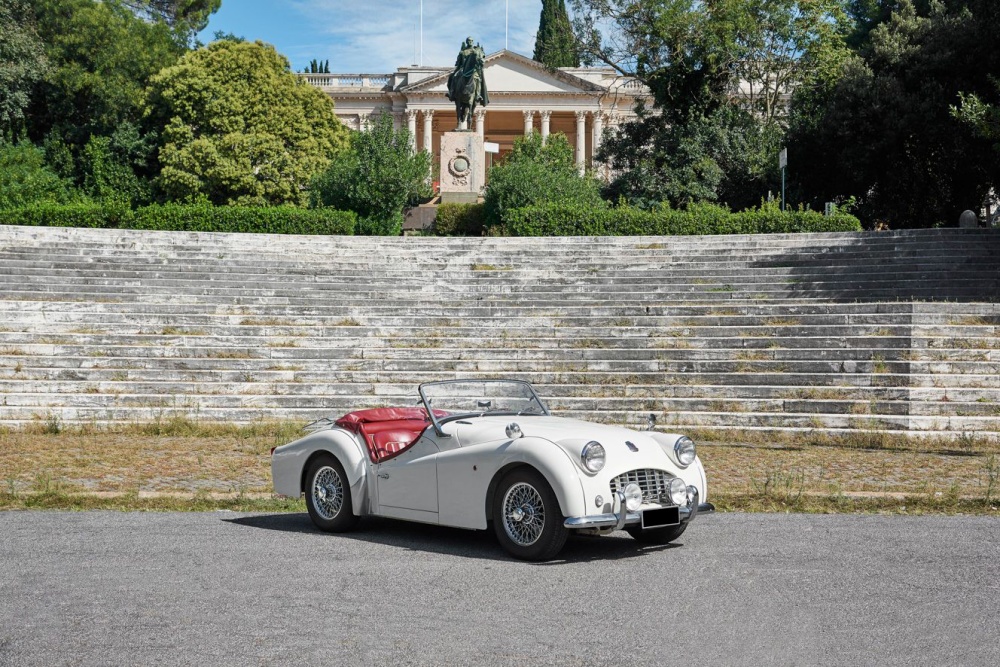
Image courtesy of Bonhams
On paper, the TR3 isn't particularly impressive today. But you can’t drive cars on paper, so who cares? Even the later 2.1-liter cars produced just 100 horsepower, and reaching 60 mph took around the half-life of plutonium. But the numbers here aren’t worth a plug nickel. Weighing barely 2,000 pounds, the Triumph nearly fizzes with eagerness at virtually any speed. The steering is direct, not because of genius engineering, but as a virtue of its lightness. The unassisted controls demand focus and effort.
And then there’s the comically low seating position, putting your cheeks inches above the pavement. In fact, my dad tells a story of a night out in a TR3 where a momentary lack of awareness led to the peeling of his knuckles on the pavement at 30 mph.
It's the sort of car that rewards commitment and trust instead of horsepower, turning every inch of road into a fairly high-stakes motorsport event, even at puttering around a corner on the way to Cracker Barrel. Long before "slow car fast" became an enthusiast cliché, the TR3 was proving that humble performance could deliver enormous fun and even some real scares. The TR3, thanks to its battlefield-esque ladder frame and leaf springs, also had the butt-clenchingly bad reputation of picking up a wheel in the corners if you pushed it a little too hard.
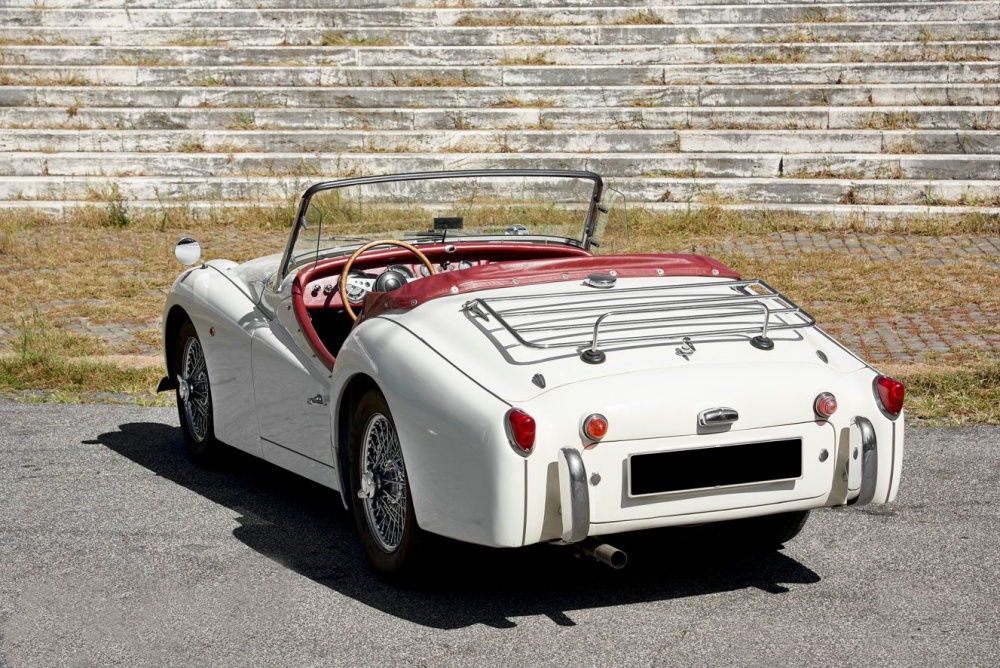
Image courtesy of Bonhams
Its greatest asset, though, might be its appearance. Those doors. Those aluminum rear fender stone guards. The frog-ish headlights, bulging front fenders, tucked-in cockpit behind a long hood – the TR3 has proportions that seem impossibly perfect for something so strange and tiny. It looks purposeful without trying too hard, elegant without being delicate. That timeless, yet alien shape, combined with its primitive driving experience and surprising motorsport pedigree, has made the Triumph TR3 one of the defining sports cars of the empire. Its legacy isn’t power, speed, or force; it’s because it wonderfully distilled the joy of driving into a simple, beautiful package.
Honda Fit
It’s hard to think of Honda’s little motorized Kleenex box as being on the same level as iconic beauties penned by Pininfarina and mid-engine Porsches. Still, the ugliness of modernity aside, the Honda Fit is a great slow car. The Gridlife movement pulls the Honda Fit from goofy econocube into focus as a cheap and thrilling driver’s car.
Unlike the slow sports cars making up the majority of this list, the Honda Fit was never meant to appeal to sport drivers. The Fit falls into a more interesting sort of under-the-couch space where cars designed for one purpose find new life with a new use. Despite being built for errands and fuel economy, it's become a favorite at autocrosses, track days, endurance races, and events like GRIDLIFE because it embodies that same, stale cliché: it's more fun to drive a slow car fast than a fast car slow.
Although the Fit, known as the Jazz over there, came out in 2001 in Japan, then Europe and Australia the following year, we didn’t get it stateside until 2006 for the 2007 model year. The second- and third-generation Fit (2007-2020) paired a naturally aspirated 1.5-liter four-cylinder producing 117 to 130 horsepower with a curb weight of around 2,500 pounds and a slick six-speed manual. This was not a fast car, but a light, nimble chassis made it a hell of a fun car for those able to get over the looks.
It had an interesting feature known as the "Magic Seat" system. The seats don’t really add to the driving fun, but it does offer a surprisingly efficient interior that allows decent flat storage and an interesting folding option that allows vertical storage by folding the bottom of the seat up. Between this and its bubbly roofline, it can swallow spare wheels, tools, and camping gear, making it one of the most practical track-day cars you can buy.
Reliability is another reason the Fit has become a grassroots motorsports darling. Its durable L-series engine is well-built and full of inexpensive parts. Its low running costs and excellent fuel economy make it easy to own and race. That's why Fits are now common sights in SCCA competition, endurance racing, and GRIDLIFE, where skilled drivers can punch above the car's weight.
Like every great slow car, the Honda Fit proves that while horsepower is fun, it isn’t the only path to good times. It won't win any drag races, but it will make you a better driver, and that's a far more satisfying accomplishment than simply having enough money to buy a more powerful car.
Opel GT
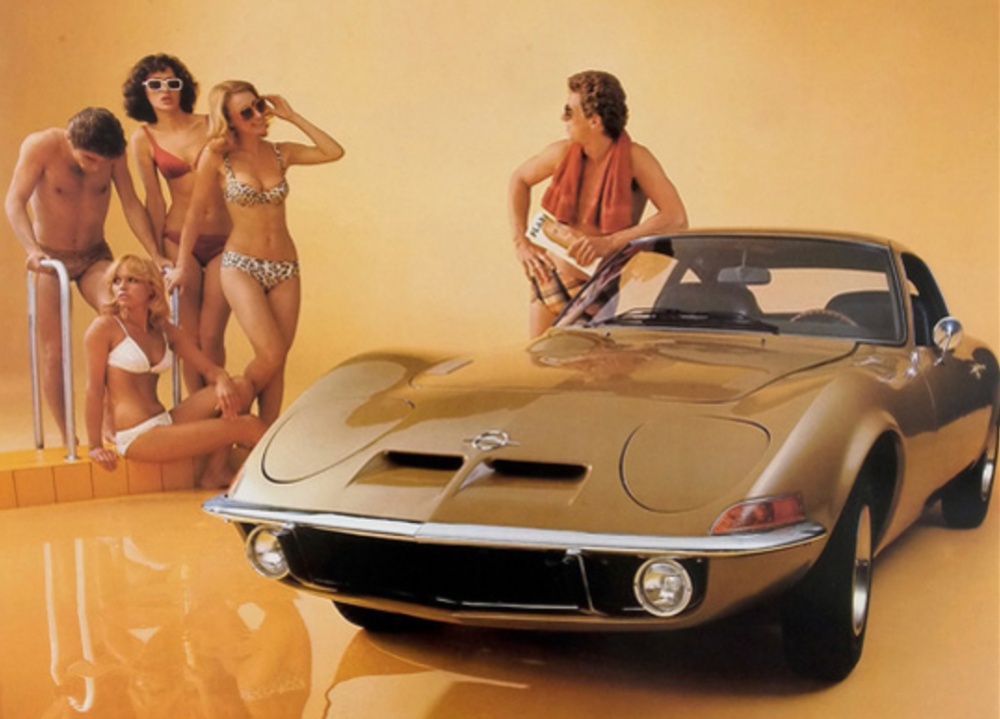
The Opel GT never quite made it out of its era in the same way the MG, 914, or TR3 has. It only exists because Opel wanted to prove it could build more than just commuter cars. Introduced in 1968 as a collaboration between General Motors' German and American design teams, with bodies assembled in France, the GT was a multinational effort wrapped in one of the prettiest shapes of the era. It borrowed much of its mechanical hardware from the (very) humble Kadett, but its long hood, coke-bottle curves, hidden flip-up headlights, and dramatic Kamm tail made it look like a miniature Corvette.
Sold through Buick dealerships in the United States, the Opel GT became an unlikely success, not to mention it looked like a Stuart Little car compared to the steel sleds from Buick. Even still, more than 103,000 got built before production ended in 1973, over two-thirds of which found homes in America.
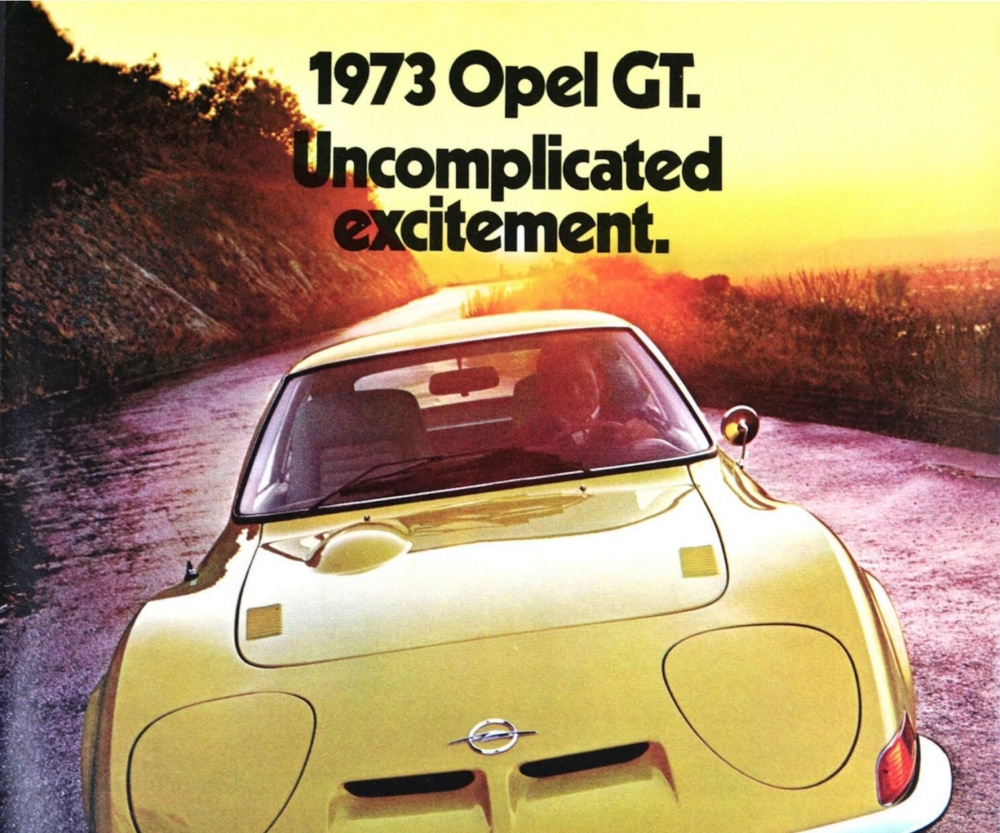
Opel
As beautiful as these little guys were, there was still more going on here. Opel spent considerable time refining the GT in the wind tunnel, giving it aerodynamic touches that actually served a purpose rather than simply looking flashy. Most buyers got a 1.9-liter overhead-valve four-cylinder producing a poppy 102 horsepower in early cars before emissions regulations reduced output to 90 horsepower in 1971. Even in its most powerful form, the GT wasn't especially quick, needing a hilarious 20 seconds to cover the quarter mile and topping out at around 98 mph.
What it lacked in speed, however, it made up for with eagerness that made any road feel like a special stage. Its size, shape, and shake made the Opel a thrill, a real killer on the narrow lanes, twisting tracks, and crowded parking lots, I’d assume. Go slow or don’t even go at all (which was a real possibility thanks to funky electrical issues); it doesn’t matter. If all else fails, you can always park in front of your house and show off your impeccable taste.
Jeep Wrangler
The Jeep Wrangler isn’t all that old in name, but in spirit, it’s ancient, and it endures forever. The Wrangler in one form or another started slogging through muddy battlefields of Europe. They were tough, simple, lightweight, cheap, unstoppable, and slooooooow. And yet, legend has it, Mr. Ferrari himself once called the Jeep the "only true American Sports car."
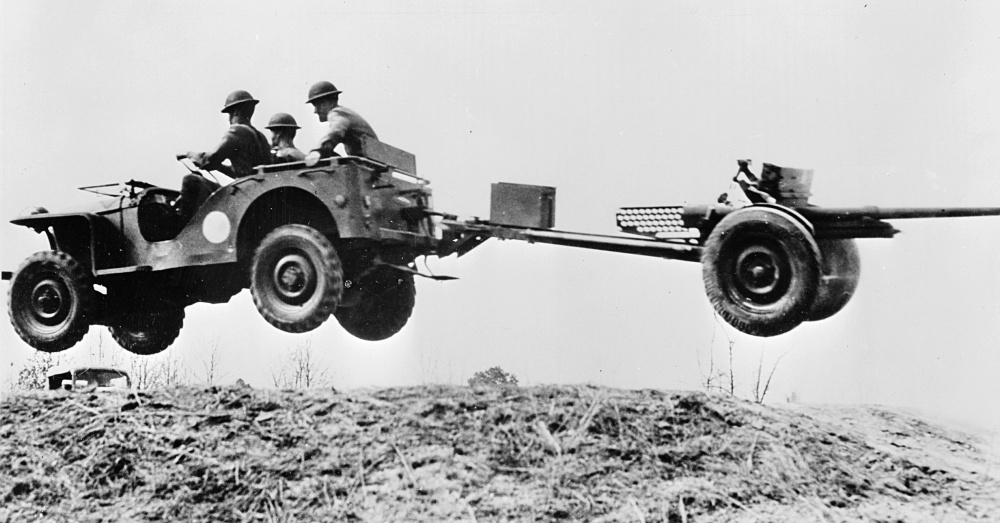
U.S. Army
The Jeep Wrangler traces its roots directly back to one of the most important vehicles ever built: the original Willys MB of World War II. After the war, Willys recognized there was demand for a civilian version, launching the CJ (Civilian Jeep) series in 1945. The CJ dominated beaches, trails, farms, and everywhere else roads weren’t laid for more than four decades before the Wrangler debuted in 1986 in its square-eyed YJ. The first Wrangler was a far cry from the Willy’s and CJs, but was still a hard, square chunk of car offering little civility. It had an underpowered but torquey four-banger as standard and a couple of different AMC in-line sixes, leaf springs, four wheels, and almost nothing else. Even still, the YJ immortalized itself as the truck that could outrun a T-Rex. I don’t know how fast a T-Rex was, but I struggle to see how a first-gen Wrangler could outrun a chicken, much less the King of the Dinos.
Since then, the Wrangler has evolved through the TJ (the best 4x4 ever made. Fight me. I want the smoke), JK, and current JL generations, morphing from buckets with wheels to modern SUVs with all the comfort features, much more powerful engines, and improved road manners. Despite Jeep succumbing to the peer pressure of comfort, Jeep still manages to be one of the most iconic and understood brands in the world.
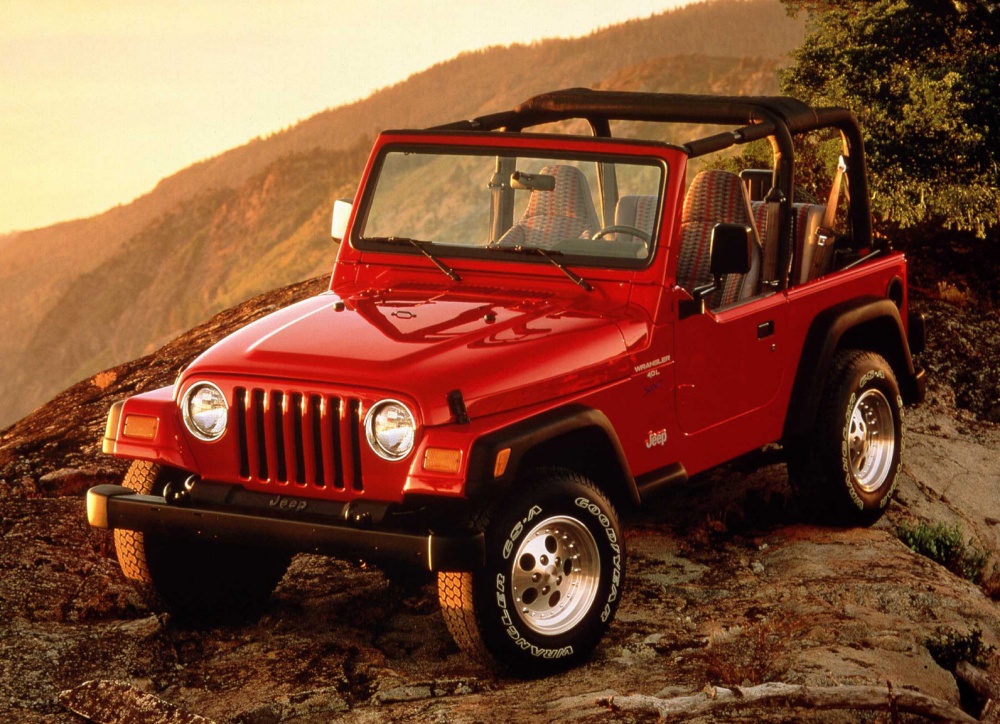
FCA
Their approach angle, departure angle, breakover angle, articulation, crawl ratio, locking differentials, disconnecting sway bars, low-range four-wheel drive, and nearly 11 inches of ground clearance make the Wrangler one of the few production vehicles that can drive straight from the dealership to some of the toughest trails in the world with little more preparation than a full tank of gas.
That's why, even after all these years and all the changes, we can’t help but love Wranglers despite it all. They're noisy, slow, and their aerodynamics resemble a garden shed, but none of that matters once the roof and doors come off. The Wrangler isn't about outright speed. It's about potential. It invites owners to employ free will at every step of ownership. More than almost any other slow vehicle, the Wrangler proves that capability and character are far more enduring than acceleration. Its greatest achievement isn't conquering rocks or mud. It's making every drive feel like it could be the beginning of a great story.
Mini Cooper
As do many great human achievements, the original Mini was born out of necessity. Introduced in 1959 by the British Motor Corporation (BMC), the teeniest little economy car hit the streets, thanks to Sir Alec Issigonis. Aside from making the cutest little car you ever did see, Issigonis flipped small-car design on its head by transverse mounting the Mini’s engine (sideways) and driving the front wheels.
That clever packaging gave the Mini the special power of being smaller than a loaf of bread but still fitting human people and cargo inside. Mary Poppins ’ bag was taking notes. Sold initially as the Austin Seven and then Morris Mini-Minor, the car quickly developed a shining reputation for being affordable, practical, efficient, and smart, laying the foundation for what would become the template for virtually every modern compact car.
The Mini's reputation shifted, or exploded, in 1961 when BMC partnered with race-car-building legend John Cooper. What came next was a problem for people who made big, expensive cars. The Mini Cooper transformed the bread-loaf car into a damn race car, adding a larger 997-cc engine, upgraded brakes, and sharper suspension. Two years later, the even quicker Cooper S arrived with a 1275-cc version that cemented the Mini's place in motorsport history.
Against cars with way more power, the lightweight front-wheeler freaked out the racing world by winning the Monte Carlo Rally outright in 1964, 1965, and 1967. It made it clear that the more powerful cars aren’t always the better ones. Other aspects of driving dynamics like agility, balance, and smart engineering could actually make a car perform better than one with more power and bigger tires. By the late 1960s, the Mini had changed again with some styling and mechanical updates, and after British Leyland dropped the Austin and Morris names in 1969, it was simply known as the Mini. That same year also introduced the square-nosed Mini Clubman and the 1275 GT, buzzing the little car into a new decade.
The Mini survived long after many expected it to disappear. Through the 1970s and 1980s it adapted to changing emissions and safety regulations with updated interiors, revised trim, and countless special editions like the City and Mayfair, slowly shifting from a budget commuter into a beloved cultural icon. The Cooper name returned in 1990, and after more than 41 years of continuous production and over 5.3 million cars built, the final Classic Mini squeaked off the Longbridge line on October 4, 2000.
The BMW-era MINI that followed in 2001 carried the name into a new generation, but the original remains the benchmark. True North. It wasn't just a great small car. It, on a base level, changed how small cars were engineered and proved that some of the best driving experiences have very little to do with horsepower.

Peter Corn
Peter Corn is an automotive writer and storyteller. Peter has spent nearly a decade writing about cars, trucks, and motorcycles for some of the best publications in the business. He believes the best automotive stories aren't really about the machines at all, but instead, the people who love them.
Read Peter Corn's articles
Latest News
Comments
Comments are disabled until you accept Social Networking Cookies. Update cookie preferences
If the dialog doesn't appear, ad-blockers are often the cause; try disabling yours or see our Social Features Support.