David Hutson/Getty Images
The art of the quick: Mears on peak speed
The new issue of RACER magazine is our annual Speed Issue and that provided us with an excuse to speak with Rick Mears about how a driver analyzes their own performance. How do they know when they're at their absolute best? How will they recognize the signs that they've lost that last percentage point of pace? And can it even be done in real time, or is it only feasible with hindsight, in retirement?
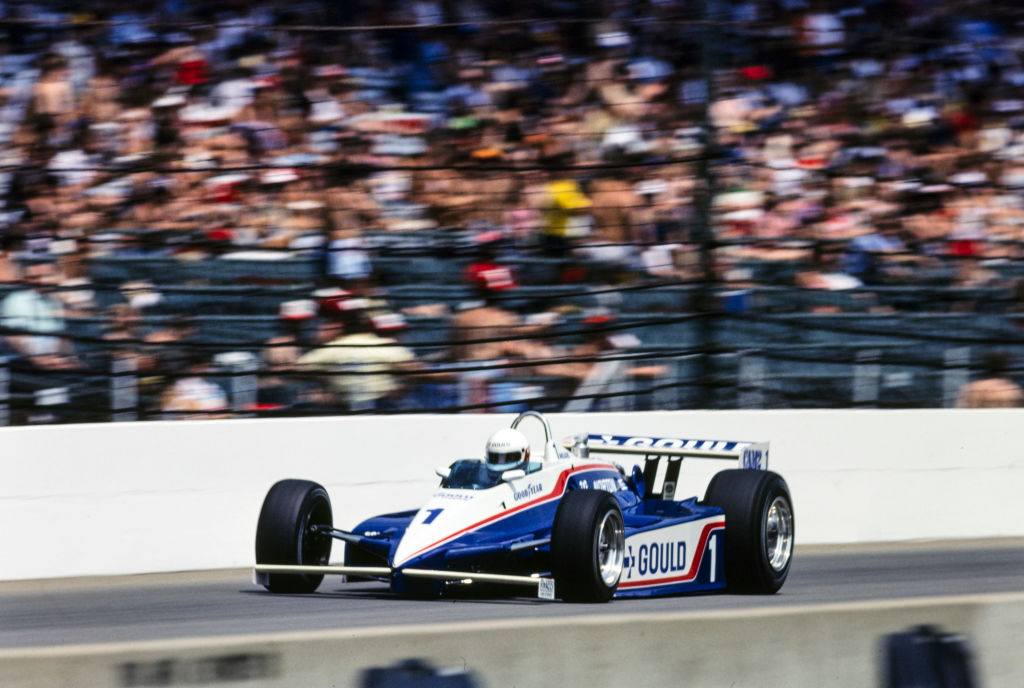
While no elite athlete is devoid of ego, Mears could unplug the cable between head and heart in order to self-critique without tainting his analysis with emotion and self-regard. No doubt, his quest for ever-improved performance contributed to his tally of three IndyCar championships, 29 IndyCar wins including a record-matching four at the Indy 500, 11 front-row starts at Indy including six poles (still the record) and 40 IndyCar poles altogether. His nicknames “Rocket Rick” and “the Master of Faster” were bestowed upon him with good reason.
But his constant striving to do better and find more pace is a special case because it’s not possible to generalize his “overall” speed across the diverse array of IndyCar tracks – superspeedways, short ovals, road courses and street courses. The hideous shunt on the Sanair tri-oval in 1984 that pulped his feet and ankles put a lengthy pause on his ever-developing skills on road and street tracks, and put him on a (very damaged) back foot.
To that point in his career, Mears had scored 19 IndyCar wins, including two Indy 500s, but had also claimed seven road course victories at a time when there were few such venues on the schedule. His first three road course races at the top level in 1978 – Mosport, Silverstone and Brands Hatch – saw him finish second, second and first respectively. And in 1981, he won all three road course events on the CART calendar – Riverside, Watkins Glen and Mexico City.
Nonetheless, Mears says his oval speed came naturally and the road courses required more work, but it was work he enjoyed and anticipated would pay off.
“Perhaps because of my background in off-road racing, where it’s important to keep up momentum and protect your car by keeping your inputs smooth, I found long, fast corners in an Indy car lent themselves best to my style, and obviously the ovals are all long, fast corners,” says Mears. “I believe that after my first full season with Penske [1979], once I’d experienced all the tracks in a strong car, the speed that came from within me – what some people call their ‘natural speed’ – was at its peak, and stayed at that level until my final year [1992]. But across that period I got faster!”
Huh? That sounds like a Rick riddle. What does he mean?
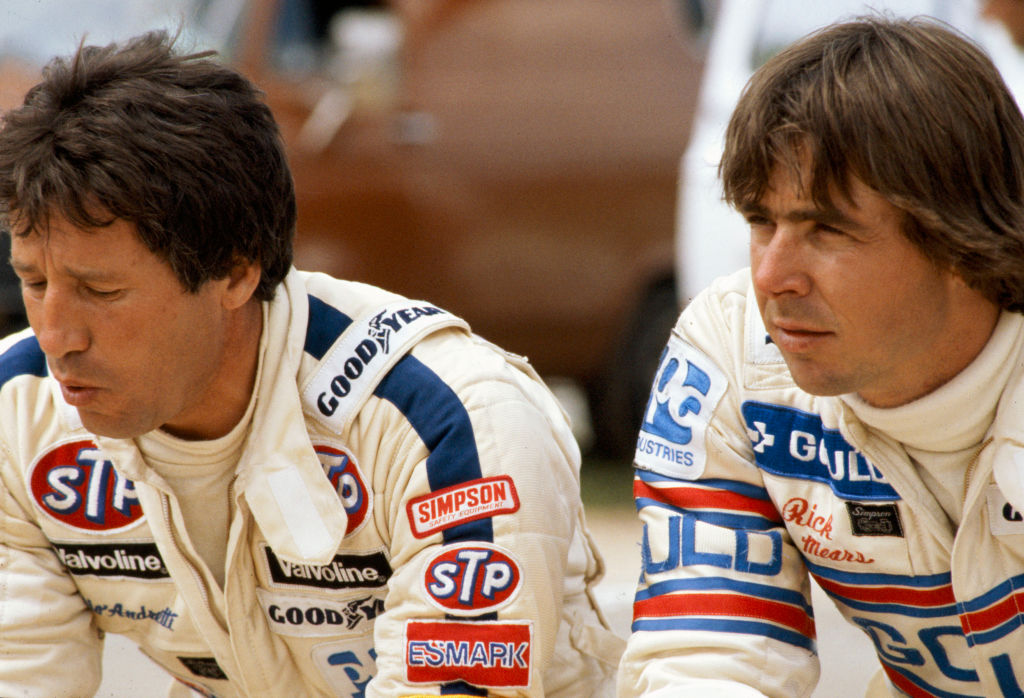
For all his precocious pace, it took Mears (right) a while to match the technical savvy of veteran aces like Mario Andretti. Getty Images
“What I mean is that I got smarter through experience and that made me faster. So in 1978, my first season with Penske, as a part-timer, I might get everything I could out of the car with it set up the way I got it in the time available, but I didn’t yet know all the potential of the car setup in the same way that the established guys would have done. People like my teammate Tom Sneva, or Gordy [Johncock], Johnny Rutherford, Mario [Andretti], Bobby [Unser], Big Al [Unser Sr.] – they had several seasons of IndyCar racing behind them at that point. I was a rookie in comparison even though I’d done about a season’s-worth of races in old cars before that.
“So at the time that I was still learning how to get the most speed from the car by adjusting this and that, and learning what effect it had on the car’s handling and how that translated into more speed in this turn but might upset the handling for another turn, I was up against really great guys who knew exactly what to do to their cars so they could lay down a lap as soon as their tires were in their sweet spot. It’s the same for rookies at any period in racing history – gaining experience and taking on board what you learn from that experience is the only way to consistently get on the pace with the veterans.
“That’s what I tried to do. As an example, off the top of my head: I learned that balance isn’t everything when it came to putting in a strong lap. In those days, tire sets could be a lot more inconsistent than now and could upset the balance of your car. But I discovered that putting on a set of new tires, even if I didn’t have time to fine-tune the balance the way I wanted it, gave me enough extra grip that I could lean on it and turn a faster time than if I had a perfect balance but had gone past the ultimate grip level. So I quickly realized I couldn’t afford to waste time getting the balance just right: I had to put in a lap that took advantage of the tires when they were at their best grip-wise, and could take the maximum lateral load.
“Then as you rack up the miles and experience, and you get to run all the tracks on the schedule, when you come back to them you have more knowledge so your initial setup choices for the weekend are less and less of a gamble. You’re nearer the handling sweet spot, and any imbalance from the new tires is minimized, so each qualifying run, you’re starting off with a combination of handling balance and tire grip that’s nearer and nearer ideal.
“To get back to your point, I think that whatever speed was in me stayed the same almost throughout my career, but what changes – what has to change if you want to stay on top of your game – is that knowledge of how to draw more speed from the car when you need it most, in qualifying and in the race.”

David Malsher-Lopez
Read David Malsher-Lopez's articles
Latest News
Comments
Comments are disabled until you accept Social Networking Cookies. Update cookie preferences
If the dialog doesn't appear, ad-blockers are often the cause; try disabling yours or see our Social Features Support.