Jake Galstad/Lumen via Getty Images
With Wickens’ return for Long Beach, DXDT ready to take another step forward
When the IMSA team trucks unload in the tight confines of Long Beach this weekend, much of the fan attention will be drawn to the GTP runners in the field. It always is, right? Big manufacturers, star drivers and impressive cars running for overall wins will forever have an appeal. Once again, though, the street race in California, with its smaller field featuring two of the four WeatherTech Championship categories, hands a golden opportunity to the GTD runners to enjoy some time in the spotlight.
Naturally, eyes will be drawn to the GTD Pro one-offs from AO Racing’s "Roxy" Porsche and Pfaff’s brand-new Lamborghini Temerario. However, a huge chunk of the fans onsite fort the doubleheader with IndyCar will again be keeping tabs on the progress of DXDT as Robert Wickens embarks on his second IMSA sprint campaign with the Statesville, N.C.-based team.
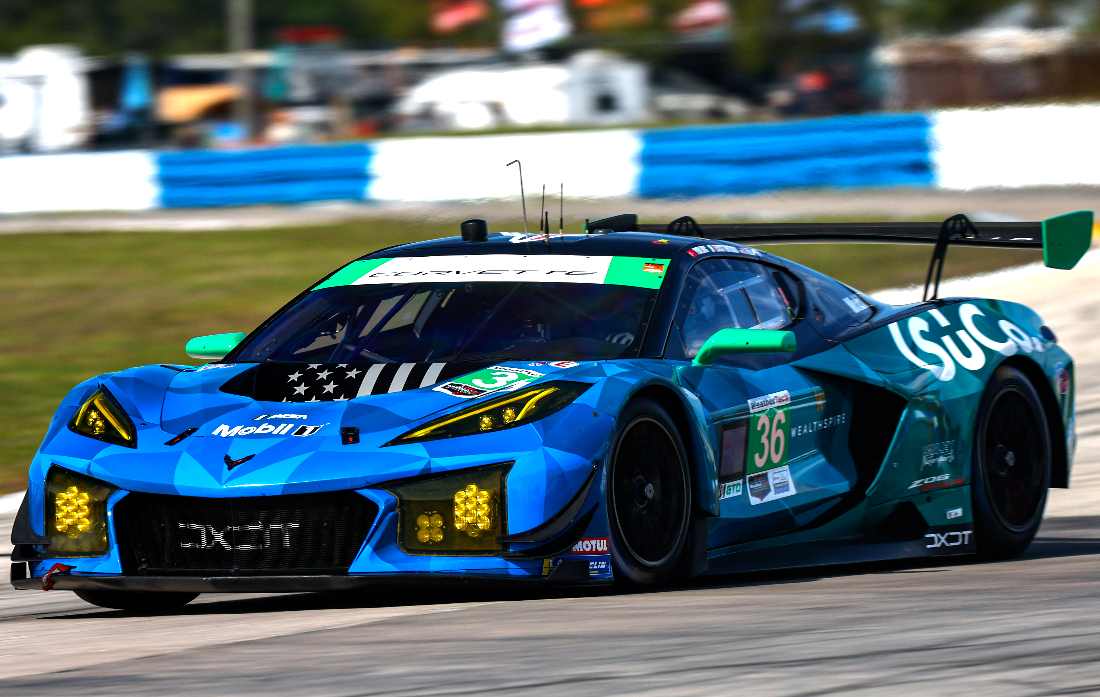
David Askew’s outfit took great strides forward last year during its first IMSA campaign with the maturing Corvette Z06 GT3.R. The second half of the season saw the team perform well in qualifying regularly, finish in the top 10 three times and narrowly miss out on a podium at Canadian Tire Motorsport Park. As a result, this time around, the expectation from within is that finishing the campaign with multiple podiums and a first win is more a realistic prospect than a pipe dream.
At the heart of the effort are team owner David Askew, competition director Bryan Sellers and general manager Erin Gahagan. As the team, which was founded in 2014, grows in stature, the trio’s vision for DXDT’s future is becoming clearer. No longer is it simply a conduit for Askew to fulfill his ambitions behind the wheel; the former chemical engineer, now into his 60s, has stepped back from his own racing and is focused on building a title winner in top-level GT racing. He’s in it for the long haul.
“It was actually very easy to get the team started,” Askew tells RACER. “What's very difficult to do is to figure out what you really want to focus on. And I think that's been the biggest challenge and the biggest learning over the 10-plus years I've been doing this is that we've realised that in order to have the greatest success, you just really have to limit your scope.
“You have to limit what you're focusing on, and really decide what your goal is, and our goal is to be a championship-winning race team. I believe that you have to have a very limited focus so that you can take all the expertise you have, all the knowledge that you have, and succeed.”
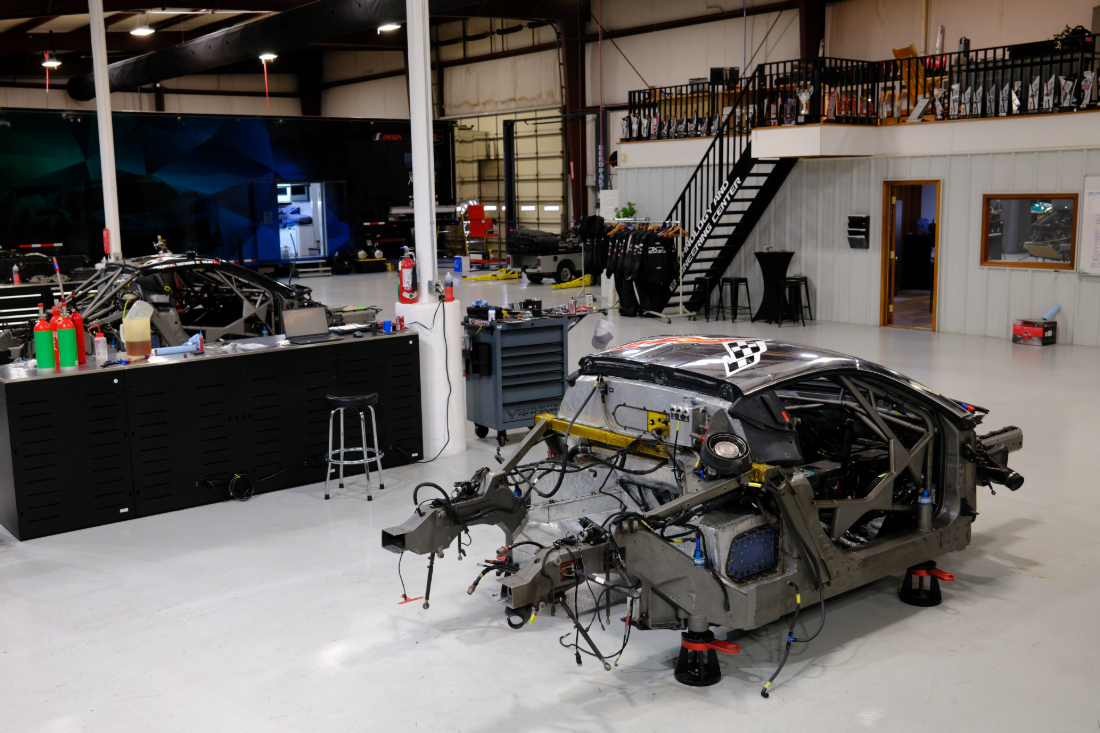
Part of the process that led them from the lower rungs of the motorsport ladder to SRO competition and now IMSA was the decision to move the organization from Utah to Statesville, back in 2020. Statesville may not have the gravitas that Mooresville does in motorsport circles, but it’s quiet, close by and a more cost-effective location for a team with ambition to grow.
“You have the best people,” Askew notes. “It's all, really, all about the people, and in Utah, there just isn’t a lot of great racing people. So it was kind of natural for me to explore moving us somewhere with more people. You know, I realized that the Charlotte area, the Mooresville area, isn't the only place in the world with lots of racing people, but there's that talent pool. A lot of guys who work with us live in Charlotte and the surrounding areas, or don’t mind moving here. All the vendors, support, and manufacturers have operations in Mooresville or in the Charlotte area. And that makes things super efficient as well.”
Over time, Askew believes that the move to Statesville will allow the team to eventually take the next big step, running two cars in IMSA, one GTD, one GTD Pro, and fighting for titles on a regular basis.
Before DXDT reaches that point, though, it must find some form this season. Daytona and Sebring proved tough. But now, with the two biggest Endurance Cup rounds in the rearview mirror, there’s a chance for a reset in the first Sprint Cup encounter.
The team’s fate ultimately rests on the performances delivered by its drivers. Saturday’s race will see Wickens pair up with full-season driver Mason Filippi at DXDT for the first time. Through the opening races, Filippi has shown promise, particularly at Sebring, where he helped lay the foundations for the team’s ninth-place finish.
“Mason has been a great addition to our team,” general manager Gahagan tells RACER. “We’re looking forward to what he can do in the shorter races, because he’s driven with Robert before in Pilot Challenge, so it makes for a good combination.”
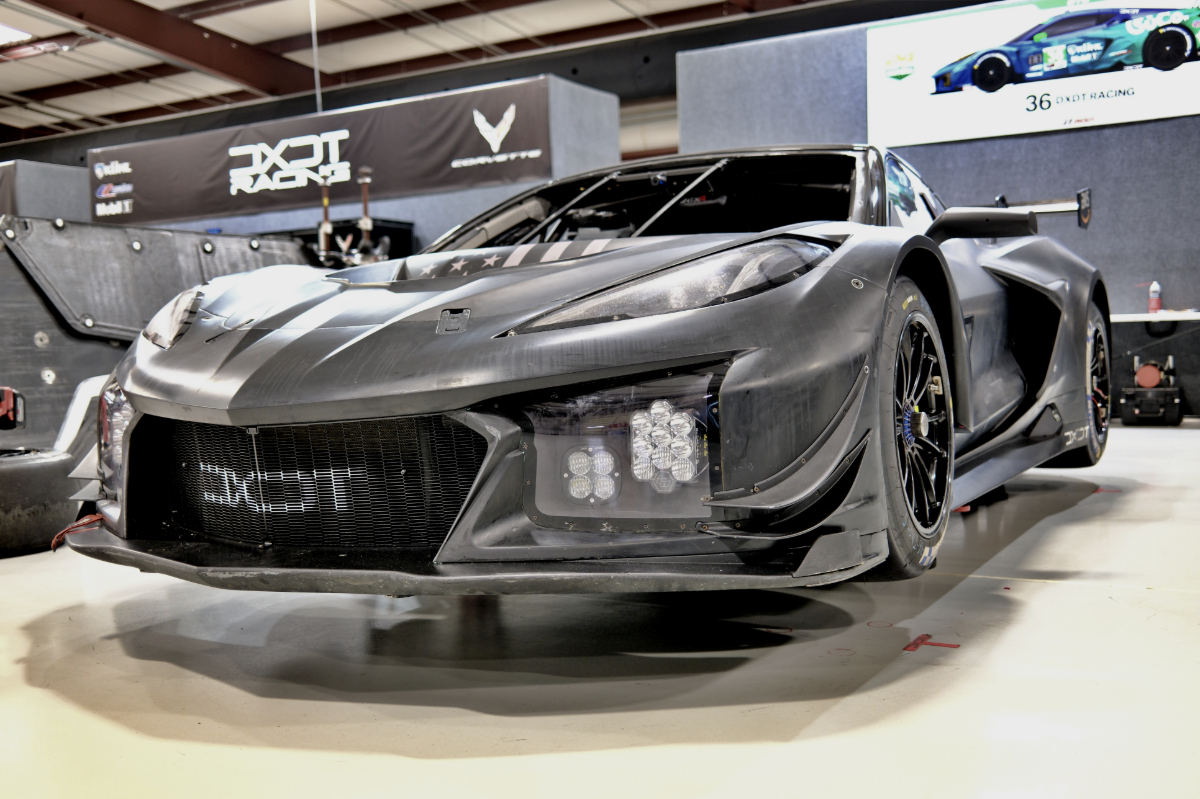
The Z06 GT3.R, of course, will run with the hand controls for the races Wickens is set to take part in. The progression Bosch, plus Pratt Miller, have made in developing the system is a fascinating part of DXDT’s project; it’s tech that has turned heads. And now, impressively, after multiple iterations, the current system doesn’t add much complexity or expense to the team’s effort either.
Evidence of this can be found in DXDT’s shop. The team possesses three Z06 GT3.R chassis, but only one will be used during the GTD campaign. The other two currently act as spares, ready and waiting for a future expansion of its operations in IMSA.
“The car is homologated with it all in mind, so we don’t have to take everything associated with it out of the car when he’s not racing. The standard brake system stays there,” DXDT car chief Freddie Johnson says when asked about the process behind prepping the car for the rounds that Wickens is with the team. “There’s a system that goes between the pedal box and ABS pump. It’s an electronic system that basically replaces the function of the pedal with the electronics from the hand input. It has its own wiring.
“We can prep the car in a day, around eight hours, because you’re not taking anything out, everything has a home, it’s all figured out. The computer side of things takes a bit more time to activate and set up, but from a mechanical standpoint, it’s not super involved because it’s a kit, and it all fits in.”
“Bosch and Pratt Miller have delivered a great system,” Askew says. “You’d think there would be reliability concerns, but we’ve had none. It’s why we want to continue this journey, and it’s why we expect so much of Robert. The disability doesn’t come into it.
“The only difficulty we have with Robert, physically, is getting him in and out of the car during pit stops as quickly as possible. We’ve focused on that, and as a team we’ve had to figure out how to get faster and faster at it. Our goal is to ensure there is never an issue or a time deficit. We want to make it so that when Robert is racing, nobody notices that we have a disabled driver, or cares.”
Gahagan believes that with a new car and a new project, it takes three years to win a championship. One year to get going, a second year to build and a third year to fight for the big prizes.
“With our driver line-up across the season (which includes Salih Yoluc and Charlie Eastwood for the Endurance Cup races), and the crew we have assembled, we can see it coming together,” she says.
“We like to think we treat our employees like a family. It’s a great group – they all get along on and off track. It’s all about trying to find people who work well together. Our crew might be a little older, but they care about the people they work with. It’s the culture of the team. And that is what we feel will lead us to where we want to go.”
Stephen Kilbey
UK-based Stephen Kilbey is RACER.com's FIA World Endurance Championship correspondent, and is also Deputy Editor of Dailysportscar.com He has a first-class honours degree in Sports Journalism and is a previous winner of the UK Guild of Motoring Writers Sir William Lyons Award.
Read Stephen Kilbey's articles
Latest News
Comments
Comments are disabled until you accept Social Networking Cookies. Update cookie preferences
If the dialog doesn't appear, ad-blockers are often the cause; try disabling yours or see our Social Features Support.