Brandon Badraoui/Getty Images
'No hard feelings' within Porsche Penske Motorsport ahead of Long Beach after contentious Sebring finish
Porsche Penske Motorsport would always be at the center of attention going into this weekend’s Acura Grand Prix of Long Beach, especially after starting the 2026 IMSA season with consecutive wins at Daytona and Sebring.
Championship leader Felipe Nasr, defying orders by overtaking teammate Kévin Estre for the lead with just over an hour to go in the 12 Hours of Sebring, generated both scrutiny and intrigue around the top team in the IMSA WeatherTech SportsCar Championship. It cast a shadow over what should have been a joyous occasion.
Speaking to reporters ahead of Long Beach, Porsche Penske Motorsport competition director Jonathan Diuguid addressed the finish, and the late-race drama that played out between the two factory Porsche 963s.
“The one thing I’ll say is that we’ve talked about it as a group. Felipe and Kévin have talked about it, the team has talked about it in general, and everybody understands what the expectations are going forward – and how we’re going to go moving forward,” said Diuguid, who also serves as the strategist for the No. 6 Penske Porsche 963.
“There’s no hard feelings between anybody. You know, there was some, call it, drama at the end of the race – whatever you want to describe it. But the reality is, is that our two cars dominated the race. We finished 1-2, and that’s what we wanted to focus on.”
With an hour and a half to go in the Twelve Hours of Sebring, Myers Riley Motorsports’ Jenson Altzman crashed hard exiting Turn 1, bringing out a full course yellow and a chance for both Porsches to make pit stops.
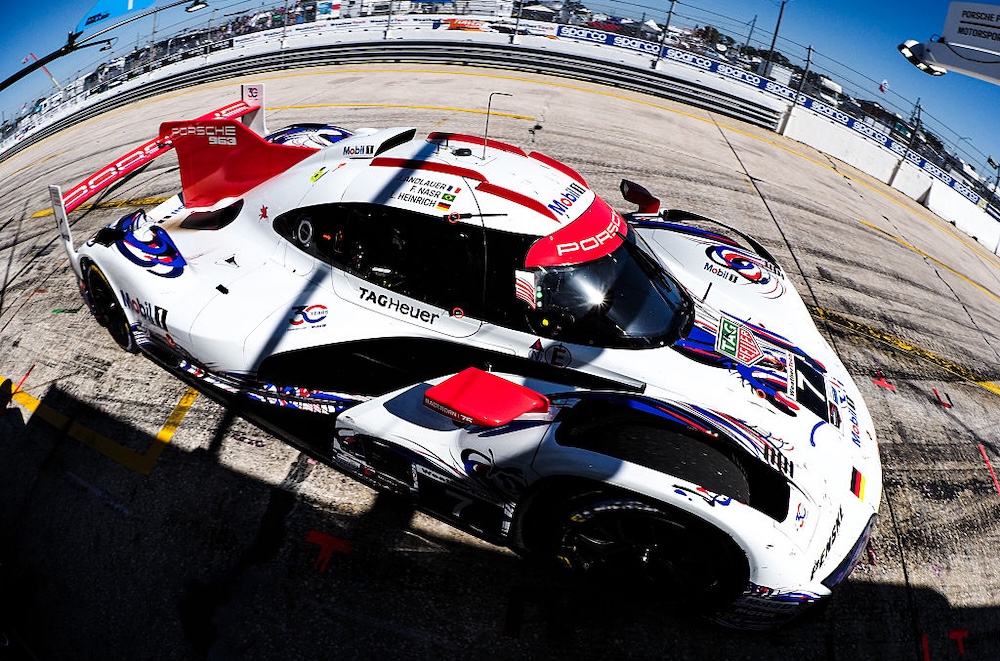
The No. 6 Porsche of Estre came in from the lead to take new tires and energy replenishment, while the No. 7 car of Nasr came in from second to take energy only. Nasr left the pits with the lead, but was asked to let Estre through after green flag racing resumed. Nasr expressed his frustration to Travis Law, PPM’s competition director and strategist for the No. 7 car, though reluctantly agreed to the swap after an intervention from Roger Penske himself.
But with the No. 31 Cadillac Whelen V-Series.R of Jack Aitken rapidly closing in on the pair, Nasr overtook Estre up the inside of Sunset Bend to take the lead with 65 minutes left, and the two finished in that order. It led to a frosty post-race press conference with two proud competitors at the center of the discussion, a drivers-only post-race meeting, and then a subsequent debrief involving team management.
At the end of it all, and with a few weeks for all involved to reflect further, it seems that everyone within PPM is back on the same page heading into IMSA’s West Coast double at Long Beach and Laguna Seca.
“I think the details of how we went through our analysis aren’t terribly important,” Diuguid said. “The one thing I will say is, we looked at all levels of the team – from how the drivers interacted, to how Travis and I interacted, to how the management staff interacted with managing the situation.
“We talked about things that we thought we did well, and we talked about things that we didn’t think we did so well. And ultimately, we did get all the drivers together, and openly talked about the missteps or mistakes – or however you want to analyze it – and set the expectation going forward.
“Everybody left that meeting with a common understanding and also a common goal. And there’s no existing hard feelings, or anything like that.”
As for the drivers-only meeting, Nasr’s co-driver Julien Andlauer summed it up briefly: “We all pretty much talked about it, and we exposed our point of view,” said the Frenchman, who now leads the IMSA WeatherTech GTP championship alongside Nasr.
“And we just, let’s say, came down to the basics – which are, respect of each other, of everything that is internal should remain internal, and some people did mistakes. I’m not going to talk about driver management, or this or that, but we just talked about it so it doesn’t happen again.”
But it inevitably raises the question: Will Porsche Penske continue to use team orders, when and where it is appropriate? “Absolutely,” Diuguid affirmed.
“I think every single manufacturer at the Sebring Twelve Hours employed team orders; Cadillac swapped positions between the No. 10 (Wayne Taylor Racing) and No. 31 (Cadillac Whelen) at the end of the race. BMW switched positions on track and in pit lane, Acura switched positions on track and pit lane.
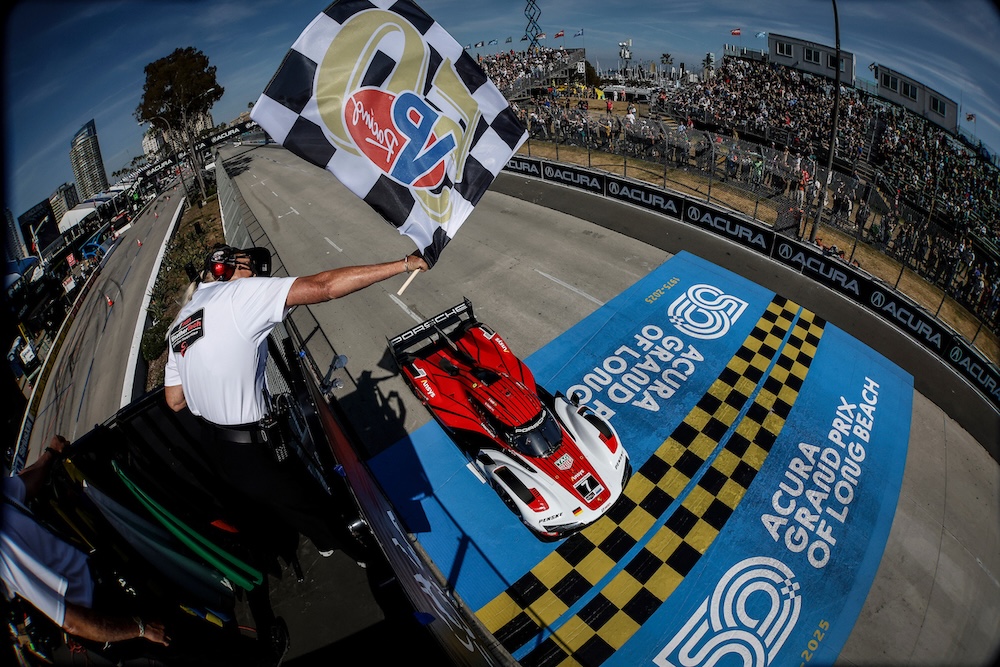
PPM comes into this weekend's race at Long Beach as the defending winner, but will have some new BOP hurdles to overcome this time around. Mike Levitt/IMSA
“It’s part of the sport, and it’s part of being successful with the pit lane structures that we race in, in IMSA. Because in the end, our goal is to make sure Porsche ends up first, and we’re going to do whatever it takes to do that. And I hope to be in that position in Long Beach again, when we’re talking about which one of the PPM cars is going to finish first.”
If Porsche Penske Motorsport is to win the Grand Prix of Long Beach for the third time in four years though, the task at hand has seemingly gotten tougher on paper.
In the March 25 installment of the RACER Mailbag, Marshall Pruett described the factory Porsches showing their full pace and performance potential all weekend at Sebring as being akin to Jimmy Conway’s henchmen in Goodfellas rewarding themselves for a job well done with the Lufthansa heist by buying fancy cars and clothes, putting them at risk of alerting the authorities in defiance of Conway’s guidance.
To inevitably continue that analogy, the pink Cadillac in the parking lot was discovered last week when IMSA released its technical bulletin outlining Balance of Performance for Long Beach.
A 45-kilogram weight increase puts the two factory cars at the maximum allowable weight of 1100kg (the cap was increased from 1080kg in 2025). The 'first stage' horsepower has been reduced significantly, which hits harder at a tight, technical track like Long Beach with very few high-speed zones. Adding to this, these changes only impact the 2026-spec Porsches run by the factory team, and not the 2025-spec Porsche 963 run by privateer JDC-Miller MotorSports.
BOP is never the sole determining factor in wins or losses in top-tier prototype racing, but running the numbers, any big result from Porsche Penske will have to be extracted through the intangibles like strategy, pit work, and drivers getting the maximum from the package they have.
“We can only do so much to beat the laws of physics,” Diuguid said of the hand his team’s been dealt. Porsche Penske tested at Laguna Seca this past Saturday to run the car at its higher weight limit, and how that interacts with Michelin’s new Hypercar tire compounds.
“It’s something that we’ll have to work through, and make sure we understand how to respond to it, whether it’s the life of the tires, or setup approach, or those kind of things," he continued. “But we were working on that already, as soon as the information came out from the IMSA Technical staff on Wednesday. Tires are probably going to be the biggest focus. I think we have a pretty good toolbox from the setup world, to be able to react and respond to any of the BOP metrics appropriately. So I’m not necessarily concerned about that.”
Some see the adjustment as a form of punitive success ballast aimed at preventing Porsche Penske Motorsport from running away from the pack to its third straight full set of IMSA GTP titles. Be that as it may, it isn’t going to change the way the team prepares for Long Beach in principle.
“From the outside, it probably looks like the performances of the team – not just this year, but in previous years – have come easy,” said Diuguid.
“The one thing I will say is, I can’t be prouder of all the hard work that our team does, because it does take a lot of hard work. And when we show up to the race track and we’re dominant, it’s a direct result of that.
“Our weight or power or whatever, doesn’t really change how we approach the race weekend. Everybody’s going to work as hard as we did beforehand, and be successful in the conditions that we’re given.”
RJ O’Connell
Read RJ O’Connell's articles
Latest News
Comments
Comments are disabled until you accept Social Networking Cookies. Update cookie preferences
If the dialog doesn't appear, ad-blockers are often the cause; try disabling yours or see our Social Features Support.