Getty Images
Looking back on Ganassi’s first IndyCar championship, 30 years on
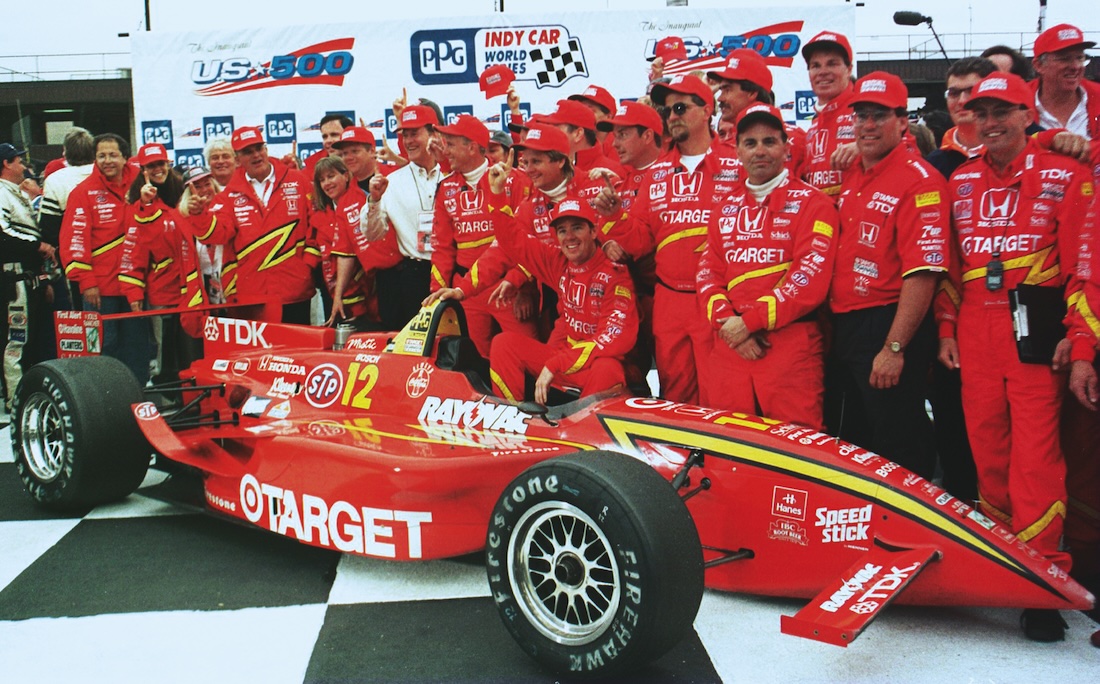
Thirty years ago, Jimmy Vasser was in the early throes of a triumphant IndyCar campaign – his first and last, Chip Ganassi Racing’s first of 17… so far. RACER reminisces with Vasser, his race engineer Julian Robertson, CGR’s managing director of the time, Tom Anderson, and Mike Hull, then team manager but MD since 2001.
Jimmy Vasser has nothing to prove these days. As a driver, he was an IndyCar champion. As an Indy car team co-owner – he was the “V” in PKV/KV/KVSH Racing – he won several races including the Indianapolis 500. And as a team co-owner with James “Sulli” Sullivan in the IMSA WeatherTech SportsCar Championship with Lexus, he has seen the Vasser Sullivan-run RC Fs score several triumphs, including a sweep of the GTD titles in 2023.
Thirty years ago, things were different for Vasser. He knew how good he was, but wasn’t sure others did. After finishing runner-up in the 1991 Formula Atlantic championship, he’d graduated to CART IndyCar racing with Hayhoe-Cole Racing, but the team was part-time for two years, and even when it went full-time in ’94, it was a one-car line-up. Vasser had no teammate with whom to share feedback, nor a yardstick by which others could quantify his ability.
But someone who had noticed a spark of promise was Chip Ganassi, who that same year had switched his team to the new Reynard chassis and scored two wins with Formula 1 exile Michael Andretti. Now for 1995, the latter was heading back to his natural home, Newman/Haas Racing, so Ganassi needed a new star…
RACER: When did Chip first indicate he was interested in you joining his team, and what convinced you?
Jimmy Vasser: Toward the end of the ’94 season, Chip contacted me. We’d learned that Conseco wasn’t going to continue sponsoring Hayhoe-Cole, the team I was with at the time, and then through the winter, the talks dragged on. I had an offer from Rick Galles, which was a big deal because he’d had a lot of success with Al Unser Jr. a couple of years earlier, but my team owner Jim Hayhoe was talking to Chip, and I was interested in that because of Michael Andretti’s recent success. Bryan Herta had already been signed to replace Michael, but Chip was keen to keep a two-car team, and Jim Hayhoe had STP sponsorship left over from his team’s deal, so he got me in the door at Ganassi.
We had reliability issues at the start of 1995, but we got a run of podiums mid-season. I was really starting to jell with Julian Robertson, my race engineer, and I could feel the whole Chip Ganassi Racing program starting to take off.
At the end of 1995, it seemed exceedingly bold to change both your engine supplier from Ford to Honda and your tire supplier, from Goodyear to Firestone. The combo of Reynard, Ford and Goodyear had just won the championship with Team Green and Jacques Villneuve, whereas Firestone had scored just two wins since its 20-year hiatus, and Honda had just a solitary win. What was the thinking behind two simultaneous transitions?
Mike Hull: It was about the people who were part of those organizations at the time. They were managing their technology and their passion for the technology, and their steps for long-term growth, and their ability to support a team in doing it. At that time, this team was a second citizen to some of the teams it was racing against in terms of the pecking order. Honda’s and Firestone’s passion and energy, and their methods of solving problems, were very similar to ours. So that blend between our three organizations seemed a really good fit. So was it a bold move? Not sure that’s the correct term. It was a move that represented where Chip Ganassi Racing was going next – and we took full advantage of it.
Tom Anderson: Myself, [veteran IndyCar and Formula 1 race engineer] Morris Nunn and Mike Hull, had observed the rate of progress that Patrick Racing had made with the Firestone development program, and what sold us on the Honda program was [late HPD director] Robert Clarke, who was extremely passionate and professional. He explained everything they’d gone through with Rahal-Hogan and Tasman Motorsports, and what they thought they could do. Collectively, we thought Honda looked ready. Obviously we were taking a chance by switching engine and tire supplier, but it worked out. Turned out it was the right thing to do at exactly the right time.
I should also point out that there was also a different chemistry in the room for ’96, because Chip had done a deal with [NFL legend] Joe Montana, and of course Alex Zanardi had arrived. He just had this incredible personality and it raised the level of everybody in the team. It put extraordinary pressure on Jimmy Vasser, and Jimmy rose to the occasion: he became another person in ’96, really dug deep and showed his talent.
Everyone motivated each other; Montana was excited, Chip was excited, and even Mike Hull – who’s a quiet motivator – had an influence on Jimmy. And Jim Hayhoe, who had run Jimmy before he joined us, was also there. It was a strong combination. Plus you had Rob Hill, crew chief on Zanardi’s car, Mo Nunn, Grant Weaver and Julian Robertson, Ricky Davis, Scott Harner, Tim Keene… They’re all still in racing – that’s how much they loved the job.
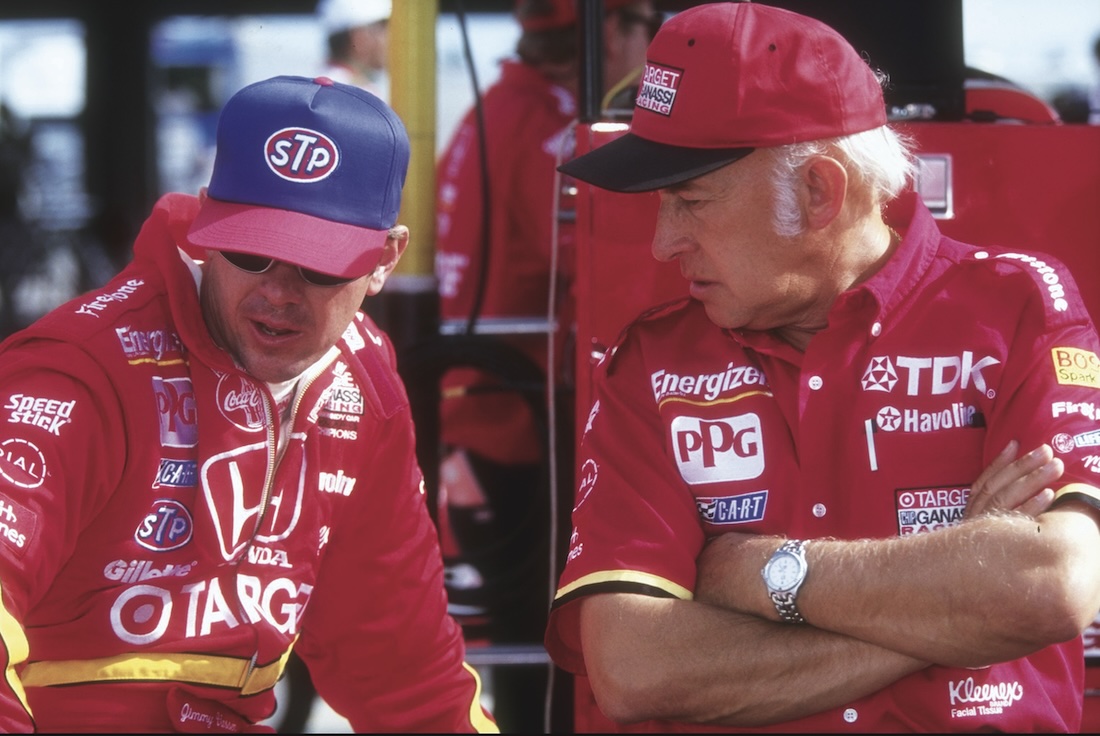
Mo Nunn (right) formed part of the strong brain trust that got the most out of Vasser (left). Getty Images
Julian Robertson: I think we knew Firestone was going to be good. Scott Pruett [Patrick Racing] and Andre Ribeiro [Tasman Motorsports] had each won a race on Firestones the previous season. And Pruett had scored several other top fives. Also, Patrick Racing used to stay on and do tire tests after a lot of the races – unlimited testing back then – so they were gaining knowledge very, very quickly. Also, Firestone kept it very simple from the outset, whereas I remember Goodyear seemed to have a lot of different tire compounds: every oval, it felt like we had a different compound at each corner of the car from anything we’d seen before. It’s hard to dial the car in when the tires are changing that much. By the time we had signed with Firestone, they just had a short-oval tire, a superspeedway tire, a road course tire and a street course tire, so that gave us good baselines from track to track. That was a lot more straightforward, because it meant we knew what we had going into the weekend and we’d set the cars up accordingly, and then just make tweaks depending on track conditions and temperatures.
And as for Honda, I mean – they’re just racers, aren’t they? It was super-cool to be developing motors with them. I remember at the Firebird road course in Phoenix, during early development, although I don’t recall the exact figures – say 12,500 rpm as maximum revs – they walked in one morning and said, ‘OK, you can run 13,500 now.’ Whoah! We had been treating it as a big deal when we were allowed an extra 100 rpm, and now we’re with a company that says we can go up another 1,000! So Honda were truly going for it.
Jimmy Vasser: The Ford had had some reliability problems, and it was clear that Honda were coming hard, taking it very seriously. And Firestone were doing a lot of testing, and we were to become their number one team, whereas Goodyear always leaned on Penske and Newman/Haas for their tests. I figured I’d get a lot of test miles with the Firestone switch, so I wasn’t worried about these decisions: I saw them as net positives.
David Malsher-Lopez
Read David Malsher-Lopez's articles
Latest News
Comments
Comments are disabled until you accept Social Networking Cookies. Update cookie preferences
If the dialog doesn't appear, ad-blockers are often the cause; try disabling yours or see our Social Features Support.