Mark Thompson/Getty Images
Guarded optimism from drivers after FIA changes energy to bolster qualifying at Suzuka
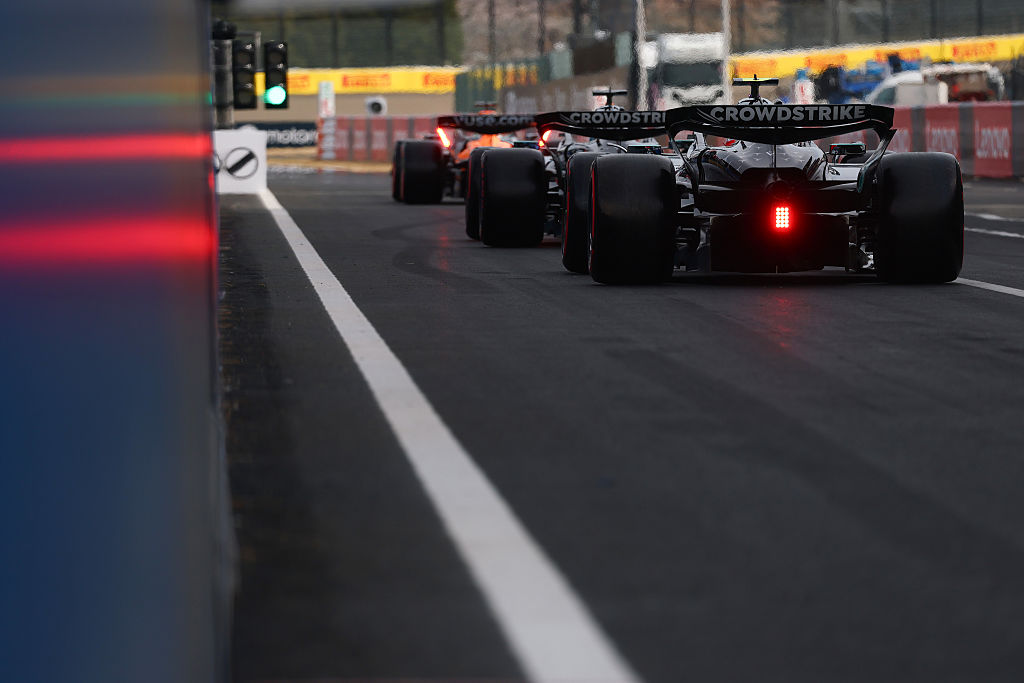
The FIA has approved a change of conditions related to energy recharge limits in order to try and improve the qualifying challenge at the Japanese Grand Prix.
The 2026 regulations put a significant emphases on harvesting energy in order to be able to deploy it at the right parts of the circuit for the optimum lap time, something that has led to more action in races but had a detrimental impact on qualifying.
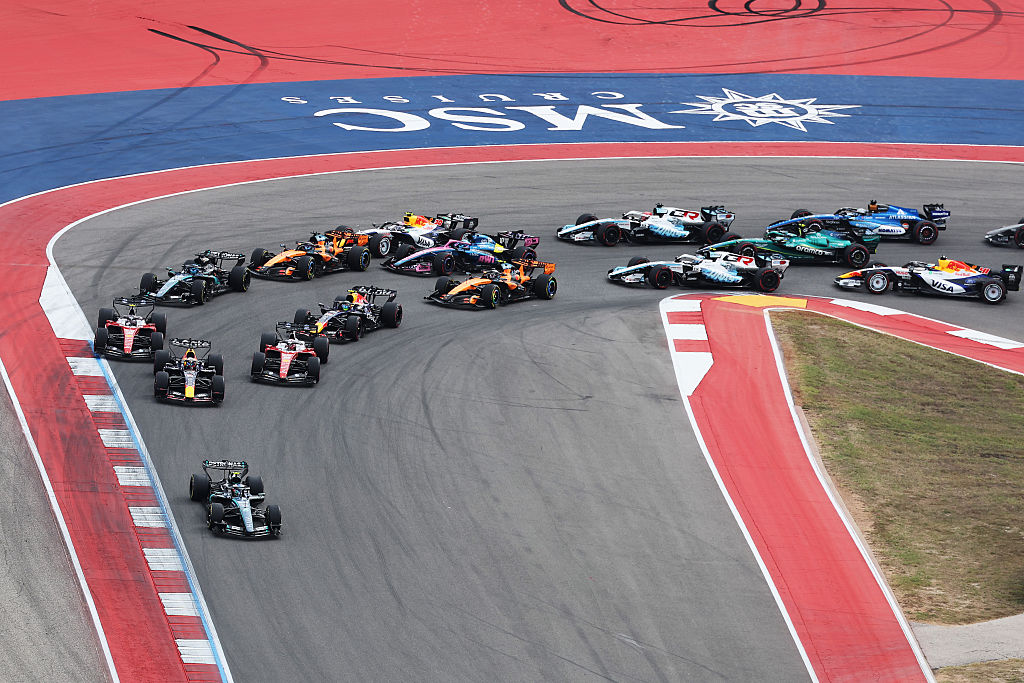
In Melbourne in particular – an energy-starved track due to a lack of well-spaced large braking zones – drivers were slowing on the approach to the high-speed Turn 9 and 10 section, super-clipping to generate energy for the following straight. Many bemoaned the loss of a challenging section of track as they were tackling the two corners far below top speed, so discussions have taken place to try and address the balance.
As a result, drivers will be allowed to harvest less energy during a qualifying lap, with the intent of reducing the need to lift in certain areas in order to generate that energy.
“Following discussions between the FIA, F1 teams and power unit manufacturers, a minor adjustment to the energy management parameters for qualifying at the Japanese GP has been agreed with the unanimous support of all power unit manufacturers,” the FIA said in a statement.
“To ensure that the intended balance between energy deployment and driver performance is maintained, the maximum permitted energy recharge for qualifying this weekend has been reduced from 9.0 MJ to 8.0 MJ. This adjustment reflects feedback from drivers and teams, who have emphasized the importance of maintaining qualifying as a performance challenge.
“The FIA notes that the first events under the 2026 regulations have been operationally successful, and this targeted refinement is part of the normal process of optimization as the new regulatory framework is further validated in real-world conditions.
“The FIA, together with F1 teams and power unit manufacturers, continues to embrace evolutions to energy management, with further discussions scheduled in the coming weeks.”
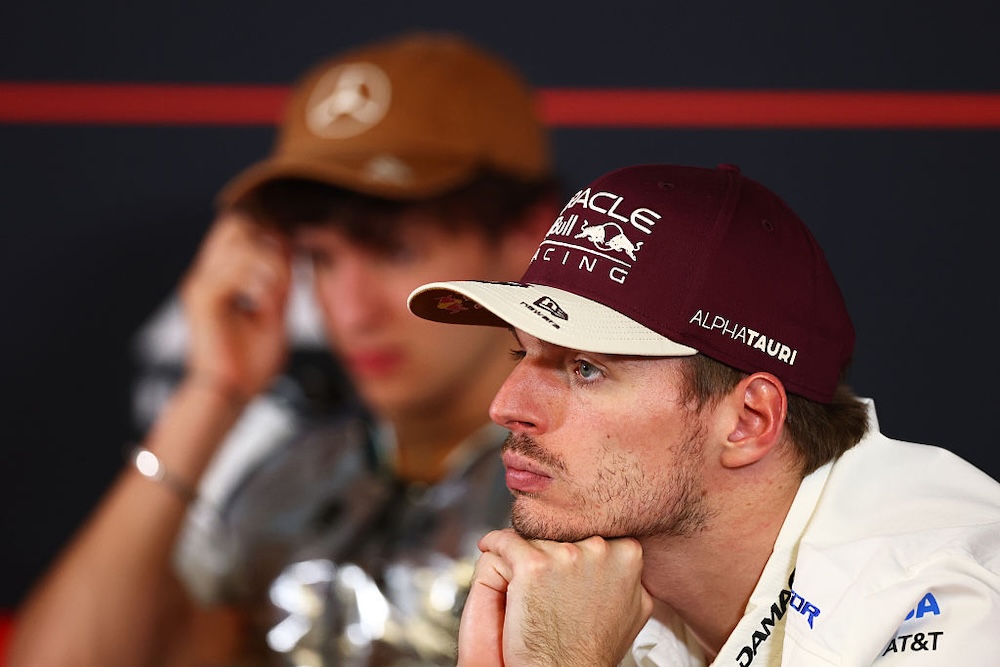
The change drew a range of views from the drivers, with Max Verstappen – who has been a vocal critic of the new regulations – believing it should be a small improvement from a qualifying perspective.
“I've not practiced this on the simulator, so I cannot give you a clear answer,” Verstappen said. "Before it was a little bit... well, not flat out basically. So, I hope that this can be closer to being flat out.
“It feels very different to last year. But this is the reality that we're in now and you just have to accept that at the moment. There's not much that you can do anyway for this year. I hope that bigger changes will be there for next year.
“How does it feel? It feels as it feels. It's different. I mean, you all know how I think of the situation and I think that was something that I felt when I was on the simulator as well around here.
“Going to eight megajoules probably helps a tiny bit, but the basics are the same, so you still need to be careful with your throttle inputs. That is very different to the past.
“You're on the limit of what the car is allowing you to do, but in terms of power, of course, in places you're not.”
While championship leader George Russell would be well-placed to not want any changes given his team’s early advantage, he says the direction the governing body is working in is a positive one.
“It will have an impact,” Russell said. “I don't think it will change things substantially, to be honest. We've all done the preparation so far with the previous rules, so I think we'll just wait and see.
“But I think it's good that the FIA is looking to make some of these small changes, refining the regulation, because we're still race three into the season. It's obviously been very positive, I think, for the sport – the racing – but qualifying just needs a bit of work.”
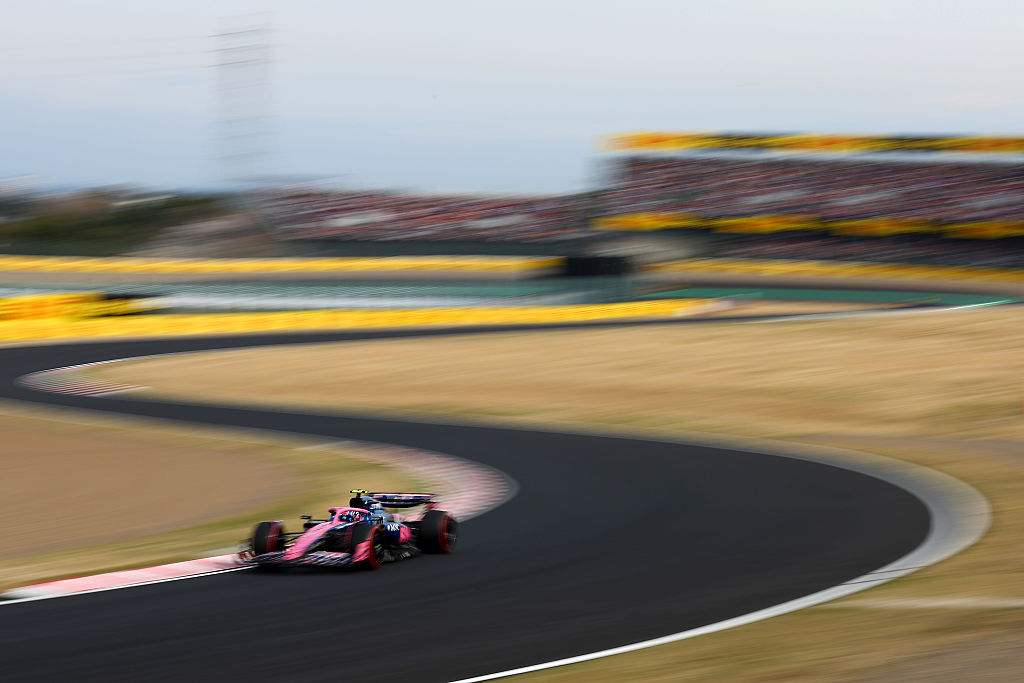
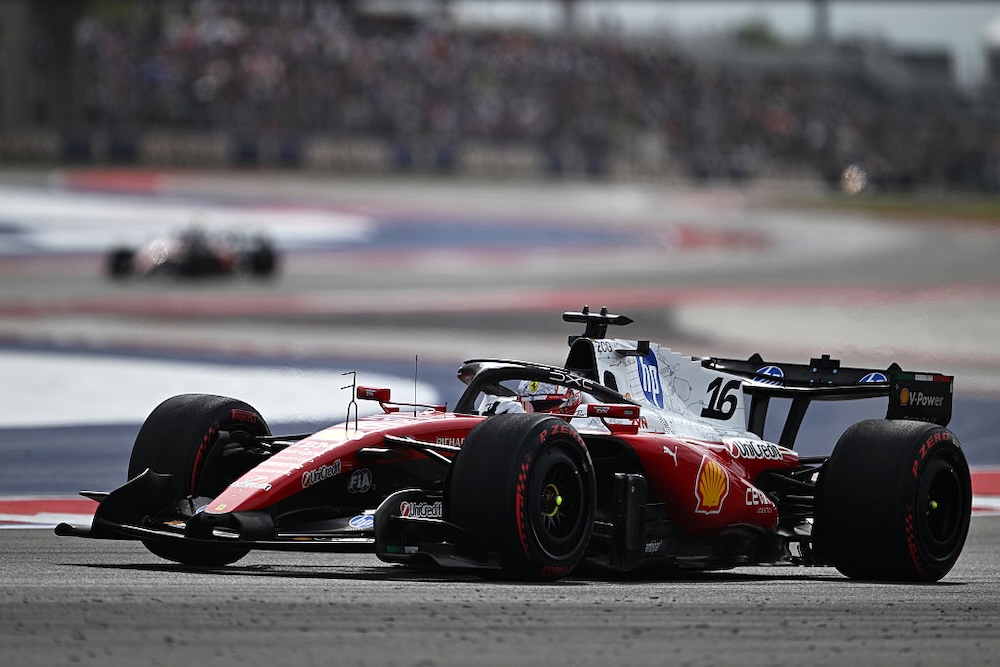
Drivers feel the nature of the new cars has neutered some of F1's high-speed sections like those that feature prominently at Suzuka, but are hopeful the latest change is a step in the right direction. Andy Hone/Getty Images
For cars further back in the field with less downforce, there was still an expectation that the Degner Curves and Spoon at Suzuka could be far less of a driving challenge, bu Alex Albon hopes the change might minimize that impact.
“It's the same thing in Spoon through Turn 13 and 14, it’s very similar to Turn 8 and 9 in many respects,” Albon said. “Even Turn 1 and Turn 2. There's lots of these things. I think what I'm feeling so far this year is there isn't really any high speed anymore, because you're arriving so slowly, basically everything's a medium-speed corner now.
“But what I like that F1 is doing is they're being open-minded. I like that they're making changes. It's great that the teams are also complying and being open as well. I'm not sure if it's going to be the full fix but I hope this is going to get rid of some of it.
“For example, there's still going to be a trade. We don't know, if I'm being totally honest, how it's going to fall out. I was on the team [prep meeting] yesterday and it's all gone to the toilet because of these changes. So I'll let you know later.
“Sector 1 will still be strong. I still think you're going to get some enjoyment there. Basically Turn 8, Turn 13, 130R… To be honest, [130R] hasn't really been a corner for a lot of years. But that corner would also generally be slower as well.
“You saw it in Melbourne. Melbourne Turn 9 and 10 lost a lot of its fun. I'm a driver who generally goes well in high speed as well. It's been a bit frustrating. Let's see. This is the right direction.”
Ferrari-powered driver Oliver Bearman believes the reduction in harvesting limits is one solution but is “just making us even slower,” yet Cadillac’s car performance means Valtteri Bottas hasn’t actually suffered as much as those in quicker machinery so far.
“For us there's been no management in qualifying,” Bottas said. “No lift and coast, because I think, for example, us compared to Ferrari, we're spending less time, full throttle, with less grip.
“So in the qualifying lap, no management has been required for us yet. But maybe that will come. I know that F1 and FIA are working on some improvements with the deployment or with the harvesting, if there's anything that can help. But for us so far, it's been actually OK.”
Presented by:


Chris Medland
While studying Sports Journalism at the University of Central Lancashire, Chris managed to talk his way into working at the British Grand Prix in 2008 and was retained for three years before joining ESPN F1 as Assistant Editor. After three further years at ESPN, a spell as F1 Editor at Crash Media Group was followed by the major task of launching F1i.com’s English-language website and running it as Editor. Present at every race since the start of 2014, he has continued building his freelance portfolio, working with international titles. As well as writing for RACER, his broadcast work includes television appearances on F1 TV and as a presenter and reporter on North America's live radio coverage on SiriusXM.
Read Chris Medland's articles
Latest News
Comments
Comments are disabled until you accept Social Networking Cookies. Update cookie preferences
If the dialog doesn't appear, ad-blockers are often the cause; try disabling yours or see our Social Features Support.