Mark Thompson/Getty Images
What's going on with McLaren?
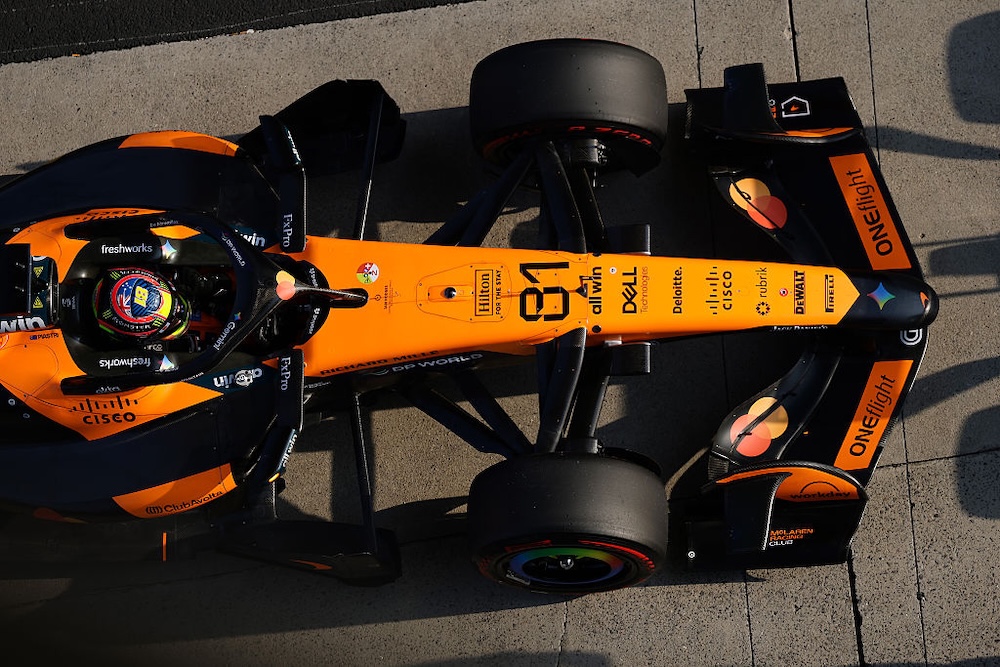
In a typical Formula 1 season, defending world champion McLaren’s 2026 struggles would be the major storyline. Yet it’s been merely a subplot, subsumed by the wider themes of the major regulations overhaul and its impact on the racing, the re-ascent of Mercedes to the summit of grand prix racing and the struggles of every team to adapt to the new rules. So what’s gone wrong?
It’s important to be realistic about the extent of its troubles, which are framed within the context of its re-emergence as an F1 powerhouse. On balance, McLaren has the third-best car, which is reflected in it holding that position in the constructors’ championship despite its dismal strike rate of managing only one start in four attempts in the two grands prix held so far. But the double-DNS in China, the consequence of what team principal Andrea Stella described as electrical problems each of a “different nature”, is a nadir unmatched even by the lows of the Honda era.
First and foremost, McLaren’s difficulties expose the advantage of being a full works team in control of the chassis and power unit design. This confers the ability to optimize their integration and preparation in terms of simulation. While the gap has been reduced by regulations demanding that engine specifications must be the same across manufacturer and customer teams and, crucially, “operated in the same way”, McLaren was taken aback by its deficit to Mercedes in understanding how to optimize the powertrain around the lap. Williams went even further than that, with team principal James Vowles saying “what Mercedes are doing on the power unit is something that caught us off guard”.
Not that there’s any wrongdoing on the part of Mercedes, and Stella himself has stressed that "we're not complaining about it". There is no obligation for a supplier to reveal the depth of knowledge it has built up through its own simulation and analysis. Whereas last season the engines were a known quantity, McLaren has been forced into the uncomfortable position of being more reactive in understanding how to get the best out of the engine early on.
“Go on track, run the car, look at the data, now react to what we have,” Stella said in Australia of the process. “That’s not how you work in Formula 1. What happens on track, you simulate, you know what is happening, you know what you’re programming, you know how the car is going to behave. You have your plans as to how you evolved it that you have figured out before. Since we became a customer team [with Mercedes in 2021], this is the first time that we feel we are on the back foot.”
This exposes how surprised even the teams are by how tiny details in harvesting and deployment, and driving style, can create huge swings in terms of laptime. However, this in itself isn’t the fundamental problem for McLaren given it has already improved significantly. This was a process that it was always going to have to go through, one magnified by how profound the impact on laptime and perhaps its over-confidence in just how close the relationship with Mercedes is. Stella has talked regularly about the depth of the two-way communication, portraying it in the past as almost semi-works and therefore with negligible impact on performance potential, but Mercedes quite rightly hasn’t given away all of its secrets. Why should it?
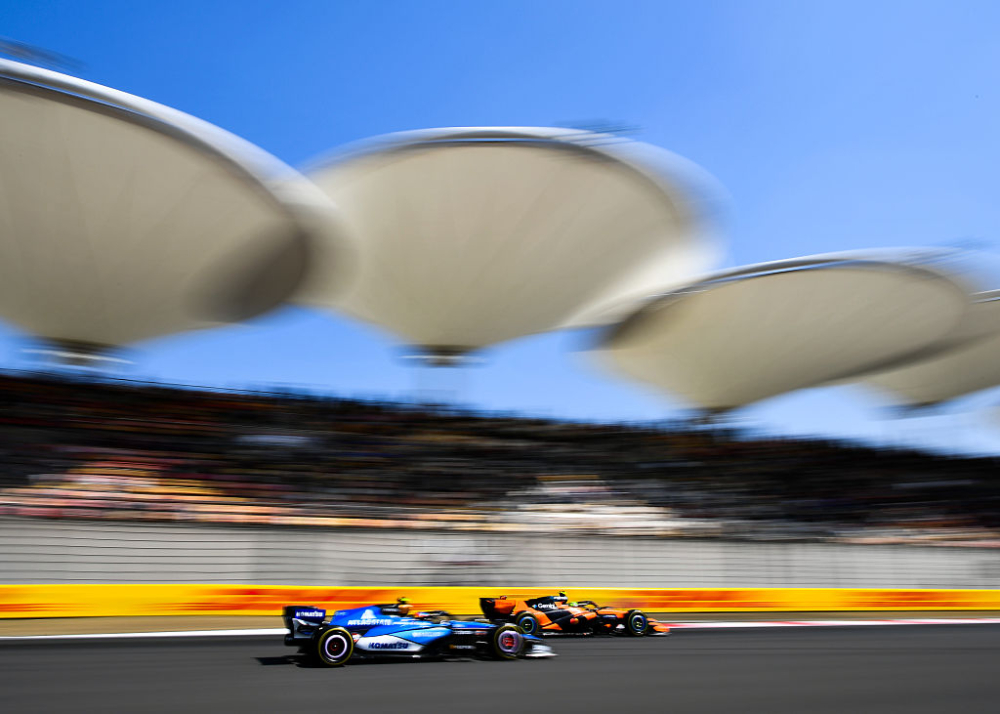
Williams and McLaren both have the same engine as the works Mercedes team, but hasn't enjoyed the same strong start. James Sutton/Getty Images
Instead, the concern is that the McLaren MCL40 simply isn’t at the same level as the Mercedes W17 – or, for that matter, the Ferrari. As world champion Lando Norris pointed out in China, that has an impact on how the McLaren has to be driven in an attempt to have any chance to challenge Ferrari. Even having a power unit advantage over a rival doesn’t mean a better overall package.
“We have a better power unit than the Ferrari and that's our advantage today, we just have more straightline speed, but theirs is still a car that drives around some of the corners quicker than even the Mercedes,” said Norris after qualifying in China. “So, to keep up with them in the corners and then try and get them in the straight is difficult. Between Mercedes and them, they have different places they're strong.”
The deficit in the way the power unit is used is rapidly being eroded, which is demonstrated by the step McLaren made from the Australia season opener to the following weekend in China. While it’s not necessarily possible for McLaren to match precisely what Mercedes is doing given there are dynamic factors that can have small influences on the harvesting and also the risk of stumbling over the myriad quirks that can lead to deployment being modified automatically that costs lap time, it can get close. This means the real focus is on the chassis.
“In Australia, we were sort of 50% of the deficit to Mercedes was related to exploitation of the power unit and the other 50% grip in the corners,” said Stella in China. “I think we have closed the gap a little bit from a power unit exploitation, because we are exploiting the power unit better, but when it comes to the corners, the gap we have is pretty much similar to what we saw in Australia.
“This is related to not having enough aerodynamic load, I would say. There's obviously grip that you generate by using the tires in the right window, but we all understand how to use the tires pretty much in qualifying. So qualifying is a good reference to see actually what's the deficit from an aerodynamic point of view.
“We all know at McLaren that we need to improve the aerodynamic efficiency of the car and in particular downforce. There's good stuff happening in development, so I would expect that the car will be significantly improved in the coming races, especially starting from Miami.”
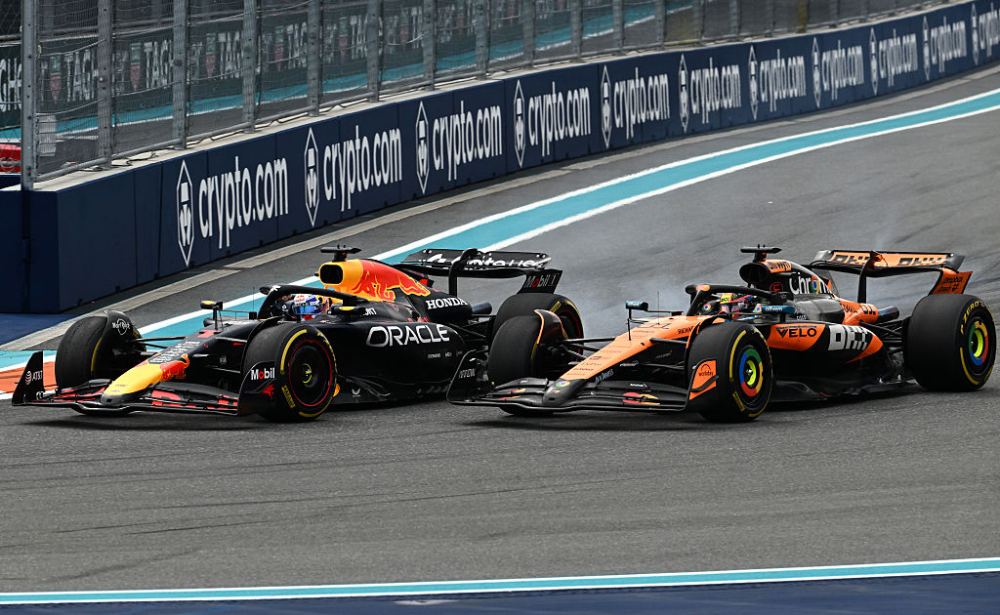
Like former title rivals Red Bull, McLaren has been off-form this season, but could could a resurgence in Miami (pictured) be on the cards? Mark Sutton - Formula 1/Formula 1 via Getty Images
As soon as Stella mentions Miami, now the fourth race of the season at the start of May after the loss of April’s races in Bahrain and Saudi Arabia, it’s a reminder of the need for patience. In recent years, Stella’s frank and honest evaluation of performance weaknesses, for example at the start of both 2023 and ‘24, has been accompanied by predictions of improvements that started in Miami. He has enormous credibility leading a team that has conclusively proved itself to be robust and deliver on its objectives in recent years. While this year has started poorly, that doesn’t mean there won’t be rapid progress – even if it would be unrealistic to expect, and Stella hasn’t promised, a 2024-style leap to victory in Miami.
Arguably, the toll of last year’s pursuit of the world championship played a part in this. Both McLaren and Red Bull have chassis troubles, and it’s unlikely to be a coincidence that Mercedes and Ferrari, which were able to switch maximum development resources to the 2026 car earlier last year, are in better shape. However, that isn’t enough to explain McLaren’s problems and it's unclear what limitations there are in the underlying concept.
The car is understood to be around 100mm shorter than the maximum allowed 3400mm wheelbase, which appears to contribute to the downforce deficit at the rear in particular. That can also mean reduced stability under braking, which could contribute to less efficient harvesting. There are also other differences to Mercedes such as the gear ratios, which must be the same as the supplier team if you have a customer gearbox, but can differ for McLaren given it designs and manufactures its own. Downshifts in terms of timing and number are part of the harvesting opportunity so it’s possible there’s a small disadvantage there, one McLaren could tackle by using its one permitted ‘joker’ change available for the first year of these regulations.
The full picture of McLaren’s car deficit will gradually become clearer, just as it could be reduced by upgrades. Stella and McLaren have an enormous amount of credit in the bank thanks to the massive leap taken from struggling team to championship winner. That was a recovery that at times looked impossible, so this is a team with a recent history of working through and solving problems. The qualities and strengths that allowed this to happen are still there, and if you switch perspective on its current situation and consider the fact that it’s comfortably the strongest customer team in this difficult set of circumstances it becomes a hallmark of McLaren’s qualities.
However, improvements must be made. It’s not yet possible to rule out the possibility of McLaren re-emerging as a title-challenging force this year because the rate of development is so rapid, but realistically that is unlikely thanks to the big head start Mercedes has. What is necessary is for McLaren to make sufficient gains to be a threat for race wins later in the season to ensure it’s ready to return to contention in 2027. In the background, it’s also essential that irons are in the fire to find a works partnership – not at any cost, as a good customer power unit is far better than a bad factory one – as that is the way to maximize the ultimate performance potential of a team.
That, however, would be a long way off if it happens at all. What is realistic is for McLaren to win races this year. That this is the case, even though it’s a customer team that not long ago was roaming aimlessly in the F1 wilderness during its long victory drought, is testament to how far this latest form of the McLaren team has come. To prove it’s back at the front for the long-term, the next test it must pass is recovering from this bad start.

Edd Straw
Edd Straw is a Formula 1 journalist and broadcaster, and regular contributor to RACER magazine. He started his career in motorsport journalism at Autosport in 2002, reporting on a wide range of international motorsport before covering grand prix racing from 2008, as well as putting in stints as editor and editor-in-chief before moving on at the end of 2019. A familiar face both in the F1 paddock, and watching the cars trackside, his analytical approach has become his trademark, having had the privilege of watching all of the great grand prix drivers and teams of the 21st century in action - as well has having a keen interest in the history of motorsport. He was also once a keen amateur racing driver whose achievements are better measured in enjoyment than silverware.
Read Edd Straw's articles
Latest News
Comments
Comments are disabled until you accept Social Networking Cookies. Update cookie preferences
If the dialog doesn't appear, ad-blockers are often the cause; try disabling yours or see our Social Features Support.