Meyer Shank Racing
How Rosenqvist's crew chief Kyle Gibson went from new guy to number one
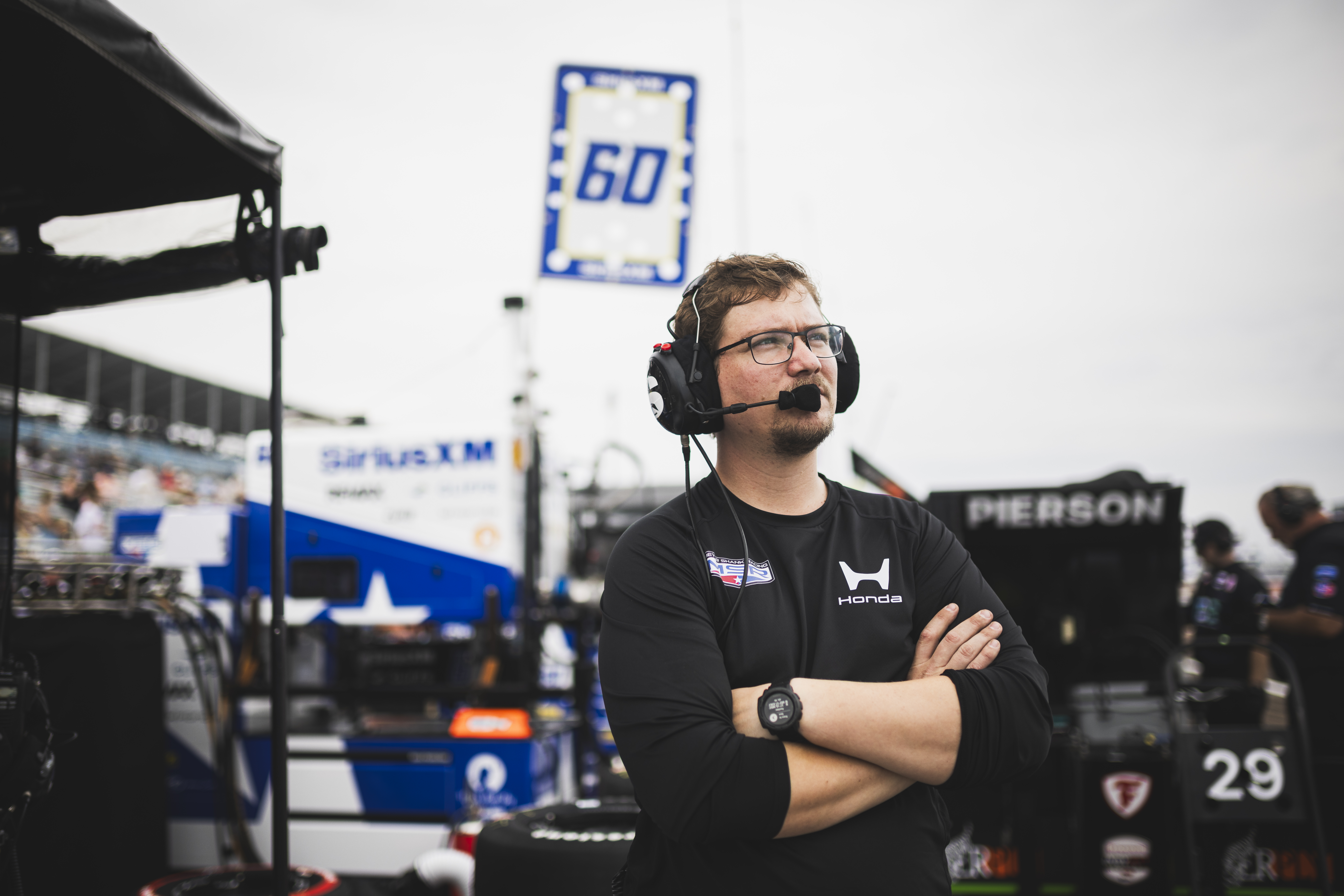
Kyle Gibson was introduced as a new chief mechanic at Meyer Shank Racing during a one-day test at The Thermal Club late in 2024.
The team was in Southern California to give ex-Formula 1 driver Logan Sargeant a run in one of its Indy cars, and throughout the day — and despite Gibson’s youth and inexperience as a team leader — his poise was evident.
Soft-spoken. Intense focus. Procedure-oriented. Commanding presence. Gibson exhibited all of the attributes you’d want in a new car chief. Less than a year and a half into his role, he’s leaving the Indy 500 as the winning crew chief on Felix Rosenqvist’s No. 60 Honda.
“Kyle was a tire guy for AJ Foyt about six years ago,” Mike Shank said. “That's what he did. He came to us as a mechanic, and just kept working his way up. And we gave him a shot two years ago now. It's a big deal. He's a young guy, young wife, young kid, trying to fight his way through this. Really deserves a lot of credit, too. Kyle takes a lot of crap from us when things don't go well. But when they go well, he'll get his share, too.”
Gibson was beaming with pride as his No. 60 MSR crew assembled Monday morning to take victory photos on the famous yard of bricks that mark the start/finish line at the Indianapolis Motor Speedway. The previous afternoon, he and the team were dealing with the highs and lows of emotions as a surefire win was placed in jeopardy by cautions that erased Rosenqvist’s advantage.
“Feels very good,” he told RACER. “We had, I think, we had the best car all month, and we came up a little short in qualifying, and then that yellow came out with eight to go or whatever. I was pretty low at that point, because I thought, man, now anything can happen.
“Because we were sitting there, right there with Pato [O’Ward], and we had him on fuel, we had everybody else beat, then that yellow came out and cleaned the slate, so I wouldn't say my heart dropped, but definitely made [me have] a lot more anxiety at that point.”
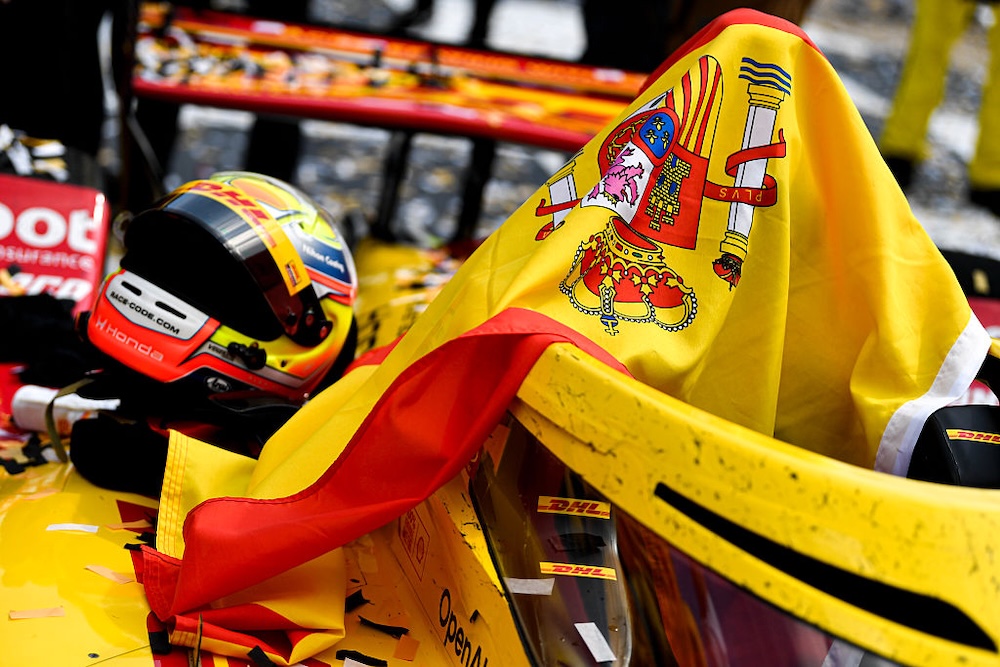
But Gibson’s driver held on through a daring final lap to regain the lead by racing the high line against teammate Marcus Armstrong and slinging past David Malukas to win the closest race in Indy 500 history.
“Felix, he did his job, and same thing on pit road, everyone did their job, and that's all you can do,” Gibson added. “Do your job, and whatever happens, happens. Really proud of all the guys. Really proud of Felix. I mean, to go two-wide for basically a whole lap, and then just keep his foot in it the whole time. I mean, that was the best finish I've ever seen.”
Although the finish of the race and the No. 60’s win is what will be remembered first, it was the event-long excellence by Gibson and all of the men and women that work on the car who kept the machine running in a high state of performance and reliability throughout the two-week-long event.
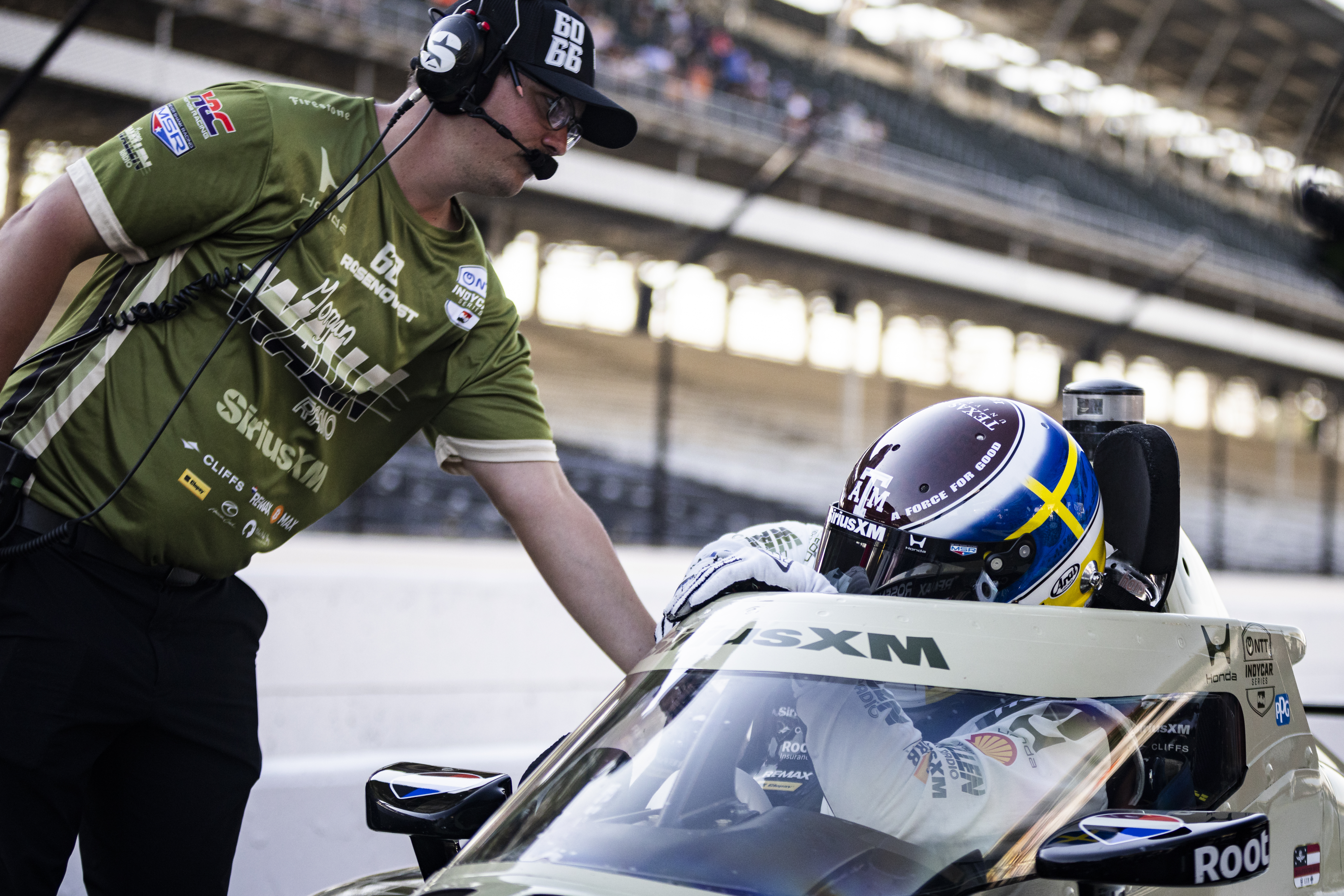
Gibson assists his driver, Indy 500 winner Felix Rosenqvist, during a session at IMS. Meyer Shank Racing
Drag racing Malukas to the checkered flag was first made possible by executing on all of the small and mundane items in Gasoline Alley during practice and qualifying. Get a suspension setting wrong, or missing a tiny electrical connection, or one of a hundred other items, could have set Rosenqvist back and hindered MSR’s progress while preparing for their biggest race.
Step back to the offseason where preparing the No. 60 Speedway Honda began, and the totality of the effort led by Gibson becomes fully apparent.
“Like the setup pad, like everything, all the details were done,” Gibson acknowledged. “It didn't just start on that first Tuesday when we started running, it started months and months and months ago, from all the bodywork guys doing the body fit, all of the floor stuff that IndyCar started throwing out without any real answers, yeah, but just getting ahead on all that stuff, making sure our car was completely legal, and we had nothing pop up when we got here. All the sub-assembly guys, all the managers just like going through all the rules, making sure there was nothing that was going to catch us out, something small that would have taken this moment away from us.
“From top to bottom, this is not a big team, and so top to bottom, everyone busted their ass for this win, and to have two cars sitting here with wins in five years for a team from Ohio, I mean… we might not have the most people, but we have some of the most talented staff, and everyone cares about what they're doing because they know that this is the ultimate goal. I'm super proud of everyone in the shop, everyone on pit lane, everyone on the setup pad, all of the engineers.”
Ross Bunnell, who is attached to the No. 60 via Chip Ganassi Racing, serves as an inspiration for Gibson and all of his brethren on Rosenqvist’s car.
“All the Ganassi people that help us, they don't treat us like a sister car, they don't treat us like a satellite team,” he said. “Ross, the race engineer, puts his heart and soul in this. He's a very competitive person, and he won. He's told us the other night, ‘I want to win this race. I don't care about anything else. I just want to win this race.’ And so Ross and the engineers, they all put everything into it. It doesn't matter whose name is on their paycheck. It’s a complete team effort, complete. That's what it was, just a big team effort.”
Marshall Pruett
The 2026 season marks Marshall Pruett's 40th year working in the sport. In his role today for RACER, Pruett covers open-wheel and sports car racing as a writer, reporter, photographer, and filmmaker. In his previous career, he served as a mechanic, engineer, and team manager in a variety of series, including IndyCar, IMSA, and World Challenge.
Read Marshall Pruett's articles
Latest News
Comments
Comments are disabled until you accept Social Networking Cookies. Update cookie preferences
If the dialog doesn't appear, ad-blockers are often the cause; try disabling yours or see our Social Features Support.