Bill Murenbeeld/Getty Images
The lost world of Atlantics
In the autumn of 1974, 21-year-old Denison University student Bobby Rahal got into his orange ’72 BMW 2002tii and pointed it east toward Watkins Glen, New York, to compete in his first professional race. It was the start of a journey that took him to places he dreamed of, like Monaco, the Nürburgring, Laguna Seca and Sebring, and ultimately somewhere he never expected – Indianapolis.
Rahal’s college friend, the Schlitz brewing heir Steve Uhlein, purchased a Rondel M1 Formula 2 car and converted it to Formula B specifications. Rahal raced the Rondel in a couple of SCCA regional races before qualifying 19th out of 47 entries at The Glen for a Formula Atlantic support race prior to the 1974 United States Grand Prix. He’d gained six places when he banged wheels with Gary Magwood and was forced to retire.
“We didn’t have any spare wheels or tires, so that was that!” Rahal recalls with a laugh.
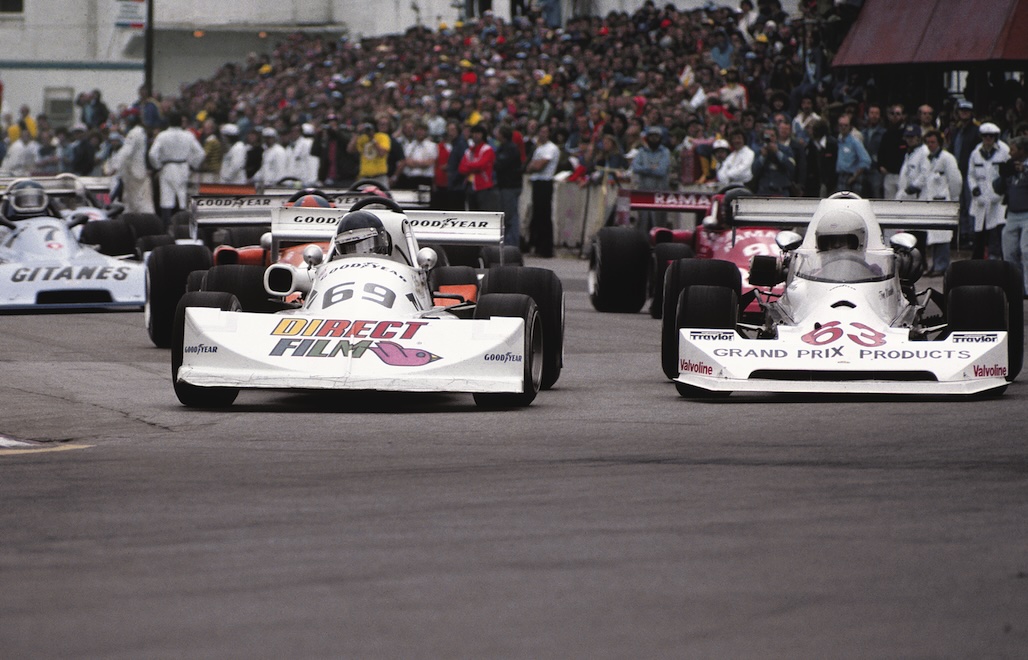
Launched in 1974, Formula Atlantic was based on the Formula B regs established 10 years earlier for 1,000lb, open-wheel cars, but using a Ford-Cosworth BDA twin-cam engine. FB was popular with club racers in America and it served as Canada’s National Championship, with a weekly highlights package on the CTV network. The inaugural CASC-sanctioned Player’s Challenge Series of ’74 featured seven Canadian championship rounds, a non-points race at Trois-Rivières, Quebec, and three SCCA-sanctioned non-championship rounds in the U.S., including Watkins Glen.
Veteran Canadian champion racer Bill Brack won the final Player’s Challenge run to FB spec in 1973, then followed up with additional Formula Atlantic titles in ’74 and ’75. Brack had vast experience, including F1, and his slick operation masterminded by crew chief Doug Crosty served as the benchmark for young racers like Rahal.
“Racing in those days was a lot simpler,” Rahal says. “In ’75, it was me and a Lola T360 with mechanic/engine builder Wiley McCoy and my friend Clay Filson. Clay was like an intern – he didn’t get paid anything, to my knowledge… and I wasn’t paid anything! We were just off on this great adventure trying to realize our dreams. That was the start. In those days, there were races as far west as Vancouver, B.C., and as far east as Halifax, Nova Scotia, and everything in between. It was really like a band of gypsies and the camaraderie was as good as the competition.”
Over the years, that band of gypsies grew increasingly international and increasingly eclectic. The most intriguing newcomer in Atlantic’s early days was Gilles Villeneuve, a French-Canadian snowmobile racing champion who briefly appeared on the scene in 1974 before breaking his leg in an accident at Mosport halfway through the season.
“Discovered” at the Jim Russell Racing School at St. Jovite by 1971 Canadian Formula B champ Jacques Couture, Villeneuve laid it all on the line when he approached Ecurie Canada team owner Kris Harrison about making the transition to cars via FAtlantic.
“Jacques Couture told me, ‘He’s extraordinary.’ Those were his exact words,” Harrison says. “But I said to Gilles, ‘I don’t have the money to do it unless you are paying me.’ He just said, ‘I’ll pay you the money,’ and we shook hands. He didn’t tell me, but he sold his house and moved his family into a motorhome. A little bit later, he showed up with a check for $50,000. We never had a contract or signed any letters.”
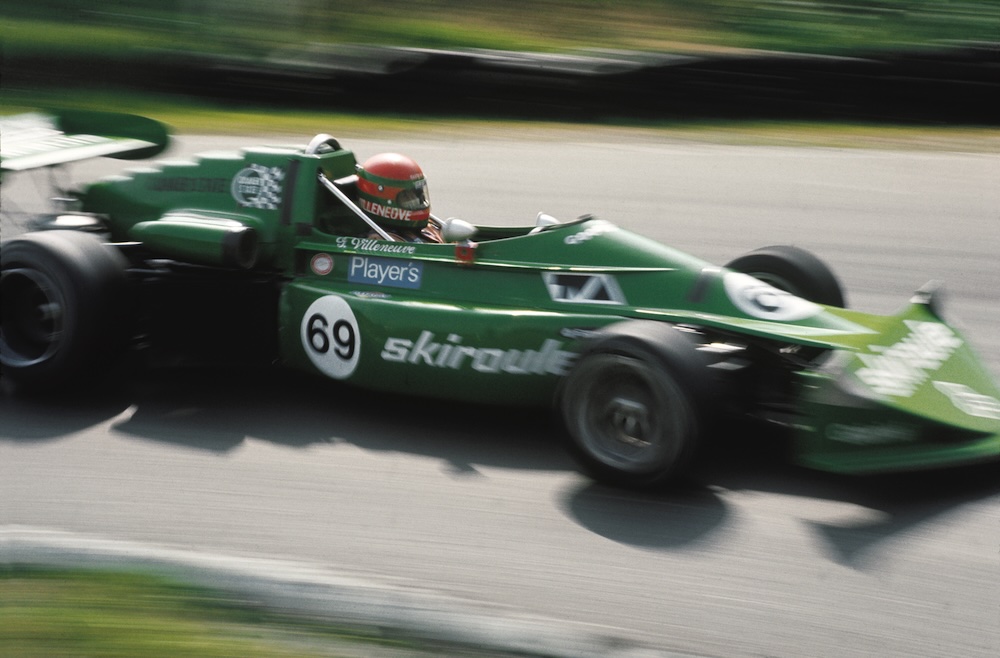
Gilles Villeneuve helped make Formula Atlantic one of the most respected junior formulas. In 1975 he won at Gimli and took second at Mont-Tremblant (above), before going on to take the 1976 Canadian and IMSA Atlantic titles, followed by the ’77 IMSA crown. Bill Murembeeld/Getty Images
Harrison and Villeneuve bumped heads, prompting Gilles to field his own car in 1975. He scored his first win in torrential rain at Gimli, Manitoba, over Rahal, Price Cobb and Brack. Driver and team owner patched things up and Harrison hired ex-March F2 team manager Ray Wardell to oversee Villeneuve’s effort in ’76.
“That’s the guy who really made Gilles, in my opinion,” says Rahal. “He took that diamond in the rough and polished it. 1976 is the year that really put Gilles on the map.”
That year, the six-round CASC Player’s Challenge was joined by a six-race American FAtlantic championship sanctioned by IMSA. Villeneuve was virtually unbeatable, winning four times in each and claiming both titles. But it was his performance in the Trois-Rivières street race that sent the 26-year-old Quebecois to F1 via McLaren and ultimately Ferrari.
It seems incredible in retrospect, but his Ecurie Canada teammate at Trois-Rivières in 1976 was James Hunt, who made the trip to Canada to moonlight between the Dutch and Italian GPs in his F1 World Championship-winning season. In the race, Hunt finished third behind Villeneuve and Alan Jones, and ahead of Vittorio Brambilla, Rahal and Patrick Tambay.
“The organizers at Three Rivers always paid me to bring someone over from Europe,” says Harrison. “I brought Patrick Depailler over one year, and then I brought Hunt over in ’76. It was interesting and exciting to have a world champion caliber guy driving one of our cars. But Hunt couldn’t outqualify Villeneuve, and he really tried. At the end of the weekend, he said, ‘I’ve never seen anything quite like this guy, and I’m going to tell [McLaren team manager] Teddy Mayer about him.’ That race against James Hunt was so important.”
Rahal confirms the cachet the Trois-Rivières street race carried for FAtlantic regulars.
“For those of us who were aspiring to go on to bigger and better things, it was a chance to show the world what we could do,” he says. “It really motivated anybody that went there. Trois-Rivières was just like going to Europe – everybody spoke French, the women were all beautiful, it was a good little track, and it had history. We loved that.”
Cobb, a Texas native who went on to enjoy a fine career in sports cars, raced in Atlantic from 1975 to ’82. He won the Trois-Rivières race twice and finished second to Villeneuve in the ’76 IMSA Atlantic championship before fielding his own car with chief mechanic Don Schneiders and neighbor Don Hubbard.
“We left Dallas at the start of the race season, traveling from the west coast of Canada to the east coast,” recalls Cobb. “I’d rent one hotel room for the weekend and we would alternate each night, with one of us sleeping in the bed and the other two sleeping on the floor. One hotel room and loaned garage space was how we survived the trek. Atlantic wasn’t cheap, but it was accessible to the average guy who wanted to race.”
John Oreovicz
John Oreovicz is one of America’s most versatile motorsports writers, earning respect over a 30-year career that includes stints with National Speed Sport News, Autosport, ESPN, and RACER. He has authored several racing-themed books, including the award-winning “Indy Split” (2021, Octane Press).
Read John Oreovicz's articles
Latest News
Comments
Comments are disabled until you accept Social Networking Cookies. Update cookie preferences
If the dialog doesn't appear, ad-blockers are often the cause; try disabling yours or see our Social Features Support.