Tim Holle/Penske Entertainment
IndyCar unveils regulatory, technical updates ahead of 2026 season
As IndyCar teams continue to wait for the 2026 rulebook to be issued, the series has released a few updates to its technical and procedural regulations.
The first is a conformation of the shift RACER recently revealed where teams will be required to use Firestone’s alternate tire compounds twice during every street course race. IndyCar will also require a single use of the primary compound at those six races.
Drivers must complete two green-flag laps on each of the alternate sets and the primary set to comply with the rules, and IndyCar will allow teams to fit their cars with new or used tires while meeting the two-lap minimum.
Penske Entertainment’s Independent Officiating Board and its IndyCar Officiating race control team says it will be more aggressive in trying to clear lapped cars in front of the leaders in late-race restarts, and the approach taken to Friday’s road and street course practice sessions will be applied to the second sessions held on Saturday mornings.
First practices will feature a 40-minute segment to open the run, and after a brief break, the field will be split into two groups for 12-minute runs with fewer cars on track. The same 40/12/12 model will be used in the second practice as well, and pre-race warmup sessions will expand from 25 minutes to 30. FOX’s coverage of the warm-ups will last 60 minutes.
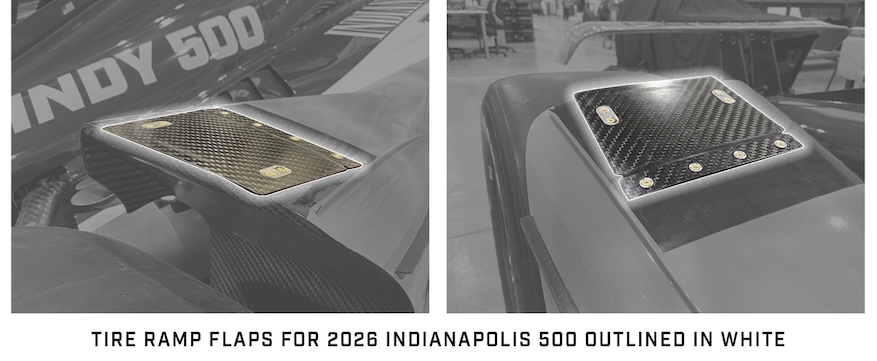
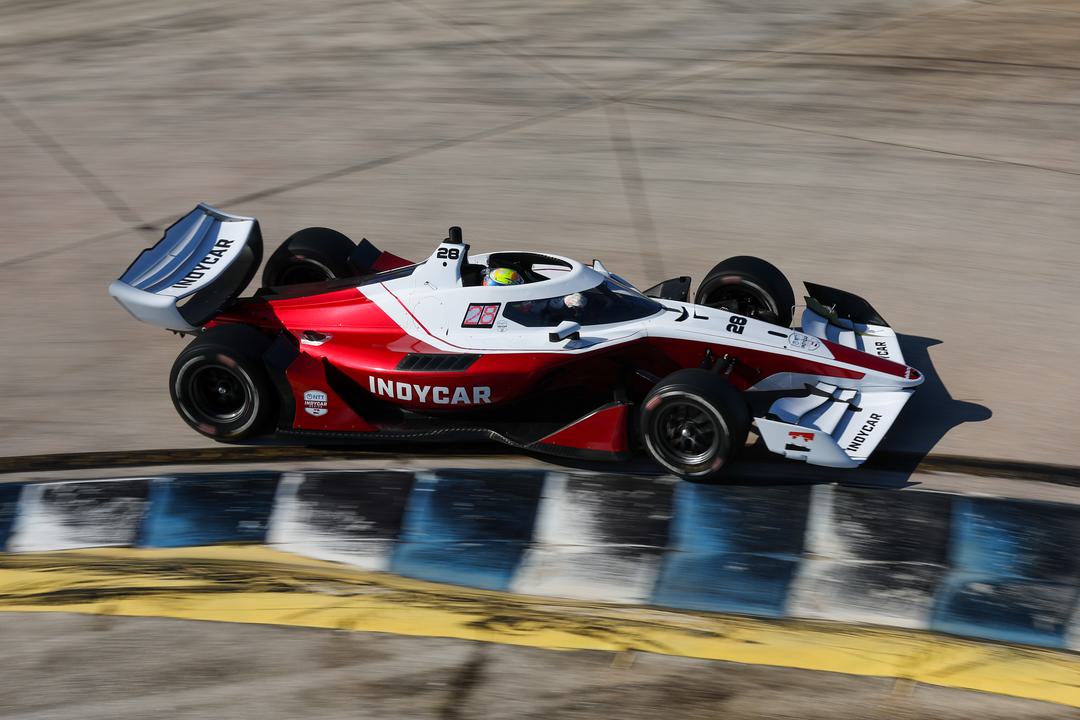
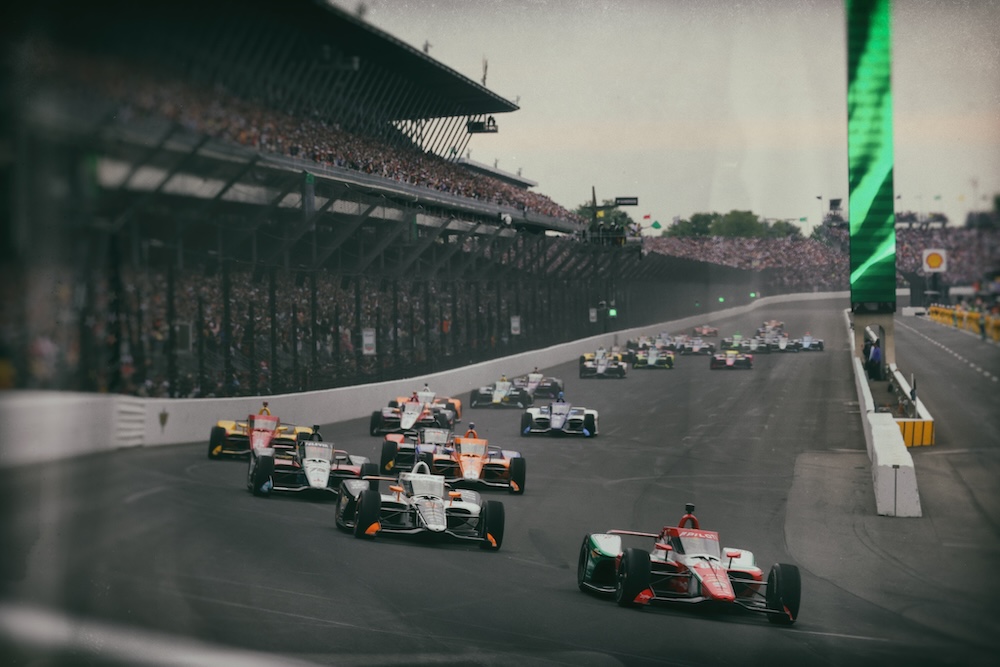
And finally, IndyCar has developed new superspeedway flaps that sit atop the rear tire ramps which will deploy in a spin or rearward moment to spoil the air traveling over the ramps and reduce the likelihood of lift being generated in order to keep the car from leaving the ground. The flaps (above) are a mandatory inclusion for this year’s Indianapolis 500.
“Dallara is a tremendous partner and have joined us to closely examine spins that have occurred over the last few years at IMS,” said Tino Belli, IndyCar’s director of aerodynamic development engineering.
“This update to the rear tire ramps has proven in computational fluid dynamics testing to decrease, by nearly 9 percent, the likelihood of a car at speed ‘lifting’ after a 180-degree spin. We are always evaluating safety and, from a car perspective, believe this is an effectual development for a superspeedway.”
Marshall Pruett
The 2026 season marks Marshall Pruett's 40th year working in the sport. In his role today for RACER, Pruett covers open-wheel and sports car racing as a writer, reporter, photographer, and filmmaker. In his previous career, he served as a mechanic, engineer, and team manager in a variety of series, including IndyCar, IMSA, and World Challenge.
Read Marshall Pruett's articles
Latest News

Comments
Comments are disabled until you accept Social Networking Cookies. Update cookie preferences
If the dialog doesn't appear, ad-blockers are often the cause; try disabling yours or see our Social Features Support.