Shell photo
F1's other big performance differentiator in 2026
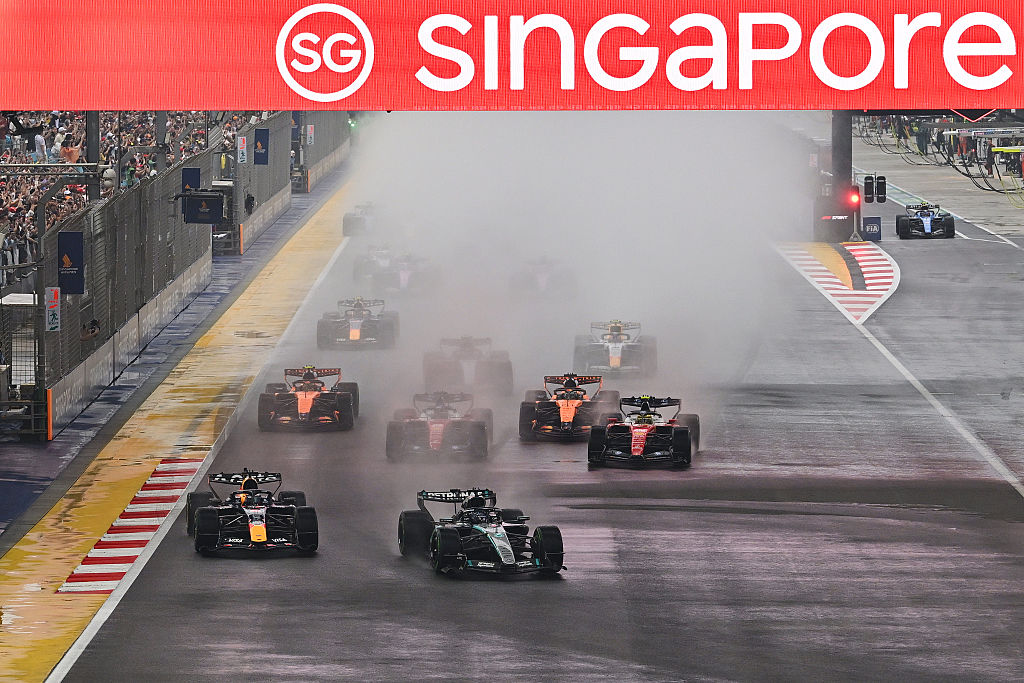
This season has been called the biggest change of regulations in the Formula 1’s history by more than one team principal in the build-up to this year, and it’s not hard to see why.
While the new cars still look like F1 cars, the entire aerodynamic concept is different, with the ground effect impact greatly reduced and the introduction of moveable front and rear wings. And in many ways, that overhaul is due to the powertrain changes, with the removal of the MGU-H, but far greater energy coming from the hybrid system in order to create a roughly 50:50 split in performance coming from the internal combustion engine and the electrical unit.
Where the two areas are interlinked come from the need to both recover and deploy so much of that energy. As a result, the straight line mode that cars will adopt in certain sections of track allow them to reduce drag while accelerating, improving efficiency.
But there’s another area of the regulations that is markedly different compared to the past, and it could also have a major impact on performance: the fuel.
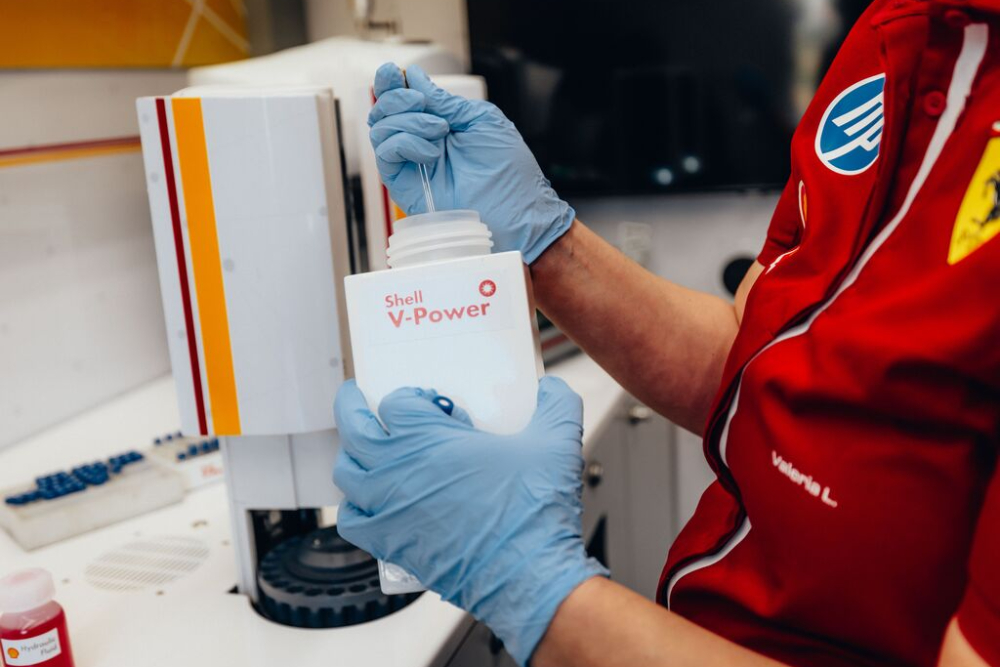
“The molecules that we were using in 2025, they are all extracted from crude oil, or some kind of fossil feedstock,” Shell’s technology manager for motorsport operations and marketing, Valeria Loreti, tells RACER. “The molecules that we have to use [in 2026], with a small exception of up to 1% which is going to be additives and denaturants, everything else of the 99% of the fuel is going to be molecules extracted from different [advanced sustainable] feedstocks.
“So crude oil is banned and these new feedstocks can be a variety of different things. So you can take residues from crops, residues from agriculture industry, from wood industry, paper industry, or you can take municipal waste – so your organic waste, it still contains carbon and it is of biological origin – you can take recycled plastics, that is still carbon.
“So you can take everything which is not in competition with the food chain, where you don't have to change the crop. Anything which is defined as second generation or something which is in the circular aspects of the recycled plastic is not adding any new carbon to the atmosphere.”
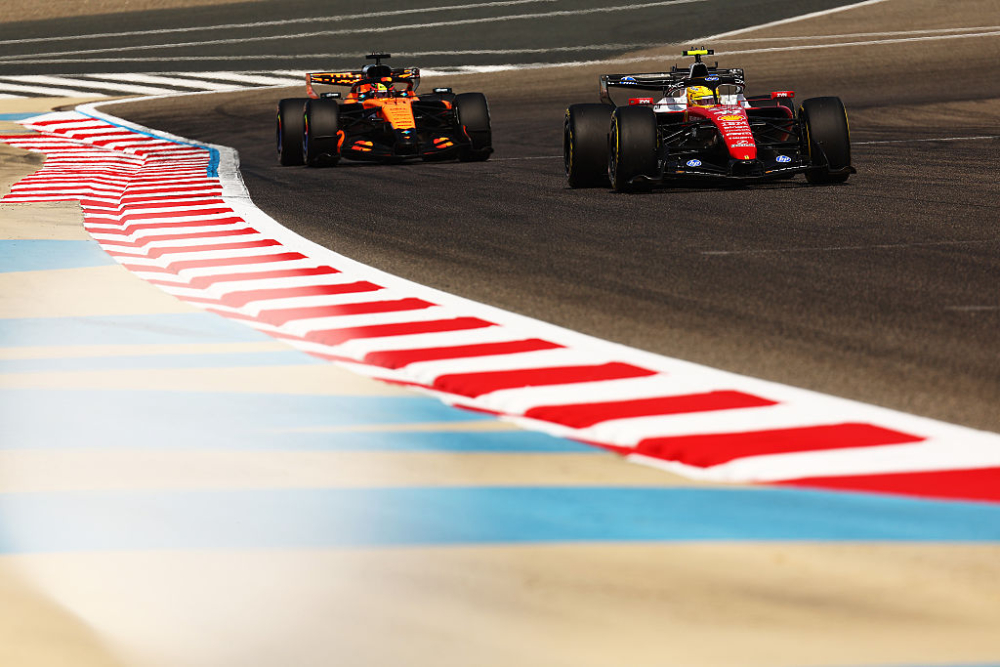
Fuel could play a big part in separating teams in 2026. Joe Portlock/Getty Images
As a long-term partner of Scuderia Ferrari HP – celebrating 75 years since the partnership in Formula 1 began last year – Shell’s primary focus when it comes to the new regulations is to provide maximum performance and efficiency. Loreti explains that despite new power unit regulations, the end result that the fuel provider is aiming for is similar to what has gone before, rather than a vastly different final product.
“It is a bit simplified but it is correct. So in the end you have still a hydrocarbon mixture; you have paraffins, you have olefins, you have aromatic rings, more or less in the same composition as we had before – because the rules that dictate what components are allowed or not allowed, and what the limitations are, they are very much similar,” Loreti says.
“There are a few changes that also drive changes in the composition so it's not exactly the same, but the molecules per se, if you draw it on a piece of paper, it's going to be the same. But where these molecules come from is completely different and all this way through this journey, that is where we have spent a lot of time, done a lot of research and learned a lot.”
Although the FIA’s regulations include measuring the CO2 equivalent to every step – preventing extremely energy-intense processes from being used to produce the molecules required – there is still a question around scalability. However, Loreti says the ongoing ability to develop the fuel, including a window to update it in 12 months time, provides the opportunity for solutions to become more realistic large-scale options in time.
“We have focused this year literally on providing this special fuel for Scuderia Ferrari HP so that they have all that they want – performance, efficiency and sustainability,” says Loreti. “But by doing this we have assessed so many different options – also understanding what are their benefits, what are the constraints, what could be optimized or changed – and it doesn't have to be everything for now.
“We will have some extra opportunities to change [the race fuel formulation] in 2027, and 2029. So you can also look at it from that perspective – what is there that can deliver what we need that is not available now, but maybe in two years time it's going to be possible? And by doing that you really understand what the scalability potential is.
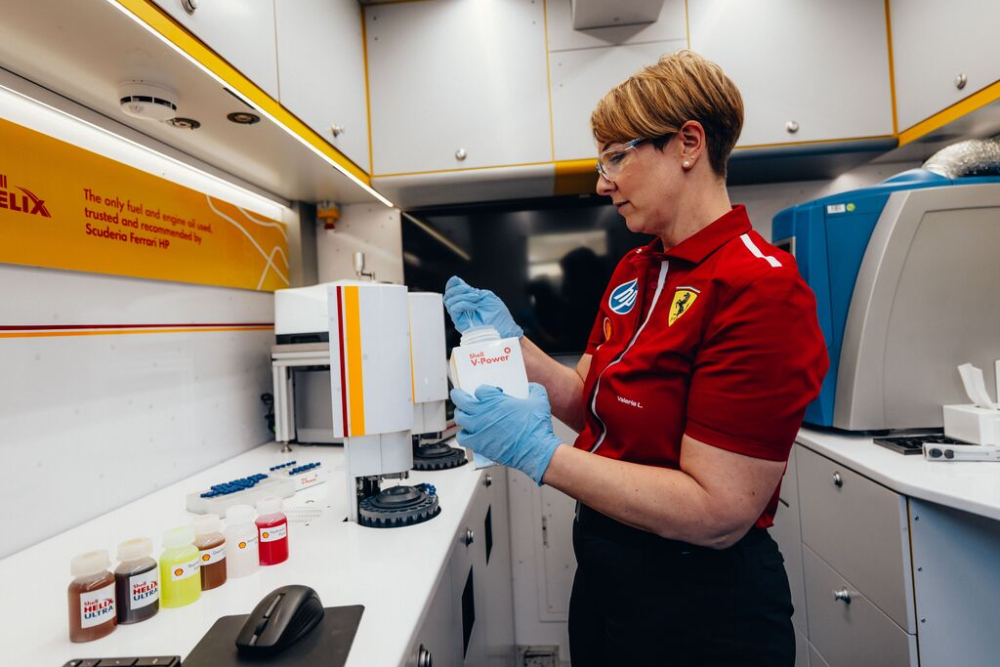
Shell and Ferrari have been working together for over 75 years. Shell photo
“So for now the real goal is literally these small volumes and proving that Advanced Sustainable fuels are, as wished for by the FIA – drop-in fuels so that you can use them as they are, no modifications to the engine for the fuel – and they are performing and they are still good for competition.
“But by doing that we can really put in perspective some of the strengths – some of these components can be easily scaled up and they have all it takes to bring them into the wider market. So it’s still a very good research program.”
Despite the potential for the F1 fuel regulations to provide a pathway to a wider availability of drop-in sustainable fuels for your everyday car, it’s still an area of development that is shrouded in secrecy. As much as any other component of the new cars, fuel suppliers keep their cards extremely close to their chest, and that’s because the prescriptive nature of the regulations can make even the smallest details have a significant impact on performance.
“By choosing the right components, the right strategy and the right design of the fuel you can really unlock a competitive advantage,” Loreti says. “If you go back to the '80s they were using rocket fuel! That was something really boosting performance and introduction of regulation in the middle of the '90s was actually really to push down the power output because it was unsafe. [Formula 1] had too many incidents. So that was an easy way to bring down the performance.
“So you can see that fuel can be really a differentiator and everybody here would like to know what others are doing. That is why it's so secretive.”
Even more so than the aerodynamic changes, getting a new power unit concept to work effectively already has the potential to be decisive for the manufacturers in the early stages of 2026. The fuel that’s being injected already played a crucial role, and the need for an entirely new source for the fuel itself is only adding to the complexity of the challenge.
While fuel suppliers might not receive much of the limelight if one power unit is particularly successful during F1’s next era, there’s every chance it’s their product that finds its way into your very own vehicle before anything else.
Presented by:

Chris Medland
While studying Sports Journalism at the University of Central Lancashire, Chris managed to talk his way into working at the British Grand Prix in 2008 and was retained for three years before joining ESPN F1 as Assistant Editor. After three further years at ESPN, a spell as F1 Editor at Crash Media Group was followed by the major task of launching F1i.com’s English-language website and running it as Editor. Present at every race since the start of 2014, he has continued building his freelance portfolio, working with international titles. As well as writing for RACER, his broadcast work includes television appearances on F1 TV and as a presenter and reporter on North America's live radio coverage on SiriusXM.
Read Chris Medland's articles
Latest News

Comments
Comments are disabled until you accept Social Networking Cookies. Update cookie preferences
If the dialog doesn't appear, ad-blockers are often the cause; try disabling yours or see our Social Features Support.