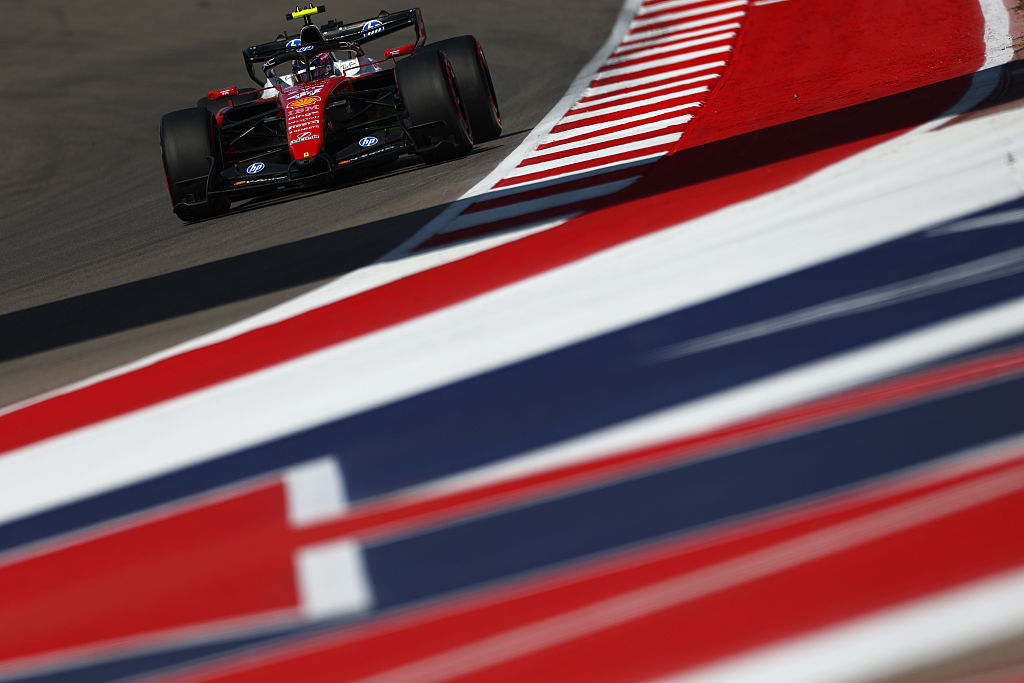
Kym Illman/Getty Images
Why Ferrari needs to be patient with Vasseur
Ferrari bought itself a momentary respite from the brutal scrutiny of the media by setting the pace in last week’s Barcelona testing. Not that it will satiate the tifosi, whose expectations after a winless 2025 mean the stakes are sky-high at Maranello heading into Formula 1’s new rules. Should the Ferrari SF-26 fall short under this intense pressure, will the Scuderia’s leadership really continue intact?
Ferrari has everything required to succeed, yet hasn’t won a title since the 2008 constructors’ championship. It’s in the midst of a record drought, one lasting even longer than the famed one between its 1983 and ‘99 titles that only ended as the Michael Schumacher era was building towards its zenith. The pattern is a frustrating one of repeated flirtations with success followed by slumps. It’s in one of those downturns now, having come close to taking the ‘24 constructors' championship before failing even to win a race last year. Sustained improvement over a period of years is the exception, not the norm, in Ferrari’s history and team principal Fred Vasseur’s position will be under threat if the early months of the season don’t go well.
That’s not to say it should be. The revolving-door strategy of a soccer club cannot work in F1, but it’s difficult to see Vasseur hanging on if things go wrong. That’s why it’s critical Ferrari starts this new regulations era well, as it did when the ground-effect rules were introduced in 2022 and Charles Leclerc won two of the first three races.
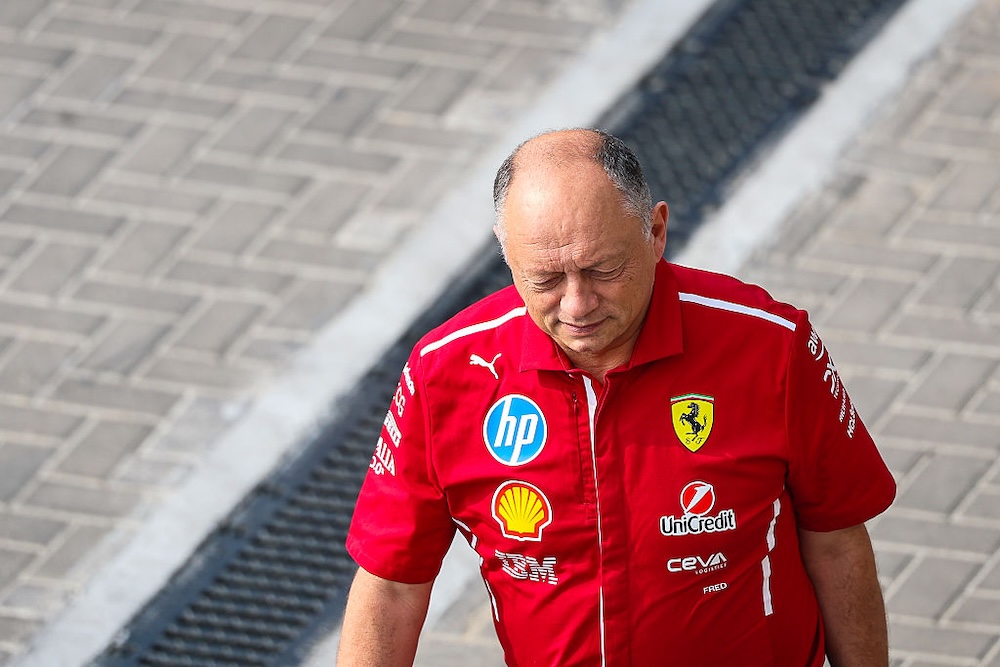
Vasseur is a calm head, one who has damped down the more distracting tendencies at Maranello and successfully given clear direction to his team. That momentum was interrupted by last year’s struggles and the rumors of his possible replacement that emerged in the Italian media in June, which frustrated Vasseur enormously. In fact, the whole media circus engulfing Ferrari irritates him, particularly when he’s forced to tackle incorrect reports about a possible recruitment or staff change that serves only to destabilize the team. What he thought when Ferrari chairman John Elkann publicly criticized the drivers and unspecified aspects of the team he deemed “not up to scratch” in October is unclear, but he won’t have appreciated that particular grenade. This is the blame culture Vasseur has battled to eliminate, knowing that if you stifle creativity and create a culture where you cannot be bold for fear of losing your job at the first hint of trouble, you do not win in F1.
Vasseur has generally done that well. At times, his public messaging has dodged the elephant in the room of underachievement as he underestimates the value of occasionally confronting that head-on. Sometimes, explaining that tiny differences add up to a deficit just doesn’t cut it and you need to make clear that you acknowledge the problem. For the most part, his approach has made Ferrari a calmer and more focused environment, but there are signs he's stretched by leading an organization that’s simultaneously an F1 team and a cultural icon. Ferrari should seek to shore up his position and influence, letting the Vasseur revolution play out, rather than sharpening its axe should it not deliver. Remember the last Frenchman, a certain Jean Todt, didn’t win a title until his sixth full season at the helm.
This is about more than Vasseur. If Ferrari were to get rid of him, it would abandon the changes he has set in motion and therefore waste much of the time and money invested in recruitment and restructuring. F1 teams are fast-moving, but identifying and bringing in new staff happens at glacial speed. So although he’s been in his role since the start of 2023, that's an ongoing process. Starting again likely means another multi-year reorganization. That’s no way to run an F1 team.
The fear is that Ferrari could topple like a house of cards, with the impact spreading far beyond just a change of leader. That includes the drivers. Lewis Hamilton’s Ferrari move has proved a nightmare so far, China sprint victory aside, and if he continues to struggle it seems reasonable to assume he will consider walking away. The same might apply if Ferrari falls short even if he does perform well personally, especially given the very public support he’s given Vasseur, who he described as “the main reason I’m in this team”. One way or another, the coming months could prove decisive for Hamilton. But he was at least encouraged by the first test, and surely pleased to be rid of the ultra-stiff ground-effect cars that never gelled with his preferred style.
“The car generation is actually a little bit more fun to drive,” said Hamilton. “It's oversteery and snappy and sliding, but it's a little bit easier to catch and I would definitely say more enjoyable, but we definitely have work to do to improve, of course, like everybody does. But we've had great debriefs, everyone's really on it. I really feel the winning mentality in every single person in the team, more than ever.”
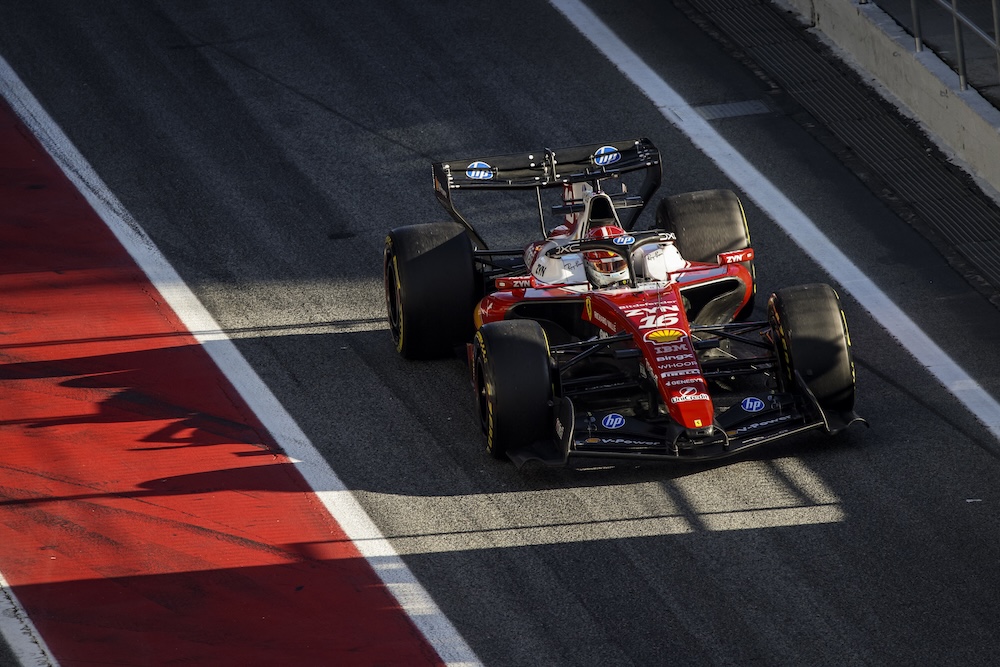
Ferrari has some reason for optimism about its 2026 car based on the Barcelona shakedown. Image courtesy of Ferrari
Hamilton’s also changing his race engineer, with Riccardo Adami moving into a role in the Ferrari Driver Academy. Judged by on pits-to-car radio communications, they never entirely gelled and that’s consistent with the impressions off-track as well. However, Ferrari has yet to confirm his full-time replacement, and testing started with him working with teammate Charles Leclerc’s race engineer, Bryan Bozzi, who was engineering both drivers while Hamilton waits for his new full-time engineer.
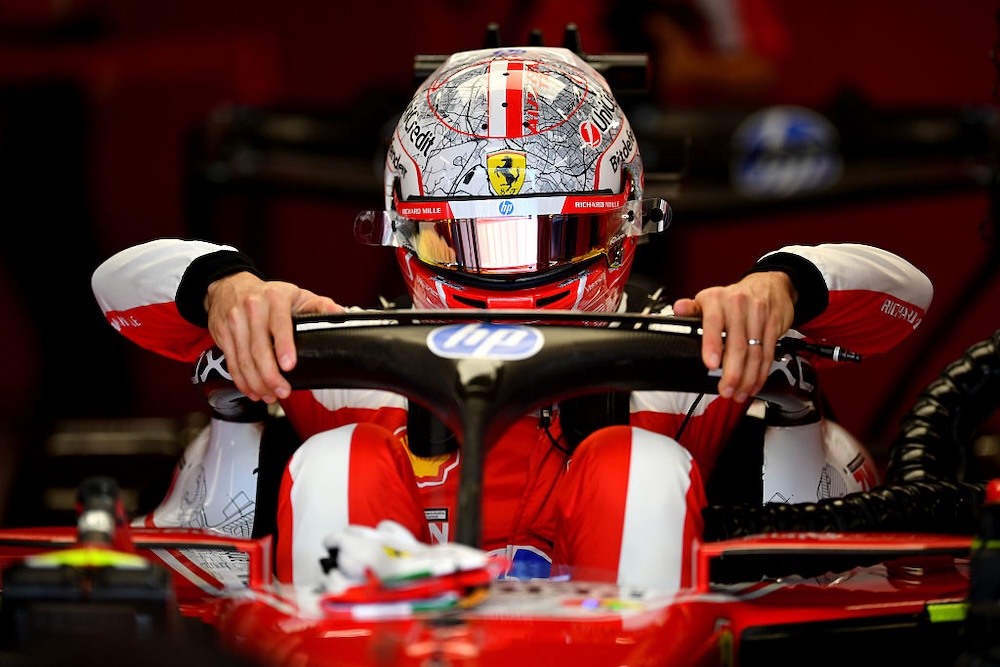
Then there’s Leclerc himself. He turns 29 in October and is staring down the barrel of wasting his career waiting for Ferrari to crack it. He’s performed exceptionally well in recent years, rounding off the rough edges in his game, reducing the mistakes and making big steps forward on tire management to the point where he has proved he deserved a title push. And he knows it, warning late last year that “it’s now or never” for Ferrari, given how 2026 starts will lay the foundations for the whole rules cycle.
He also insists that “my only obsession at the moment is to win in red”, but while he is loyal to Ferrari and even defended Elkann’s baseless public criticism of him as one of the drivers, he cannot have been impressed. Despite his long-term contract, he may start agitating for a move if he doesn’t have the car to win this year.
The question is, how good is the 2026 Ferrari? The impression from the Barcelona test is that the package is good, still in what appears to be a big four but behind early favorite Mercedes and perhaps lacking a fraction compared to McLaren and Red Bull. Yet it all feels a little 2025. It’s well-known that Ferrari has not, like Mercedes and Red Bull, hit upon the design trick that allows the stipulated maximum cylinder compression ratio of 16:1 to be exceeded when at operating temperature (and it’s important to note the rules clearly state this is measured at ambient temperature). Its power unit therefore is likely to be at a reasonable level but almost certainly not market-leading. While Ferrari itself has stuck to its Vasseur-led strategy of saying as little as possible, Ayao Komatsu, team principal of customer team Haas, is positive about the PU.
“In terms of reliability, that was really nice,” said Komatsu of the reliability of the Ferrari product. “Throughout the three days of testing, I haven’t seen any severe PU issues at all. So Ferrari has done an absolutely amazing job to get that performance up there and to be able to have a power unit as reliable as it is. That’s the foundation, because if you’re not able to run, you cannot improve your performance, you cannot understand the energy deployment.”
Reliability alone is not enough; Ferrari needs pace. The engine is reckoned to be the primary contributor to the performance equation in the early stages of these new regulations, and the suspicion is it might be a fraction behind. That means the car also needs to be good, potentially strong enough to overcome any PU deficit.
Another question is what level of achievement Ferrari’s top brass consider sufficient to resist forces pushing for change. A repeat of 2025 where Ferrari was fourth-best and managed just seven podium finishes surely won’t be enough. Will a few wins be considered sufficient? A title challenge? That very question encapsulates the problem with the thinking that prevails at Ferrari because it emphasizes output, not focus.
What should be looked at is whether the organization as a whole is on an upward trajectory. One of the confounding factors of sport is that not everybody can win all of the time, but that is only one measure of success. Progress is rarely linear, as by definition you will fail more in terms of results than you succeed. That’s why it’s essential to look at the big picture. If Ferrari is unable to win the championship this year, which is the objective, then it’s essential to understand what the limiting factors are rather than defaulting to a leadership change, unless you can pin down a definitive limitation attributable to Vasseur.
The bottom line is that if Vasseur, a Ferrari ‘outsider’ who is hugely well-respected in F1 and motorsport as a whole, can’t make it work, who can? That’s the bigger problem for Ferrari if it is ever to break out of these unending cycles of short-term improvement followed by regime change.
After all, another leadership change to start the whole predictable process again, only to do it again three or four years down the line is the embodiment of futility. Ferrari, and F1, deserve better than that.
Presented by:
Edd Straw
Edd Straw is a Formula 1 journalist and broadcaster, and regular contributor to RACER magazine. He started his career in motorsport journalism at Autosport in 2002, reporting on a wide range of international motorsport before covering grand prix racing from 2008, as well as putting in stints as editor and editor-in-chief before moving on at the end of 2019. A familiar face both in the F1 paddock, and watching the cars trackside, his analytical approach has become his trademark, having had the privilege of watching all of the great grand prix drivers and teams of the 21st century in action - as well has having a keen interest in the history of motorsport. He was also once a keen amateur racing driver whose achievements are better measured in enjoyment than silverware.
Read Edd Straw's articles
Latest News
Comments
Comments are disabled until you accept Social Networking Cookies. Update cookie preferences
If the dialog doesn't appear, ad-blockers are often the cause; try disabling yours or see our Social Features Support.