Michelin photos
How Michelin makes the world go round at the Rolex 24
16,000 tires, 176 cars, 25 staff, 35 tire transporters, six races. That’s the scale of Michelin’s operation at this year’s Rolex 24 At Daytona, the biggest test in North American sports car racing for its organization.
The French constructor is, of course, used to servicing IMSA’s biggest event, since signing its exclusive contract to supply the WeatherTech SportsCar Championship plus the support series since 2019. But in 2026, it’s a race week that holds extra importance as the French constructor is debuting a brand-new GTP tire and an evolution of its compound produced specifically for the GTD classes.
Rolex 24 weekend is a big test for its new products and the supply chain that it relies on to produce its race tires at its plant in France.
“It's always a challenge when the biggest race is the first one of the year,” Michelin’s North American motorsports director, Raymond Cotton, tells RACER. “There’s no warm-up coming in. Anytime you phase in a new product or phase out the old, right, it’s an absolute challenge to get it ready.
“I would say the nice thing is, the dates don't change and we know when we have to be ready. But, yeah, it's a logistical headache. And, you know, we've got a dedicated supply team, and we got all our supply in, basically, on the week we had to leave to come here.
“As soon as the design was frozen we had to start producing. But one of the reasons we race is that at a small scale, we can start to test the supply chain. A good example is that these tires are, in part, made from recycled carbon black, and this project allows us to work out how we can get it.
“But the team did a great job, I was way more stressed ahead of the 2025 race than I was for this year. It’s all gone smoothly to get to this point, which says a lot because it’s always stressful when you’re bringing something new and you don’t have a huge warehouse filled with tires far in advance.”
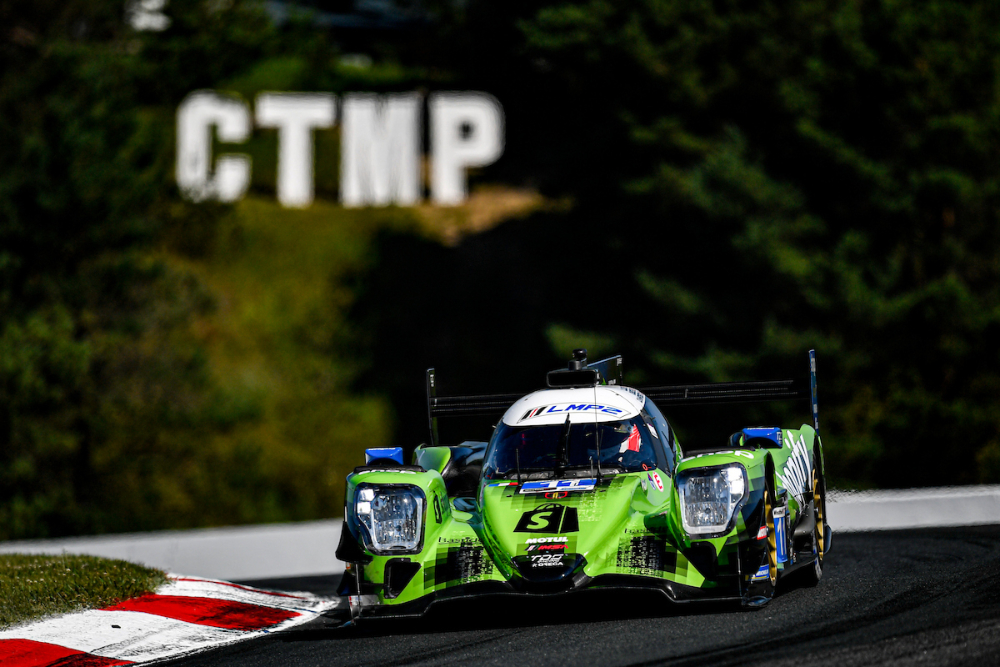
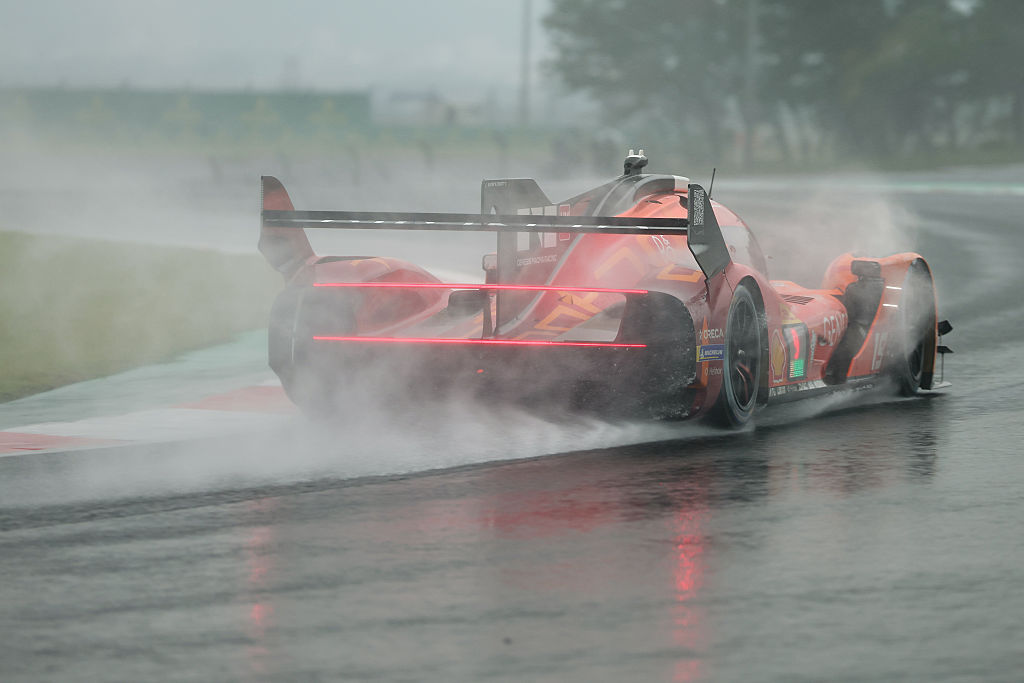
The new GTP tire, which will also be in use in the FIA WEC’s Hypercar class, was developed over multiple years, and tested at a variety of circuits in Europe, North America and the Middle East. For its debut, the Soft and Medium compounds are in use on the high banks, with the Softs reserved exclusively for the race in a defined window between 5pm and 10am.
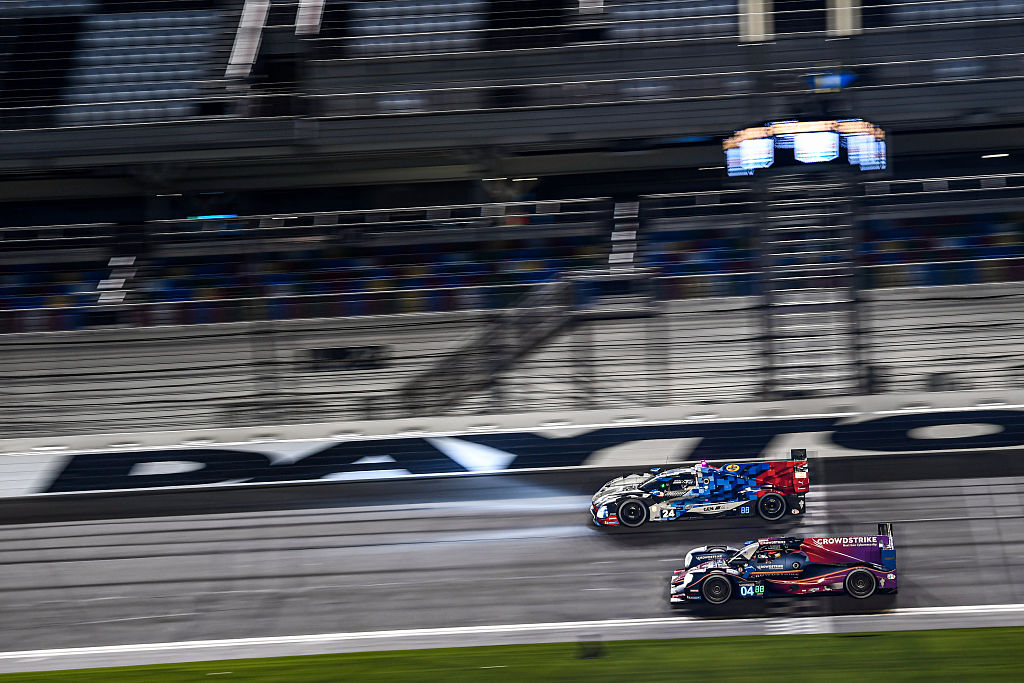
Daytona places unique demands in a lot of areas, particularly tires. Brandon Badraoui/Lumen via Getty Images
Daytona is a unique circuit on the IMSA calendar because of the loads that the banking places on each car’s right-side rubber. While there’s nowhere else like it for the GTP cars in IMSA and Hypercars in WEC, it represents an important first test for the new product to pass.
“It was important to test here, and at Watkins Glen before we froze the tire, because Watkins is super aggressive and hard wearing and here is crucial because it’s perhaps the most demanding place we race for tires,” Cotton notes.
Through the IMSA Sanctioned Test, Roar Before the 24 and the pre-race sessions this week, the GTP manufacturers have had a good chance now to sample the final, frozen specification of the Michelin Pilot Sport Endurance range. And the feedback from drivers and teams RACER has spoken to over the course of this month's event has been universally positive.
Not only has Michelin managed to reach its target of producing a prototype tire incorporating 50 percent sustainable materials (up from 30 in the previous tire), but it has found gains in warm-up and consistency that the drivers are already reaping the benefits from.
The days of GTP and Hypercar drivers struggling to switch on their tires at restarts and on out-laps and getting passed by the GT cars aren’t necessarily over, but as Aaron Teliz from Lexus’ GTD team Vasser Sullivan explained to RACER: “It’s a big step forward. I’ve seen GTP cars leave the box with brand-new tires and they seem to be in a better place. In the past, they were moving chicanes; now they’re behaving more in line with what you’d expect from a car on cold race tires.”
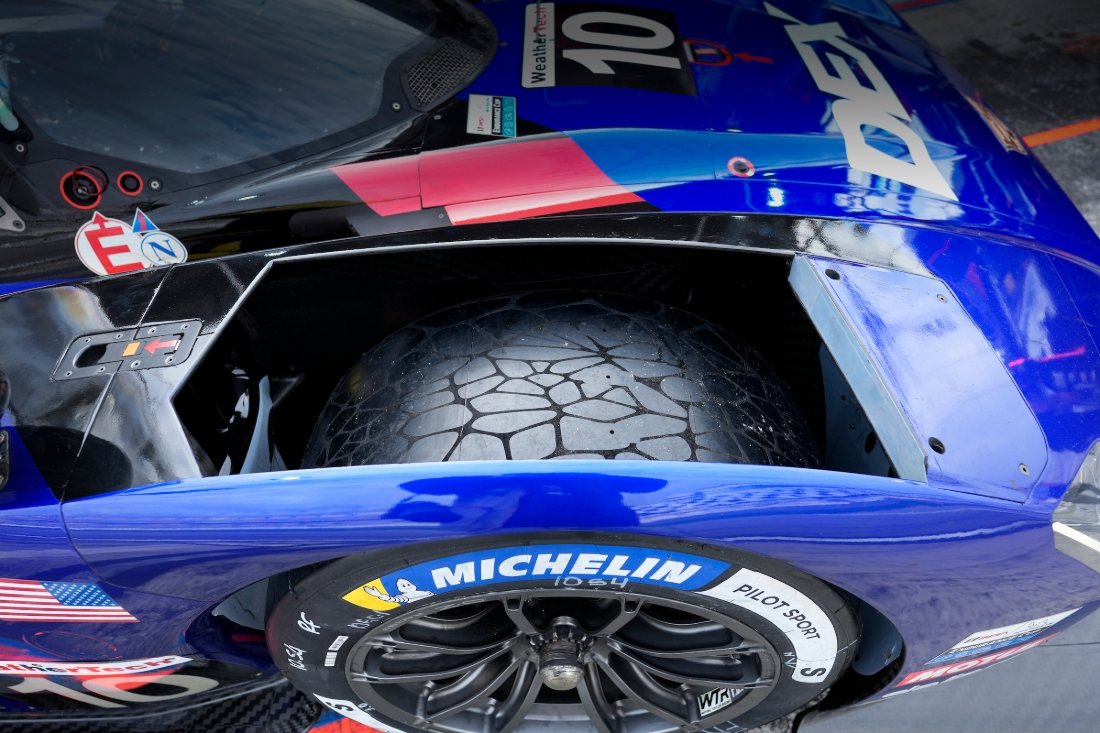
Cotton has received his fair share of positive feedback, too. “If we look at the GTP tire, warm -up was an area we knew we could improve. People are over the moon with the look at the Vision tread pattern we’ve put on, but when you look at the data, the longevity and warm up has improved. The new tire has a much more usable window and teams are happier with the lack of degradation and longevity for the Soft in particular.”
.jpg)
The GTD classes are as large and competitive as ever this year, and Michelin is not resting on its laurels in that department either. For this year, it has developed an evolution of its IMSA-specific product, the Pilot Sport Pro, which the teams are getting up to speed with in Florida.
“This is a true evo of the tire," Cotton explains. "We’ve made it easier to mount because some of the team’s wheels made it hard to mount, so from a safety perspective, we refreshed that. And while we were at it, we did a bit of tuning for wear and endurance.
"It’s super minor – most tracks you wouldn’t notice much difference – but we wanted to ultimately get more even wear with profiling changes. Hopefully, it equalizes the chassis playing field a little better, because some are hard on tires.”
Like the car manufacturers it supplies, Michelin is constantly looking forward, developing new and improved technology for use on track. Its efforts were rewarded at the end of last season when IMSA announced an extension of its exclusive supply contract to 2035.
That stability, according to Cotton, allows Michelin to plan far in advance and put together a roadmap that will lead to increases in both performance and sustainability for its future race tire range for sports car racing.
In GTP terms, there are complexities, though, as Michelin is in the process of tendering for the next FIA WEC Hypercar supply deal for 2030 onwards, after the invitation to bid was presented to tire constructors back in December.
As Michelin works to produce a single range of tires for use in both major championships, it currently sits in a holding pattern. But once it has an answer on its WEC future in the long term, it will begin the hard work for the next generation of Michelin prototype tire, where it will again look to push the boundaries.
“It’s a long partnership and we do it because it’s working and because we need the stability to be able to invest in the technology,” Cotton concludes. “To push where we want to push, we need stability, and IMSA provides that; it’s why it was important to get a long contract extension. We have an aggressive roadmap – we know what we want to do.
“If you look at the WEC tender, you’ll get some ideas of the direction. It requires a sustainable material count that’s higher than it is today, so in some ways the roadmap is defined for us.
“If you look at convergence in sports cars, it looks like we’ll get more of that in the future, not less. When we look at it, (the next set of regulations for Hypercar and GTP and the potential for a single platform) will probably match the timeline of the new tire.”

Stephen Kilbey
UK-based Stephen Kilbey is RACER.com's FIA World Endurance Championship correspondent, and is also Deputy Editor of Dailysportscar.com He has a first-class honours degree in Sports Journalism and is a previous winner of the UK Guild of Motoring Writers Sir William Lyons Award.
Read Stephen Kilbey's articles
Latest News
Comments
Comments are disabled until you accept Social Networking Cookies. Update cookie preferences
If the dialog doesn't appear, ad-blockers are often the cause; try disabling yours or see our Social Features Support.