Julien Delfosse/DPPI
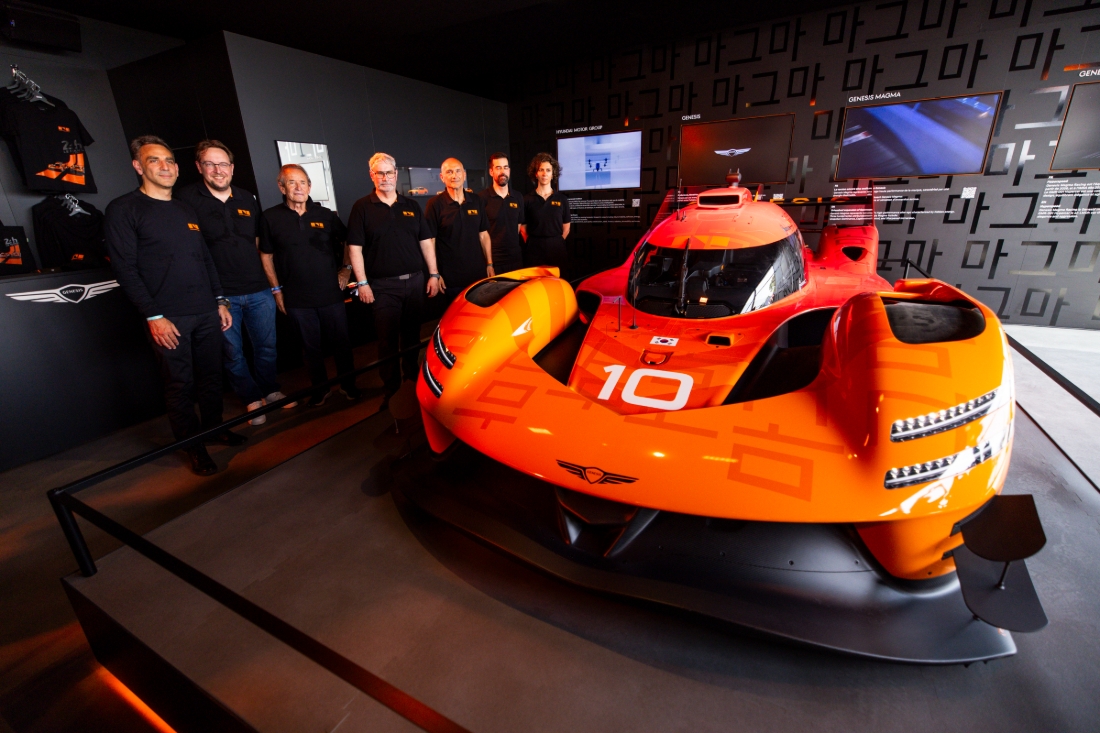
Drivers and crew eager to start writing the book of Genesis in Hypercar
The dawn of the new year means the big moment has almost arrived for Genesis Magma Racing and its ambitious FIA WEC Hypercar effort. The young prestige brand of the Hyundai family is now just weeks away from embarking on its first sporting campaign, up against stiff competition from the suite of market rivals that the current formula has attracted.
To this point, its presentation, openness, and decisions on personnel and car development are in line with other race and title-winning programs. But the real test will come when the pair of GMR-001 LMDh prototypes finally exit the pit lane in Qatar for the opening practice session of the season in March.
GMR’s team principal, Cyril Abiteboul, has operated at a high level in motorsport for long enough to know that expectations shouldn’t be set too high early on, particularly when entering a ruleset multiple years into its cycle to take on a deep, world-class field like this one. Thus, he is candid about where the project currently sits: close, but not quite ready; promising, but unproven; ambitious, yet realistic.
That self-awareness runs through the team, which now comprises about 60 members of staff, the vast majority of whom have been poached from other Hypercar programs. Familiar faces from Ferrari, Porsche and Alpine’s WEC efforts, for instance, can be found in the back of the garage, as well as a handful of engineers who have moved over from Hyundai’s WRC arm.
More than 12,000 miles of on-track testing are already in the books and there are more to come, with another run currently taking place in Qatar at the time of writing and a final tune-up in Europe ahead of the Prologue Test in Lusail, prior to the opening round of the season. That doesn’t mean that the job list is complete, though.
The ORECA-based, turbo V8-powered racer (which is surprisingly loud on track) still needs finishing touches applied before homologation. The team itself also lacks experience working together as a unit in a high-pressure, competitive environment.
“It’s coming nicely together,” Abiteboul says. “It’s always the same thing. We are probably 95 percent there; we know the last five will be difficult to get. It’s easy to flatter ourselves. We’ve got a nice truck, nice car, nice liveries, lots of people.
“I think we’ve got a good baseline. With ORECA and the carryover of the WRC engine, it’s a solid foundation, but it’s the little things that can amount to big issues when the season actually starts.”
Those “little things” are precisely what define the difference between a promising test program and a successful race operation.
“We need to be realistic and manage expectations about what we can achieve at the start of our program,” Abiteboul admits. “We’re going to join a group that is well established, very competitive and we will have to make our way into this group. It will take time.”
Rather than setting immediate targets for wins or championships, the emphasis is on execution and credibility.
“Our mission is not to say we will fight for wins and championships anytime soon. At the same time, though, we have ambitions to do things in a good way, with faultless execution, without being arrogant," he says. It’s finding a balance. First, we have to be safe, legal and reliable; that’s our main objective for the season.”
In endurance racing, reliability is, of course, as important as performance – particularly for a new entrant. Genesis Magma Racing’s early objectives reflect that reality. Testing, as expected, has thrown several challenges at the engineers. Cooling, turbo lag, software glitches and tire degradation (using Michelin’s 2025 rubber) are all areas that have needed work.
“We’d like to be able to finish races,” Abiteboul says of the team’s targets for 2026. “It’s long races, and it starts hard with 10 races. Then we would like to be on the lead lap as long as possible – we know the advantages from a strategic perspective.”
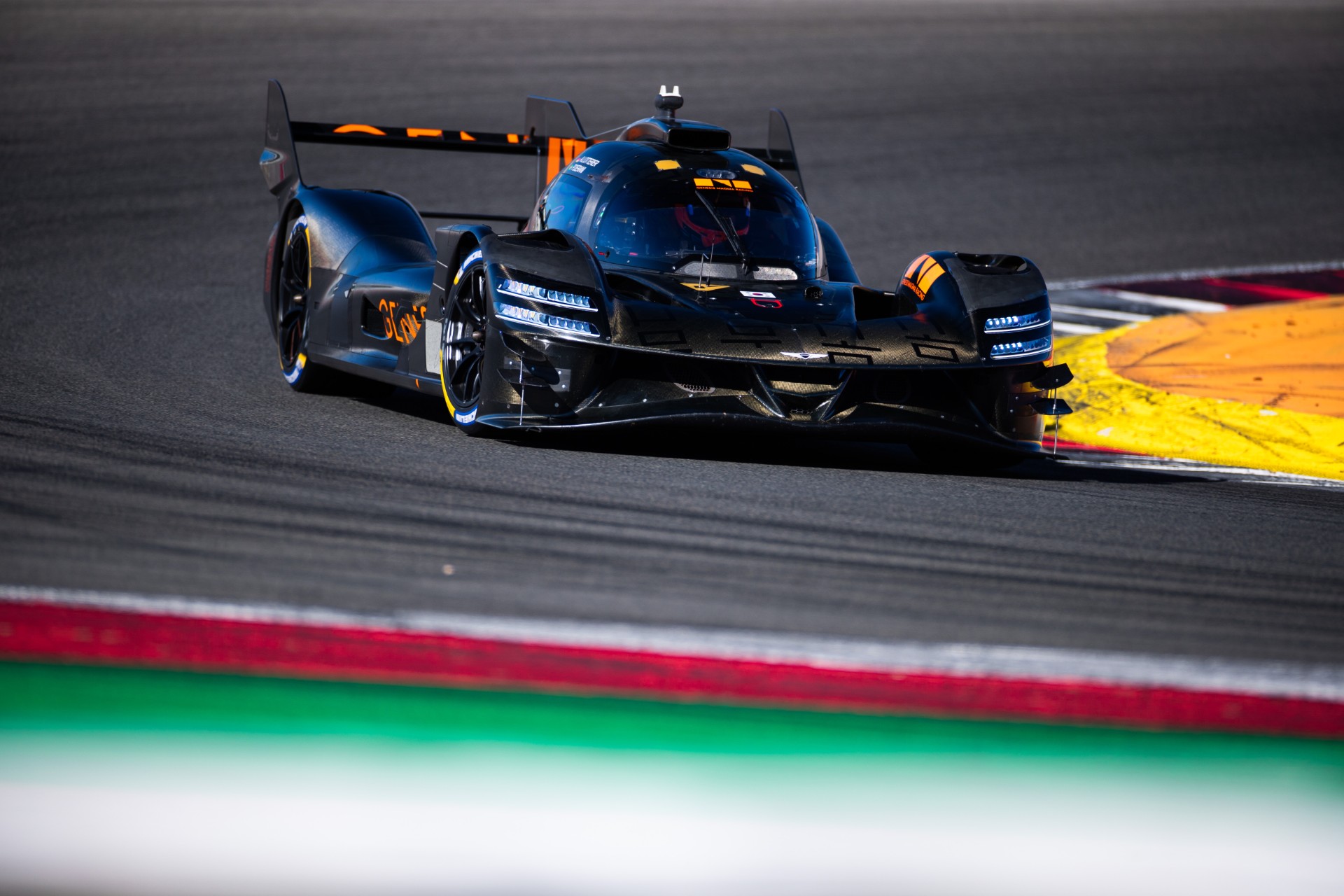
The Genesis GMR-001 LMDh has already logged more than 12,000 miles of testing, but there are some lessons only racing can teach.
Perhaps the greatest challenge now and going forward is developing software development for the car, as it’s an area of the rulebook that’s open. Genesis is investing heavily in this area with experienced personnel and the purchase of a top-end simulator, although this won’t be ready until Q3 of 2026. However, it’s a key area where manufacturers can make a difference which Genesis’ competitors have had a significant head start in.
Factory driver Pipo Derani – who has been with the team since its inception – stresses that running the car to the power limit defined by the power curve for long periods on challenging circuits has been no easy task. Developing bespoke software and working with the torque sensors is a fiercely complicated element of the ruleset for the teams to improve on and exploit. It’s practically impossible to hit the exact power target set by regulation all the time, so teams must retain a small safety margin to ensure they are legal as well as fast.
Derani believes Genesis is making steady progress in this area, though: “At times it felt like we were going to crack the code a bit quicker, and at times it felt like we were never going to crack the code, and we were scratching our heads," he admits. “At the end of the day, it’s part of a new manufacturer coming into a new sport, a new engine being built from scratch (by marrying two inline 4s from the WRC effort). So I think we’ve come out the other side in a good way so far.”

Stephen Kilbey
UK-based Stephen Kilbey is RACER.com's FIA World Endurance Championship correspondent, and is also Deputy Editor of Dailysportscar.com He has a first-class honours degree in Sports Journalism and is a previous winner of the UK Guild of Motoring Writers Sir William Lyons Award.
Read Stephen Kilbey's articles
Latest News
Comments
Comments are disabled until you accept Social Networking Cookies. Update cookie preferences
If the dialog doesn't appear, ad-blockers are often the cause; try disabling yours or see our Social Features Support.