DGR-Lola concept car is Lucas di Grassi’s vision for racing’s future
Every so often a concept car gets revealed that is meant to give a glimpse of “the future of motorsport.” You know the kind: unfathomable aerodynamics, a million horsepower, and an unthinkable proposed top speed that'll turn your organs inside out.
They're always a bit ridiculous and far-fetched. But now there's a new concept car from motorsport's crystal ball – and not only is it somewhat grounded in reality, it's come from the mind of someone who actually knows a thing or two about race cars because he drives them for a living.
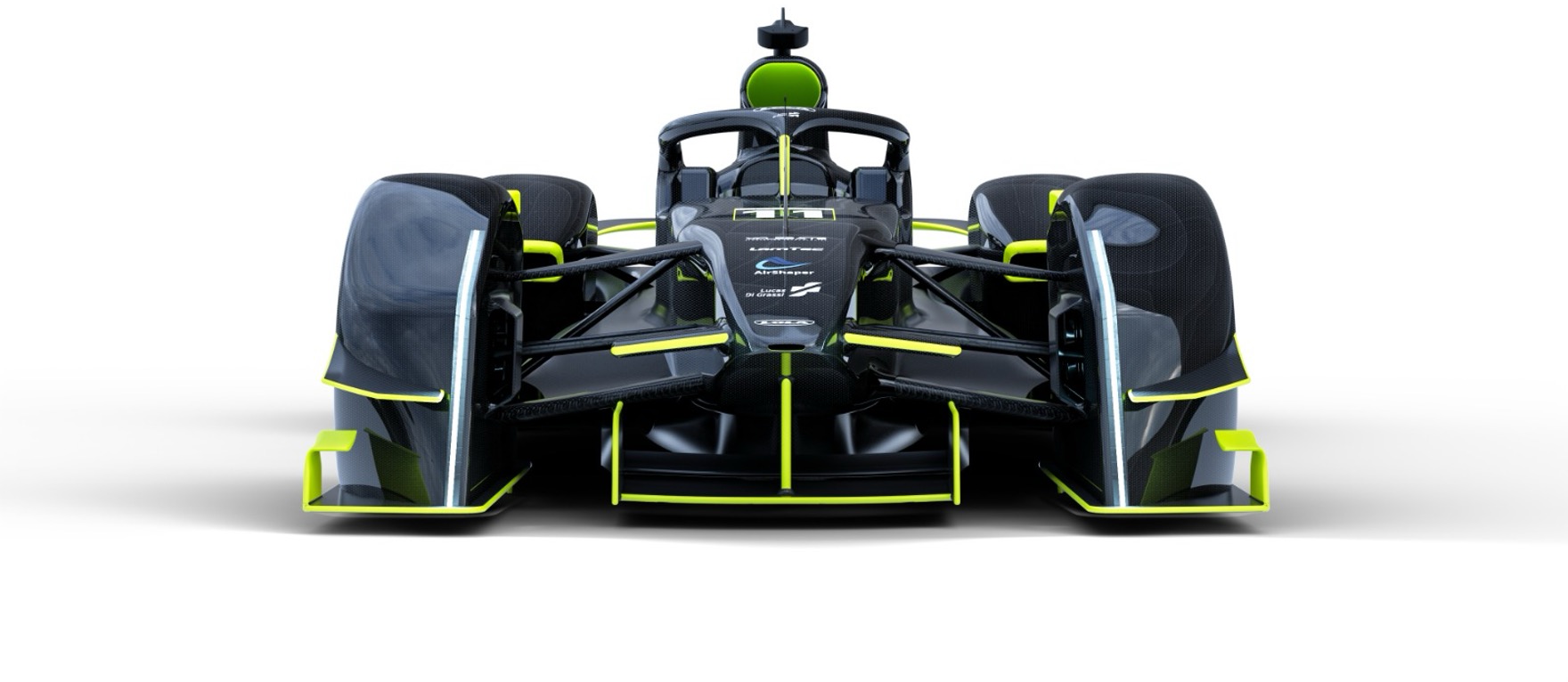
Lucas di Grassi has plenty of experience in top-level motorsport, with spells in Formula 1 and as part of Audi's legendary LMP1 line-up, plus starts in all but one Formula E race on his resume. He also has a keen interest in engineering and technology, and he's combined all of that to come up with the DGR-Lola electric race car concept.
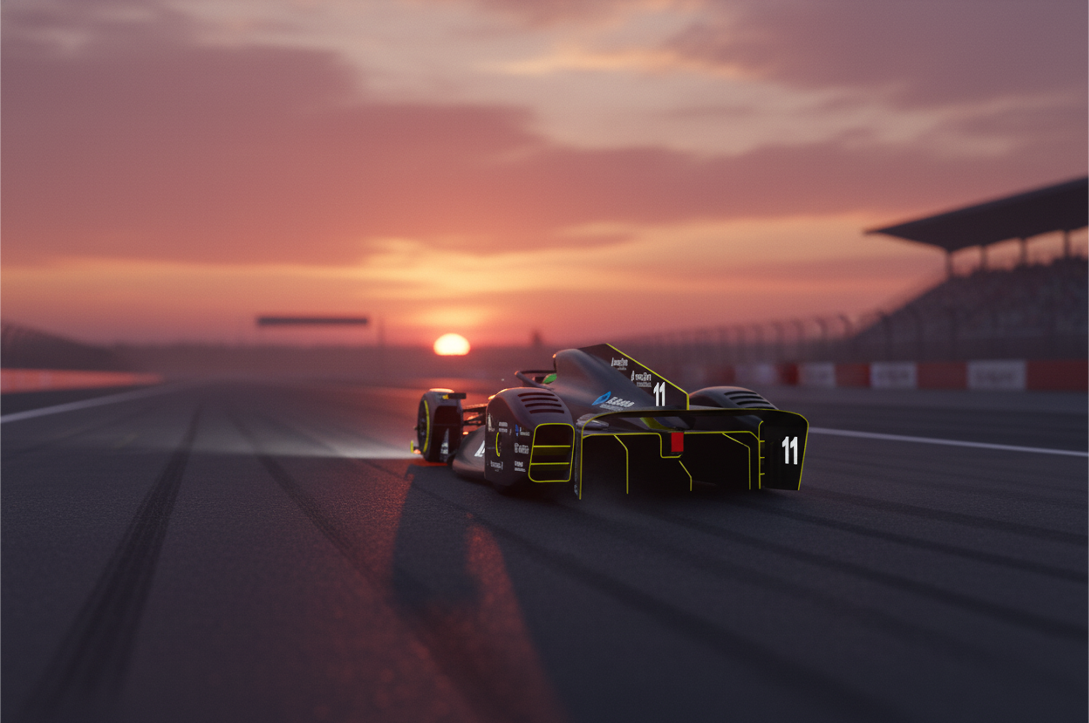
Featuring variable active aerodynamics, an enhanced modular battery design, improved safety features, and open software integration, along with all-wheel drive, a twin motor setup delivering 600 kW (804 hp) of power and powered by a fully integrated 60 kWh modular battery, the car is said to be capable of lap times 4.3 seconds quicker around Monaco than current Formula 1 cars (a number that could theoretically improve to 11 seconds as battery technology improves and weight decreases), while also being 10 times more efficient. It also features a twin-turbine suction device to generate large amounts at any speed.
That's impressive credentials, and performance shown in simulations, but none of it is that far-fetched.
Blackbird 66 Mk.1: the racecar reimagined, by JR Hildebrand
“The technology must be related to production cars, of course – something that is too exotic, like rocket engines and stuff like this that you might not be able to put on the road, it's not the best solution,” di Grassi told select media including RACER. “It is very important to avoid exotic or non-existing technology.
“In the project, you have to put realistic physics and materials and engineering into the car. Of course, I can say the battery is the size of a shoebox and has 100 kilowatt hours, but that does not match reality. There isn't this technology. So all the parts of the car are ready, available technologies, then simplify non-essential engineering.
“In racing, I've seen many examples during my career of many parts of the car that shouldn't exist in the first place, or a rule that should not be there, but they keep adding different rules to counteract that one specific thing or that specific part. It's easier to remove those so trying to remove rules and remove parts is better than trying to re-engineer those parts.”
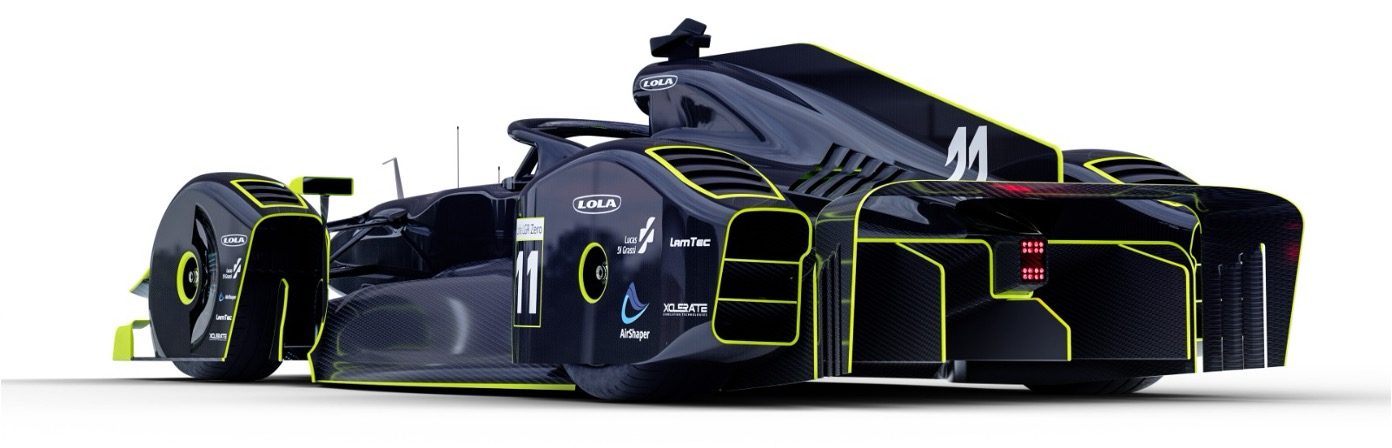
Aerodynamics on the car have been designed to minimize drag and improve efficiency.
“All the natural downforce from the car comes from the diffuser,” di Grassi explained. “It has a very large diffuser; it has a very tiny rear wing that works together with the diffuser. The wheels are covered [for] efficiency – the aerodynamic drag must be as low as possible. And basically, the lower the drag, the longer the races are.”
That reduction in drag goes hand in hand with cooling, which isn't needed as much with an electric car.
“An electric racing car requires much less cooling than a combustion racing car – we're about three to four times less. So we're talking about 40-45 kilowatts of heat dissipation,” di Grassi said. “And you can achieve that with the active aerodynamics, which becomes active cooling as well.
“So basically this serves as a protection when the car rolls over, but also as the air intake. And then by putting all the cooling here, you can remove the side radiators, which decrease drag quite a lot.”
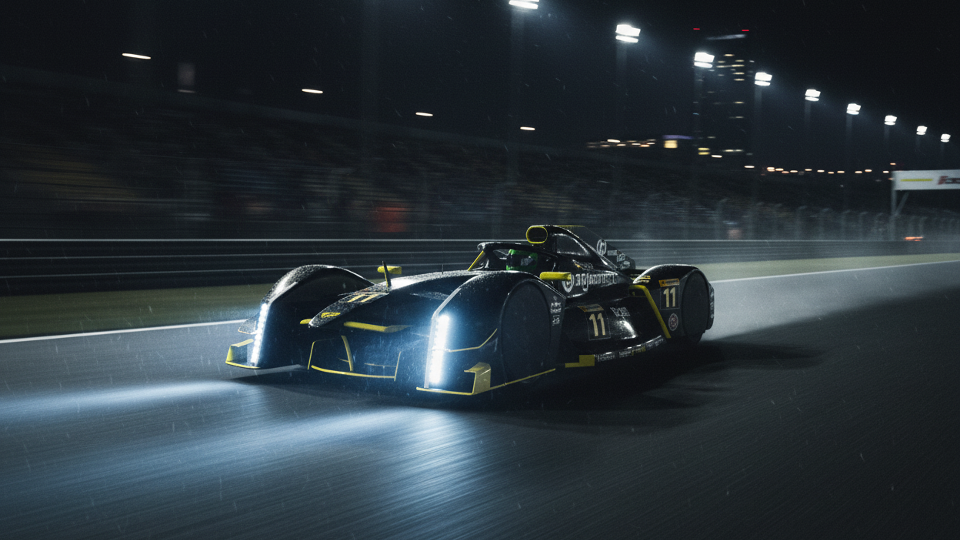
Cooling is also aided by the turbine system which is there to provide downforce in lieu of big wings at the front and rear of the car. di Grassi says that the car generates 520 kilos (1,146 lbs) of downforce at 180 kph (112 mph), and at 250 kph, over a ton, but that's without the turbine system active.
“They have a similar effect to the Chaparral and the Brabham and McMurtry, which is the ground effect sucking,” di Grassi said. “This is sealed to the ground, and the sucking of the air from this central part generates low pressure.
“I couldn't believe the numbers – this is five times more efficient per unit of energy spent than a wing profile. When you put on a wing, the wing generates downforce, but also generates drag. The car is able to produce a lot of downforce from this system.
“Another thing that this system does, is that the cooling is actually forced by the low pressure zone. You already have the normal air intake, but you have forced air with a low pressure. We can use part of this air also to cool the radiator. So you can have a much more compact and much more streamlined version of the car.”
Elaborating on the car's aerodynamic efficiency working with the turbine, di Grassi says, “I can switch off all the suction from the car above 180-200 kph (112-124 mph). And when I'm running the suction at low speed – theoretically I could run it at 50 percent if I do this – I already match the one minute 10 Lando Norris pole position (at this year's Monaco Grand Prix). But also, I'm way more efficient in terms of energy expense than if I had the wings and everything else that I needed for the car to do so.”
Di Grassi says the concept, which he has spent over 100 hours of his free time developing, is only “a concept to inspire” right now, but he does intend to build it and test it for real.
“I wanted to prove that this is not a technical challenge anymore. We can do this,” he said. “So my aim is to build this car in the next two years and start proving the concept in testing, and then hopefully these ideas get introduced into Formula E.
And as a driver for the Lola Yamaha Abt team in Formula E right now, he hopes that it could be a project that the resurrected race car giant can get onboard with.
“It's my project, my vision and what I want to do," he said. "And of course, being a Lola racing driver and understanding where Lola wants to go with their expertise and technology, and with the new reinforcements and new quality of engineers, the new headquarters, new investments, they will be a preferable option for me to kind of join together to build something, so why not?”

Dominik Wilde
Dominik often jokes that he was born in the wrong country – a lover of NASCAR and IndyCar, he covered both in a past life as a junior at Autosport in the UK, but he’s spent most of his career to date covering the sliding and flying antics of the U.S.’ interpretation of rallycross. Rather fitting for a man that says he likes “seeing cars do what they’re not supposed to do”, previously worked for a car stunt show, and once even rolled a rally car with Travis Pastrana. He was also comprehensively beaten in a kart race by Sebastien Loeb once, but who hasn’t been?
Read Dominik Wilde's articles
Latest News
Comments
Comments are disabled until you accept Social Networking Cookies. Update cookie preferences
If the dialog doesn't appear, ad-blockers are often the cause; try disabling yours or see our Social Features Support.
.png?environment=live)