Julien Delfosse/DPPI
Peugeot Hypercar program at the crossroads
As debate intensifies over the future of the FIA World Endurance Championship’s Hypercar regulations, Peugeot Sport finds itself at a crossroads in its long-term planning.
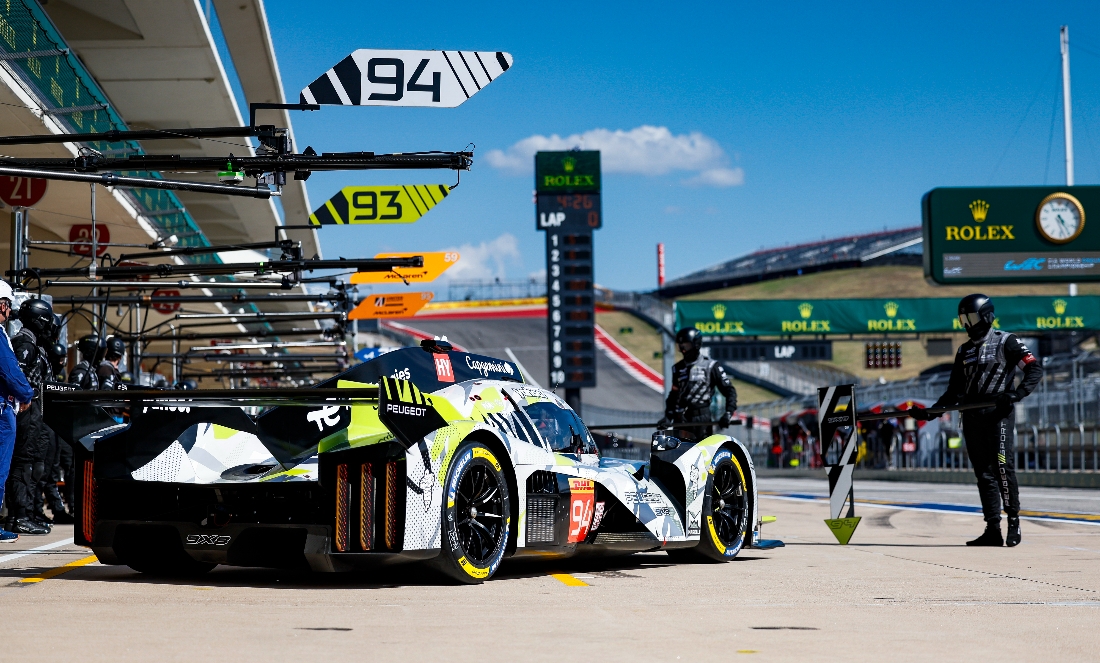
The French marque is still chasing a maiden victory with its LMH-spec 9X8 prototype, which has undergone a series of updates since its debut in 2022 to improve reliability and performance. But unlike rivals who appear intent on extending the lifespan of their current cars, Peugeot is believed to be actively pushing for the opportunity to introduce a new model.
In an ideal scenario, Peugeot would prefer to bring a brand-new car to the grid rather than continually refine the existing one. Yet with the regulatory landscape still unsettled, the team is seeking clarity before committing.
“There are a lot of discussions now about regulations, performances, how we all make it work together for 2026,” technical director Olivier Jansonnie said ahead of last weekend's Lone Star Le Mans at Circuit of The Americas, when asked if Peugeot had been given any direction on whether a new car would be allowed.
“There will be more discussions to come with the manufacturers. It’s very dense in terms of discussions right now," he said. "It was already dense between Le Mans and São Paulo, and it’s becoming more and more again. I am assuming this will be clarified in the next few weeks.”
Peugeot has been lobbying to introduce a new car for 2027, but with every week and month that passes without permission from the rulemakers, the target becomes harder to hit. The main sticking point is the possible shift towards a single converged platform.
While Hypercar regulations have been extended through to 2032, there is still no clear picture of what the technical rules will look like later in the decade. This is a topic on which a number of manufacturers are becoming increasingly vocal.
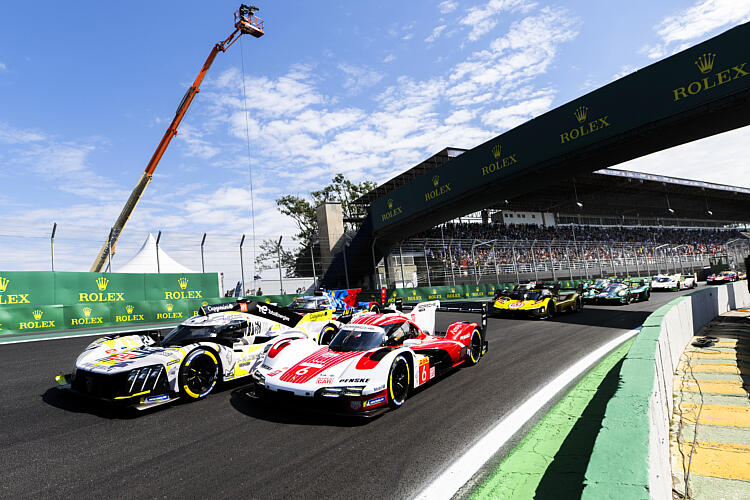
Peugeot has worked hard to bring its 9X8 up to competitive pace. Fabrizio Boldoni/DPPI
The concern for Peugeot is that any new car it introduces could quickly become obsolete or require significant modifications if the rulebook shifts towards something closer to the current LMDh formula, which has attracted more manufacturers than LMH.
“The situation hasn’t changed very much since what we learned at Le Mans,” Jansonnie explained. “The technical regulations have been extended now, and some teams like us, who have been here since the beginning of the championship, somehow need to be given chances to update the cars.
“This is what has been discussed: to try to find the right balance between opening up a little bit and not opening it up too much, so we are not facing an overall cost increase, and trying to keep it fair between the newcomers and the teams that have been there for a long time.
“It’s not easy, by the way; that’s the reason why it takes so long. There are many things that the governing body has to make sure they protect somehow.”
Asked about a potential new car concept, Jansonnie was clear that Peugeot is constantly evaluating its options.
“We are always evaluating. We always try to understand the weaknesses of the current car and what can be improved," he said. "This we do all the time. It’s constant development. It’s one of the differences we have between LMH and LMDh, that we are developing the cars. We are not allowed to homologate new cars every year, but we are still generating concepts.
“I think we are ready, and we are at least looking forward to being given a chance to do something!”
As to whether the brand prefers a clean-sheet design or an evolved 9X8, Jansonnie said: “My preference is to do something, whatever it is, on regulations that are written and clear. The thing that Peugeot needs to avoid 100 percent is what happened to us at the beginning of the LMH regulations, when the regulations changed when the car was already designed.
“For us, the tricky point is that whatever happens needs to be clarified, and then the rules are completely clear for everybody. It means time and what you are allowed to do and not allowed to do. It has to be fair and consistent.”
Despite the uncertainty, Jansonnie stressed that LMH remains Peugeot’s favored route.
“If you look back, we explained why we did the LMH rules and not the LMDh. This hasn’t changed," he said. "Practically, the only thing that might have changed is that we understand the LMH is more difficult generally in terms of technical ambition. You have to design a complete car; it is a more complicated project.
“But the reasons in terms of marketing and positioning with what we want to do in endurance racing for Peugeot have not changed. So for us, LMH is the best regulation.
“Now, we are also happy to discuss what could be the evolution of the regulations, with the chance that we converge everything, but for us, convergence doesn’t mean we go to LMDh. It means we really converge and try to make something in between. The question is when can we can do this, and is it actually realistic?”
A key meeting between the FIA, ACO, IMSA and Hypercar/GTP manufacturers is scheduled to take place today, RACER understands. While not expected to deliver immediate decisions, it is set to cover key topics, including Balance of Performance, the technical ruleset, and broader ideas for improving the show as endurance racing’s top class looks to build on its current momentum.

Stephen Kilbey
UK-based Stephen Kilbey is RACER.com's FIA World Endurance Championship correspondent, and is also Deputy Editor of Dailysportscar.com He has a first-class honours degree in Sports Journalism and is a previous winner of the UK Guild of Motoring Writers Sir William Lyons Award.
Read Stephen Kilbey's articles
Latest News
Comments
Comments are disabled until you accept Social Networking Cookies. Update cookie preferences
If the dialog doesn't appear, ad-blockers are often the cause; try disabling yours or see our Social Features Support.