Sam Bagnall/Getty Images
Don't forget why Monaco needed tweaks
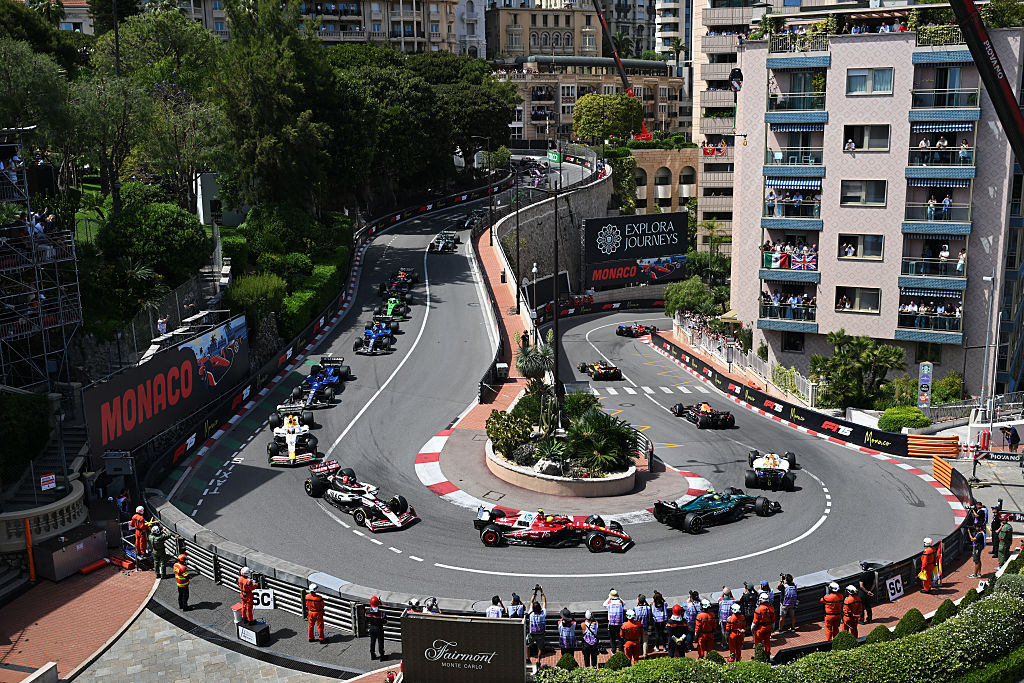
Pre-race in Monaco this year felt different. In the past, whenever the lights were about to go out, you knew that the race would be as good as over once the drivers exited the first corner at Sainte Devote just a few seconds later.
Rain might mix things up, but aside from that it was a relatively straightforward scenario as long as the team executed its one pit stop cleanly. And even that wasn’t always necessary.
It was a welcome change to be waiting with anticipation for the race to start, and to not be certain how different strategies were going to play out.
As it transpired, the frontrunners needn’t have been so stressed, as they all safely negotiated the pit stop phases whenever they required them. Max Verstappen tried the red flag strategy and stayed on track until the start of the final lap before making his mandatory second stop, but once he came into the pits it reset the top four as they started.
It was made all the easier by the approach further back, where Racing Bulls kicked things off by using Liam Lawson to create a pit stop window big enough for Isack Hadjar to make both of his stops in the first part of the race and emerge in the clear in sixth. Lewis Hamilton jumped him, but only Esteban Ocon and Fernando Alonso could try and respond, with Lawson in P9 and keeping the rest of the field out of range.
The approach would have always been on the radar for the grid, but once that strategy had been successfully executed, it became clear to other teams that they could execute something similar with two cars close together.
Williams was next in line and did the same as Racing Bulls. Carlos Sainz backed up the cars behind him, allowing Alex Albon to make both pit stops, then Albon allowed his teammate through to escape far enough up the road to do the same thing. Once both stops were complete, the positions were swapped back.
There was jubilation at Racing Bulls for pulling off such a strategy and securing 12 points, but Williams was less excited with its own double-points finish.
“We didn't want it to happen, and I think on our side it wasn't how we were going to go racing,” Albon said. “Once RB started it, it basically it put us in a position where we had to do it as well. It bunched the field up so tightly, the only way to get out of that situation was to basically repeat what they did. Not pretty and and frustrating, but in the end it's a team sport and we maximized three points for the team.”
George Russell went further, though. After admitting Mercedes had the same strategy in mind for himself and teammate Kimi Antonelli to try and pull off from 14th and 15th – plans that were scuppered by the Racing Bulls and Williams approaches – he said: “I appreciate trying something this year for two stops. Clearly, it did not work at all.”
But I disagree with Russell. It did work.
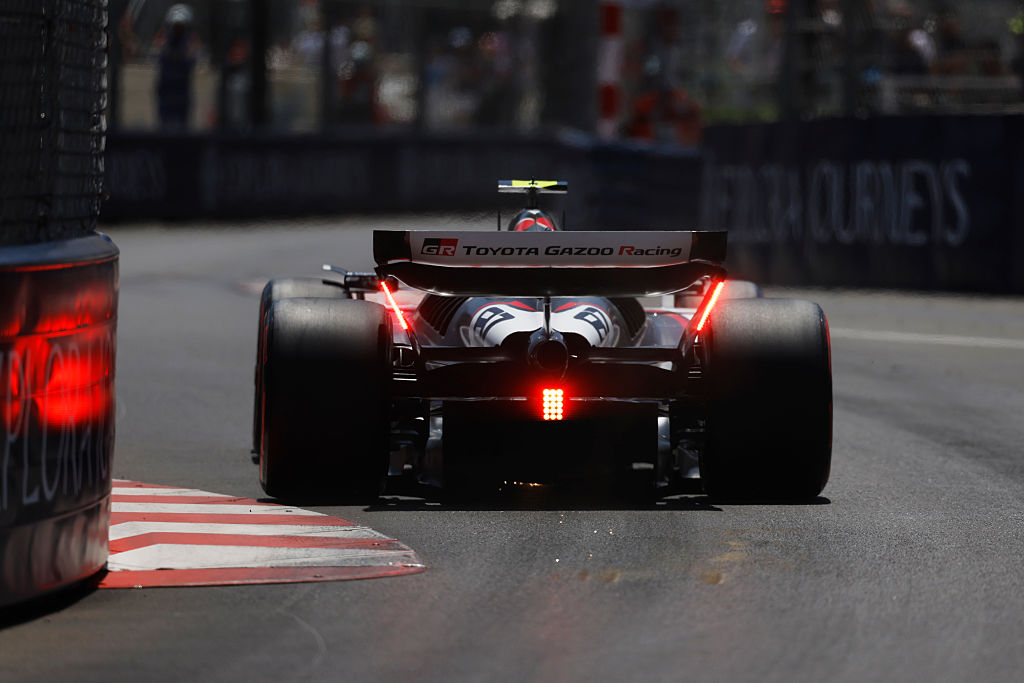
Strategy games were worth a shot, but the fact remains that the current cars take up a lot of real estate. Glenn Dunbar/Getty Images
I’m not saying it delivered a thrilling race by any stretch, and it was really frustrating at times watching drivers back up the field to allow their teammate to make free pit stops, in essence removing the opportunity for different strategies to play out. But the new regulations did exactly what they needed to, because they ensured there would never be a repeat of last season.
As good as the story was of Charles Leclerc finally winning his home race, the early red flag and procession that followed was dire. Very quickly you could see there was no real chance of anything at all happening, and it was just going to be a slow run to the flag.
With the new two-stop rules, that would have been impossible. Even in the exact same scenario, all teams would have still had to make another pit stop after the initial race interruption, and there would have been a chance of moves through strategy or pit stop errors.
“You give us one stop, we were doing it on a one-stop, creating this style of racing,” Albon admitted. “We would do it on a two-stop, we would do it on a three-stop, we would do it on a four-stop. You give us whatever, [this would happen]. I think it was worth a try.”
As Imola showed, if the right conditions combine at a track where overtaking is difficult, then you can still have a good race. But in the past it has also proven processional. The conditions didn’t combine for drama in Monaco, but with the majority of the frontrunners needing to make a further pit stop in the second half of the race, and Verstappen even in a position to steal the victory if a red flag had come out that would allow him a free tire change, there was still more uncertainty from the extra strategic considerations.
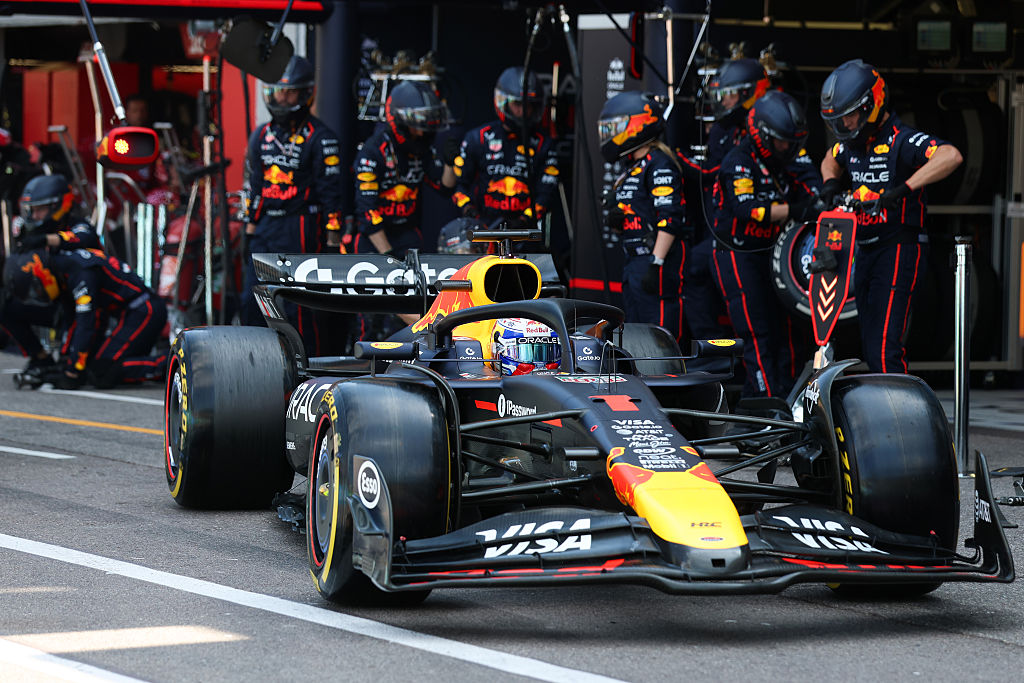
Had a free stop presented itself, Verstappen could have stolen a win from the faster McLarens and Ferrari. Steven Tee/Getty Images
While Russell was again extreme in suggesting the entire event should simply become two qualifying sessions, it was down to a rookie in the form of Oliver Bearman to give the most balanced viewpoint. Teams and drivers will always find an approach to secure their best possible results, and until you make the size of the cars fit the circuit more, you’ll always get backing up.
“I don’t think it was a good look, honestly,” Bearman told SiriusXM. “Obviously I didn’t see everything but it didn’t seem like the best look for the race. I think at some point we just need to understand that Monaco is not about the race, it’s about qualifying.
“That’s where the thrill of Monaco will always lie. That’s what we love. Sunday might always be a procession until the cars get smaller, but that’s not Monaco’s fault.”
Qualifying was still a brilliant part of the weekend. Sunday came with a little more uncertainty. It wasn’t pretty, and they were only small improvements, but it was still a better offering than 12 months ago.
If you want to truly shift the balance towards Sunday again in Monaco, far more fundamental changes will be required.
Presented by:

Chris Medland
While studying Sports Journalism at the University of Central Lancashire, Chris managed to talk his way into working at the British Grand Prix in 2008 and was retained for three years before joining ESPN F1 as Assistant Editor. After three further years at ESPN, a spell as F1 Editor at Crash Media Group was followed by the major task of launching F1i.com’s English-language website and running it as Editor. Present at every race since the start of 2014, he has continued building his freelance portfolio, working with international titles. As well as writing for RACER, his broadcast work includes television appearances on F1 TV and as a presenter and reporter on North America's live radio coverage on SiriusXM.
Read Chris Medland's articles
Latest News
Comments
Comments are disabled until you accept Social Networking Cookies. Update cookie preferences
If the dialog doesn't appear, ad-blockers are often the cause; try disabling yours or see our Social Features Support.