Joe Skibinski/IMS Photo
From the new RACER magazine - Rick Mears: The best and worst of my career
What’s the best career decision you ever made?
My best career decisions generally weren’t made by me, they were made for me! I think that was because I hadn’t originally been looking to climb a racing ladder; I started racing to have fun. But anyway, the first great career decision was made by my mom, getting me off motorcycles and into cars. I’d been racing motocross, desert racing, TTs, and opportunities were starting to come up. One guy with a speedway team approached me, and then another guy with a BSA/Triumph dealership in town offered me a three-cylinder 750cc BSA Rocket for racing in the production bike class. I tested for him at Willow Springs and had a ball. So just like later on with cars, I didn’t chase rides but these offers kept popping up – and I didn’t turn anything down! So Mom saw where that was leading, where it might lead, and so her and Dad decided to get me into a car.
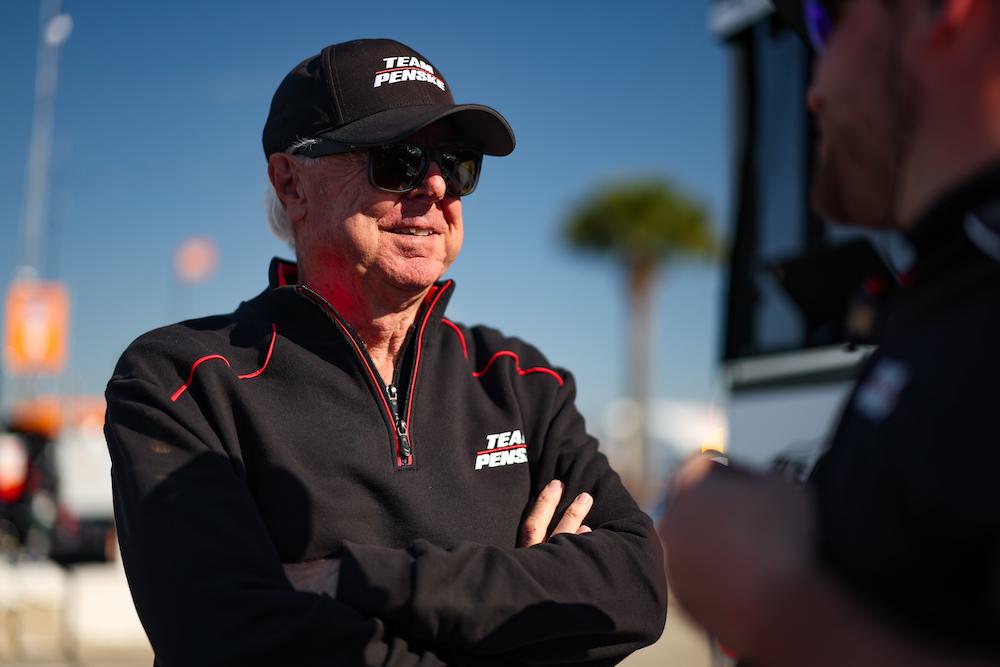
The second one was a result of Roger Penske making me an offer. I didn’t even dream of joining Team Penske because I was just starting out. I had made a few starts [11 total] with Bill Simpson, Art Sugai and Theodore Racing, but it wasn’t a tough decision to say “Yes” to Roger. I mean, sure, it was only a part-time ride, shared with Mario [Andretti] while he focused on Formula 1, but a part-time ride with Penske compared with a full-time ride with any other team still seemed like a no-brainer!
I suppose the career decision that I did consciously make for myself was doing what I’d been doing on bikes, which is grabbing every opportunity that came by in those early years, because you learn from everything. So I went for my pavement license, to race in Formula Vee and Super Vee, which led to Bill Simpson running me in Formula 5000. This is all hindsight; I wasn’t aware that it was a smart decision at the time! I just loved driving anything and everything.
What’s the worst career decision you ever made?
The first one that pops in my head is making that decision to squeeze past Corrado Fabi in practice at Sanair in ’84 in order to get myself a clear lap. My feet and ankles – and my career – could really have done without that.
What was your greatest race?
I’d point out that probably a driver’s greatest performance will come in a race he didn’t win – when the car’s not handling well or there’s been problem with strategy, or a slow pit stop. You tend to dig deeper trying to recover time lost than when you’re controlling things out front.
But I’ll go for the fourth win at Indy, in ’91, because it was an example of everything going according to what my general gameplan always was – first half to get the car’s handling where I want it, the second half to get to the front if you’re not already there. Working with the team to give them the best information to make changes to the car in pit stops, to make the car as strong as it can be for the shootout. But ’91 was the only one where I actually had the chance to show how strong we’d made the car for that final couple of stints. We beat Michael [Andretti] in that shootout and then pulled away from him after the final yellow. That was gratifying.
What was your most disappointing race?
Subtract my wins [29] from my total starts [203], and it’s all the others! Finishing second to Gordy [Johncock] at Indy in ’82, of course was a disappointment, but I wasn’t disappointed with the race. We lost by the smallest of margins [0.16s] but we had thrown everything we could at Gordy.
I would say I was more disappointed with Indy in ’85, because it was my first race back after the Sanair accident, I was literally just getting my feet under me again. I was rusty from being out of the car for so long, so in practice and qualifying I was cautious and we qualified only 10th. Early in the race, I was cautious again at first, running it with push which isn’t the fastest way, and getting back into the swing of how to deal with traffic. Then as I got more comfortable and got my timing better for making passes, we started to free the car up, run it a little looser, and we gained speed and we really started progressing. We ran the quickest lap of the race and I felt like we had a shot at the win, so to miss out that day was a disappointment because I think I was set to prove that my injuries weren’t going to hurt my competitiveness, at least on ovals.
What was your most significant win?
Along the same lines as my last answer, you could say Pocono ’85 because that was the first win after the accident, and we’d built up to it. We podiumed at Milwaukee, got pole at Michigan and then we won Pocono, and that’s a tricky track, so that was gratifying. And in terms of personal satisfaction, passing Mario on the very last lap to win at Michigan in ’81 was special because I think that’s the only time it ever happened to me, and it was against one of my heroes. So those wins were personally significant.
But if you’re talking bigger picture, it’s a tie between Milwaukee ’78 – my first win for Roger, and therefore my first win in IndyCar – and the Indy 500 in ’79 because it was my first win there, and because Roger had been waiting for his second win there since Mark Donohue won it seven years earlier. That’s a long wait!
Actually, USAC’s trip to England in ’78 was also very significant because it had been partly my road course racing background that had encouraged Roger to sign me, as more road courses were coming onto the calendar. And it paid off when we finished second at Silverstone and won Brands Hatch.
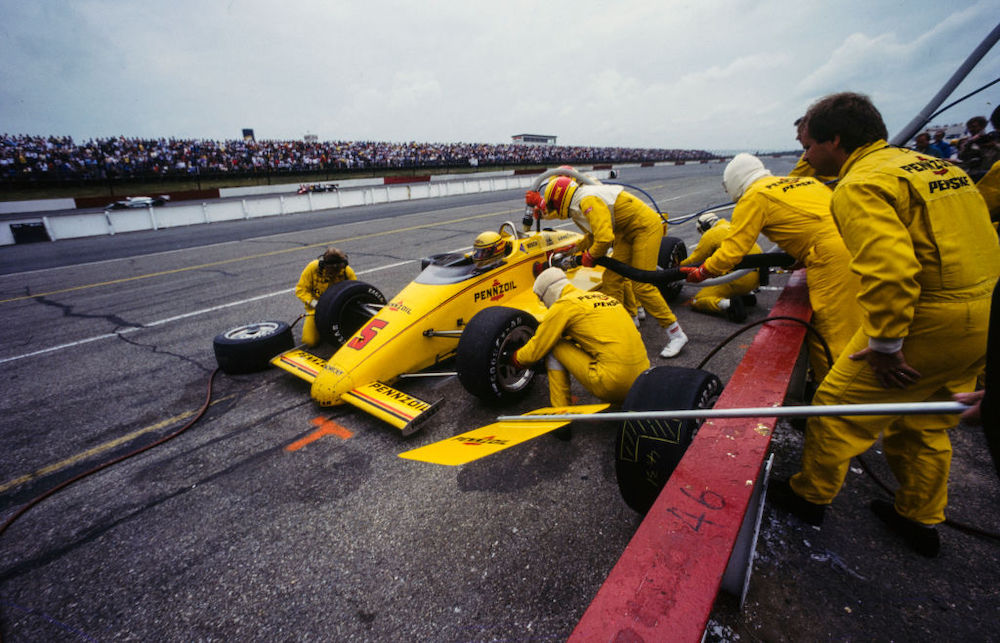
The 1985 Pocono race holds special significance for Mears, as it was his first win since returning from injuries sustained in a crash at Sanair a year prior. William Murenbeeld/Getty Images
Who was your best teammate?
Truth is, all my teammates were good, I learned from them all, but they were good in different ways. Bobby Unser was great because he was still so fast, he taught me to read between the lines of what he said, and to keep my eyes and ears open. He also kept me digging for improvements. What he did was probably more helpful than what he said!
His brother, Al, was a perfect teammate right across the board. He was quick, he was smart, he could read a race so well, and we spoke the same language technically. I absolutely trusted Al’s judgment on what changes did and didn’t work on a car, so we could split the test workload, and get through more work. We didn’t both have to try everything: what worked for one of us worked for the other. I had confidence to make a change based on what Al said, and I believe it worked both ways. And he was just a great racer: if Al was still running at the end of the race, he was someone you had to deal with.
Danny [Sullivan] brought a lot of stuff to the table, raising the team’s profile and raising IndyCar’s profile as a whole, because he enjoyed working with media, keeping sponsors happy and so on. Within the team, he learned to bring more and more to the table as time went on, and I can tell you, he drove the hell out of his car, particularly on road and street tracks.
Emerson Fittipaldi was another fun guy to work with, and I think we got to a point similar to how I felt about Al, where we trusted each other’s judgment. On road courses he showed the kind of speed he’d shown in Formula 1 20 years earlier, but he also made himself into a great oval driver, too.
My first two teammates in ’78 were very important, too – Tom Sneva was the full-time Penske man, while Mario and I shared the other seat. Mario was completely open to helping me, even though there were only a couple of weekends when Roger ran three cars so we were both driving. He and I had very different techniques – you could never pass Mario going into a turn because he went in so deep, but then I’d watch him saving his life on the exit, whereas I’d be trying to perfect the exit because I figured it would benefit me down the next straightaway. So I’d have a late turn-in, not apexing until two-thirds of the way through and straighten out sooner on the exit to pick up the throttle sooner. But despite these very different techniques, we found we had similar setups on our cars.
Tom was also very fast so he was a useful way to gauge my own progress, and he always used to be changing stuff on his car, which really helped me learn, because he was also an open book. As a driver in only my second year in Indy cars, having a combination of Tom and Mario as teammates, being surrounded by the expertise and knowledge of Team Penske and strong cars from [designer] Geoff Ferris, it was as much as anyone could ask for, so I made sure I absorbed everything.
Who was your worst teammate?
There’s no such thing. You should learn from all of them, and that’s what I tried to do.
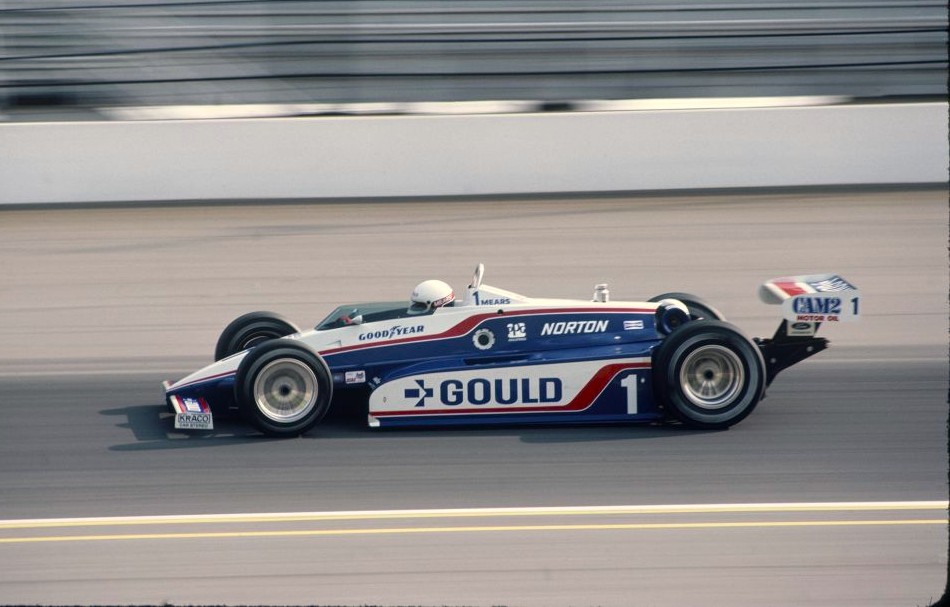
He didn't win Indy with it (just!) but Mears rates the 1982 Penske PC10 as the best race car he ever had. David Hutson/Getty Images
What’s the best car you ever raced?
The 1982 PC10 is the first that comes to mind. We didn’t actually take as many wins as we had the previous year with the PC9B, but that usually wasn’t due to car issues. Geoff came up with a ground-effect chassis that worked everywhere and the 10’s inherent speed was fantastic. We got a lot of poles [nine from 12 races] and four wins and some near misses, and we had our third championship. I was happy when they banned ground effect and went back to flat bottoms the following year, but the ground effect era had really forced drivers to refine their feel for where the limit is, and I enjoyed that. At first, you’d think the car was numb and you just had to be brave, that it would get to its limit and then just let go, but the more we ran, the more you could feel the outside rear starting to go and warn you that you’d reached the limit.
The other great car is the start of a new family of cars, when we got Nigel Bennett in as chief designer. From my first test in his PC17 in 1988, I knew we were back on track as potential winners after four years of struggles. And like a great Indy car should, the 17 and 18 could be made to work on every type of track, which was important because the CART calendar was filling up with road and street courses as well as different types of oval.
What was the worst car you ever raced?
The PC15 of 1986, or 16 of ’87 – probably the earlier one. And I feel bad about saying it because maybe there was more in it, but I couldn’t get over the fact that those cars had no feel. It had been a struggle to get the PC11 and 10B working with the flat-bottomed rules in 1983 but eventually we got a handle on it. The PC12 just wasn’t fast enough so we’d switched to March for ’84 and ’85, and anyway, in ’85, I was still getting myself back up to speed after the Sanair crash. But for 1986, I was full-time again, and we just could not get that PC15 to give any feedback to tell me where the limit was. It was a shame because I thought it was a real neat-looking car, and I could tell the new Ilmor-Chevrolet engine was really good. But the car itself was just numb. So we spent the season going back and forth between our car and the March, and I did get a pole in that car – at Sanair, of all places!
But I remember we qualified well at Laguna Seca [third] and I told my engineer, “Look, there may be more in it, this may be a pole-winning car, but I just can’t feel where the limit is.” And obviously, because this was my first full season since I messed up my legs, and I was trying to re-establish myself, having a car like that was everything I didn’t need!
What’s the best track you ever raced on?
For qualifying, Indy. Those four laps are just so demanding, they require so much of you mentally, to analyze what’s going on at one turn, while at the same time being well ahead of your car and anticipating what’s going to happen in the next couple of turns, you’re having to make constant changes to the car. For racing, the best tracks were Michigan or Milwaukee, because unlike Indy, there was a lot of track width that was still usable by the end of a race. That made it tough for someone to block you and it gave you more options in traffic, so it was unlikely that backmarkers could decide the race. And it also meant you could change your line according to how your car was handling, how much grip you had, which end was working best.
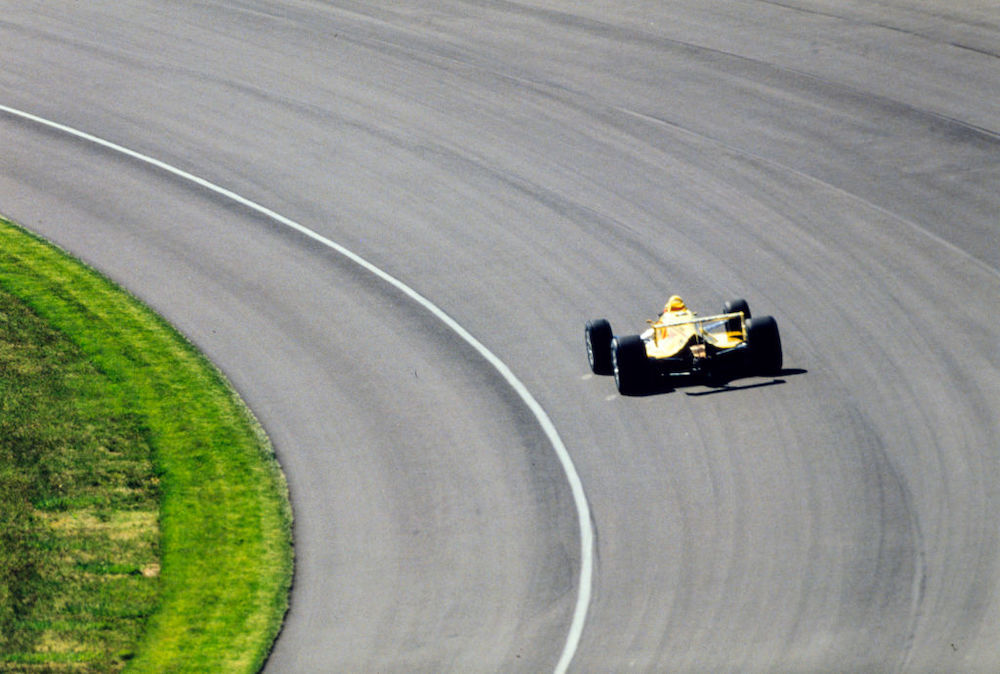
When a guy with four Indy 500 wins says that qualifying at the Speedway is the ultimate challenge, you believe him. David Hutson/Getty Images
What track do you wish you’d raced on?
Darlington Raceway has always been interesting to me. They’ve got a lot of banking at each end and although the height of the banking is very similar, the angle of the turns are very different from end to end, because it’s an egg-shaped layout, so Turns 1 and 2 require different things from your car than Turns 3 and 4. Technically, those kinds of ovals have always interested me, a bit like the Pocono triangle, where you have to compromise your handling at each of the turns instead of going super fast through one and giving up too much speed at the others. I think a track like Darlington puts maximizing the speed of the car a lot more in the hands of the driver, and that’s great.
What car from history would you like to have raced?
For Indy, I immediately think of Parnelli’s roadster from ’63, and all the roadsters, to be honest. They’re beautiful and they’re all about maximizing mechanical grip – no wings, no downforce to help you, no turbulence to hurt the racing. So that’s one. But another type of car that I’d really like to have tried was a dirt Champ car on a mile track. You drive them on the throttle, and on the mile tracks, because you have the longer radius corners, you’re sliding for a long time. I mean, I loved sliding through the corners at Ascot, a half-mile, and steering it on the throttle and figuring out how to do it while negotiating traffic, predicting where he’s going to be and when, so where you need to be and when in order to get around him. Do you drop down low to get past, or is he going to be coming down just at that point, so you need drift out wider to get around him on the outside? It was great fun. I think of those photos of Mario and Al in the Viceroy cars, sliding in formation. It’s great. So the idea of doing that on the mile tracks where you’re really haulin’ ass… I’d imagine it’s about as much fun as you could have in a race car.
What advice would you give to someone who wants to start racing?
Don’t rush through formulas – accept that a second year in a junior category is fine because you’re still always going to be learning, you’re going to improve. You don’t want to take a bigger step than you can manage, because if you struggle in the next category, it’s going to hurt your confidence, whereas if you’d stayed in the previous formula and gained another year of experience, maybe you wouldn’t have struggled when you move up. And the other thing is, especially in the early years, accept drives in a wide variety of cars, because at that stage, gaining experience and applying them can only be a help.
CLICK HERE to purchase the new issue of RACER. And to have the new-look RACER magazine delivered to your mailbox six times per year, CLICK HERE to check out print and digital subscription options.
David Malsher-Lopez
David Malsher-Lopez is editor-at-large for RACER magazine and RACER.com. He has worked for a variety of titles in his 30 years of motorsport coverage, including for Racer Media & Marketing from 2008 through 2015, to which he returned in May 2023. David wrote Will Power’s biography, The Sheer Force of Will Power, in 2015. He doesn’t do Facebook and is incompetent on Instagram, but he does do Twitter – @DavidMalsher – and occasionally regrets it.
Read David Malsher-Lopez's articles
Latest News
Comments
Comments are disabled until you accept Social Networking Cookies. Update cookie preferences
If the dialog doesn't appear, ad-blockers are often the cause; try disabling yours or see our Social Features Support.