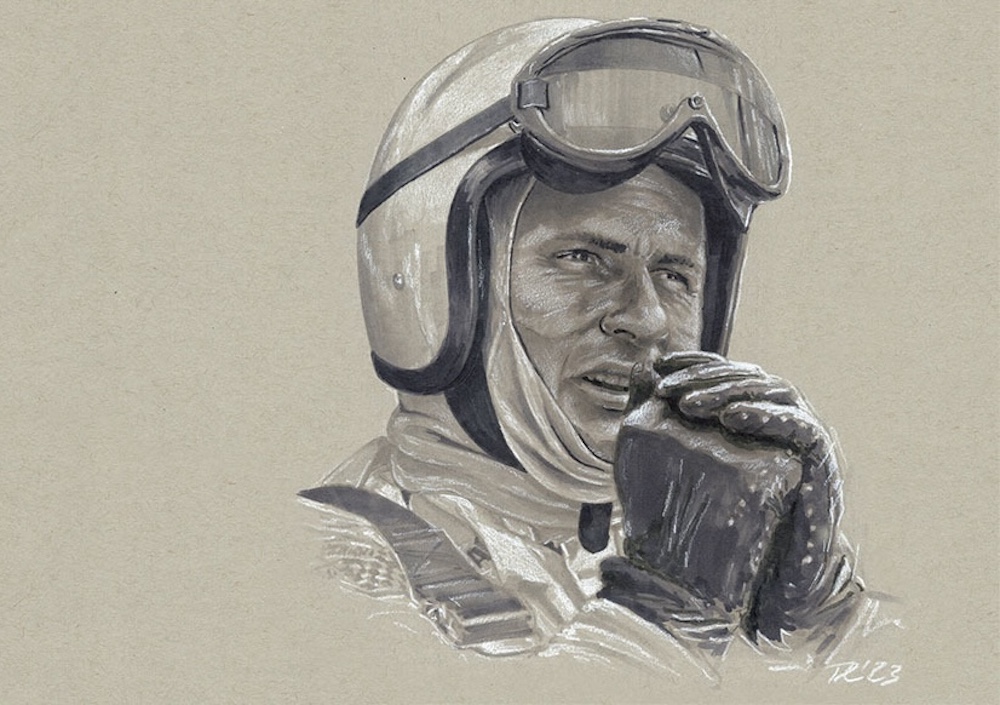
Illustration by Paul Laguette
From the vault: The Boss
Ex-Formula 1 driver and racecar constructor Howden Ganley is the epitome of New Zealand’s "She’ll be right" stereotype: laidback, competent, adaptable. Everybody, however, has a breaking point: McLaren’s fraught Formula 1 debut of May 1966 was his.
"I did Monaco with them – then resigned," he says. "I couldn’t see where it was going with that Ford engine. It made a fantastic noise, but most of its power shot out of the exhausts.
"We towed the car back to the UK, and when we got home we were told to turn around and go to Modena to test the Serenissima engine. I was very tired and kinda overreacted…"
Ganley had joined fledgling Bruce McLaren Motor Racing Ltd. in June 1964 as its fourth employee and mucked in – literally: "The first ‘factory’ was owned by a contractor of roadrollers, earth-movers, etc. We were tucked in a small corner: just enough space for a workbench and two cars. The floor was compacted dirt; if you dug down far enough with your heel you might have found broken concrete. Hardly ideal."
This young team – a potent mix of resourceful Kiwis, can-do Americans, and Brits schooled in the rigors of aeronautics – was by ‘66 overstretched more than it was underfunded. Its Can-Am cash cow had yet to be milked, but its founder’s pivotal role in Ford’s assault on Le Mans was handy in terms of dough and hi-tech go. As such, he was open to new ideas and made bold choices.
"Bruce plucked me from college, basically," said chief designer Robin Herd, who sadly passed away in June 2019. "He needed a highly-trained engineer – and Howden had a mate who mechanicked for a Formula 2 driver [Alan Rees] who kept mentioning some clever ex-schoolmate who designed aircraft: me."
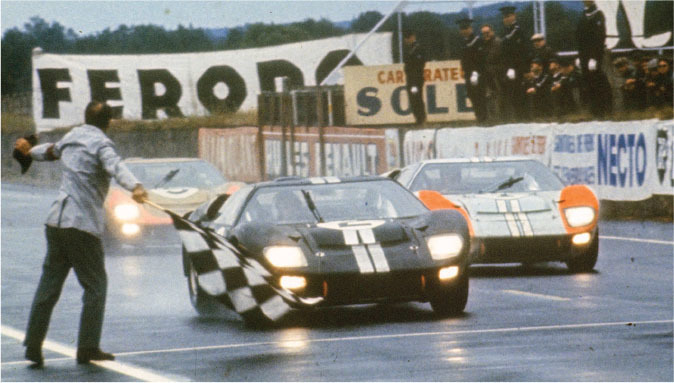
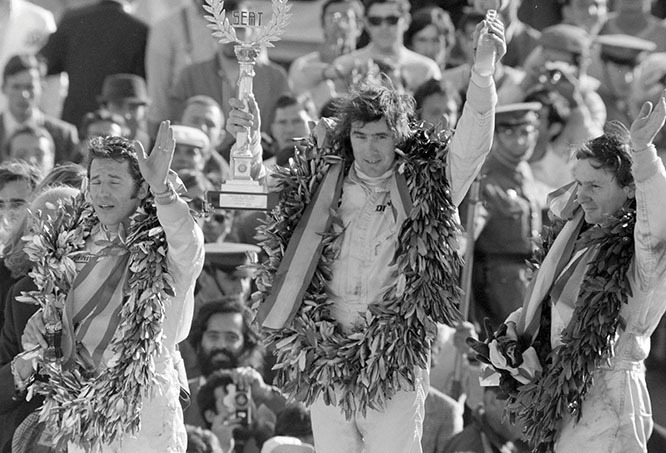
In 1966, sharing a Shelby American-run Mk II with fellow Kiwi Chris Amon, McLaren headed home Ford’s carefully choreographed 1-2-3 formation to take the Blue Oval’s first of four Le Mans victories in four years. David Phipps/Getty Images
It was Herd’s first job in motorsports. A brilliant Oxford University graduate, he’d been working on Anglo-French supersonic airliner Concorde as senior – he was only 24! – scientific officer at the vast and rigidly structured National Gas Turbine Establishment, a government-run site for jet engine development. Thus McLaren’s operating systems came as something of a shock.
"They were by some distance the most talented people I have ever met," said Herd. "Everybody chipped in – with Bruce gluing it together. Barring finances, decisions were communal. Some criticize this as design by committee – but it would have been stupid not to access all this knowledge and experience. That said, I took absolute responsibility: I schemed initial parameters and finalized end specification."
Herd’s NGTE colleague Gordon Coppuck followed. "Except for two years of National Service, I had since 1952 held a very secure, if very sober job. I had a fortnight’s trial at McLaren and I loved it that parts I’d drawn had been made before I left; I was used to waiting a year for that.
"Robin was much more of a scientist. I’d done drawings for him at NGTE and he needed someone to fulfil that task at McLaren. I was flattered to be asked." And swift to accept, as employee No. 13. "It wasn’t long before my stuffy Civil Service background seemed an age away."
The pair were not only familiar with the latest materials and construction methods that Bruce craved – Jim Hall’s innovative Chaparrals had lit a fuse – but also were unafraid of their application: Mallite was a laminate of sheet duralumin and end-grain balsa developed for aircraft interiors; Herd used it to build his first two open-wheelers.
"I kept it simple: no compound curves," he said. "We rolled the shapes and bonded them to steel bulkheads. We used just a few rivets to hold it while it cured. A lot less complicated than a spaceframe."
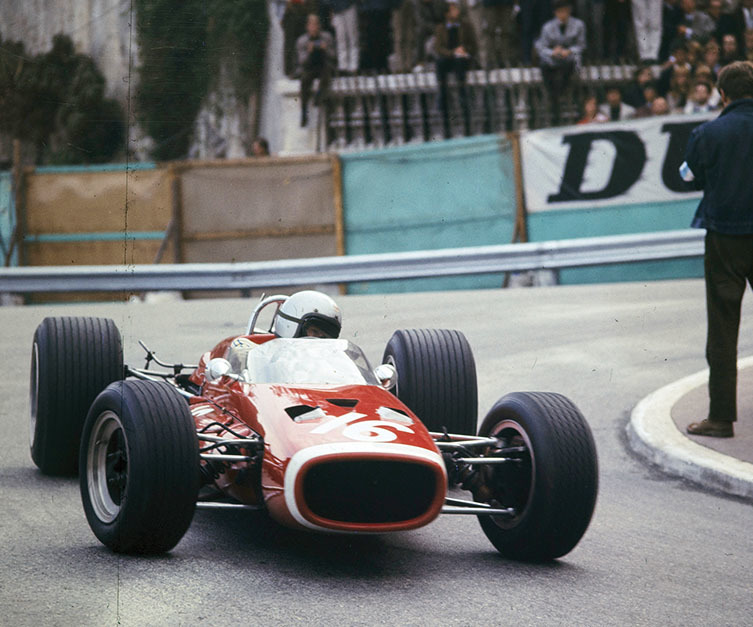
While waiting for a BRM V12 to arrive to power the M5A, Bruce McLaren drove the stop-gap, BRM V8-powered, F2-derived M4B to a creditable fourth at the 1967 Monaco Grand Prix. Ron Easton/Getty Images
The first was a test vehicle – for Firestone and Herd’s ideas – fitted with a 4.5-liter Oldsmobile V8. The second, M2B, was a 3-liter F1 car powered by a short-stroke version of Ford’s Indy-winning V8. This car differed in that Mallite was confined to the inner skins of its monocoque. The end result was stiff but heavy, and further hampered by a gearbox holding only four ratios. Bruce did well to qualify 10th at Monaco – but retired after nine laps due to an oil leak.
The Serenissima V8 was worse – lighter, but even less powerful. Run bearings and jammed timing gear prevented it from starting the Belgian and Dutch GPs. Between times, Bruce coaxed it home sixth at Brands Hatch, albeit two laps behind. Revamped by Traco in Los Angeles, the Ford was reinstalled for Watkins Glen and Bruce finished fifth – three laps down – only to suffer another engine failure at the Mexico City finale.
"But for this strife, we would have had downforce in 1966," said Herd. The team had run a cantilevered rear wing at a Zandvoort tire test in November 1965. Providing repeatable three-second gains, it was removed in a secretive hurry. And forgotten until 1968… "Was it that long?! Perhaps we weren’t so smart. To be fair, sourcing an F1 engine was our biggest problem."
A BRM V12 was ordered for 1967. It was very late arriving, but effective at least when finally uncrated. Bruce might have won a wet-dry Canadian GP on M5A’s debut (in late August!) had an alternator been fitted; the oil catch tank boiled the battery dry. And he would start the next GP, the Italian at Monza, from the outside of the front row.
"I don’t know why that car was reasonably competitive," said Herd. "Against my better judgement – the only time at McLaren that I was railroaded – it featured an aluminum monocoque and aluminum body with compound curves. We did it because Colin Chapman was doing it like that. It turned out that compound curves are crap."
Lessons learned, all the pieces were in place for a proper crack with a two-car squad in 1968: Herd’s neat M7A had a Cosworth DFV – no longer exclusive to Lotus – at its back, and newly-signed, newly-crowned world champion Denny Hulme to drive it. At which point Herd dropped a bombshell.
"I felt I was short-changing McLaren," he said. "I was riding on the back of the quality there. Bruce offered me a lot more money, plus shares, but I wasn’t leaving to earn more; I was leaving to learn. I’m glad I went [to Cosworth]. But I do regret passing up my one opportunity to do F1 properly. I spent two days a week at McLaren until the car ran – and was very proud when it won first time out."
Starting from pole and setting fastest lap, Bruce led the 1968 Race of Champions at Brands Hatch throughout. He then completed a McLaren 1-2 behind Hulme at Silverstone’s International Trophy. After a mid-season lull (coinciding with ramping up prep for the lucrative Can-Am series), consecutive GP victories in Canada and Italy allowed Hulme an outside chance of retaining his F1 title in a three-way showdown in Mexico: he crashed when the rear suspension failed. It was fitting, however, that Bruce had scored his team’s maiden world championship victory, at Spa in June.
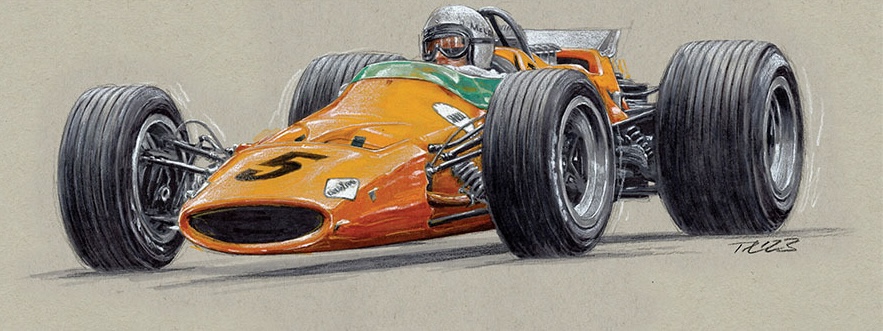
The Spa-winning Robin Herd-designed M7A was neat, simple and – crucially – powered by Formula 1’s new benchmark engine, the Cosworth DFV V8. Paul Laguette Illustration
"I love that race because I was his mechanic and we built a huge proportion of that car," says another Kiwi who gravitated to McLaren. Alastair Caldwell joined in 1967 as a cleaner, was promoted to mechanic the next day, and worked "lunatic hours" thereafter. "We were getting to the stage where we thought we might hire a hot shoe. Bruce was a superb motivator and test driver, both of huge benefit to us. So Denny was the one we would have sacrificed. We should have won a lot more, because the [M7A] was a brilliant bit of kit."
The same can’t be said of the all-wheel-drive M9A F1 machine that wasted much of the team’s time and budget in 1969. Coppuck hadn’t yet felt ready to replace Herd, so Swiss Jo Marquart was poached from Lotus to design it. It would, however, be Coppuck’s B and C variants of M7 that kept McLaren in the mix: Hulme won in Mexico (ironically) and a consistent Bruce finished third in the championship.
The M14A of 1970 was another evolution and the season began well, with second places for Hulme in Kyalami’s South African GP and for Bruce in the Spanish GP at Jarama. But then the team’s heartbeat stopped – on June 2 – when Bruce was killed testing the M8D Can-Am car at Goodwood.
"His parting left an enormous void, which a lot of people believed we could never fill," says Coppuck. "We didn’t – but we survived as a company. We were a bit more intense after his death. That’s not to say it was no longer a good place to work, but certainly there wasn’t one man able to speak to everybody and make a telling contribution at all levels. But we were reaching the point at which a boss could only keep tabs via department heads. Even Bruce would have been forced to work that way sooner or later."
Caldwell: "Bruce’s death was a disaster. If I’d had the money for the airfare – I’d recently bought a house in the UK – I would have returned to New Zealand. It’s sad but true, however, that the F1 team did quite well without him. No one jumped into his shoes, but we had lots of good people and the team held itself together."
Bruce McLaren’s final Formula 1 podium: second with the M14A in the 1970 Spanish GP, behind winner Jackie Stewart. Getty Images
Hulme, hands badly burned during practice for the Indy 500, was a pillar of strength in the aftermath, as was Teddy Mayer. This legally trained and tough-minded Pennsylvanian had been with the team since its beginnings – deciding to stay on despite his brother Timmy’s fatal accident in one of its cars in February 1964 – and was the "bad cop" who made the difficult decisions that "white hat" Bruce had avoided.
"I think I got even tougher after his death," said Mayer, who passed in January 2009. "I had to be that way to keep control, to make sure we were all pulling in the same direction. That was perhaps Bruce’s greatest strength: he made this look easy."
New recruit Ralph Bellamy’s Coke-bottle M19A proved a handful in 1971. It showed better with the Australian designer’s rising-rate suspension retained at the front but removed from its rear, and Hulme finished third in the 1972 final F1 standings. By which time Bellamy, uncomfortable with the open-doors policy, had rejoined Brabham – and McLaren had contested its last Can-Am race.
Coppuck now felt ready. His M16 design, a winged wedge with radiators housed in sidepods, had reset Indy’s parameters in 1971: "I always felt Can-Am was an inherited success. But nobody had expected us to turn Indy on its head. It was this car that convinced me that I could do it – and that bigger was usually better."
The resultant M23 debuted at the 1973 South African GP after just a half day of testing: Hulme took pole – the only time in his 112 GP starts – and was leading when he punctured on debris. Three wins that year – one for Hulme, two for Peter Revson – convinced Marlboro, Texaco and 1972 world champion Emerson Fittipaldi to throw their lots in with a revived McLaren: the drivers’ and constructors’ titles of 1974 were won as a result.
"Bruce might have kept his M6GT road car program going – he was passionate about it – but otherwise I think he would have been happy with how the team progressed," said Mayer. "Although some say that F1 was third on his list of priorities, after Can-Am and Indy, he and I always considered it the ultimate challenge."
Presented by:

Paul Fearnley
Read Paul Fearnley's articles
Latest News
Comments
Comments are disabled until you accept Social Networking Cookies. Update cookie preferences
If the dialog doesn't appear, ad-blockers are often the cause; try disabling yours or see our Social Features Support.