The RACER Mailbag, April 9
Welcome to the RACER Mailbag. Questions for any of RACER’s writers can be sent to mailbag@racer.com. We love hearing your comments and opinions, but letters that include a question are more likely to be published. Questions received after 3pm ET each Monday will be saved for the following week.
Q: I have read eight or nine articles about Thermal in the last couple of weeks, including last week's Mailbag. Below every article in the reader comments section, everyone is complaining about the absence of fans on the television broadcast. The main set of spectator bleachers were set high up on an embankment, about 20 feet above the track surface. The TV cameras are set up at track level. As the cameras pan around the track to catch the racing action, there is no way they will catch a view of the spectators because the bleachers are so high.
The bleachers at Thermal were packed, and it looked like there was more fans than Portland and several other races. At the beginning of the broadcast there was a brief drone shot of the bleachers and they looked full. Not sure what can be done to catch shots of the fans, but they were there – just high up and out of sight of the cameras.
Bob Gray, Canoga Park, CA
MARSHALL PRUETT: There weren’t more people at Thermal than "Portland and several other races," unless we’re talking about Portland and other tracks and their non-IndyCar events. In that case, yes, the recent SCCA Regional at Portland had fewer fans than the Thermal IndyCar event.
There was indeed a small stretch of stands at Thermal that weren’t in a great location for TV cameras to catch, but we don’t need to dip into "alternate facts" to start a narrative that it was well-attended. I wish we were talking about lots of fans, but I was there, all three days, and no false impressions were given due to camera placement. I’d happily say so if that was the case.
Q: Since it was April Fools last week, can you share any good pranking (or similar) stories from your time in the paddock?
I remember watching a Grand Am race and chuckling to myself when the broadcast team reported that a European manufacturer, Volvo maybe, was building a Daytona Prototype after reading a "report" about that on April 1st.
Kyle
MP: Yeah, those were our friends at DailySportsCar who cooked up the thought-it-was-obvious-it-was-a-joke Volvo piece that was errantly raised as something real.
No April Fool’s stories to share from my days as an IndyCar or IMSA crew member, and that’s because the date was meaningless -- at least in my era -- because there wasn’t just one day where such things were tolerated; most days were spent messing with each other, making up nonsense to see who we could deceive, and practicing general asshattery to amuse yourselves or each other.
Don’t leave your car keys sitting out because they will end up hanging from the ceiling or tied in the middle of 20 feet of string that will take an hour to untangle. Don’t leave your car unlocked or something will get disconnected -- nothing obvious and easily solvable -- and leave you stranded for an hour. Don’t leave you phone untended, or your laptop unlocked…
Hell, it still goes on today. One colleague left his laptop/email open at the Nashville season-finale last year and we had plenty of fun. One person mentioned sending something, so at my urging, another colleague sent me an email from the person’s work account, saying they were burned out, tired of the company, looking for a change, and wanted advice. I replied (and copied in the owner of the company) that I was really disappointed in them for going to me first instead of the owner, chided them for the poor decision-making, and so on. All while they were out shooting and oblivious to the fake email exchange about wanting to quit. The owner, who’d grown accustomed to seeing fake and inflammatory emails when laptops were left open, knew it was a joke, but played along.
Failed to heed my own advice at Thermal in 2023 when I went for a few hot laps with Stefan Wilson. Put my phone and whatever else I had in my pockets on the pit wall, donned my helmet, strapped into the passenger seat, and off we went for 10 minutes. Sadly, Anders Krohn, who loves finding untended phones, knew that while he couldn’t unlock my phone, there was (still is?) an exploit where you can access and use the camera from the lock screen.
Stef pulls in, I hope out, and Krohn has that big dumb smile on his face. I knew I’d been "Krohn’d" and found at least 100 obnoxious selfies he took -- maybe more -- during our lapping session. I’ve kept them on my phone as a reminder.
Yes, we’re all a bunch of idiots. But we do have fun…
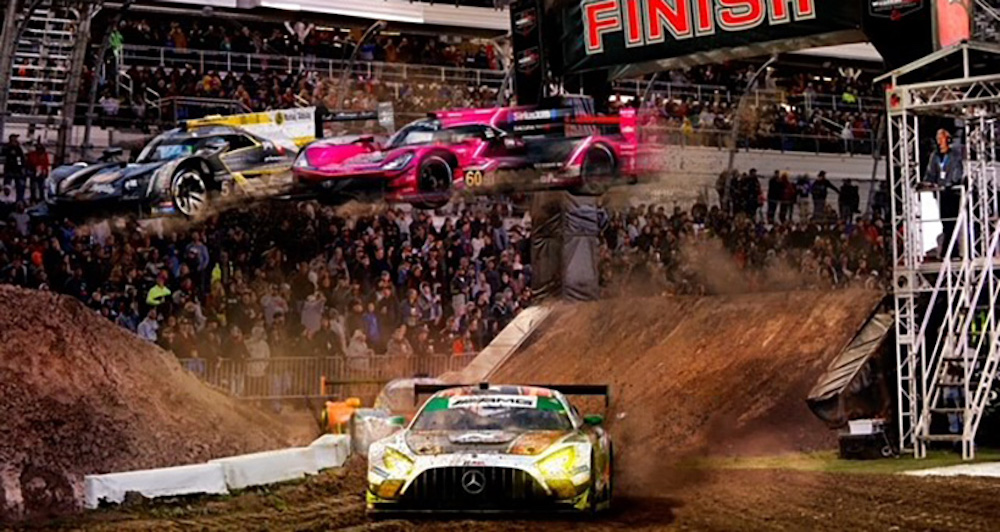
Next you're going to tell me that the 2022 IMSA press release about plans to run the Roar Before the 24 on a dirt supercross track was a prank, too. Image via IMSA
Q: I've seen this on RACER comments: If IndyCar is going to lose both manufacturers, which means their marketing money is also gone, why not adopt IMSA’s model of fuel flow and torque limit to cut development, with manufacturers free to supply engines to as many teams as they want? If they want to have a factory team only, fine. If they want to supply it to more teams, fine too. Everyone would still build a V6. And Ilmor could be used to supply engines for teams that can't make a deal with an OEM or some other independent engine builder (if it's financially viable for them to join). Charge the same fees as IMSA and see where the series goes this way.
I mean, what else does IndyCar have to lose (in a scenario where they are already losing Chevy and Honda)?
One more question: How much did it cost to lease the Honda V8 back then? Did Honda subsidize the whole grid?
William Mazeo
MP: Honda supplied CART engines for many years, so there’s no single answer. In many cases, the engines were free, or free plus a lot of cash, which was a common practice for every manufacturer with its best teams (or teams that had a driver whose national origin was the same as the manufacturer) during CART’s best days in the 1990s. Adjusted for inflation, millions for the select teams without the right ties or driver, or ran towards the back.
Q: I've got a question following on from Bob, the lifetime fan from last week's Mailbag. What is more important for growing the series – a few thousand fans enjoying themselves at Thermal? Or a classic high-speed IndyCar battle on a fast speedway? Because right now, FOX is advertising the fastest racing on the planet, but we've started the season with two rather ho-hum races on some not-so-fast circuits, nearly a month apart.
Aside from Lundgaard and Palou swapping for half a lap, Thermal wasn't too exciting. How do we keep new fans to come back if the racing isn't like what FOX is selling? How would you say the importance of a strong TV audience compares to that of strong tickets sold at the gate?
Gabe, Indiana
MP: Two measurements of similar but different values. For teams selling straight sponsorship (no business-to-business, etc.), TV audience is still a significant number to base the deals. Digital/social reach is becoming more important, but for regular sponsor deals, those audience figures are the trusted currency for how many people a company can reach with its product or services.
A strong gate only helps, and in line with last question, the better the crowd, the more popular and important a series and its teams and its sponsors look and feel. But other than the Indy 500, I can’t think of how an IndyCar team would work track attendance into a sales pitch unless it was absurdly good.
Getting Company X to give you $5 million per year won’t come from averaging 25,000 at the non-Indy races. It will come from the exposure to 1 million-plus on the broadcasts, plus the 300,000 at the Speedway.
Q: I was so looking forward to watching the LBGP this past weekend, and was then so disappointed when I pulled up the TV schedule and found out it isn't until next weekend. Forget NASCAR, NCAA basketball, etc., the real reason new fans aren't going to get hooked on IndyCar is because the front of the season is too erratic. 1.4 million Fox viewers believed the hype and tuned in for St. Pete, but here we are two months after the Super Bowl, and we've had two races…
And I'm not one to fight for Thermal, but is having 3-5,000 fans on-site really important to the quality of the race? Sure, the energy of packed houses at Indy (or even Long Beach or Toronto) shines through on TV (and I've gone to all three), but is Thermal that much different than having lawn chairs scattered around the rolling landscapes of Barber, Mid-Ohio, Laguna Seca, or Road America?
Brian, Ohio
MP: I just wish we’d had another race straight after Thermal 2025 so we could stop talking about Thermal 2025. Only Laguna has a low-attendance parallel to Thermal. Barber’s sold all they tickets they have, Mid-Ohio is awash with fans and campers, and Road America has more cars parked within its property than Thermal had fans, cars, and race cars last month.
If you’re flipping through the channels and come across a sport, or a concert, and the venue is large and sprawling, but you see very few people there, what kind of impression would that leave? Probably a different one than if the same big venue had folks filling at least half or more of the place. If it’s a club or a bar, do you walk into one where it looks dead and stay, or keep walking until you find one that’s rocking with people having fun? Since we’re taking sports and entertainment, yeah, I don’t think it’s strange to suggest that crowd size and energy conveys something more attractive to the viewer or attendee.
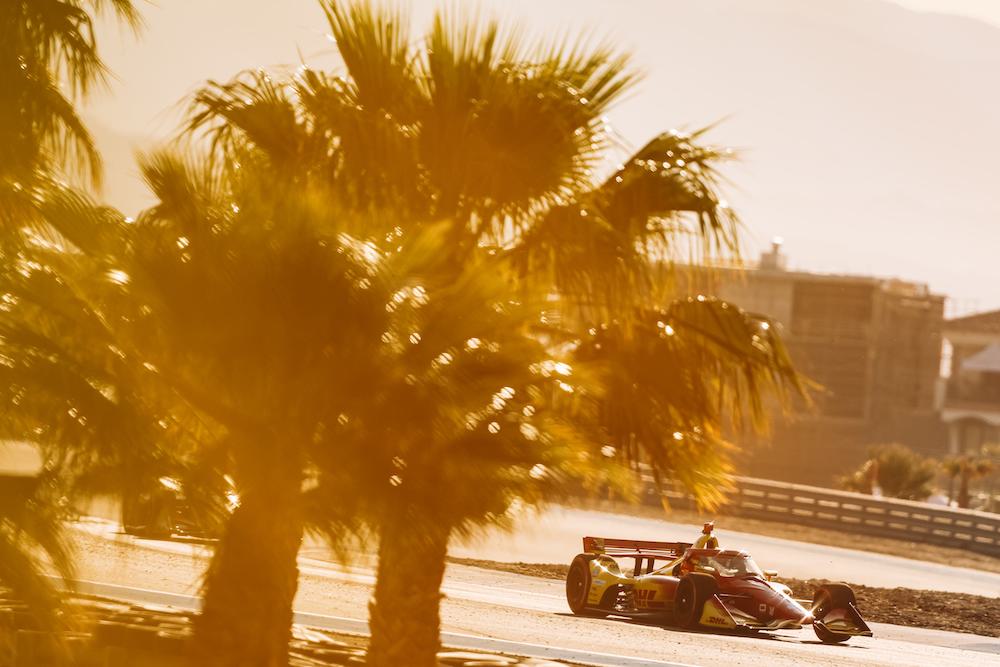
The sun is finally setting on letters about The Thermal Club. Joe Skibinski/IMS Photo
Q: What happened to the Jarno Trulli pictures? Have we switched to Alex Zanardi holding dead chickens?
Seriously -- any update on Alex's condition? I was so fortunate to get to spend some time with Alex during his Target years. One of the nicest people have ever met, period.
Ed Kelly
MP: His wife and family control such info, and out of respect to them, we don’t intrude. When they want to share, they do. It’s just been a while. [ED - Regarding Trulli, Jarno's there for us when we need him most. He made a cameo last week. And for the record, Zanardi was holding a rubber chicken, not a dead one!]
Q: Reading between the lines of your recent article on RACER, this is what I see. In 2026, there will be 16 races due to the World Cup. In 2027, there will be 18 races and the series will replace Laguna Seca and Portland with Mexico and Denver. Also, I think one of the Iowa races will be replaced with a race out East, and Thermal will be used for pre-season testing.
Brian, Joliet, IL
MP: From my conversations with the paddock, nobody wants to lose Laguna and almost everybody would welcome farewelling Portland. Iowa is in an interesting spot where its presence on the schedule is heavily underwritten by sponsors -- Hy-Vee, in particular -- which add the big musical acts. If there’s any disruption in funding, reverting to a single race would be expected.
Q: You mentioned that Jay Frye had an offer(s?) in Formula 1. Can you share any details about them?
Kyle
MP: I cannot. Those are his details to share, if he wants to. There were a few outreaches that could have been rather cool, but the one from RLL ended up being the best fit.
Q: Rasmussen, Lundgaard, Ericsson, Rosenqvist -- in a field of 25 or so IndyCar drivers, there seems an unusual number of Scandinavians. I'm finding it difficult to differentiate them except for Ericsson, whom I well recall from his F1 days. Maybe if they were given distinctive nicknames along the lines of "Super Tex," "Lone Star JR" or "Hollywood" Danny Sullivan, they might better stand apart in viewer's minds. Any suggestions?
"Big Skate" A. Jenkins, Ontario , Canada
MP: Where I get lost is in NASCAR. It feels like 90 percent of the field is named Chase Austin, Kyle Chase, Austin Chase, Kyle Austin, Chase Dillon, Cody Austin, Ty Chase, Justin Austin, Chase Cole, or Dillon Kyle Austin Chase. I’d give anything for a Hingle McCringleberry, L’Carpetron Dookmarriot, or Dan Smith (from BYU).
Q: Texas Motor Speedway is rotting. IndyCar quit going there and NASCAR is once a year.
Of course it costs millions to renovate but why not implement a Roval there like Charlotte? That would open it up to early/late-season races and other series of racing.
TMS really pulled through for IndyCar during COVID lockdowns. Most of the racing season it is impossible to sit through a race because of the Texas heat. A Roval there might re-invigorate it and offer lots more options for racing and Mr. Gossage’s ROI. Thoughts?
Texas Pete
MP: Best I can do is offer the same response as the previous TMS questions on the topic: Everything I was told by IndyCar is, it tried three different ways to make a race happen in 2024 and all were rejected by the track, leaving the impression that continuing with IndyCar was no longer desired. Eddie Gossage retired a few years ago and passed last May at the age of 65.
Q: Just read the article about California Speedway, and how NASCAR doesn’t know what to do with the remaining acreage for building a "short track." I realize tracks come and go, especially in California. But this has to be the biggest travesty in sports. Talk about a lack of vision.
I’m sure Roger Penske is strictly (mostly) transactional in his business dealings, but you think his heart is a little broken that the place where his team held the closed course speed record is just a memory now? I know it is for me, because I was there. I didn’t make every race there. But I was there for CART, the IRL, NASCAR and AMA SuperBikes.
RIP California Speedway.
Tom Ross, Morro Bay, CA
MP: The biggest travesty in sports? At least we’re not overreacting. Roger is a thousand percent about what’s in front of him. If he took a moment to reminisce, sure, I’d bet he was saddened by the development, but after that three-second pause, he was back to handling the affairs of the moment. It was a great facility, no doubt. But like Ontario, Riverside, Carlsbad, Irwindale, Ascot and many other SoCal tracks, it ran its course.
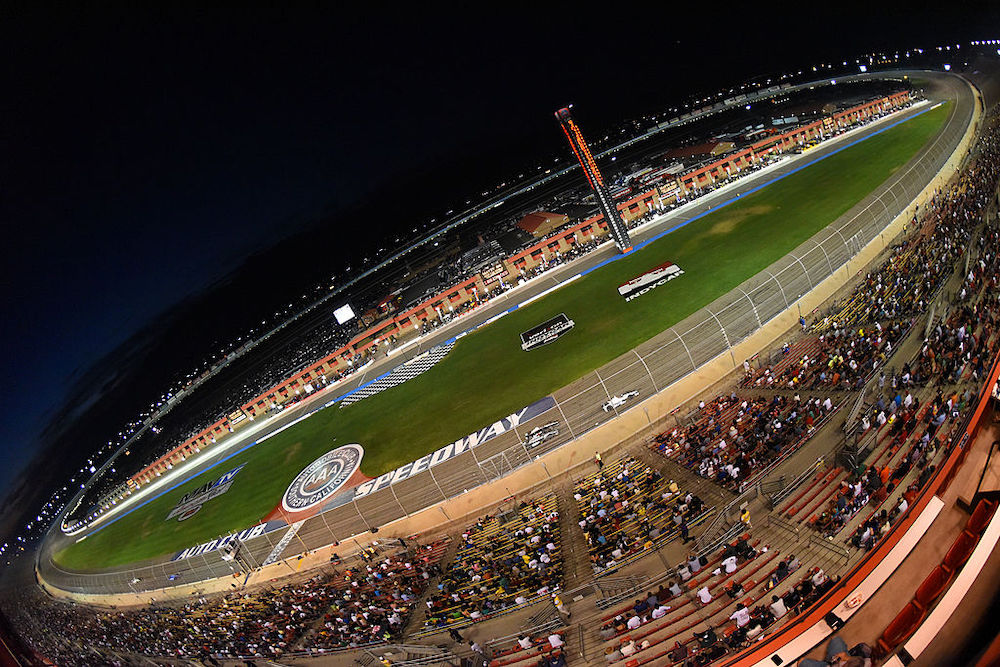
As with many other great SoCal tracks, the lights might be out forever at Fontana. Robert Laberge/Getty Images
Q: Just an anecdote on the subject of 1960s-'70s era drivers’ fitness programs – or lack thereof – versus today’s drivers’ PitFit routines: In the early ’70s, an IMS track announcer was interviewing Bill Vukovich II and asked about how he stayed in shape. Vuky answered, “I’m on a weight-gaining program.”
Tom Hinshaw, Santa Barbara, CA
MP: My dad and his business partner Rick Sturiza were amateur racers in the SCCA in the 1970s, and I have vivid memories as a little kid of their end-of-day routines at whatever roadside motel we stayed at outside of Laguna Seca or Sears Point. It was cooking steaks that would stop your heart and bottles of red wine or vodka or whatever caught their fancy. In the mornings, it was nitro-grade coffee to try and fend off the hangover and sugar bombs -- bear claws or glazed donuts -- and driving to the track to wrench on and race their cars. I swear the track-based parts of the weekend were only half the allure.
Q: I'm not done reading this week's Mailbag (April 2) and already there have been several letters calling for the banishment of the hybrid system. The fact that people are up in arms over the failures at Thermal lends me to consider it as further evidence that I'm getting rather old.
I remember a part of watching CART races and NASCAR Cup races was not just could the lead driver hold on until the end, but would the engine hold together. Like watching Rick Mears at Milwaukee in 1984. His engine started smoking around lap 20 or so. He had a good lead, but would he make it with a smoking engine? For fans, that was some additional drama. For those too young to have been there, his engine did not make it and let go in the back straight of the last lap.
My point is, racing today has gained an incredible amount of reliability compared to 30+ years ago. That's good for teams, and a definite costs savings. But it has also removed a part of the drama for the fans watching. Engine reliability is good for safety as broken engines tended to put oil and water on the track, which was not a good thing for following drivers. But is has removed some level of excitement. I'm sure you remember the Buick V6s from the early days of the IRL. As I remember, those engines put out a lot of power but it was not a matter of if they would break, but when.
A key aspect of auto racing is pushing the boundaries to gain that extra hp, that extra piece of downforce, or shaving that extra bit of drag at Indy. So I don't view the issues at Thermal as failures. The teams overheating the hybrid system pushed the boundary and it cost them. But overall, the hybrid system adds a piece of strategy to the racing and, lest people forget, it's still a new piece of technology for the series. The series, teams, and its suppliers are still learning. I'm not ready to toss it yet. Now, I am on board with you on the discussion of the future of the hybrid system with the new car and the future engine rules. That's for the future, not the here and now.
John Balestrieri, Waukesha, WI
MP: Yep, wrote as much last week; for those who are newish to racing, failures are a shock. For older fans, it was once part of every race’s story, and often in significant ways. The fact that IndyCar’s hybrid package was subjected to its harshest conditions to date and, as so often happens, weaknesses were found in some areas, but in others, some teams got cute and created their own hybrid problems by using too much radiator blanking on a scorching day, is either willfully overlooked or intentionally ignored.
Regardless, for those who just want to see their favorite drivers and teams vie for wins, tech problems aren’t acceptable.
Q: Ah, memories. When I read about Gary Bettenhausen in the motel bar in his fuel-soaked drivers suit, it brought back so many fun memories of the iconic watering hole. We grew up in Speedway and in the day considered it a perfect race weekend if we didn't go east of said bar. Of course, special dispensation was given for a detour to Long’s Bakery. One night as we were leaving, I mentioned to Parnelli Jones that when my daughters felt like I was driving too fast they called it "doing a Parnelli." He told me his kids called it doing an A.J...
So the question is do you have any other great Speedway Motel Bar stories?
Tom, Reno, NV
MP: My first Indy 500 ROP in 1997 was spent at the hotel, but I think it was razed soon after. I don’t have a lot of memories from that stay, which probably means a good time was had…
Q: Thank you, Marshall, for the career advice last week! I would also like to respectfully push back on your answer to my question, "How plausible do you believe an alignment will happen for some or all of IndyCar, Super Formula, and F2?"
To my knowledge, IMSA and the WEC are owned by different people and serve different markets. Ditto for DTM and Super GT, which had aligned regulations for seven years (2014-20) and two joint races before DTM became a GT3 series in 2021.
I can see reasoning to not F2 not aligning, as it's a feeder series. However, I don't buy that IndyCar and SuperFormula if the aforementioned series fit the same bill before their "unification." I would appreciate course correction if there are gaps in my knowledge, though.
Atilla Veyssal, Madison, WI
MP: You are welcome. Difference here is common formulas between similar sanctioning bodies, which is why drawing a parallel to sports cars for an open-wheel question doesn’t necessarily work.
Look to the 1980s, and IMSA allowed GTP and WEC Group C regulations in its series, and the ACO, which used Group C regs, went so far as to create an IMSA class for GTP cars. Fairly common for sports car racing where big manufacturers often want to have regulatory options to go play at Daytona or Le Mans or wherever and have cars that can cross borders and comply.
Not the case in open-wheel. I’m not saying it has never happened over 100-plus years of racing history, but for your question, no, there’s nothing remotely common about the sanctioning bodies, or the regulations, or their clientele and markets to make international alignment feasible. The FIA doesn’t want to assist IndyCar in any way that would challenge F1. F2 is a second-tier training category. And why would our top-tier IndyCar Series should align with F1’s college series? Or an awesome, but largely anonymous (outside of Japan) series in Super Formula?
How’s this: Would Formula 1 align its regulations with Indy NXT? Sounds ridiculous, right? Same to me, at least, for IndyCar with F2 or Super Formula.
Q: Somebody build a 1:1 recreation of the beloved Riverside Raceway. Make it Grade 1 and try to host F1. Make it a concert venue. Build it in a growing region. Roger? Please?
Ian
MP: I’ll ask Roger to dig beneath the cushions on his couch and see if he can scrounge up a few billion to make it happen.
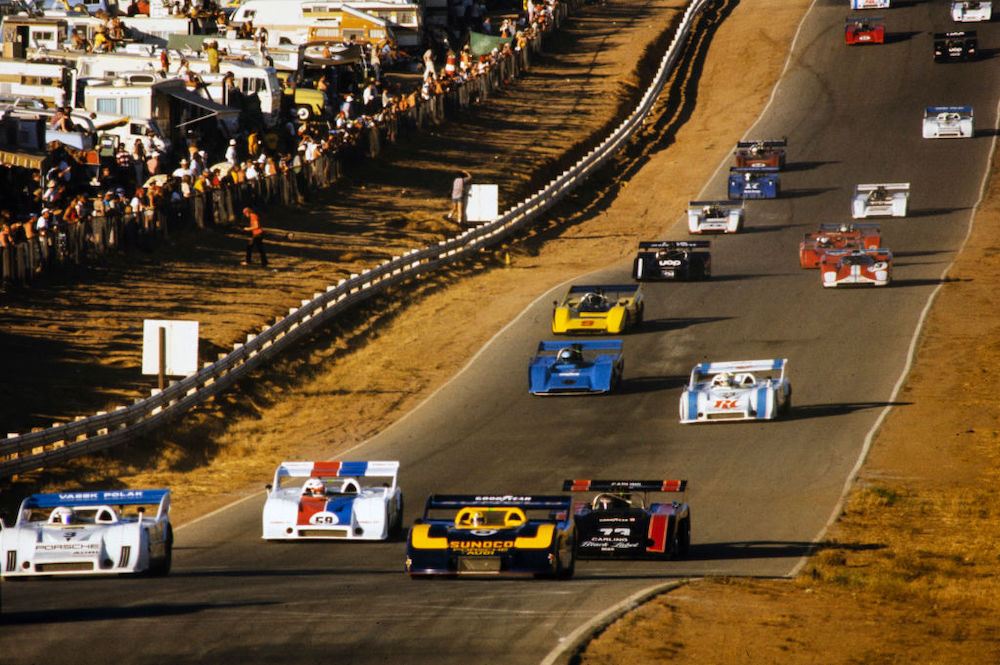
Oh, you'd like another shot of a lost Southern Californian gem of a racetrack? Happy to oblige. Rainer Schlegelmilch/Getty Images
Q: Big Possum comes from simpler gentler time in our nation’s history when the roasting of those you disagree with was not even a consideration – tar and feathering maybe – and if you roasted something you were obliged to eat it.
Big Possum agrees 100% that racing drivers are 120% athletes – what they do requires huge athletic ability plus plus plus plus- they are much more than mere athletes on which Robin and Big Possum agreed.
That is why they should be referred to as racers – a much higher calling than a mere athlete. Everything Jonathan says in last week’s Mailbag is true about the physical requirements of a racing driver – a bowler could be called an athlete, for goodness sake – no comparison to a racer!
Big Possum apologizes to both Jonathan and Joe the he was not clear in his post.
Big Possum
MP: The topic of words and what drivers are called is fun to debate, but doesn’t change a thing. We can call them ballerinas, and they still climb in and drive race cars. The act is the same no matter what’s used to describe the action.
Q: What happened to Brazil that they have no drivers now? They used to have so many in IndyCar and F1.
Steve Mattiko
MP: Gabriel Bortoletto is Brazilian and races in F1. We had Pietro Fittipaldi in IndyCar last year. But yes, there are fewer Brazilians in the open-wheel pipeline and populating the top series. Whenever I ask, I’m told funding is the issue.
CHRIS MEDLAND: Gabriel Bortoleto would like a word, Steve! But I’ll let you off as he’s a rookie, and the Stake Kick Sauber is not exactly a competitive car at the moment. But he is the F2 champion so keep an eye on him, he has real talent.
That said, I think this is actually a common misconception – and you’re not alone, because I sense-checked this and surprised a few people with a stat. There have been 33 drivers from Brazil who have started an F1 race, but that is only slightly more than half the number of American drivers who have, and the 58 from the United States are excluding the 175 that only ever raced at Indy when it was part of the championship.
The thing with Brazilian drivers is, they’ve had some absolute greats – like Ayrton Senna, Emerson Fittipaldi and Nelson Piquet – or long-serving ones such as Rubens Barrichello and Felipe Massa. So it’s more the fact that they can produce some extremely high-quality drivers out of actually quite a small pool that have that reached F1.
I’d say there should be more given the size of the country, but it’s also a massive move – just like for American drivers – to leave Brazil and race internationally, so I don’t think it’s down to any core reason other than just timing. There’s definitely still a conveyor belt of talent, with Rafael Camara leading the F3 championship early on this year.
Q: This question applies to all series: From a physical perspective I believe everything is done with wraps now, which must make changing designs weekly possible, but who designs the car's liveries from week to week? Looking back at the history of great liveries in motorsport, some have truly been works of art. Do teams have their own art department? Do they contract out to someone? Do the sponsors do their own design work? The quality varies to a point where I'd guess some of the teams have an intern fiddling on the pre-installed Windows photo editor ,and other cars look like they've hired Pininfarina.
Tom, Milwaukee, WI
MP: A great "how long is a piece of string" question. Many people design liveries. Sometimes it’s an in-house employee, sometimes it’s an ad agency connected to the sponsor, and sometimes it’s a professional like my friend Andy Blackmore, who worked for McLaren in the 1990s, created some gorgeous McLaren F1 GTR liveries and some of the F1 team’s designs, branched out to start his own boutique design business after moving to Canada, and does everything from wrap creations for 10-12 cars/teams in IMSA, plus does IMSA’s spotters guide, event posters for IMSA, liveries in SRO, special projects for manufacturers, etc.
One of the cooler things he was hired to do a few years ago involved recreating the glorious Mercedes-Benz CLK GTR livery of the exposed engine on the Original Teilie-liveried car from 1997-98. The car was sold and raced in Brazil with a different livery and after it was sold, the new owner wanted to restore it to its original spec, and that involved Andy’s sourcing of period-correct photos to draw the entire thing from scratch, stitch together photos of the engine bay, and deliver a file that could be printed and wrapped.
CM: In F1, the teams all have their own departments within marketing that design these. They will work with sponsors and partners – such as in the case of the Red Bull in Japan working closely with Honda – but it’s very much an internal undertaking for teams. I want to give a bit of love to Haas for that one in Japan too, I thought it was very cool to do a Sakura livery.
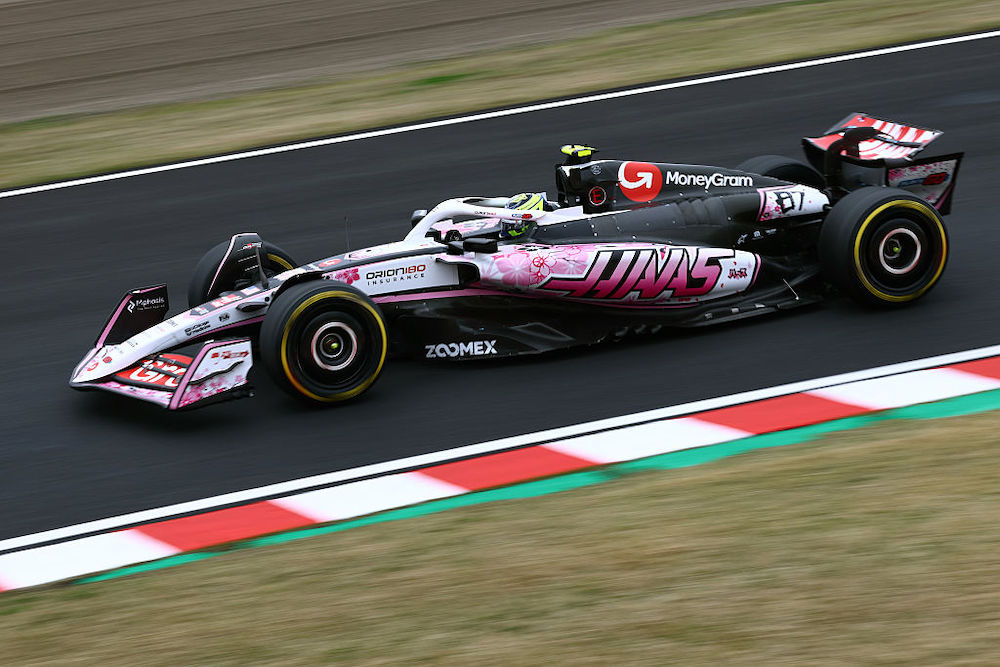
Cherry blossoms make everything better. Unless you have allergies. Zak Mauger/Getty Images
KELLY CRANDALL: A lot of the NASCAR teams have someone in-house who does the paint schemes, but there is a process before it’s approved. I’ve heard of teams where the driver and crew chief get a say in what they like and don’t like, even down to the colors. Dale Earnhardt Jr. has been very open about how involved he was with his designs. Other drivers don’t get involved. But usually, the team and the sponsor work hand-in-hand. If teams don’t have someone in-house, the person they are working with will still have to go through a back-and-forth process to get approved from the team and the sponsor before whatever version is chosen hits the racetrack.
Q: Glad I didn’t try to stay awake to watch Suzuka at 2am. The races can’t all be winners, but one competitive overtake in the top 10 (Hamilton over Hadjar), and probably not many outside of it. I love the track. It's right up there with Spa as an icon in F1, but is there anything to be done to make it race better? Were the tires too hard?
Ryan, West Michigan
CM: You’ve hit the nail on the head, but it wasn’t Pirelli’s fault at all. The tires proved hard for the conditions when it was much cooler than expected, and it was actually pretty cold all weekend.
The hardest compounds are needed at Suzuka because all the high-speed changes of direction ask a lot of the tires, and it’s usually more fun with degradation and different cars struggling with either the fronts or the rears (because there are some decent traction zones too), but this year's low temperatures just gave the tires a much easier time.
Add in a lack of long running on Friday, and everyone was really conservative early on. That led to a very easy one-stop races where drivers could push to the end. In many ways it’s exactly what fans and drivers often ask for (and criticize Pirelli when they can’t deliver) – to push flat-out for most of the race and not worry about tires – but the field is so close that often just leads to a lack of performance differential through each stint.
If it had been warmer, a two-stop might have been on the cards and that variation would have allowed more overtaking. It’s no surprise the drivers who did something different on strategy (Lewis Hamilton started hards, Jack Doohan started on softs, Carlos Sainz finished on softs) were the few who made moves. Doohan gained four spots, and Sainz did a fair bit of overtaking in the closing stages, too.
Q: The year that Nico Rosberg won his championship, there was a story before the season that Mercedes had swapped the mechanics and Lewis’ crew was working on Nico’s car and vice versa.
If you’re running Red Bull, do you have to have to start looking at the mechanics and engineers supporting the second car? It doesn’t really make sense that there’s averaging a 10-place difference in finishing position for same-spec cars
Will, Indy
CM: I’m not sure if Red Bull has ever done that, but I wouldn’t expect it to be a root cause. You’re right that it’s more likely that Max Verstappen has been able to create a car crew that he likes and keep hold of it, but Red Bull is also a big team and I would be amazed if there was a perceived weakness in its personnel across the garages.
The reason Mercedes did that was just to show the drivers were treated equally in an intense internal championship battle, so it could afford to in many ways as there were no external threats. Honestly, Red Bull needs to do the opposite since Max is the only one with a chance to win the drivers’ title.
Q: Is it just my imagination or does Kimi Antonelli remind one of a young Ayrton Senna, both in appearance and in performance?
Wiscowerner
CM: Big call, but I do see what you mean! Certainly the appearance, but I would argue he hasn’t yet had the performance that marks him out as a generational talent. Not that I doubt he has that ability, but if you think of what Senna did in Monaco in a Toleman (and even two top-sixes in his first four races in a far less competitive car before that) I would say Kimi’s yet to deliver the same.
Suzuka was really impressive though, both from Kimi and the team. He was not on the pace early on, but Mercedes knew how to help build his confidence up and he did improve rapidly when it mattered and finished strongly.
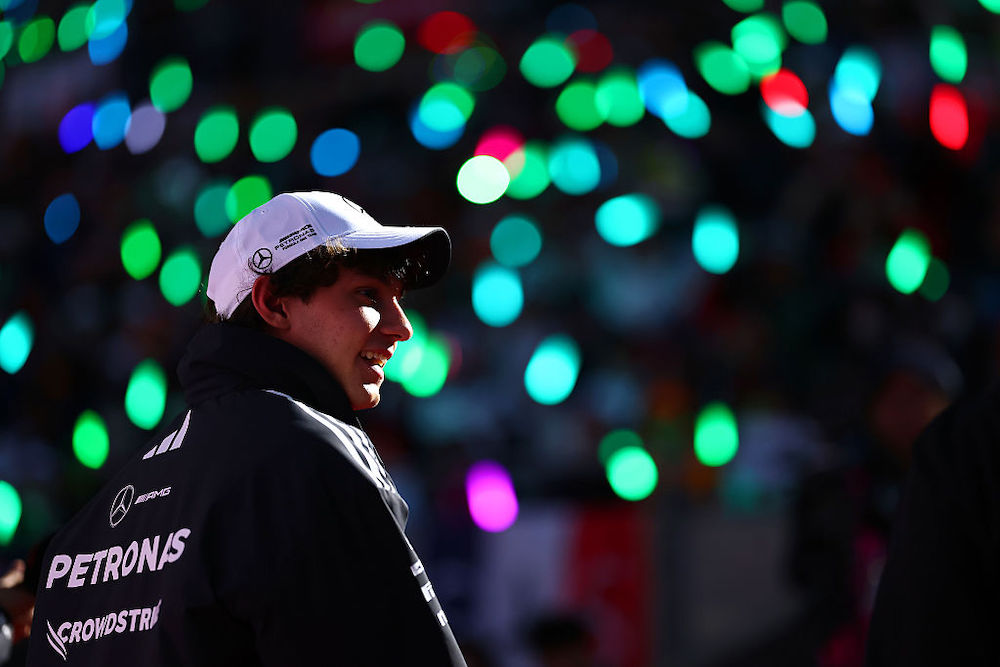
Antonelli might be a star in the making, but for now he's Senna-ish rather than Senna-esque. Sam Bloxham/Getty Images
Q: Do you think it creditable that both in the cockpits and in the garages, McLaren are already points-racing for the championships? It struck me that at Suzuka the drivers were arguably more concerned with racing each other than worrying about Max.
Jack
CM: Absolutely, Jack. It’s something that I criticized the team for over the weekend on air, actually. It was far too passive and gave up points to Max to ensure it didn’t risk upsetting a driver for taking more points off another.
There was a stage where Piastri was the better bet to try and threaten, and the positions could have been swapped back, but I’ll also admit James Hinchcliffe was right on F1 TV that it shows its focus is the drivers’ championship, leaving the drivers to sort it out and not prioritizing the team’s best overall result.
But in doing that, it effectively allowed Verstappen to win without offering its best challenge (the way Max drove, it’s unlikely Piastri would have passed him, but still). That could definitely be something that could come back to bite McLaren if you look at how significant the turnaround in form was last year, and how far back Norris had to try and come back from.
There’s no guarantee McLaren will have this advantage all year, and you don’t want Verstappen any closer than you can allow at this stage in case Red Bull gets its act together.
THE FINAL WORD
From Robin Miller's Mailbag, April 9, 2014
Q: In several of your recent columns, you mentioned that you raced midgets at one time. Back when I was a much younger lad without thinning hair and an expanding waistline, my cousin and I would get up early on a Saturday and stand outside Mel Kenyon’s garage and watch him and his brother build the midget cars that Mel raced. We would stand there for what seemed like hours just watching those who work on the car. They never shooed us away and would always answer any question we might have asked.
I was just wondering if you ever raced against Mel or perhaps had an opportunity to interview him. He truly was and still remains one of the nicest guys a person could ever meet, both inside or outside of racing. I wrote a small letter to Mel a couple of years back to thank him for not only all he contributed to the sport, but also for letting two rug rats hang around his garage all those years ago.
I know Mel has had some health issues over the years, but he’s still in good spirits even though he has to be around 80 years old now. I was at the Indy 500 the year he hit an oil slick coming into Turn 3, hit the wall and had to duck back into his seat to avoid a flying car. He escaped without too much damage but there were tire tracks on his helmet from that airborne car! I’m sure of lot of the new, younger fans don’t remember Mel, but to us old-timers, he was a heck of a guy. The auto-racing community owes a lot to him.
Jerry Laake, Davenport, IA
ROBIN MILLER: Some of my early stories at The Indianapolis Star were about Miraculous Mel at Indy or running midgets at IRP or the State Fairgrounds. He and brother Don were a force of nature for 30 years in USAC as his 111 wins and seven championships would bear. His comeback from burns and subsequent success was very inspiring.
And that was Gordy Johncock he dodged in 1971 in Turn 3. One of my big thrills running USAC midgets from 1975-82 came in 1977 when I passed Mel on the outside during hot laps at Erie, Colorado (half-mile dirt track) but, of course, that was about the only time I can recall me passing him. I also crashed into him once and nearly gave him a concussion. Sorry Mel. But he’s good people and was a helluva racer. By the way, good guess regarding his age: Mel is 80 right now but turns 81 next Tuesday.
Marshall Pruett
The 2026 season marks Marshall Pruett's 40th year working in the sport. In his role today for RACER, Pruett covers open-wheel and sports car racing as a writer, reporter, photographer, and filmmaker. In his previous career, he served as a mechanic, engineer, and team manager in a variety of series, including IndyCar, IMSA, and World Challenge.
Read Marshall Pruett's articles
Latest News
Comments
Comments are disabled until you accept Social Networking Cookies. Update cookie preferences
If the dialog doesn't appear, ad-blockers are often the cause; try disabling yours or see our Social Features Support.