Simon Galloway/Motorsport Images
Formula E's new Pit Boost adds another layer of unpredictability
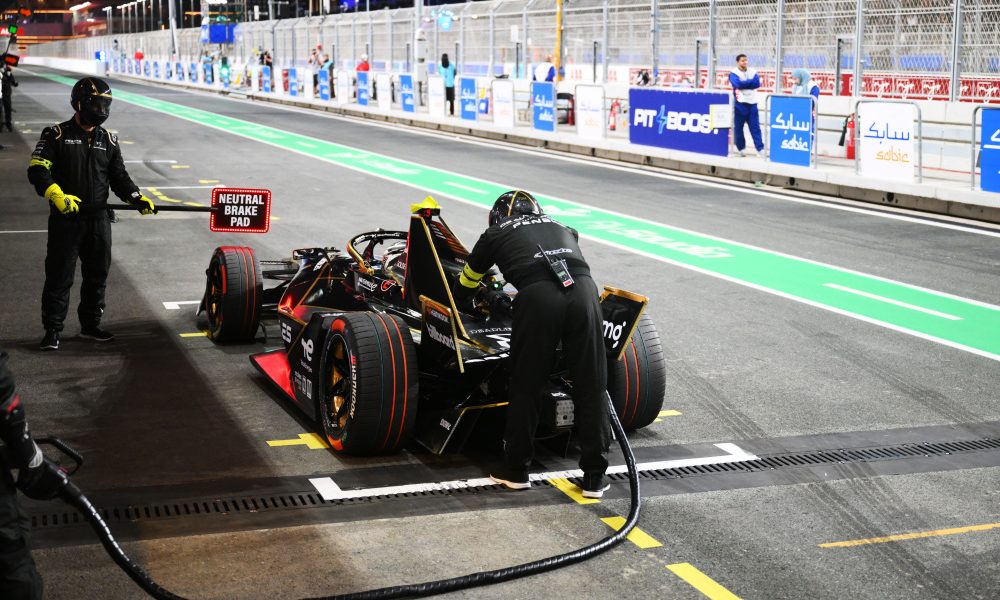
After a lengthy gestation period, Formula E's new Pit Boost made its debut in the first race of the Jeddah E-Prix. The 34 second stops – 30 seconds of charging with 34 seconds total mandatory stationary time – came as drivers entered a window of 60-40 percent state of charge. The end result was a race fought to the end in typical Formula E fashion, albeit without the tense "peloton style" of pack energy saving that has been a fixture of Formula E races throughout the GEN3 era. It more closely resembled a more traditional open-wheel race in some ways.
One of the key thoughts behind Pit Boost was to introduce more strategic variety. Technological demonstration aside, that might seem somewhat needless. Formula E races already have that with Attack Mode and are already unpredictable, with luck often being a key pillar to a race victory.
While the start and the end of the race provided the same level of entertainment Formula E races usually do, the middle stanza when everyone was pitting seemed to create something of a lull as we waited for everyone to take their mandatory stop and the race order to shake out for the final push to the end.
Of course, that’s nothing new in races with mandatory stops, but the Jeddah Corniche circuit's short length – 1.865 miles in its Formula E guise, 1.971 miles shorter than the F1 layout – created something akin to an exaggerated pursuit that perhaps wasn’t the easiest race to follow.
Longtime race leader Oliver Rowland used his first Attack Mode to build a gap before pitting, hoping that it would be enough of a buffer to maintain the lead after the stops. Maximilian Guenther, meanwhile, used both of his Attack Modes afterwards, allowing him to charge to the finish.
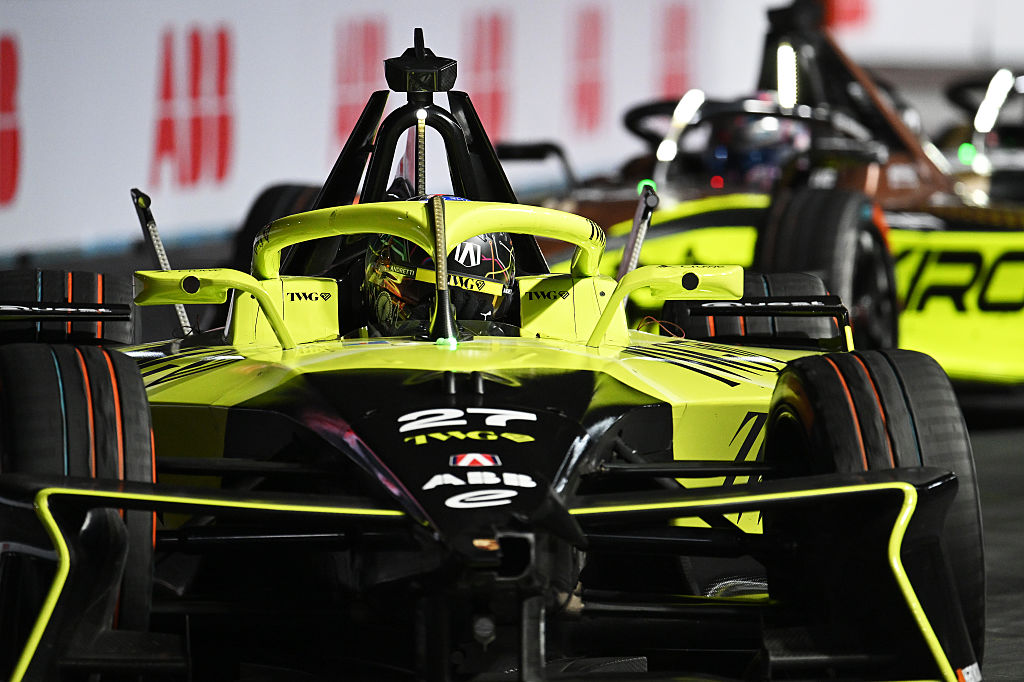
Rowland mentioned that had he known how much energy Guenther had, he might have approached the race differently, and Jake Hughes – the first driver to make a Pit Boost stop – admitted that understanding what others are doing will be key to making a success out of the new element.
“Obviously being the first race with Pit Boost for everyone brought a whole new element to the competition,” he said. “I think we have learned some good lessons from the race, even I had some important mental lessons. I think just understanding how to use the energy in the Pit Boost is going to be quite a big discussion point.”
The strategic variety afforded by Pit Boost brought about what will likely go down as one of Formula E’s all-time classic finishes. But with Pit Boost not being a factor in Saturday’s race, there will be more diversity still – and something that will likely be more familiar.
“I think we'll get a race like Portland, Misano -- high energy-saving races where it's going to be a bit of a mess in the beginning [and] qualifying will probably be less important,” Rowland said of how Saturday’s race might compare to Friday night’s. “We'll see what people prefer. I expect tomorrow to be much more chaotic, and people winning from 15th, possibly.”
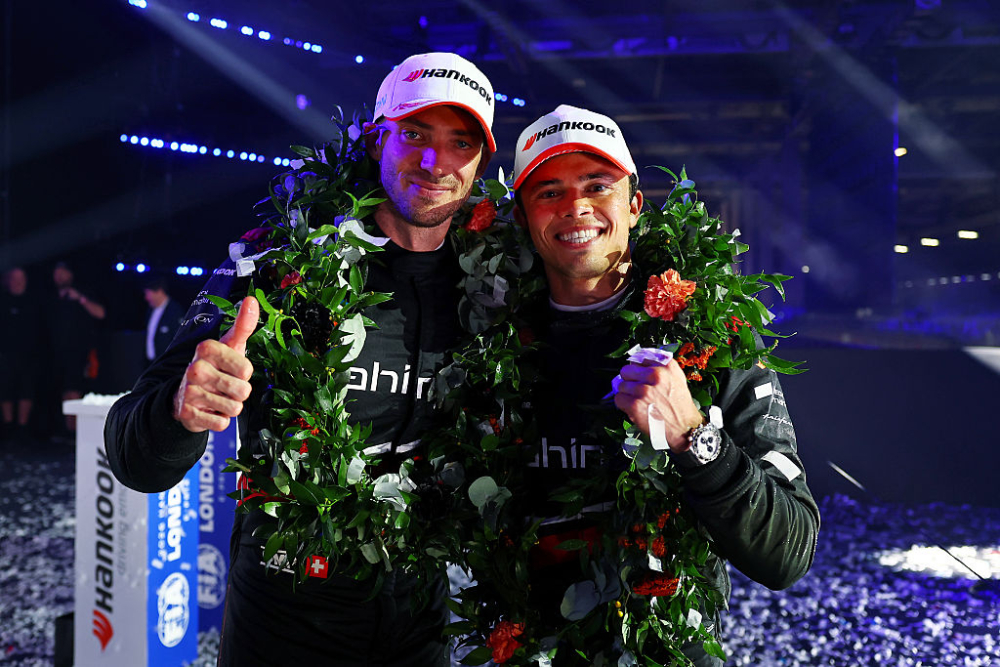
Friday winner Maximilian Guenther wasn't down about the added unpredictability.
“I think it's really cool to have [different kinds of] races, because the dynamic is very different,” he said. “Tomorrow we will see a very different kind of racing.”
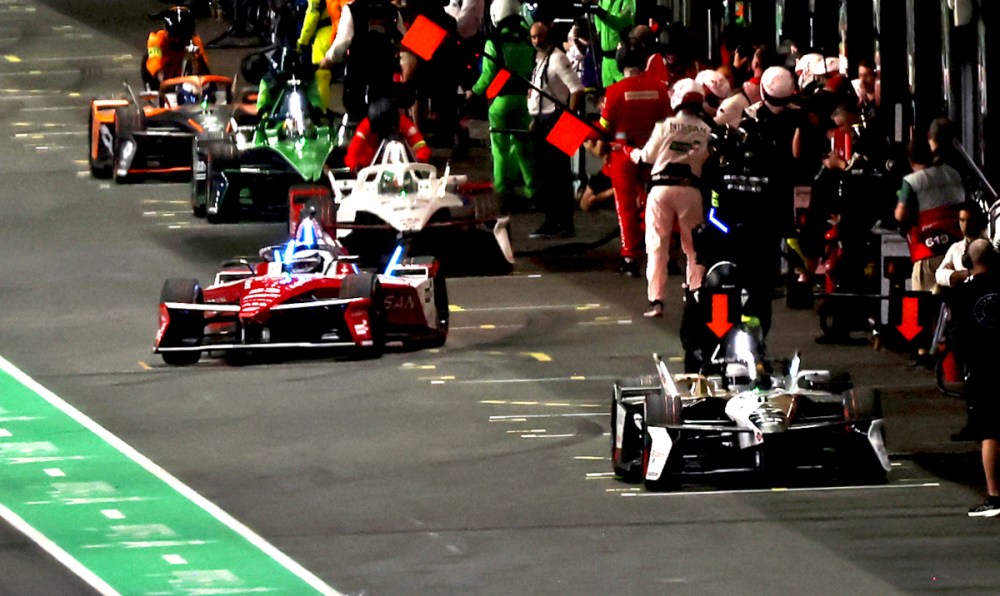
Pit Boost is a massive lead in technological development, but the change goes beyond having more gadgets in the cars. Andrew Ferraro/Motorsport Images
“It just shows Formula E’s progress in terms of technology, that in 30 seconds you can charge the car 10 percent, which is actually incredible,” Guenther said. “This, under competitive conditions, is cool. It brings another element of excitement for the fans, for us in the car, for the engineers and the teams in the garage. I really think it's a great addition to the championship.”
Rowland was equally positive about the introduction of Pit Boost, but warned against passing a full judgement just yet, and suggested how it was used could be changed in future depending on the race.
“I think it's the first step towards the future,” he said. “First of all, let's get it working. Today was quite a clean race, which I think helped the spectacle. I think we're going to have a few hiccups along the way, when full course yellows and safety cars come out.
“But I think in the future, if we can use it to strategically have maybe more or less energy, depending how long you stop, it could be quite interesting.”
Dominik Wilde
Dominik often jokes that he was born in the wrong country – a lover of NASCAR and IndyCar, he covered both in a past life as a junior at Autosport in the UK, but he’s spent most of his career to date covering the sliding and flying antics of the U.S.’ interpretation of rallycross. Rather fitting for a man that says he likes “seeing cars do what they’re not supposed to do”, previously worked for a car stunt show, and once even rolled a rally car with Travis Pastrana. He was also comprehensively beaten in a kart race by Sebastien Loeb once, but who hasn’t been?
Read Dominik Wilde's articles
Latest News
Comments
Comments are disabled until you accept Social Networking Cookies. Update cookie preferences
If the dialog doesn't appear, ad-blockers are often the cause; try disabling yours or see our Social Features Support.