The RACER Mailbag, August 7
Welcome to the RACER Mailbag. Questions for any of RACER’s writers can be sent to mailbag@racer.com. We love hearing your comments and opinions, but letters that include a question are more likely to be published. Questions received after 3pm ET each Monday will appear the following week.
**Everyone needs a vacation and the Mailbag is no exception, so it will be spending next week lying in a hammock and sipping drinks with little umbrellas in them. Keep sending your questions in, and we'll run them when the Mailbag returns on Wednesday, August 21.**
Q: I was hoping you could shed some light on the current status of the legal dispute between Alex Palou and McLaren? The complexities of contractual agreements in the racing world are well known, but McLaren's recent actions have left many of us puzzled. It seems almost paradoxical for a team that has shown such a disregard for contracts to expect unwavering commitment from their drivers under similar circumstances.
Bruce
MARSHALL PRUETT: I stopped tracking this story once I got the feeling there was no interest by McLaren to actively resolve the matter. I can’t recall any recent movement that would get this into court and reach a swift settlement; the strategy, as I’ve understood and written about, remains the same: Prolong the process and extract maximum financial pain. This could drag on for years and has the potential to leave Palou in financial ruin.
McLaren has the resources and apparent anger-fueled motivation to take this slow, and it wouldn’t do so unless it believed its case was a winner. This felt personal from the outset, and if it was purely about the money, you’d expect McLaren to be pushing the pace to get a favorable settlement out of Palou or to get this in front of a judge or an arbitrator to take money off of Palou today.
Instead, letting this play out over years, which McLaren can afford, and will take a meaningful amount of money away from Palou with legal fees, sure looks like the ongoing plan.
Q: My wife and I decided to add Gateway to the list of tracks we have gone to this year, but all we hear is doom and gloom about how bad the race is going to be from many within the series itself. It’s gotten so bad I’m considering either staying home, or going to Michigan to watch NASCAR. Please tell me everything I hear is wrong and give me some optimism!
Brian, Joliet, IL
MP: I’ve had a few drivers and engineers share versions of the same opinion, which is that in reaction to some tire blowouts (and at least one crash because of a tire failure) in oval testing in recent months, they believe there has been a decision to go conservative on the tires used at Iowa and that were tested last week at World Wide Technology Raceway. Those tires had minimal degradation and, as a result, presented limited opportunities to pass once they came up to temperature.
Based on their collective feedback, unless a less durable tire is brought for the race, they aren’t expecting a lot of passing. But it’s a great weekend, and all it takes is a few clashes or crashes or mistakes on pit lane to add intrigue to the race. The more restarts, the better.
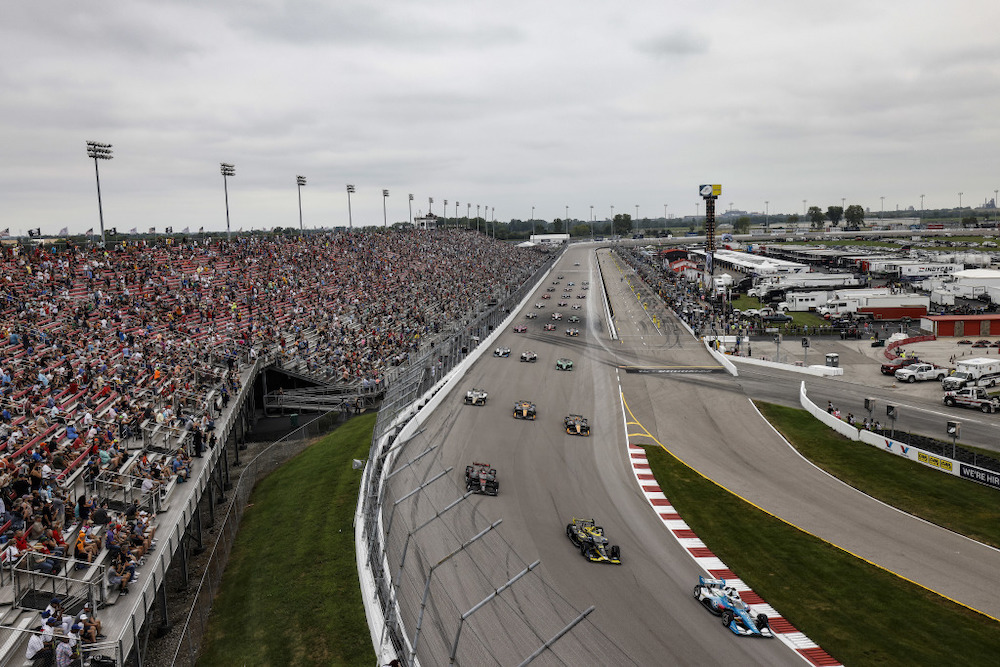
Let's hope that WWTR proves to be the gateway to great racing when IndyCar arrives later this month. Michael Levitt/Motorsport Images
Q: With the 2024 IndyCar season drawing to a close and FOX taking over as the broadcasters for 2025 onward, when can we expect an announcement regarding commentators and driver analysts? Are you aware of any details about who might be considered for those roles? While there are talented people out there, it would be better to have people well versed in IndyCar than NASCAR commentators.
Another problem is that NBC offered streaming through Peacock, and FOX doesn't have a streaming option, to my understanding. A lot of people don't want cable or satellite and do not want to pay for channels they don't need or use if all they want to see is IndyCar. Is the series doing anything there to remedy this issue?
IndyCar has a terrific streaming service of its own in IndyCar Live. Unfortunately, Americans and Canadians can't view the races on it and can only view practice and qualifying. If IndyCar and FOX could work something out so both sides could make money, fans would no doubt pay for IndyCar Live.
David Colquitt
MP: Not since the last question in the Mailbag about it was sent in and answered. Adam Alexander has been mentioned as a solid option as the host in what is currently Leigh Diffey’s role, but he’s also coveted for other series. Hinch is a strong candidate for a driver analyst role, and Kevin Lee is like Hinch -- a freelancer -- who would bring continuity and comfort as the series moves from NBC. Beyond that, I continue to hear FOX will want to use a lot of its talent to anchor the broadcasts.
I hear what you’re saying on not wanting to dress the coverage in NASCAR sensibilities, but take Lee, for example. He was an IndyCar guy, who was added to the IMSA broadcasts on a regular basis a little while ago, and despite not having a background in endurance sports car racing, he studied hard, got to know the people in the paddock, and now blends seamlessly between both series when asked.
A good broadcaster is a good broadcaster, whether they’re folks we know from NASCAR or wherever else. There’s also the Jamie Littles of the world who’ve covered all forms of racing and who blends into whatever task she’s given.
Q: I love IMSA multiclass racing, but I find the NBC Sports scoring pylon to be very frustrating. It tries to be all things to all people by only showing the top five in each of the four classes. Do you know of anyone at NBC who might be open to discussing a different format, one that would show the entire GTP class for a while, then the entire LMP1 class for a while, etc.? I can't be the only one who grumbles at the TV while there is some fantastic racing going on. It's not like the leader just evaporates when he goes in the pits, right?
Chris Doutre
MP: Like most of the constructive criticism aimed at a series or broadcaster, I’d recommend using the public tools available on social media. A groundswell of interest for change or improvement on any topic will be seen by your IndyCars and IMSAs and so on.
Q: Just finished watching the IMSA race from Road America with its lengthy commercials and full course yellows. Any guess how much time/laps of the total race time were under yellow?
To my complaint: With about 12 minutes left and following a restart after a lengthy yellow, we had an almost three-minute commercial break, returning to race with about eight minutes left. So with all the previous lengthy yellows and with the tight racing resuming at the end, why? Who determines to go to a three-minute commercial break?
Very poor timing by whoever made the decision.
Peter, Phoenix, AZ
MP: According to IMSA’s timing and scoring, the 2h40m race had: Green: 1h17m33s (6) Yellow: 1h23m12s (5). Race broadcasters are the ones who choose when to go to commercial.
Q: With the numbers of entries every IMSA class has now, and more to come in 2025/2026, is it time to go back to Camel GT days and split GTP/LMP, and GTD PRO/GTD into two separate races? Maybe on separate days?
Mark, Springfield, OH
MP: I’ve been hoping for GTP/LMP2 to reach a total car count that would warrant using the split prototype/GT race format I loved at the sprint races back in the day. But I also know that unlike 30-plus years ago when it last happened, easy TV options to show a feature-length GT race at 2h40m and then a second feature 2h40m broadcast for GTP/P2 is highly unlikely.
And yes, one could be aired on Peacock, but manufacturers and sponsors don’t pay to have feature races routed to streaming anymore than necessary, so there’s that.
Q: Do you know when we can expect a public announcement on Honda's future intentions in IndyCar?
Joe
MP: They’re signed through 2026. I’d expect something by summer of 2025 on its future intent.
Q: I thought I would write in this week with multiple questions. First, have any sponsor deals for the teams come out of the Thermal Club connection? Second, GM is moving its headquarters from the Renaissance Center to the new Detroit Hudson Tower. Does this mean IndyCar will be abandoning the current terrible track they’ve raced on the last two years?
Three, instead of doing a doubleheader at Iowa, which is super-hard on the teams, why not do two races at Mid-Ohio or Road America? If I still lived in Ohio I would definitely go to see two IndyCar races. They could schedule one for early summer and maybe the second one as the season finale.
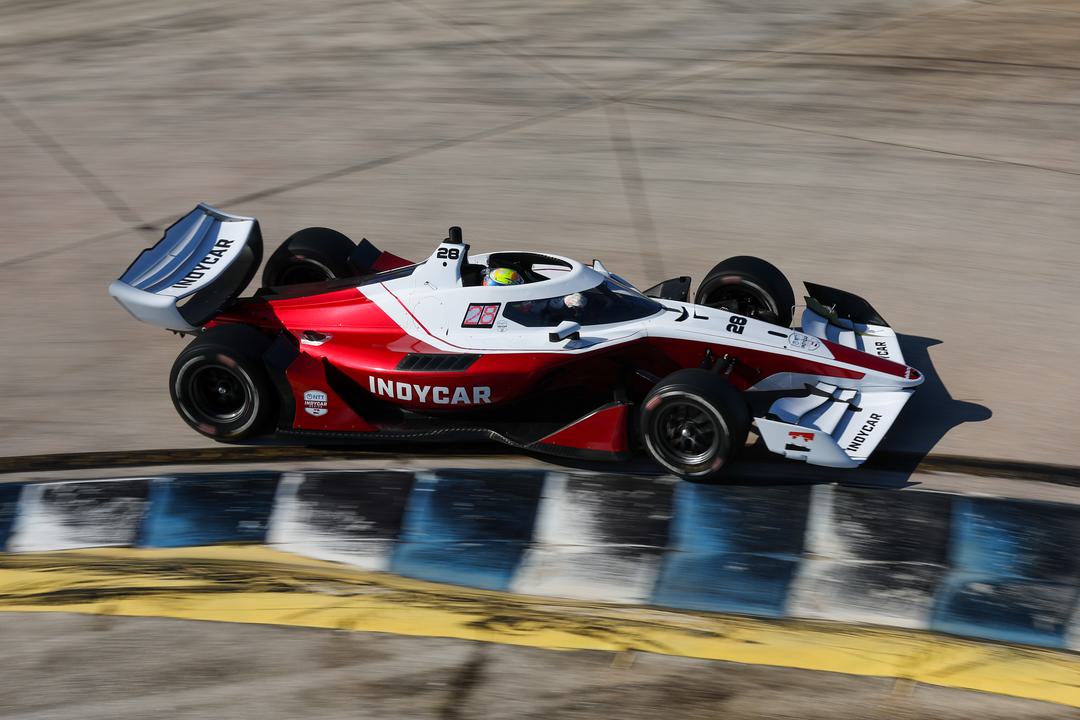
Fourth, why does IndyCar not race at Road Atlanta? I’ve seen the huge safety improvements they’ve done over the last several years. If the super-fast IMSA prototypes can race there, why can’t IndyCar?
Finally, why is it being implied that Firestone is responsible for improving the racing at Iowa? Iowa is a NASCAR-owned track where they only did a partial repave, which definitely affected the IndyCar race having more than one groove.
Rick Schneider, Charlotte, NC
MP: Not that I know of with Thermal. The Detroit race isn’t tied to where GM executives work each day. A Road America doubleheader would be the most popular weekend of the year, outside of the Indy 500.
I’ve crawled over Road Atlanta for decades, including last October, and I can’t think of where the huge recent safety improvements you reference are found. Fully-enclosed prototypes and GT cars are just that, fully enclosed, and not smaller and less sturdy open-wheel cars. Those four tires are the only thing that connect race cars to the circuits they race on. If the tires aren’t a match for the surface and don’t make for good racing for whatever reason, changes need to be made.
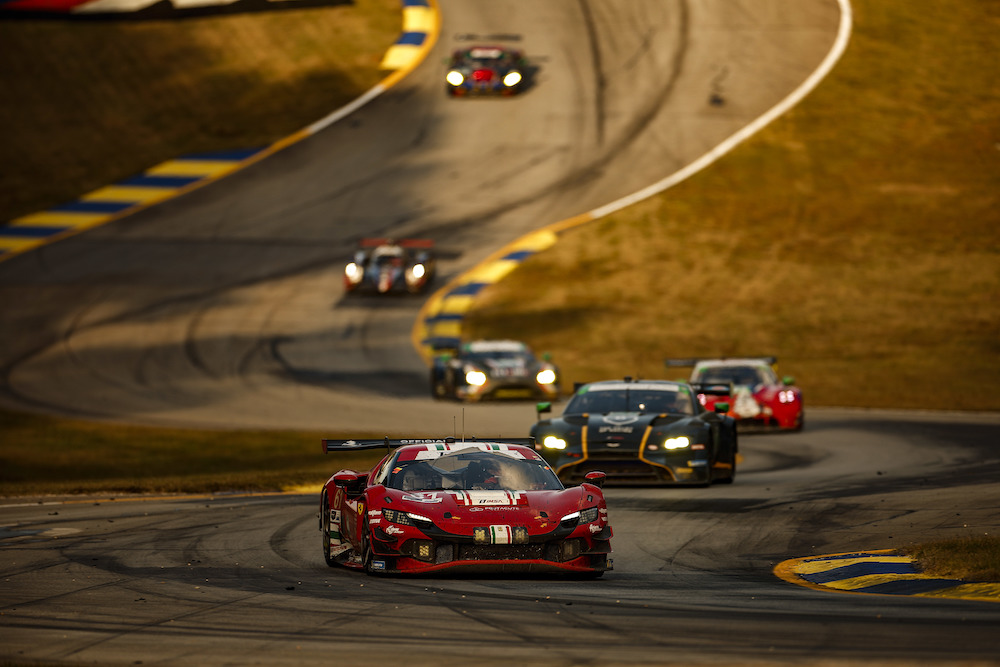
IndyCar at Road Atlanta might not be practical, but it's still fun to think about. Michael Levitt/Motorsport Images
Q: Will the IndyCar Series introducing the full-throwback paint scheme race weekend for all competitors in the future like NASCAR Cup and Xfinity did at Darlington?
Therius Oktavario, Pontianak, West Kalimantan, Indonesia
MP: It’s been suggested many times by many people, but I’m not aware of it being in the works for next year.
Q: There is a picture of a 1991 GTP Spice in last week’s Mailbag. Its rear tires are completely covered. How were its tires changed? It seems like the tire covers would slow the pit stops.
Kyle
MP: Tom Walkinshaw Racing wasn’t the first to use the rear-wheel slats, but TWR popularized it when they came over in 1988 and some of the other marques gave then covers a try. Yes, removing and reinstalling them added some extra time; there were sliding latches that held them in place, but pit stops weren’t crazy-fast since big fuel tanks needed to be refilled.
Q: Whatever happened to the Canadian presence in IndyCar? The home fans had nobody to cheer on! From the pioneers like Billy Foster and Eldon Rasmussen to the golden age of the Villeneuves, Tracy, Goodyear, Tagliani, Carpentier and Greg Moore, the Maple Leaf was prominent on the grid. Claude Bourbonnais, Marty Roth and Andrew Ranger all added in their own ways to Canada’s IndyCar legacy as well.
But now? Hinch is in exile in the commentary booth; Robert Wickens, due to circumstances beyond his control, is being an absolute hero elsewhere, and Scott Hargrove had the talent but not the dollars to back it up in Indy Lights a few years back. This is when you truly appreciate how much money Player's and Molson poured into racing in the 1990s. Unless Devlin DeFrancesco rocks up with another suitcase full of money, is Lance Stroll the best Canada has to offer? To be fair to Lance, he’s now graduated to the dreaded "journeyman pro" status.
Are there any promising young Canuks trying to claw their way up the ranks to look out for, or has the domestic stock car series killed Canada’s IndyCar participation off?
Peter Kerr, Hamilton, Scotland
MP: Hinch has been trying to help nudge young Mac Clark along, and then there’s Nico Christodoulou. Both are in the USF Championships, and that’s as close as it gets in open-wheel. In IMSA, there’s a bunch of supremely talented Canadians like Parker Thompson, Roman De Angelis, Zach Robichon, Mikael Grenier and OG Daniel Morad.
But yes, there are no Greg Moore or David Empringham types on the way up who’ve left no doubt that they have the talent to go to the top.
Q: I keep reading that IndyCar went hybrid because manufacturers use racing to sell cars, and their passenger cars use hybrid technology. For me, the huge disconnect is that hybrid cars, for the most part, are very boring fuel economy appliances that have nothing in common with a race car.
Honda passenger car hybrids are slow and lack power compared to just a few years ago when they offered the J series in the Accord. Long gone are the high-revving VTEC V6s, replaced with the whirl of electric motors. I'm not sure how racing sells economy appliances. Honda’s one performance car, the Civic Type R, is a turbo four-cylinder non-hybrid. Am I missing something? Honda won't put a hybrid in its own performance car, so why would it want to put a hybrid in an IndyCar?
I know this is just anecdotal but we just bought a new car. And specifically bought a car from a manufacturer that didn't even offer a hybrid choice for us. We opted for the upgraded turbo for our new car, the exact opposite of a hybrid. We test drove Hondas new hybrids and it's just not for us. If IndyCar hybrids are an exercise in marketing passenger cars, it missed the mark with us. If auto racing really sold passenger cars, you'd think Tesla would be in Formula E.
IndyCar hybrids are a bunch of something for nothing. All that money and research should have been put in the next gen chassis/engine combo. Not hybrid gobbledygook.
Patrick
MP: So the 100-plus years of racing being used by manufacturers to sell cars, a reality that isn’t up for debate, is erased because Tesla isn’t in Formula E? C’mon, man.
Q: When did it become the responsibility of the tire companies to provide tires that degrade to make the racing better?
Bill Carsey, North Olmsted, OH
MP: In 1963.
Q: I remember Scott Dixon mentioning in an interview last season how much less testing takes place in IndyCar these days compared to when he first started out in CART. This year, it seems that testing has been happening a lot more throughout the season. I know that the introduction of hybrid technology has been a main driver of this, but could an increase in testing be something to expect in future seasons?
Matthew Houk, Columbus, OH
MP: It would be a surprise. Especially when many teams are stretched so thin financially.
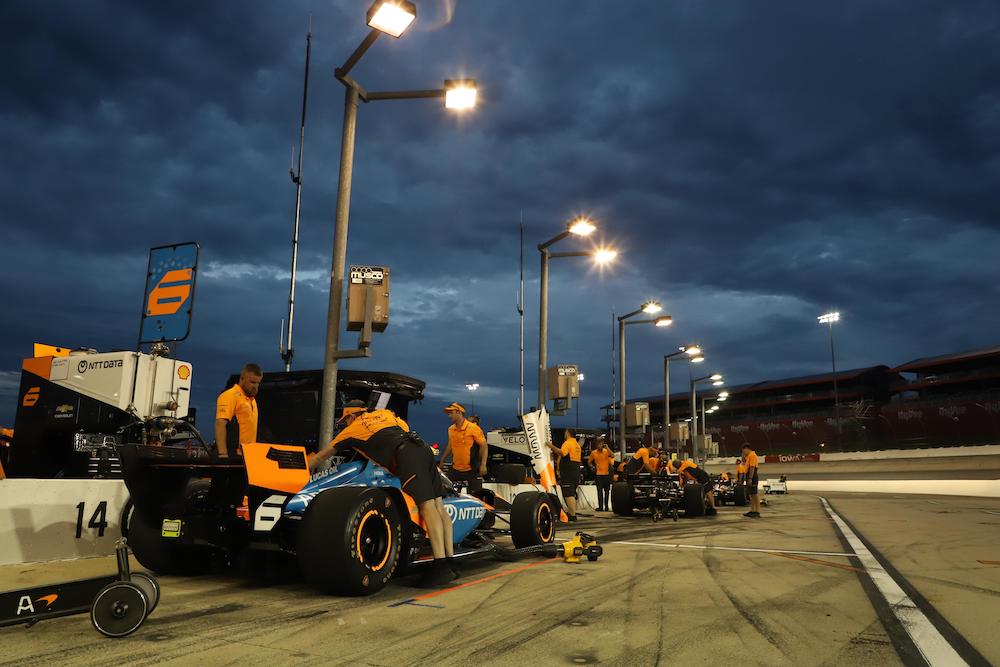
Testing is still very much a luxury. Matt Fraver/IMS Photo
Q: What would you do to "fix" IndyCar? What would you do from an engine perspective and a chassis perspective to make IndyCar relevant in some way? How do you think IndyCar should position itself and sell itself for the future? If you laid out a strategy, what would it entail? You’re at races. You talk to drivers and owners. You know what’s going on in the series. You hear from (typically grumpy) fans. You know all about other racing series and what’s working and not working from them. You should have more info than anyone on what may work to develop a plan -- a vision.
I think IndyCar is at a crossroads where it needs to hone in on what it is at its core and what it intends to be moving forward. Other racing series seem to have staked out their territories and identities quite effectively from both a marketing and technology standpoint, especially judging from manufacturer involvement and team interest. Meanwhile, it just feels like IndyCar is the Indy 500 plus filler with no fully formed vision and identity.
Ross Bynum
MP: Nothing different than what I’ve outlined in the past. Turning up the TV ratings and an engine formula that’s less expensive and easier to access for manufacturers.
IndyCar’s modern peak in popularity -- the late 1980s and a lot of the 1990s with CART -- was driven by a few things, and key among them were the big-name companies sponsoring teams, which blanketed the country with print and TV ads pointing back to their involvement in CART, not to mention huge ticket giveaways, which drew new people to the tracks.
And with the huge sponsor-driven promotions, ratings and awareness went up and more auto manufacturers wanted to be involved. Strong TV, plus big brand-name sponsors using their combined marketing budgets to make IndyCar the clear No. 1 series in the country (it was before, but went supersonic here), and a steady peak of four manufacturers as we got into the best part of the 1990s for CART.
Penske Entertainment’s recent deal with FOX that will place every race on network TV is a huge first step. It has the potential to become a game-changer for every team if the ratings are at 1,000,000-plus viewers at 16 of the 17 races that aren’t the Indy 500. If we assume Indy will put up it’s usual 3,000,000-plus, and the rest are really good, teams should have better chances of signing bigger brands to sponsor their cars. Bigger TV audience tends to equal bigger sponsors and more money spent by them to reach that bigger audience, and bigger marketing campaigns around their racing program. The FOX deal has the ability to help make this happen, but we aren’t going back to the richest days of CART.
And on the engine side, monstrous budgets were allocated during CART’s peak, and that also isn’t happening again, so the smartest call by Penske would be to follow Honda’s suggestion to shift to a much lower cost spec-ish internal combustion engine formula -- modeled off of today’s engines -- that any manufacturer can buy from Ilmor and badge as their own for a fraction of what it costs to compete as a engine supplier today.
Despite the recent moaning, a hybrid formula is important and allowing some new level of energy recovery system individuality -- maybe in software development, or energy storage system development -- would make being hybrid a more meaningful thing for manufacturers. Being restricted to using a spec, off-the-shelf ERS package could be a hard sell in a few years. It works in IMSA’s hybrid GTP class where they all use different engines and style some of the looks of their cars to their own desires, and while the ERS package is spec, manufacturers write their own software to handle some of the controls.
So, the TV part is a big source of optimism. Bring the engine/ERS formula to a place where it’s easier to afford and facilitate, and IndyCar gives itself the best chance to make significant growth. Lots of other areas to prioritize like continuing to make big investments in digital content and distribution, but ratings and bringing in more big companies -- sponsors and manufacturers -- to do for IndyCar what it can’t do with its promotions budget alone is the foundation to build upon.
Q: How many GTPs will Cadillac field next season in IMSA, and how will they be distributed among WTRA and Action Express? Is GM willing to expand from three to five cars overall (two for WEC and three for IMSA)?
Suppose that WTRA gets two cars and Action Express does not get any, is there any possibility that Action Express will be interested in racing a 963?
What about BMW? If one GTP program needs some changes, it's the BMW one. If I was the director of that program, I would definitely try to reach a deal with CGR to race the IMSA cars for 2025, with the option to take over the WEC cars for 2026 if they manage to bring an IMSA championship or a win in one the big endurance races (Daytona, Sebring or Petit) in ’25. I really want to see what CGR can achieve with two GTPs in the same championship, as opposed to the current situation, but I guess I will have to wait a little bit if the rumors about Hyundai are true.
Dimitrios, Greece
MP: Three are expected in IMSA. JOTA was just confirmed with two in WEC. Action Express Racing will have a Cadillac for as long as it wants a Cadillac.
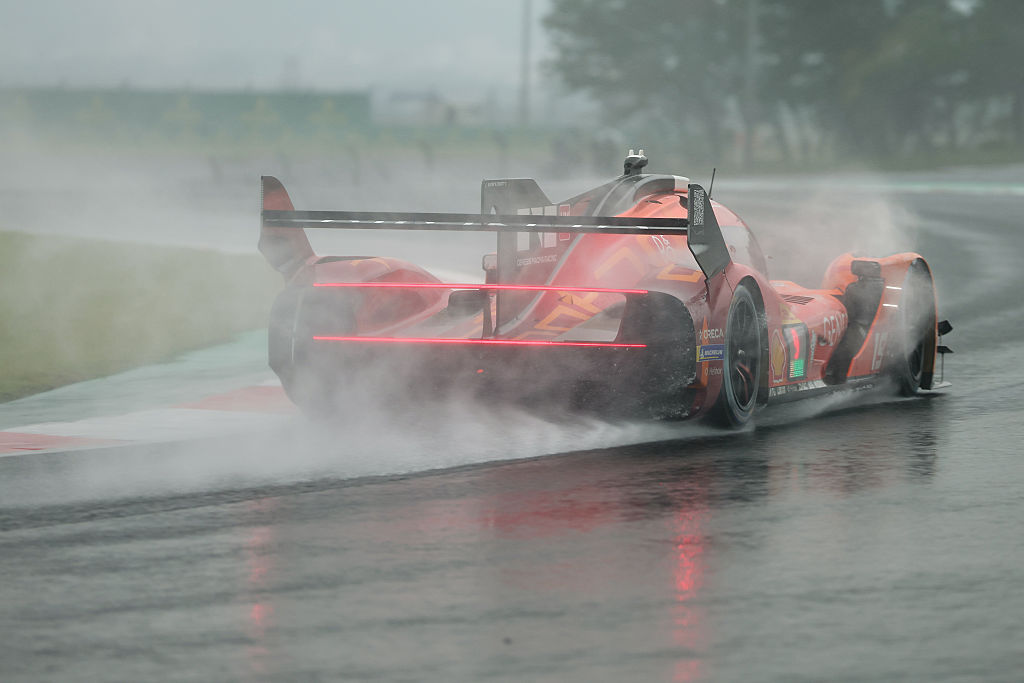
BMW and its partners at RLL lost a huge talent in former technical director Brandon Fry, who left during the offseason for Porsche Penske Motorsport. PPM has won four of seven races so far, finished one-two on Sunday at Road America, sits one-two in the standings and leads the championship with two to go. BMW, unfortunately, sits seventh with its best entry, no wins, and no podiums.
In 2023, BMW had five GTP podiums and one win. We can’t put it all down to Fry’s exit because there’s 100-plus people on the PPM side who are amazing and put in stellar work during the off-season, but we also can’t ignore the fact that when an excellent technical director leaves, and the former team struggles and the new team thrives, it’s rarely a coincidence.
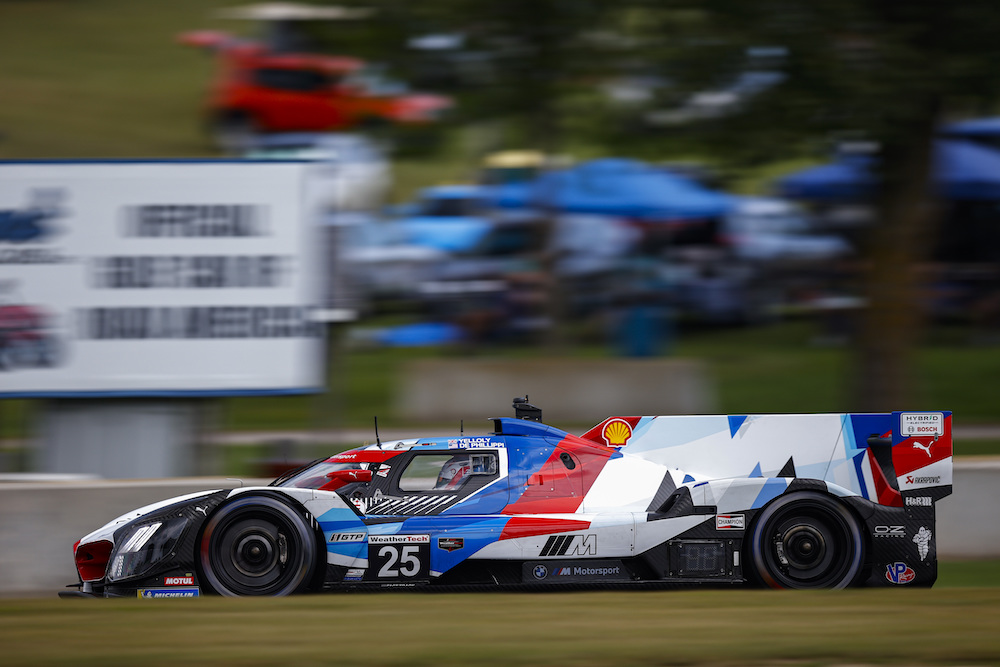
Fry's exit left BMW with a large technical hole to fill. Motorsport Images
Q: In my memory, the origin of Perez getting the second Red Bull seat was because Mercedes would split strategies between Hamilton and Bottas, and Verstappen would have to choose between giving up track position or having to defend on old tires while Albon and Gasly were nowhere to be seen.
It looks like McLaren is going to pass Red Bull in the constructors’ championship, and with how Mercedes has looked the last four races, Red Bull is vulnerable to Mercedes too. If Norris averages a second-place finish and Max averages a fifth place for the rest of the season, Lando will win the championship.
Would Red Bull not winning either championship after starting the year winning seven of the first 10 races be the biggest choke in modern F1 history, and does Perez bring enough sponsorship that would make up for losing?
Will, Indy
CHRIS MEDLAND: To answer the first part of your question first, yes I'd say if Red Bull didn't win either championship then it would be the biggest choke in modern F1 history. That's because it would clearly have to make a huge number of errors between now and the end of the season, plus create an environment Max Verstappen isn't happy with, to jeopardize his chances. I agree that Perez isn't dong what Red Bull needed this year -- certainly from a constructors' championship point of view -- but he has in the past, and Verstappen has built up such a lead and is so good I really don't see Norris (or Charles Leclerc as the other outsider) getting particularly close on the drivers' championship front.
On the flipside, I'd be surprised to see Red Bull win the constructors' from here. The trend has been so clear for so long, it really does look like an inevitable slide to P2, or even P3 (I think Mercedes is too far away despite three wins in four races), and car improvements will be needed to hold McLaren off.
There's not a driver in the world who brings enough sponsorship to a team to make up for losing both championships if Red Bull was to do so from here, but Perez did give the team its first one-two finish in the drivers' championship last season, and play a role in its previous successes, too. His retention is not just about commercial value, but trying to create some stability and backing him to rediscover his form to help the team hold on. I'm surprised a change wasn't made this summer, but it must also be said that there's no guarantee replacing Perez would improve the situation given what's gone before with every teammate to Verstappen.
THE FINAL WORD
From Robin Miller's Mailbag, August 10, 2016
Q: I liked hearing you talking about what you learned from the Formula Ford and about racing midgets. It reminded me of a quote from Little Al Unser, back when he was racing at Manzy. He said: “Driving in Atlantics taught me to drive, but sprint cars taught me to race.”
Chad R. Larson
ROBIN MILLER: In 1972 I bought a Formula Ford from Vince Granatelli with Art Pollard as the broker, and I was proud as a peacock until I started going to lunch every day with Gary Bettenhausen, Bill Vukovich and Johnny Parsons. They told me to sell that “squat to pee” car and go get a midget or sprinter car to learn how to race. They were right. USAC had nothing but badasses back then (many of the Indy drivers were still running midgets too) and it was an eye-opener in terms of aggression, starts, restarts, slide jobs and balls. Best eight years of my life.
Marshall Pruett
The 2026 season marks Marshall Pruett's 40th year working in the sport. In his role today for RACER, Pruett covers open-wheel and sports car racing as a writer, reporter, photographer, and filmmaker. In his previous career, he served as a mechanic, engineer, and team manager in a variety of series, including IndyCar, IMSA, and World Challenge.
Read Marshall Pruett's articles
Latest News
Comments
Comments are disabled until you accept Social Networking Cookies. Update cookie preferences
If the dialog doesn't appear, ad-blockers are often the cause; try disabling yours or see our Social Features Support.