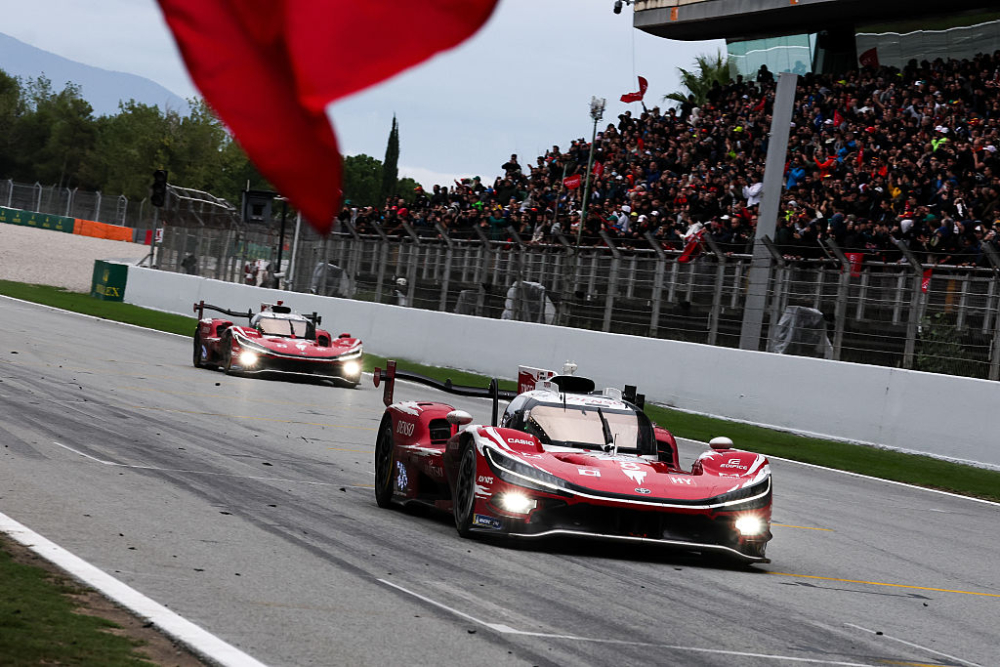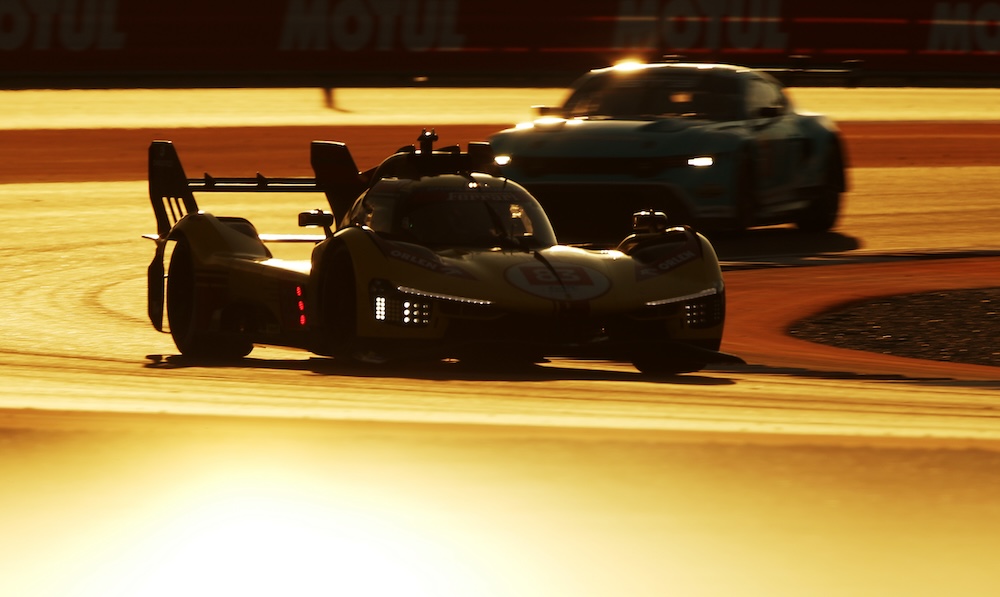
JEP/Motorsport Images
Prologue shows how FIA WEC is poised to make another step forward in 2024
The FIA World Endurance Championship has taken yet another big step. Strolling the paddock this past week at the Losail International Circuit before, during and after the Prologue test was at times overwhelming. Not only is the circuit new to the championship but the majority of the cars and 26 of the drivers are too.
This can only be viewed as a positive, though, with 14 OEMs represented across the two categories and a galaxy of star drivers, this has the feel of a season which will be looked back on and discussed for generations to come.
As with any new campaign, there are countless unknowns, and frankly, the Prologue provided only a handful of answers to some of the more pertinent questions. However, it did give a taster of what’s to come at this weekend's Qatar 1812Km and beyond.
Let’s start with the venue itself. Leaving the obvious political elephant in the room -- and the shipping delays which heavily disrupted the timetable -- to one side, Qatar playing host to the pre-season test and season opener is proving to be popular with the teams.
As a facility, it’s world-class. The paddock is spacious and highly functional, the garages are well equipped, the weather at this time of year is warm but manageable and there are plenty of nice places to stay and eat close by.
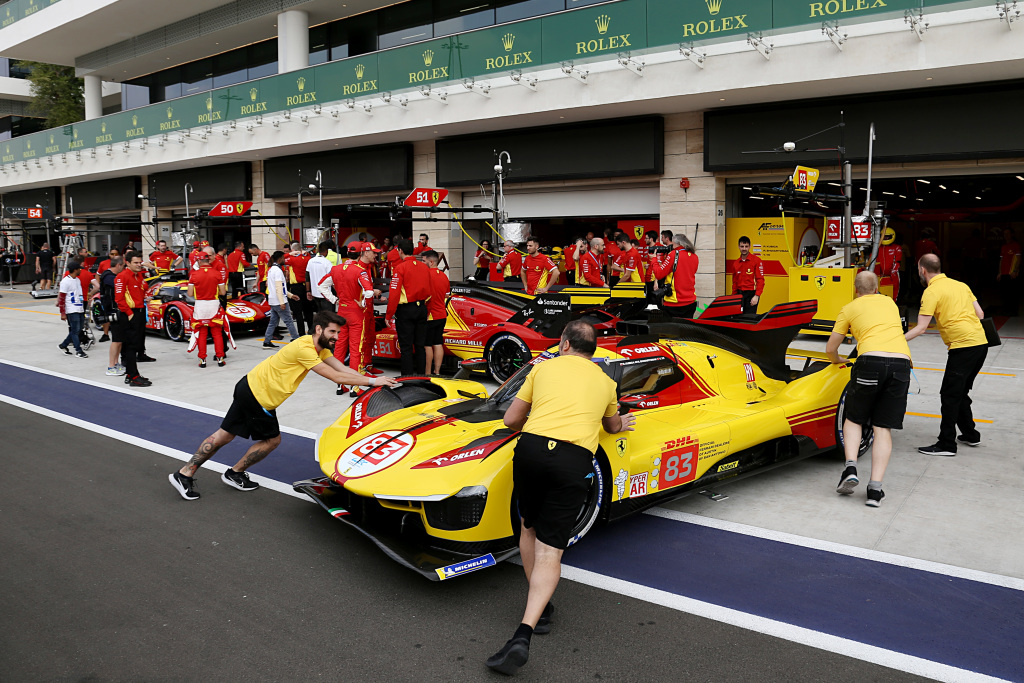
The Losail circuit is an ideal facility for a test, and presents an interesting technical challenge too. JEP/Motorsport Images
By bookending the season in the Middle East, it has handed the teams the option of keeping their cars in the region over the winter months. Hertz Team JOTA’s off-season is a prime example of the benefits this can present.
“We based ourselves just up the road over the winter after Bahrain last year and moved into a facility near here. It’s allowed us to test at both circuits in the sunshine too,” team principal Sam Hignett told RACER. “The whole country has been a massive help for us. It’s a great place to go to, with perfect weather. This country has built the infrastructure to support events like this.”
JOTA’s newly expanded effort looks poised to impress early in the season, as its Porsches powered through the Prologue without any hiccups. Assuming the season starts and ends in the Middle East in the future, this could become the norm for many teams.
As for the 3.2-mile circuit, it presents two clear challenges for the competitors: traffic management and left-side tire wear.
Watching a MotoGP race at Losail makes the circuit seem far wider than it is. In reality, it’s narrow in places, and with so many corners packed together, there will be pinch points and bottlenecks to navigate when things get busy in the race.
As for the tires, the general consensus is that teams will double stint the right side and single stint the left to combat the heavy, constant load applied to the front and rear left-side tires each lap.
“It’s a cool track with a bit of everything,” Proton Competition Hypercar driver Harry Tincknell told RACER. “It’s quite low grip with one line -- it feels like a damp track with a dry line. The curbs are interesting too, in a prototype you actually use a lot of curbs around here because they’re quite flat. We can’t cut as much as the GTs but it’s not normal for us.
“Traffic-wise, there are sections where it’s very difficult to overtake, especially the triple right, if you don’t get a good run it can be tough to get past a GT car and you have to sit behind. I think it will create a good race.”
Team WRT LMGT3 driver Ahmad Al Harthy expects it to be a tricky race for the drivers in GT3 cars too.
“It’s a difficult circuit to learn and race on. I would compare some areas to Portimao, just without the elevation changes," he said. It’s flat but it’s tight and there are areas where the Hypercars aren’t pulling away from you so your laps are constantly being compromised. It’s so tight early in the lap between Turns 2 and 3.”
Once the track action finally got underway at the Prologue on Monday, many storylines emerged, though it’s been as tough as ever to come to any conclusions at this early stage.
In Hypercar, the fleet of Porsche 963s stole nearly all the headlines. Between JOTA and Penske, every session was topped by one of the German LMDh chassis, with the four cars from the two teams running almost faultlessly and Frederic Makowiecki setting the best time of the test, a 1m40.404s.
An off for Kevin Estre in the No. 6 example was the only real hiccup, but even that didn’t prevent Penske from achieving its goals, which centered around finding a balanced setup and working on long-run pace.
Cadillac Racing’s Prologue was metronomic too, and the Ganassi pit heads into the race weekend satisfied. 249 laps were completed and there is quiet confidence.
“We’ll have a competitive package,” team manager Stephen Mitas believes.
Ferrari AF Corse’s factory and privateer 499Ps also looked strong. It is clear that the privately run 499P has a ways to go yet before the entire team is comfortable, but the signs are there that this is a car that means business.
“You can never have enough track time,” Robert Kubica, who will share the No. 83 with Yifei Ye and Robert Shwartzman this season. “But this is motorsport. We have so much to learn and this came together so late that the job list is long.”
Just how much help is the factory team next door giving this car? Clearly, there is a high level of expertise already on tap as AF Corse runs both programs, but this is a new set of staff. The No. 83 will run its own races, with its own set of goals. Just how high it can fly remains to be seen.
Asked to describe the relationship between the two factions, Kubica told RACER, “It is separate. But, for instance, we all have breakfast together. All of us drivers sit around the table and talk, and if I’m honest we’re not discussing the football scores from the night before.”
The general hierarchy of the class doesn’t feel in any way set in stone, though. It wouldn’t be wise to look down the times and assume that Porsche Penske, Hertz Team JOTA, Ferrari AF Corse and Cadillac Racing will be the front-runners in qualifying and the race.
The truth is, nobody knows. All we have are timesheets and body language to work with to tell the story. It is clear, however, that the Porsche teams expect that Ferrari and Toyota will emerge as the quickest brands here.
“I’m not reading into the pace,” Jonathan Diuguid, the managing director of Team Penske, told RACER. “We know the times people set in the test here last year (which featured Toyota, JOTA, Penske and Ferrari). The order was different to now.”
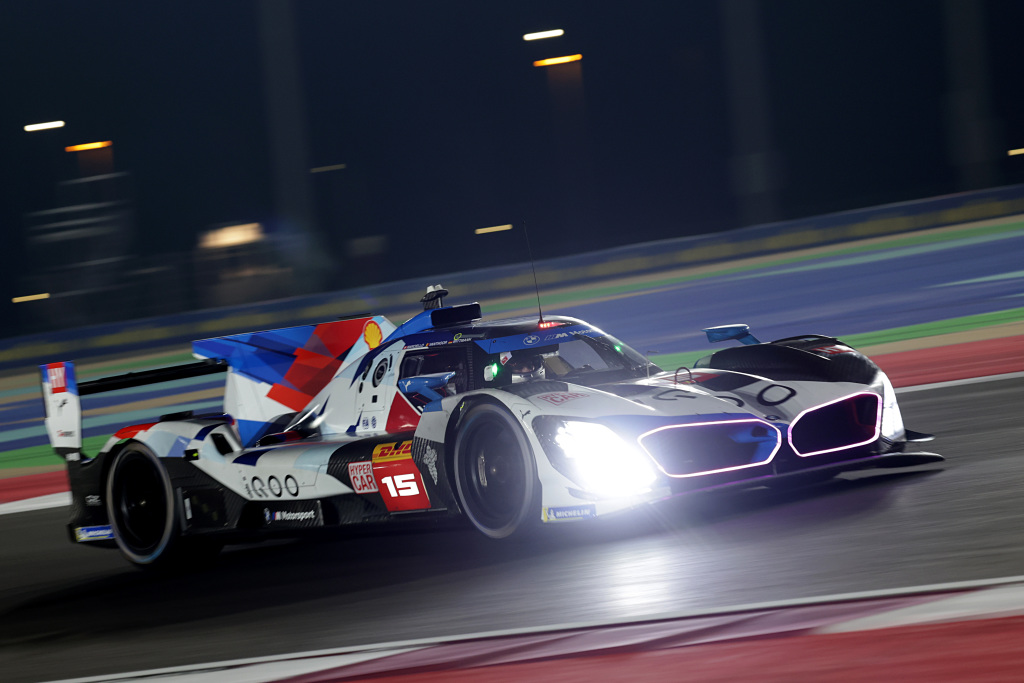
BMW appears best placed of the Hypercar newcomers with its M TEAM WRT BMW M Hybrid V8. JEP/Motorsport Images
So what of the other runners? Unsurprisingly, all the teams bringing brand-new cars have plenty of work to do in the remaining sessions before the race. But none of the teams looked to be drowning in their task lists. Such is the quality of the teams here that even the teams with the least resources to work with -- Proton Competition and Isotta Fraschini -- didn’t spend too much time firefighting problems.
To be clear, both teams had their issues. Proton lost a lot of track time due to the prep needed on all three of its cars on site due to the freight delays and Isotta’s Duqueine-led crew made minor operational errors, though every brand-new team does when running a car this complex. However, the Isotta was blindingly fast through the speed trap and Proton’s Porsche found pace in the final session.
Overall, BMW M Team WRT looks to be in the best shape of the newcomers. This shouldn’t come as much of a surprise, as unlike its LMDh counterparts Lamborghini Iron Lynx and Alpine Endurance Team, its car has a year of competition in IMSA GTP under its belt. The M Hybrid V8s completed plenty of laps and set the fastest time of the new factory teams present.
Alpine’s A424s and Lamborghini’s SC63 looked the part and gathered valuable data, but it does seem too early to expect either car to be at the sharp end in Round 1. With this week’s contest being a 1812km (or 10-hour) race, reliability will almost certainly be a factor here, and Alpine will hope that the engine trouble that the No. 35 hit on Tuesday doesn’t re-emerge when the pressure of the car’s debut is on.
Perhaps the toughest teams to read were Toyota and Peugeot. There are signs that Toyota, despite testing at the Lusail circuit last year before the Prologue with the GR010, isn’t entirely comfortable. There were no real flashes of outright pace and team personnel appeared to be ever so slightly concerned that its time as the dominant, all-conquering force capable of winning every race by multiple laps, is in the rear-view mirror.
But this was a test. Until another team proves otherwise in a race, the GR010 HYBRID remains the car to beat, with Toyota the clear favourite.
Peugeot, meanwhile, will surely see this as a free hit. With the new-look 9X8 on the way for Round 2, the French manufacturer has nothing to lose. Its No. 93 topped the speed trap and overall both cars produced strong lap times. Could this be a circuit that suits the characteristics of its car and allows it to give the first-gen model a good sendoff?
Then we get to LMGT3. It’s an all-new class, with all new rules and a heap of unknowns to go with it. What did the Prologue tell us? Certainly that this class is going to be difficult to read.
The brand-new LMGT3 cars were in full focus at the Prologue, and all three of them completed plenty of laps.
The most impressive on the timing screens was the Aston Martin Vantage AMR LMGT3, as all six drivers from D’Station and Heart of Racing set times towards the top of the charts.
There was plenty of positivity to go around in TF Sport’s Corvette garages too, as both Z06 LMGT3.Rs lapped within a second of Gregoire Saucy’s class best time for United Autosports and the team completed a whopping 395 laps.
“There were just so many unknowns going into this week,” said Corvette factory driver Charlie Eastwood. "We had one test day as a team with the Z06 GT3.R, which went very well at Dubai. But now we are at a brand-new track and one that’s very different than Dubai.
“From the very first session, we were pleasantly surprised to be in a very good window. From then, we ran through all the drivers, and both Rui and Tom have been building up. There are still so many unknowns. But as a team and car crew, I feel we are looking quite strong.”
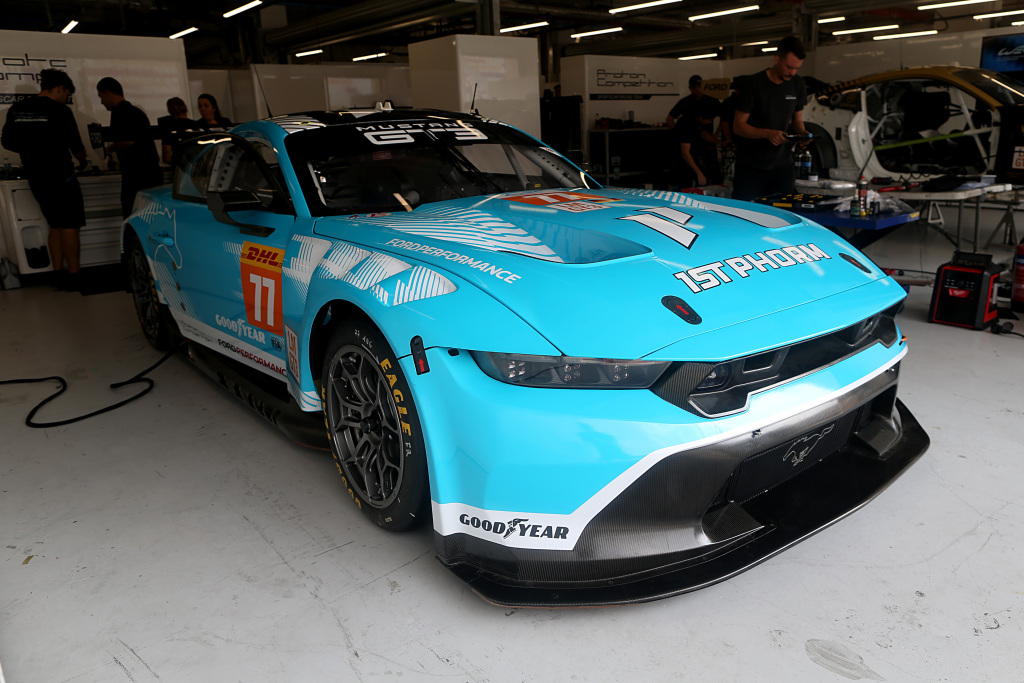
The Proton Mustang LMGT3s remain a largely unknown quantity. JEP/Motorsport Images
Proton Competition with its pair of Mustangs was the only outlier. The lap count of 244 across both cars was by no means worryingly low, but the team did lose considerable track time as its tired mechanics worked overtime to prep the cars in time for the Prologue.
The speed wasn’t quite there either, but it is never wise to read too deeply into pace at a test. In this case it’s especially true as the entire category and all nine cars are new to the championship. Look at the times and the performances from the McLarens, Aston Martin, Lexus and Ferraris certainly stand out, although it was tight, with six of the nine brands ending the Prologue with times in the 1:54s.
By all appearances it will be a close race with multiple teams in with a chance of victory. This is in part because the new, torque-sensor-led Balance of Performance system promises to hand greater transparency to the rule-makers than ever before.
Certainly, one aspect that the teams have spent the Prologue getting their heads around is managing the Virtual Energy Tank, which will dictate the amount of power each car can use per stint. This new system, which mirrors the Virtual Energy Tank in Hypercar, adds a new dynamic as it controls stint lengths without the need to regulate the size of LMGT3 fuel tanks, fuel consumption and fuel flow.
Thierry Bouvet, the ACO’s director of competition, told RACER that it’s a “fairer” system. “We are managing the amount of energy used (measured in Megajoules),” he said.
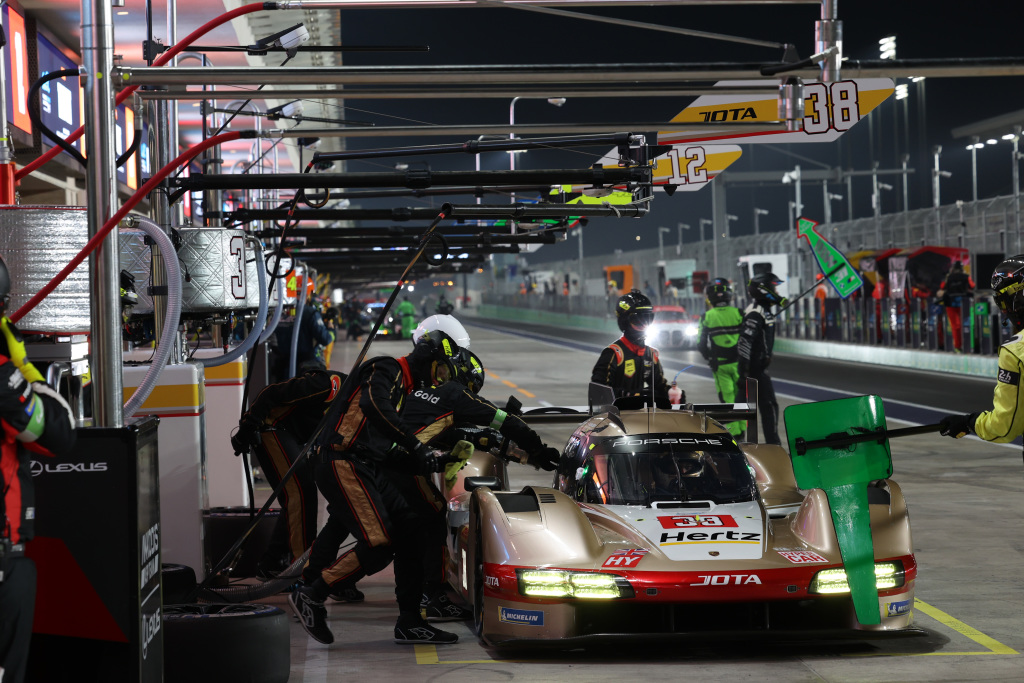
Pit stops and strategies won't be changed but will fit into a revised -- and hopefully -- more equitable -- Virtual Energy Tank. JEP / LAT Images)
Essentially, this Virtual Energy Tank depletes incrementally every time a driver puts their foot on the throttle. You have a certain amount of energy to use during each stint in the race, and every team must come in to top up the virtual tank (via a sensor on the fuel nozzle) at each stop.
How much of an effect will this have on the racing? We will need to wait until Saturday for a final answer. But the teams expect the stints to be shorter than in GTE. This won't change the look and feel of pit stops or remove any strategy options. The virtual tank can be filled in 40 seconds, but teams don’t need to fill it to the metaphorical brim each time. Instead, there is still the option to splash and still a benefit from fuel saving.
As well as being easier to police than regulating everything surrounding the actual fuel tank, it should benefit fans too. Graphics displaying live readings of the virtual tank will be shown during the race, making it easier to see how much much fuel is being saved by teams and how close each car is to pitting.
If teams fall foul of this, like in Hypercar, the penalties are severe, with 100-second stop-and-go penalties set to be doled out for the first offense and additional 100s added to each subsequent violation.
“You have to figure out how to maximize it,” United Autosports (McLaren) co-owner Richard Dean told RACER. “If what it achieves is preventing teams from wanting to sandbag and play political games ahead of an event, brilliant! If it gives us as teams more clarity going into a race event, it should create closer racing.”

Stephen Kilbey
UK-based Stephen Kilbey is RACER.com's FIA World Endurance Championship correspondent, and is also Deputy Editor of Dailysportscar.com He has a first-class honours degree in Sports Journalism and is a previous winner of the UK Guild of Motoring Writers Sir William Lyons Award.
Read Stephen Kilbey's articles
Latest News
Comments
Comments are disabled until you accept Social Networking Cookies. Update cookie preferences
If the dialog doesn't appear, ad-blockers are often the cause; try disabling yours or see our Social Features Support.