Steve Etherington/Motorsport Images
Where is F1's U.S. baseline now?
I’m an eternal optimist, but I do feel ESPN announcing record breaking figures is not the thing to be excited about when judging the growth of Formula 1 in the United States. In fact, it’s the slowing down of those gains that should be looked upon more positively.
Now, I’m not saying it’s a good thing that audiences are increasing at a slower rate as they have been, but it’s also certainly not a stick to beat F1 with.
I’ve seen comments and questions about the bubble bursting and fans being disillusioned because of Red Bull’s dominance. I say that does a disservice to those who previously followed the sport pre-Drive to Survive, but also to those who had their eyes opened to this crazy little world of racing by that series or other Liberty Media-backed initiatives to increase U.S. audiences.
Let’s start with the hard facts, and that is that even in the face of such dominance this year, the television viewership is still holding strong.
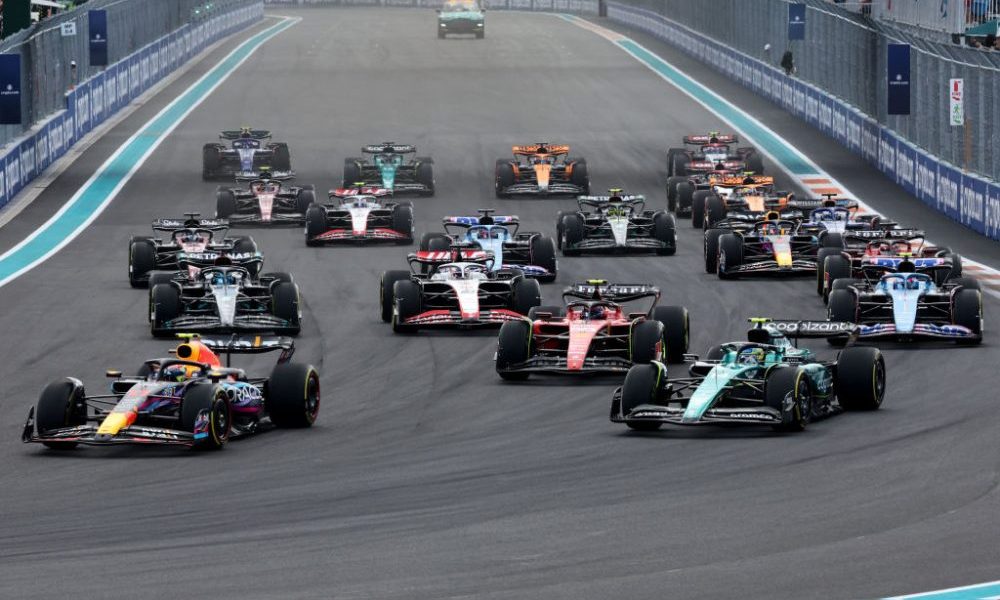
Last year saw the highest ever average viewership for F1 in the United States at 1.24 million, and that was boosted by 2.6 million tuning in for the inaugural Miami Grand Prix. ESPN views that as an anomaly, but the same race still attracted 1.96 million this year, and along with Monaco (1.79 million) and Canada (1.76 million) those mark the second, third and fourth largest telecast audience of all-time.
I know it pales into insignificance against something like the NFL, but too often the focus is on something else and not the reality of where F1 has been in America in the past, and how it’s grown recently.
And while that drop in the Miami figure means the year-on-year average is slightly down on 1.28 million at this point last season, the addition of Las Vegas could well boost it again by the end of 2023 even if the world championship will long since have been wrapped up.
Spa’s record audience and 12% increase from the previous season – when Ferrari posed a greater threat – shows storylines such as Daniel Ricciardo’s return and McLaren’s huge step forward all still draw interest.
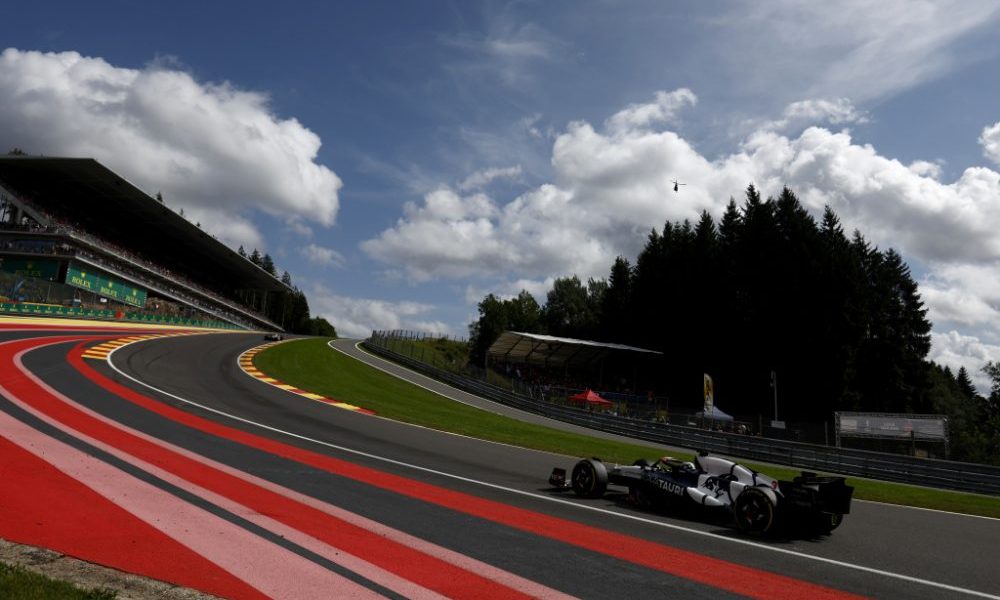
Daniel Ricciardo's return was one of the enticing storylines from Spa. Zak Mauger/Motorsport Images
And what that shows is that as great as it is, F1 doesn’t need 2021’s title fight to be repeated every season for fans to remain fans. Where Miami also plays a key role is in understanding that fandom compared to what it sees from the Miami Dolphins following, and the race’s president Tyler Epp believes a new type of heavily-invested fan is being created, even if it was a strange development that triggered that belief.
“I thought with the way that the (Hard Rock) stadium has been configured, and the four huge video boards and a place to sit, in year one, I thought for a general admission buyer we would get people in there,” Epp said. “And I was wrong. Like just flat out wrong. There was nobody there.
“Now you put access to the paddock – even if it's just a view – and (concessions), and all of a sudden now there is an experience. The best part was we didn't create any of that, that’s completely organic; that's created by the fans.
“So when we get criticism about the fan base not being there yet or something, fair criticism, but I think it's building and I think it is growing -there is a U.S. fan that's being built that is different from a NASCAR fan or an IndyCar fan or a sports car fan. And it is committed to F1, and I think that's something we've got to continue to grow.”
It was a topic I was keen to delve into anyway before speaking to Epp, but something he said really resonated when I’d asked him about years two and three being tougher. That was the warning that came from Circuit of the Americas boss Bobby Epstein, who obviously experienced as much himself in Texas after its 2012 debut.
Asked if he was seeing similar, Epp replied: “Respectfully to Bobby but that is not what we’re seeing! Year two we grew attendance, we were up to over 270,000 last year, we expect to grow again this year. But it’s authentic, it’s organic…”
That word “organic” crops up again, and suggests promoters are not seeing fans swayed by solely the outcome of each race and the dominance of one team. Drive to Survive opened up so many stories that it’s clear there’s far more to F1 than just who wins, so it feels Red Bull’s dominance isn’t doing irreparable damage.
That’s not to say fans are happy with the sporting situation at the front – many of you reading this might not be a Red Bull fan and can’t wait for the day there’s a new winner – but while Epstein was almost single-handedly trying to tell the F1 story to people in America when Austin came on the scene, now the understanding, the connection and the ability to share in fandom is far more established.
“We haven't seen (a softening),” Epp adds. “We always have to be careful with what we read good and bad. And I think, from our perspective, we can only go off the data that we're getting
“Our pre sale or discussion or social discussions or sales team, we haven't seen softening, like we see really steady growth. “We’ve had a great response to tickets going on sale, learning a lot in this first week, and pleased to be tracking ahead of our projected pace.”
In fact, from Epp’s point of view, instead of being overly-impressed by the growth, what the past year or so has shown is where F1 is still lacking when it comes to engaging with the U.S. sports fan.
“I think we have to get better as an industry about knowing who our fan is, and making sure that we're communicating with them in a way that's easy for them. I think American sport has done a really, really good job of that, and there's a bunch of examples. I think we have to get better at that as a promoter. We have to, and we need F1’s help with that, and they certainly know my point of view on that.
“So I think we can do better there. But I think that the way that we communicate with a fan, it needs to feel personal, and it needs to feel like we're speaking directly to them on the platform that they want to be spoken to. So I think that's the opportunity for progress.”
To that end, TV figures alone will never tell the full story. But the latest ones do show the strength of the fanbase that F1 now has in America, and it’s operating from not only a much higher baseline than in the past, but a more stable one too. From there, it has an even better chance of building further.
Presented by:
Chris Medland
While studying Sports Journalism at the University of Central Lancashire, Chris managed to talk his way into working at the British Grand Prix in 2008 and was retained for three years before joining ESPN F1 as Assistant Editor. After three further years at ESPN, a spell as F1 Editor at Crash Media Group was followed by the major task of launching F1i.com’s English-language website and running it as Editor. Present at every race since the start of 2014, he has continued building his freelance portfolio, working with international titles. As well as writing for RACER, his broadcast work includes television appearances on F1 TV and as a presenter and reporter on North America's live radio coverage on SiriusXM.
Read Chris Medland's articles
Latest News
Comments
Comments are disabled until you accept Social Networking Cookies. Update cookie preferences
If the dialog doesn't appear, ad-blockers are often the cause; try disabling yours or see our Social Features Support.