The RACER Mailbag, February 9
Welcome to the RACER Mailbag. Questions for any of RACER’s writers can be sent to mailbag@racer.com. Due to the high volume of questions received, we can’t guarantee that every letter will be published, but we’ll answer as many as we can. Published questions may be edited for style or clarity.
Q: JR Hildebrand was on the competitor list last year for the Pikes Peak International Hill Climb, but had to withdraw. He is entered again this year, with a DW12 listed as his car. Is he going to really run an IndyCar at the Peak? Is IndyCar involved in this effort at all? Is this a serious shot at a fast time, or an exhibition to promote IndyCar?
Brian Sanborn
MP: Here’s what Mr. Hildebrand told us:
“Yes, it’s definitely a serious commitment. No, IndyCar as the series is concerned is not involved. It’s not a PR activity on their behalf, although they have allowed us to pursue it. Otherwise, all of the IndyCar suppliers are involved in it, and basically, the trouble we had last year and we’re way ahead of this year is, IndyCar as a sanctioning body and their supplier agreements are about using the car to go IndyCar racing. Pikes Peak is outside of that, but we have a dedicated chassis for it, and there’s a shout-out to Dallara for their help in pursuing this in a way that doesn’t get in the way of other teams hunting down what they need to race in IndyCar. We’re taking this very seriously. We’re not just trying to go for a cruise up the mountain.”
Q: While overall I enjoyed the 24 Hours of Full Course Caution – I mean Daytona – next time I complain about the length of an IndyCar caution, I have instructed my best friend to hit me in the head with a tack-hammer.
I decided to try Peacock Premium so I could watch the whole thing without chasing it on different channels. I figured it'd be a good dry run to work out any technological issues on my end. I really enjoyed the commercial-free experience. The commentators stopped talking whenever the regular broadcast cut to commercial, but you still got the ambient audio of the track/cars, and the cameras still followed the cars around, too. If that's what we have in store for us for IndyCar races on Peacock, that alone is worth $5/month to me.
Dylan Burgett, Villa Park, IL
MP: The folks at NBC Sports intend to do the same thing on Peacock that you enjoyed from the Rolex 24 but, and this is the key thing, only during practices, qualifying sessions, and during the Indy Lights races. Those productions are 100 percent for Peacock. When it comes to live streaming the IndyCar races on Peacock, those will be the full NBC/USA Channel TV broadcasts that are copied to play on Peacock.
That means whatever’s on the TV is being sent down the line for the stream, and that includes commercials and whatever else they choose to air. If it’s a side-by-side commercial, or if they cut from the action to show you a personality feature, or if it’s a regular block of full-size commercials, Peacock’s streamed IndyCar races will be an exact mirror of what’s on the big screen.
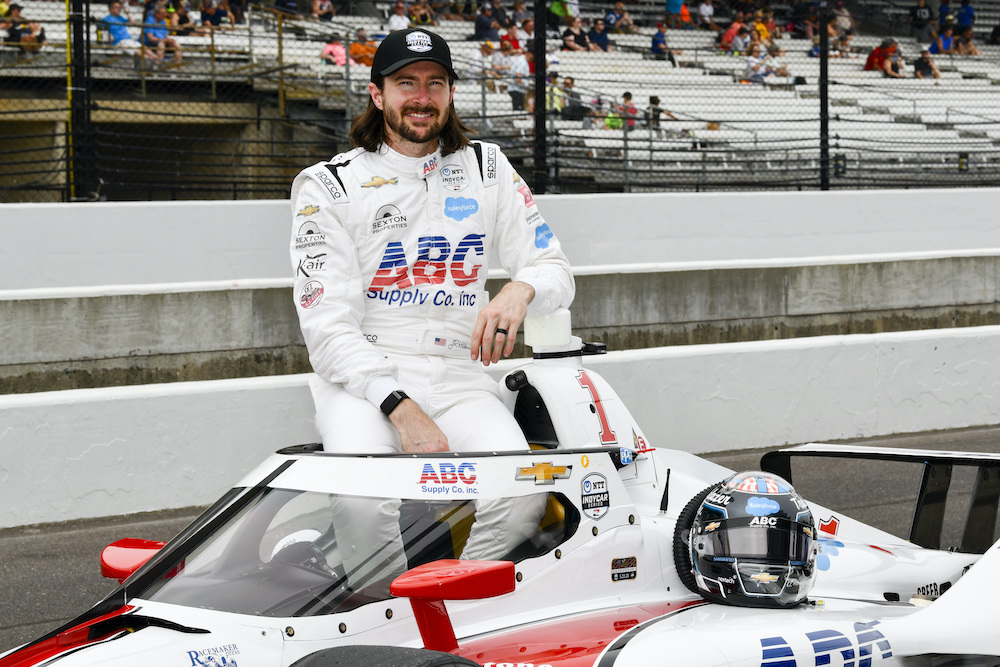
If you were preparing to drive an IndyCar up Pikes Peak, you'd be smiling too. That, or pooping yourself. Motorsport Images
Q: I watched the Daytona 24 coverage on NBC and Peacock. It was good coverage overall, but gave little attention to GTD. Other than showing the leading Porsche and the No. 19 car which kept going off, little was mentioned of the other finishers. RACER also had separate articles on all the classes but GTD on Monday. I am sure that these teams hope that by running up front, they will get some airtime for their sponsors. It was a good race overall with good battles up till the finish. FYI, Spectrum is offering one year of free Peacock to its subscribers.
Mark Bartholomew
MP: One of the constant challenges at the Rolex 24 is to have all classes covered to a similar degree. I’m not saying it’s a challenge because it’s hard to do so. It isn’t. But you aren’t going to have an equal amount of compelling content to show. LMP3, for example, was barely a race, since the winner had a lap over the P3 field for most of the event. But you’re right on GTD; it definitely deserved more coverage. All the auto manufacturers contribute to the annual TV coverage budget, so I wonder if having both GTD Pro and GTD for the first time made it easier to showcase GTD Pro more often and give the manufacturers there a feeling that they were getting what they paid for.
Q: I just received an email from the Indianapolis Motor Speedway saying they are getting ready to send out this year’s tickets. In the email, they are asking $150 for the bronze badge (now $135). Do you know if Roger is planning to raise ticket prices for next year’s race?
William Ledgerwood
MP: I’m sure I could ask, and I’d expect to get an answer that didn’t answer much since we’re talking about a race that’s 15 months away. But I would fear for the Speedway if they started doing price increases every year, because all I’ve ever heard from fans is that once it starts feeling like they’re being bled dry to drive up bigger profits, it’s game over.
Q: As we get ready for the new IndyCar season, could you review how the points are determined throughout each race as well as the championship? It seems a bit difficult to follow. Of course points are awarded for podiums, but I’m also aware they are awarded for other things such as leading laps and pole positions. Can you share some of that with us so that we can follow the season a little better?
Joan, AZ
MP: Every driver who starts a race earns points. 50 to win, 40 for second, 35 for third, 32 for fourth, and then it’s a reduction by two points per position until you reach 10th-place (20 points). From 11th to 25th, it’s a reduction by a single point, so 11th is worth 19 and 25th delivers five points. From 25th on down, it’s all the same minimum of five points.
And outside of the position-based awarding of points, the series also offers single bonus points for earning the pole and leading a lap, and two points for leading the most laps. A perfect weekend for the race winner who got pole, led a lap and the most laps is 54 points.
The one outlier is the Indy 500, which pays double points and also awards qualifying points. We’ve seen instances where a driver who was having a decent but unremarkable season coming into Indy go on and win the 500 and vault themselves into title contention as a result of those double points. At the same time, a streaking driver who also wins Indy could make it really hard to be overtaken in the standings if they avoid calamities after May.
Q: This isn't a question, but a recollection after reading the Rolex 24 letters in last week's Mailbag. They brought some great memories of the event to mind, and a major fail, too! I'm a long time IndyCar fan who enjoys traveling to road courses and races I've never been to before. The 24 Hours of Le Mans has been on my bucket list for decades, but age brought the need to rationalize that list. Several years ago I changed that target race to the Rolex 24 At Daytona.
For the 2020 contest I flew from Chicago, and met my race buddy Dan. The experience exceeded our expectations on many levels. The fail, and to me it was a huge fail, was the behavior of our hosts when the checkered flag fell. A significant part of my enjoyment of any race is the interviews with the winner and podium finishers. And with four classes of competition this was going to be an event in itself. We positioned ourselves in the upper deck near Turn 1 entry across from the video screen relaying the excitement from victory lane. While the Wayne Taylor Racing team was still celebrating their overall victory, I noticed a few track employees dispersing themselves around us. As the interviews had just began, security told us we had to leave. That thought seemed preposterous after a 24-hour endurance event. He told us that no, he wasn't kicking us out, we just had to leave! So we did.
That put a major dent in my enjoyment of the experience. The only thing that got me out of my funk was an impromptu parking lot car show next door to our hotel held by the club that was renting the track the next day.
I received a package of IMSA swag as a goodwill gesture following my letter of feedback sent to both IMSA and their parent company. I hope track ownership has since improved their treatment of the ticketed fan.
Bob Pagels, Downers Grove, IL
MP: As you rightly illustrate, there are some tracks like Indianapolis that are geared for having victory lane celebrations done for the audience in attendance and the world at large, and then you have Daytona, which isn’t geared for making its victory lane happenings something that fans can readily enjoy. It’s so far away from the grandstands, I’m guessing the track people who shooed you away had no idea you were trying to join in the festivities. Best suggestion is to try and get passes for the infield if you decide to return, but even that won’t get you as close as you’d want to be.
Q: With Honda and Chevy already in the testing phase for the new V6 IndyCar engines, it does not sound like there will be a third engine manufacture in the near future. There has been plenty of time for other manufactures to have developed an engine by now, all we ever hear out of IndyCar is how all the interest is from one-three manufacturers, and when the time comes, they are nowhere to be found.
Arnold Edgar, Danville, IN
MP: The only scenario I’ve heard of for a third engine supplier with this new hybrid formula that’s coming in 2023 is for that auto manufacturer to join in 2024. I’d say IndyCar is in a bit of competitive pickle with IMSA in that regard, because the WeatherTech SportsCar Championship is also going hybrid in 2023 with its GTP cars. Acura (Honda) and Cadillac (Chevy) are already committed to the prototype class, and they’ll be joined by BMW and Porsche to launch the category.
We could be up to six GTP manufacturers by 2024, and if it wasn’t already obvious, with two significant American racing series going hybrid at the same time, manufacturers will lean towards what they know, which is something that has fenders and looks a tiny bit like a road car compared to a field of identical open-wheelers that only carry their engines hidden in the back. I was critical of IndyCar for announcing its new non-hybrid engine formula back in 2018, and if they’d had the foresight to move forward with an ERS system back then and the new hybrid formula launched in 2021 or 2022 at the latest, I imagine they’d have more auto brands in the field. Going hybrid the same year as IMSA was always going to be problematic for one and happy for the other.
Don’t lose hope on IndyCar landing a third supplier, but also don’t be shocked when you read about more manufacturers signing up for GTP.
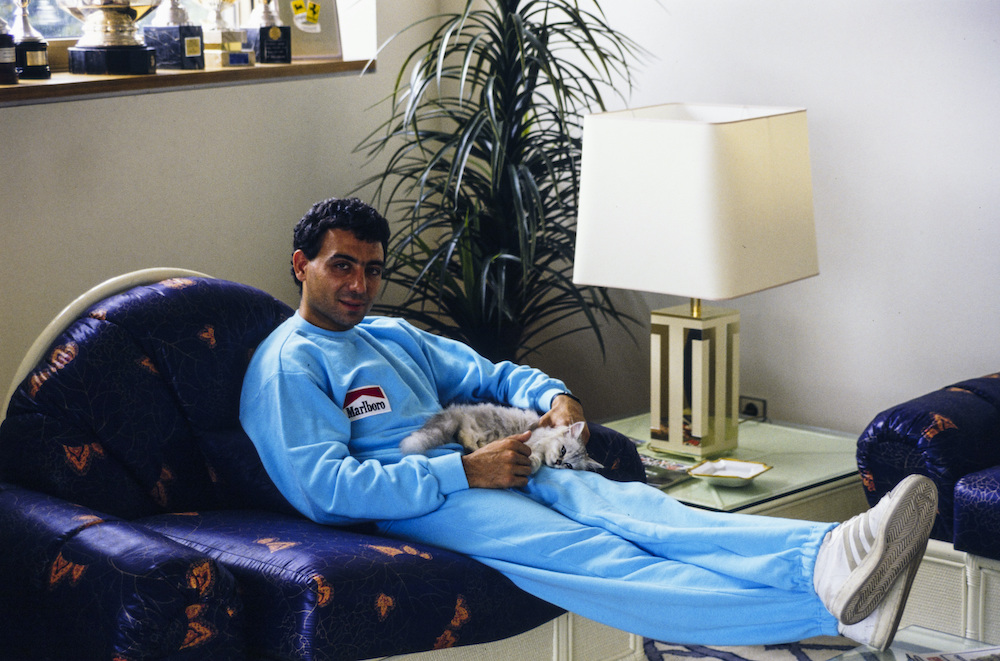
We don't have any photos of Mailbag reader Bob being kicked out of the Daytona grandstand during the podium ceremony at the 2020 Rolex 24. Nor do we have a shot of IndyCar's third manufacturer. What we do have is a pic of Michele Alboreto wearing a blue tracksuit and stroking a cat. And here it is. Ercole Colombo/Motorsport Images
Q: I was thinking about the new track records that a reader wrote in a previous Mailbag. My suggestion would be to recalibrate the records based on a criteria. For example, can we reset the records when the hybrids come? Just a thought. It might be a daft idea.
Steve
MP: I figure the track records have been set and broken through every era of innovation at the Indy 500, so let’s not disregard the records from all that came before hybridization when going hybrid is just the latest link in a chain that extends back to 1911. We didn’t reset them when the engines moved from the front to the back, or when turbos arrived, or when wings landed, so let’s keep what we’ve got.
Q: At the longer IMSA races there are commonly now four drivers per car. Not every driver gets the same time behind the wheel, however, and sometimes teams will leave an ace in the car extra-long or have one jump behind the wheel out of sequence to do last laps heroics – example being Colton Herta at Daytona. I'm old enough to recall the famous rain-sodden six-hour sports car race at Brands Hatch where Pedro Rodriguez in a Gulf Porsche won by five laps! His teammate Leo Kinnunen was put in the car only for the fewest laps allowed to qualify as a second driver. What is the minimum time behind the wheel mandated for a driver in a 24- or 12-hour race?
Anthony Jenkins, Brockville, Ontario
MP: Lots of differences here between IMSA’s Pro classes (DPi and GTD Pro) and its Pro-Am classes (LMP2, LMP3, and GTD). To start, here’s what the main rulebook says:
12.13. (SSR) Minimum Drive-Time 12.13.1. (SSR) Each Driver must individually drive the Car for a Minimum Drive-Time as listed in the Event SR or Car penalized in the Drive-Time Penalty Order Priority (Art. 12.12).
12.14. (SSR) Maximum Drive-Time 12.14.1. (SSR) Drivers must not exceed the Maximum Drive-Time of four (4) hours in any six (6) hours and/or any other limit listed in the SR.
The Event SR (sporting regulations) give the answers on how much/how little drive time must be completed to earn points. Here’s what they had for Daytona’s 24-hour race:
12.13 - Minimum Drive-Time: DPi Two (2) hours
12.13 - Minimum Drive-Time: LMP2/LMP3/GTD PRO/GTD: Four hours and thirty minutes (4:30)
12.13 - Minimum Drive-Time: GTD PRO only, Multiple Cars: Two hours and fifteen minutes (2:15) For any Silver or Bronze Driver driving two (2) Cars in the same class in a four-driver Car.
12.14 - Maximum Drive-Time: ALL: Thirteen (13) hours max. / no more than four (4) hours in any six (6) hours
12.15 - Trueman/Akin Drive-Time (Pro-Am drivers): LMP2/GTD: Four hours and thirty minutes (4:30)
And here’s what they’ve published for Sebring’s 12-hour event:
12.13 - Minimum Drive-Time: DPi: One (1) hour
12.13 - Minimum Drive-Time: LMP2/LMP3/GTD PRO/GTD: Three (3) hours
12.14 - Maximum Drive-Time: ALL: Seven (7) hours maximum / no more than four (4) hours in any six (6) hours
12.15 - Trueman/Akin Drive-Time: LMP2/GTD: Three (3) hours
Q: With the new IndyCar engine pushing car weight over 2,000 pounds, what is a realistic diet the new (2025?) chassis could go on? Would it truly be as simple as integrating the bolt on units (aeroscreen, zylon panels, hybrids, etc.) from the outset? Or are there other ways they could reduce weight? What's a realistic weight target for the new chassis – or is a one-ton IndyCar the new normal?
Michael, Halifax, Nova Scotia
MP: I plan to learn more about this when I get to sit and talk with folks at St. Petersburg. Lots of questions on the ifs and hows and whats to run through. Beyond doing a new tub with all the DW12’s add-on safety bits integrated from the outset, are there new materials that are lighter/stronger/better that might be used? A lot of time has passed since the DW12 did its first track test in August of 2011; there must be some construction options that would allow for more lightness to be incorporated into a DW25. And with the rest of the car, lighter metals are certainly an option, along with the allowance of additive manufacturing processes (aka, 3D printing).
I can’t say if many or any of these topics have been fully developed at this stage, but I hope to get a handle on as much as I can.
Q: I've followed IMSA since the late '80s, as time and TV coverage have allowed (IndyCar and F1 have always come first). I feel like I'm fairly knowledgeable about the series, but I'm struggling to understand the whole Balance of Performance thing and how it works. People sure get worked up about it, and I just don't have a good, comprehensive explanation of it.
Could you explain it quickly or point me to a resource? Thanks!
Kev in Boise
MP: I’ve long said that BoP are the three most evil letters in motor racing. (After that managerial cluster of an F1 season finale in December, I might need to add "FIA" to the list.)
To try and keep costs down and keep manufacturers involved in sports car racing, some evil bastard came up with the idea of trying to equalize all the different kinds of cars so that no one model dominated the others. That’s another way of saying someone came up with BoP to introduce the "Everybody gets a trophy" philosophy to racing to vastly reduce the possibility of losing for every manufacturer.
So if Ferrari has a new GT car that has better aerodynamics than the Porsches and Lamborghinis, or if the Cadillac prototype has more power than the Acura, a series like IMSA has its technical department establish a baseline for the class in terms of lap time, and then they give or take performance to the various models so they all achieve the same lap time.
If it’s easier to take away downforce and drag from the Ferrari to match it with the other cars, they will. And with the Cadillac, they’ll take power away to bring it in line with the Acura. Or maybe they’ll add weight to the Caddy to slow its lap times, or make it carry more downforce than is optimal.
There are plenty of other things series like IMSA, the FIA WEC, SRO Americas, and other organizations that use BoP do to dial up or dial down the cars in their major classes to try and create parity. But it almost never works, and one or more models will have the hot hand while others are dealt comparatively bad cards for the race. It makes me so thankful for IndyCar, F1, and the few remaining series that say GTFOH to BoP.
Q: It seemed like the Cadillacs faded badly after the last restart at the Daytona 24. Admittedly the No. 5 and No. 31 cars got together on that restart, but they didn't have anything for either Acura. Was it a case of the Acuras saving the best for last, a better warm(er) weather setup or a slightly better top end? Not saying that Castroneves and Taylor didn't drive nearly inch-perfect, but Derani and Duval seemed to hit a brick wall. What's your take?
Jonathan and Cleide Morris, Ventura, CA
MP: The Ganassi Cadillacs were super strong to open the race, and after they hit adversity, the Acuras sure seemed to perk up at the right time. The JDC Caddy was flying with a giant 20-second lead and appeared to have something for the finish, but Duval got pushed off course and that idea died. Derani complained about a lack of grip on the last 30-minute blast to the checkered flag. Acura played a masterful BoP game across the Roar and Rolex 24 and put it to great use with pace and reliability. Whatever they were holding in reserve for the final stanza was more than their rivals had to unleash.
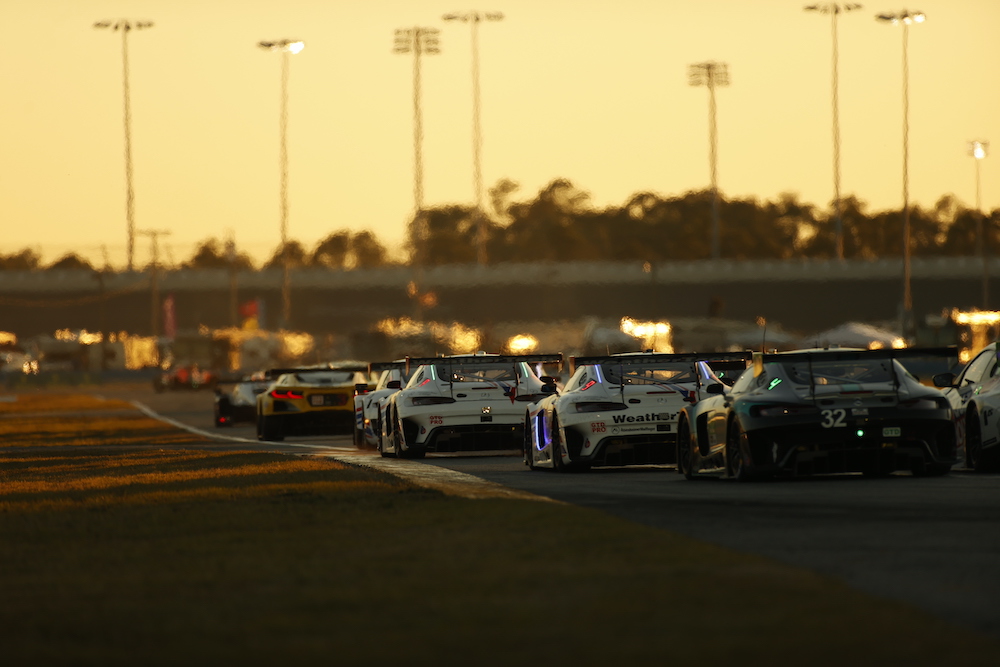
Who put the BoP in the bob-shoo-bob? I don't think anyone knows the answer to that anymore. Michael Levitt/Motorsport Images
Q: Robin considered himself a curmudgeon, but he was wrong about that. He always answered my letters, sometimes even privately. I met him at Gladstones one Saturday during a recent Long Beach GP. He was alone and waiting for others to arrive, and I could not believe my luck. I went over and struck up a conversation. Even though his health was failing, he remembered the topic of my letters, invited me to sit down, and we talked IndyCar for 20 minutes like we were old buddies. I was mad when his lunchtime friends showed up because it meant it was time for me to go. Cool dude, and I miss him.
Robin always had mostly unflattering things to say about ABC, but my fondest memories of the 500 on TV were of Paul Page, the best voice Indy ever had, and the awesome music of Delta Force theme droning in the background during the intros.
Can you talk to your buddies at NBC and tell them they need to do the right thing. Bring back The Delta Force. Best intro music ever.
Marwood Stout, Camarillo, CA
MP: I think I’m going to recommend something slightly different and see if NBC or IndyCar Radio can give us a new yearly tradition by offering a retro Indy 500 channel led by Paul with a booth filled by favorite CART, Champ Car, and IRL broadcasters. Jack Arute. Danny Sullivan. Gary Gerould. Jon Beekhuis. Marlo Klein. We’ve lost Bob Jenkins and Uncle Bobby, and I’m not sure Sam Posey is ready to travel, but heck, throw in some of your favorite old-timey radio folks to the mix, and I bet hearing today’s race called by yesterday’s voices would be something IndyCar’s tenured fans would love.
Q: Marshall, you got me a bit excited when talking about a possible harvesting paddle on the new 2023 cars. How likely is this to come to fruition? I really like the idea, as it should give more control to drivers and reward someone who can manage the braking and recharging system. Reminds me of the day when drivers could control boost in the cockpit. I'm all for drivers having more of an outcome rather than the engineers. Thoughts? Chances?
Mike in Newburgh
MP: I’ve heard a prototype steering wheel with all the usual Cosworth Electronics display goodies and buttons and clutch and shifting paddles and a harvesting paddle was shown to teams and drivers at one of the 2023 weight-and-power simulation track tests last year, and the use of the harvesting paddle has been a standard part of driver-in-the-loop simulator testing for quite a while now. I figure if they’re that far along on the concept, it must be something they have every intention of using.
Q: Interesting material about the Copper World Classic and its demise. I attended in 1995, and that included the first points-paying NASCAR truck race. The fastest of the five classes that weekend were the supermodifieds. Their track record from a few years before was 158mph+. The only thing faster at Phoenix were IndyCars. Here’s the thing. It seems to me that NASCAR doesn’t like to be involved with series where the cars are faster than the Cup cars.
I used to live near Watkins Glen, and for a few years in the '90s, the Trans Am series was a support race for the NASCAR weekend. However, they were faster around The Glen than the Cup cars and their days were numbered. The same seems to apply to their own series. Before they started to put restrictor plates on the Pavement Modifieds, they were a bit faster than the Cup cars.
What that says to me is that whereever NASCAR goes and whomever they partner with, they have to be the fastest on track show. I think this is a major factor regarding why partnering with IndyCar is not a priority and, by extension, why the Copper World didn’t mean much.
Don Hopings, Cathedral City, CA
MP: All those points make sense to me. I also don’t fault NASCAR – or any series – for behaving that way. If you’re the big headlining band, you sure as heck don’t want the opening act to steal the show before you play your set.
Q: My questions are about the new ERS and how it will be used. Will the cars start the race with a full capacitor? Will there be engine starting options other than the ERS? Will we be able to see some sort of ERS info on our TV screens (being used, state of charge, being recharged. etc.)? Can the cars be run 100% on the capacitor (yellow flag)? Is the ERS boost on/off or is it variable? I can see plenty of cool tactics and strategies available to teams and drivers. However, many will be unknown to viewers if there is not some sort "state of charge" information available to us.
Mark Hamilton, Tucson, AZ
MP: Yes, they’ll start full. I’m sure external starts will always be an option if the ERS system is empty. No clue on what you’ll be able to see since they’ve yet to do their first test with the ERS system, much less decide what info will be made available to the public. I would imagine 100-percent ERS drive will be an option. ERS power is meant to be delivered with the use of a push-to-pass button. Should be a ton of cool options available to IndyCar and its teams with ERS; all depends on what they elect to allow or disallow. The coming months of testing and the rules that follow will be fascinating to follow!
Q: Just read your piece about the IndyCar/IMSA date conflict. I’ve been going to Sebring for years and always saw upwards of a half-dozen IndyCar drivers moonlighting. Sebring is always the third Saturday of March, so what were the circumstances this year that required Texas be run on that weekend? See you at Sebring!
Jeff, Florida
MP: NBC offered IndyCar a network slot for Texas, and the series decided taking it was worth accepting and dealing with the fallout from angering IMSA to no end. It’s also placed those IndyCar teams with IMSA programs under exceptional stress, because the WeatherTech Championship has been applying significant pressure for them to ensure some of the fans’ favorite drivers are there like usual. Sadly, they’ll be disappointed. As it stands, and like most of the IndyCar drivers, I’ll need to skip Sebring in favor of covering Texas, but RACER will have Richard James there.
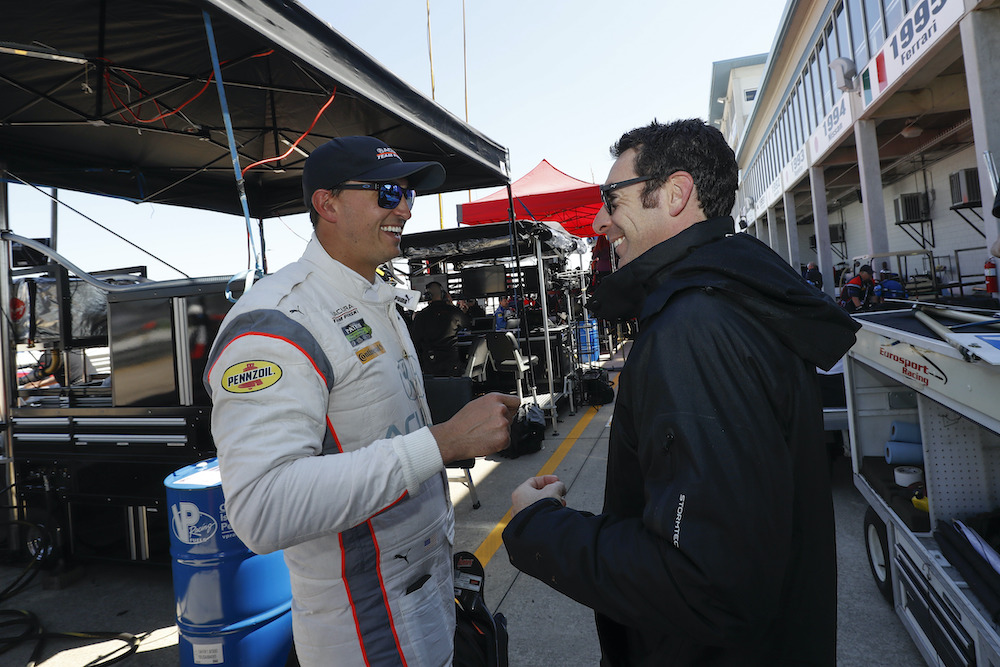
IndyCar drivers at Sebring. It was fun while it lasted. Michael Levitt/Motorsport Images
Q: Saw the article about the TV ratings for the Rolex 24 and it made me wonder: do these ratings include those who chose to stream the race on Peacock? I was one of them, as I didn't feel like switching around every few hours trying to chase the race.
Also, a comment about the Peacock coverage, which I will preface by saying that I absolutely love the amount of coverage NBC has given both IndyCar and IMSA. I wish they were still covering F1, as that is one of the reasons I stopped watching those races. However, I was rather disappointed with the audio portion of the Peacock coverage. I actually chose to listen to Radio Le Mans and muted the broadcast audio when I watched the race live, but because I am crazy and am that much of a Hinchcliffe fan, I then re-watched the race with the NBC audio on Peacock, and between the amount of dead air for the commercial breaks and all of the extra fluff pieces that didn't talk about what was happening in the race itself, I was quite appalled and how poor the product was compared to the RLM audio.
Six hours in, and you barely knew what had happened that whole time. As someone who likes watching racing because of, well, the race, and not all of the other random things, it would be nice if NBC focused a little more on what is happening. I do love the additional pieces, but there just seemed to be too many. Or more could have been saved for caution periods. Until it gets better, I'll just continue to wait for the replays to be added to YouYube so that I don't have to try to match the RLM audio with the video feed myself.
Heather Streets
MP: I wondered the same thing about the lack of streaming numbers, since we’ve seen both Nielsen TV ratings and audience sizes published, and the all-encompassing "TAD" (Total Audience Delivery) number that includes the streaming part.
It’s been a while since I listened to RLM, but I definitely know what you’re referring to here. So much effort goes into NBC’s Rolex 24 broadcast these days to appeal to a theoretical audience it believes is watching: non-IMSA fans who love nothing more than NASCAR. The one audience it doesn’t cater to? The diehards who follow sports car racing and love it more than anything else.
We’re fortunate when the old SPEED Channel hosts who covered every ALMS and Grand-Am round are in the booth, and some of the IndyCar pit reporters do a great job of learning the inner workings of endurance racing, but most of the broadcast is focused on amusing Cup fans and thinking 24 hours is way too much racing that needs to be constantly broken up with distractions.
Like most networks offer an SAP audio channel for Spanish-speaking viewers, I wonder if NBC would consider assembling a JHFTSC (Just Here For The Sports Cars) channel for future Rolex 24s. If not, my guess is IMSA Radio – and whomever’s helming it in the future – will continue being the de facto solution for the series’ biggest fans.
Q: I'd like to hear your prediction for the Indy Lights 2022 championship, Marshall. My top three would be: 1st. Christian Rasmussen; 2nd, Benjamin Pedersen; 3rd, Matthew Brabham. (No offense to other drivers.) Also, what kind of results/performances would be regarded as successful for new drivers/teams like Ernie Francis Jr., Abel Motorsports, TJ Speed Motorsports and Exclusive Autosport? I'm happy to see the series growing and flourishing.
Mitsuki Matsuura, Kanagawa, Japan
MP: Pedersen is top of my title contenders list, unless his 2021 teammate Linus Lundqvist returns in a top team. Rasmussen has been a beast so far on the first two steps of the Road to Indy, and I’d look for Robb to make a stronger impression in his second year, especially now that he’s with Andretti. His teammate McElrea has tons of potential, and then there’s old man Brabham!
Matty should school all the kids, but he has a new car and some new tracks to learn in the Dallara IL15 while a Pedersen or a Lundqvist would be at maximum attack from the outset. I wouldn’t rate anyone above Matty, yet, because we haven’t seen their ceiling compared to his, which might take a few rounds to emerge.
Francis Jr. is ridiculously talented, but he’s also the least experienced open-wheeler in the series. I’d expect Ernie to have some strong results on occasion, but nobody in their right mind would judge him on how 2022 goes. He needs a year to make mistakes and learn, and by 2023, assuming Penske Entertainment and its Race For Equality & Change sticks with him for a second season (they dropped both RFE&C programs after one season in 2021), we should get a proper glimpse of what he can do. Lastly, Kyffin Simpson and Jacob Abel could be nice rookie surprises, and I’m cheering for the rest of the drivers I didn’t list by name.
Q: How much does the average IndyCar street course race cost to operate from setup to tearing down? I also would like to know how much money a promoter needs to spend just to get IndyCar and all levels of RTI to show up. Is there a minimum amount of money a title sponsor has to bring to the table to make an event happen? I was curious about the overall cost before an event can even add off-track activities for the fans? I imagine a promoter must shell out a lot of money for insurance, too. I'm just curious to know how they break even.
One example of a typical street course event would be Long Beach that has IndyCar, IMSA WeatherTech sports cars, Super Drift Challenge, Porsche and IMSA GTP scheduled for 2022. I know that the Big Machine Music City Grand Prix paved all the roads, set up a course, took it down and had concerts booked with big name artists. Obviously, they had the budget to throw a lot of money at it to make the event successful, but I imagine some promoters have a much more limited budget than Long Beach and Nashville have to work with.
David Colquitt
MP: Those would be some fascinating numbers to learn! But like most businesses, event promoters don’t give out their budgets, sponsorship contract rates, and other private info when they’re asked.
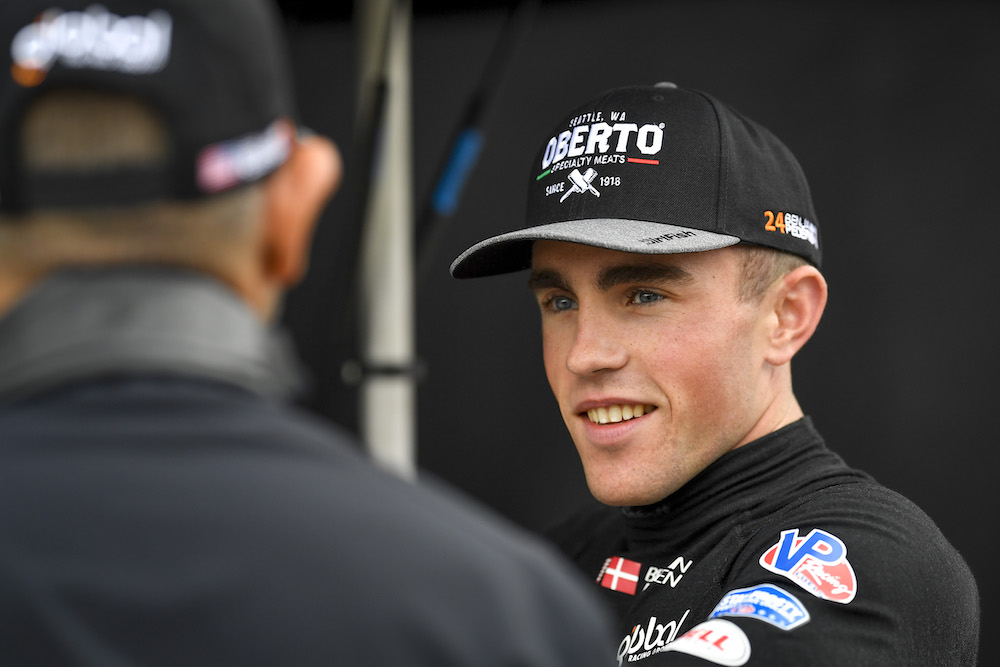
Don't be surprised if Benjamin Pedersen plays a starring role in the Indy Lights title fight. Gavin Baker/Road to Indy
Q: Watching "60 Minutes" last night and they had a segment on Hummer rollovers. One contractor seems to have developed a wearable air bag. Any racing application for air bags in general?
Also, I, like you, hope American drivers get a shot in F1 outside the tail-end Charlies and mid-pack runners. American money at highest levels may make it so. The biggest block to me seems to be NASCAR’s lock on racing sponsor bucks that drivers can take to teams, since winning does not seem to be enough to get a ride anymore.
Good luck as you prepare to slip into Robin's T/sweat shirt and do the grid run!
David Fahey
MP: The whole purpose of the HANS device is to limit forward movement of the head in an impact, so it essentially replaces the need for a front airbag. And with the cockpit head surrounds found in open-wheelers and sports cars, the need for side airbags has been removed, so I’m not seeing the need to add explosive safety devices into the mix. If NBC calls, I’ll be ready for a grid stroll.
here
.Shyam Cherupalla
MP: We had an IMSA GTP Lights car in the 1980s with an engine formed mostly from plastic, so let’s go the whole way with the chassis!
Q: While I enjoyed your response on Charlie Wiggins, and it was great to mention Joie Ray, poor Rajo Jack gets overlooked again! While Wiggins and others in the Midwest were racing the "colored circuit," Rajo Jack (real name Dewey Gatson) was racing against, and beating, white drivers on California tracks. Fortunately, there's also a good book on him, "The Brown Bullet" by Bill Poehler. At the time Joie Ray was trying to break into the AAA, there were a few other African-American racers in California as well.
Jim Thurman, Antelope Valley, CA
MP: Thanks, Jim. I’m confident that with the heavy background and education fans were given last year with the formation of the Force Indy team and the choice of Rajo Jack’s No. 99 for Myles Rowe’s car by team principal and Rajo Jack aficionado Rod Reid, he hasn’t been overlooked.
We do our best to provide answers that, in most instances, offer some insight and then move onto the next topic, rather than dive into encyclopedic answers that cover all facets of the subject in a weekly mailbag format. We certainly appreciate it when readers like yourself write in to add more to the conversation.
THE FINAL WORD
From Robin Miller's Mailbag, February 8, 2017
Q: Frequently in the Mailbag, I see you and some fans claim that political correctness as one of the reasons that IndyCar is not as popular as it was in the "glory days." I understand that guys like A.J. and Uncle Bobby could say anything they wanted to and nowadays drivers have to think about PR and sponsors, but I don’t see how that is "political correctness."
Joey
ROBIN MILLER: The rawness of what A.J. or Bobby might say was certainly part of the attraction, but their popularity was more about their bravado and talent behind the wheel in that lethal era. Tom Sneva and Paul Tracy upheld their “shoot from the hip” persona (and, ironically, both were fired by Roger Penske), but today’s drivers are most open when describing what happened in an accident (“that clown ran out of talent”) or discussing a rule change or a new venue. It’s not that there’s a lack of honest opinion. Sure, there are some robots, but maybe it’s more their style of expressing themselves. I think we all miss: “If you woulda had yer damned eyes open you’da seen the damn thing was poooshin” or possibly “Gordon Johncock drives hard but he’s a moron and doesn’t know anything about a race car and on top of that he needs to get his eyes checked.”
Presented by:
Marshall Pruett
The 2026 season marks Marshall Pruett's 40th year working in the sport. In his role today for RACER, Pruett covers open-wheel and sports car racing as a writer, reporter, photographer, and filmmaker. In his previous career, he served as a mechanic, engineer, and team manager in a variety of series, including IndyCar, IMSA, and World Challenge.
Read Marshall Pruett's articles
Latest News
Comments
Comments are disabled until you accept Social Networking Cookies. Update cookie preferences
If the dialog doesn't appear, ad-blockers are often the cause; try disabling yours or see our Social Features Support.