Peter Kirles / Motorsport Images
REWIND: Miller on how Rick Mears turned racing at Indy into an art and a science
To celebrate 40 years since Rick Mears’ first Indy 500 win in 2019, we made “Rocket Rick” and his Penske PC-6 the cover stars of RACER’s June 2019 issue.
Of course, Robin Miller supplied the words for the accompanying feature. And of course, he wasn’t content with just rehashing the life and times of Rick Ravon Mears at Indianapolis Motor Speedway. Instead, we got a deep dive into the art and science of going fast at The Speedway, and some remarkable insight into what drove Mears to his feats of near perfection.
When the issue was wrapped and away to the printers, I told Robin how much I’d enjoyed the story. The reply was typical Miller – self-effacing, and suitably colorful.
“It’s difficult to f*** up an interview with ‘The Rocket,’” he chuckled. “I just sit back, listen to the man, and hope I remembered to turn the recorder on…”
Laurence Foster, RACER Editor-in-chief
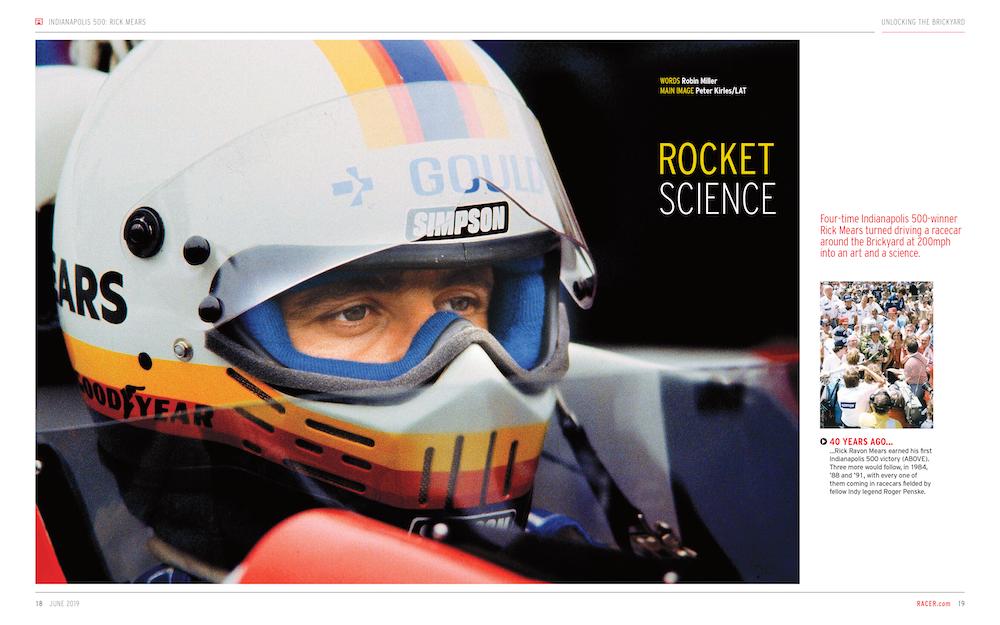
From a 75mph sprint buggy to being comfortable at 200mph in less than a year.
From eating dirt on the Baja peninsula to cutting into steaks with Roger Penske.
From trying a Formula Vee at Willow Springs to starting front row at the Indianapolis 500.
From listening on the radio to the heroics of A.J. Foyt and Al Unser to sharing their legacy.
From a kid that never dreamed of the big time to becoming one of Indy’s all-time best.
Rick Mears’ story is part fairytale, opportunity, savvy, good scouting, talent, grit, timing, desire and an American fable unlikely to happen again.
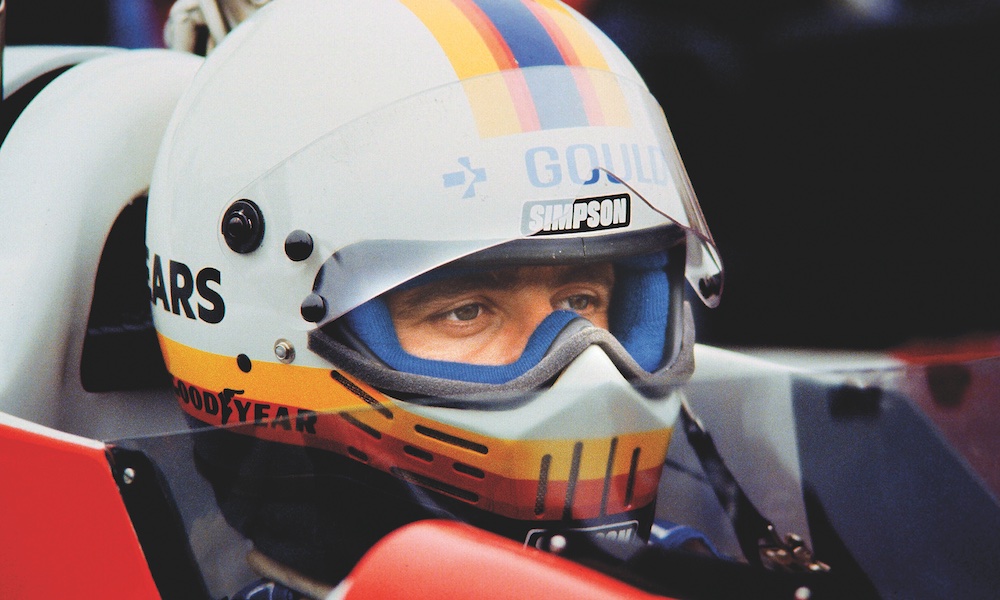
Happily running a backhoe through the week and dirt buggies at Ascot Park on weekends, Mears matriculated to an Indy car because a helmet rep for safety pioneer Bill Simpson raved about his abilities. That turned into a rehearsal at Ontario Motor Speedway, which led to a huge career that was never planned or considered.
“Like I’ve said a thousand times, my plan was no plan. I never dreamed of getting into Indy car; it was way out my league,” reflects Mears from his home in Jupiter, Fla. “I listened to it on the radio and watched a couple times on closed circuit, but I didn’t grow up around it and neither did my family.”
How Mears became an icon at Indianapolis Motor Speedway defied logic and the popular path to “The Greatest Spectacle in Racing.” But it proved that whether you came from two wheels, like Joe Leonard, or sprint cars, like A.J., Mario and Parnelli, or the desert, like Rick Ravon Mears, a real racer will figure it out.
“I remember a thought going through my head in that first race at Ontario,” says Mears, recalling his 1976 debut in Simpson’s Eagle-Offy at the California 500. “At the green everybody was scrambling, then everything settles down and I got to looking around. I see A.J, I see J.R., Johncock up there, and I say to myself, ‘You know what, they’re people just like I am. It’s a matter of getting the right opportunity and getting a little luck.’ It was a step for me in the direction that I belonged, knowing I just might be able to do this.”
Of course, as it turned out, few ever did it better at 16th & Georgetown. But how did this desert rat adapt so quickly to a turbocharged tornado and daunting speeds at the most famous race track in the world? What made him so superior in qualifying? How could he drive 16 years before ever hitting the wall at IMS? Why was he so cool in the most dangerous and pressurized race in America?
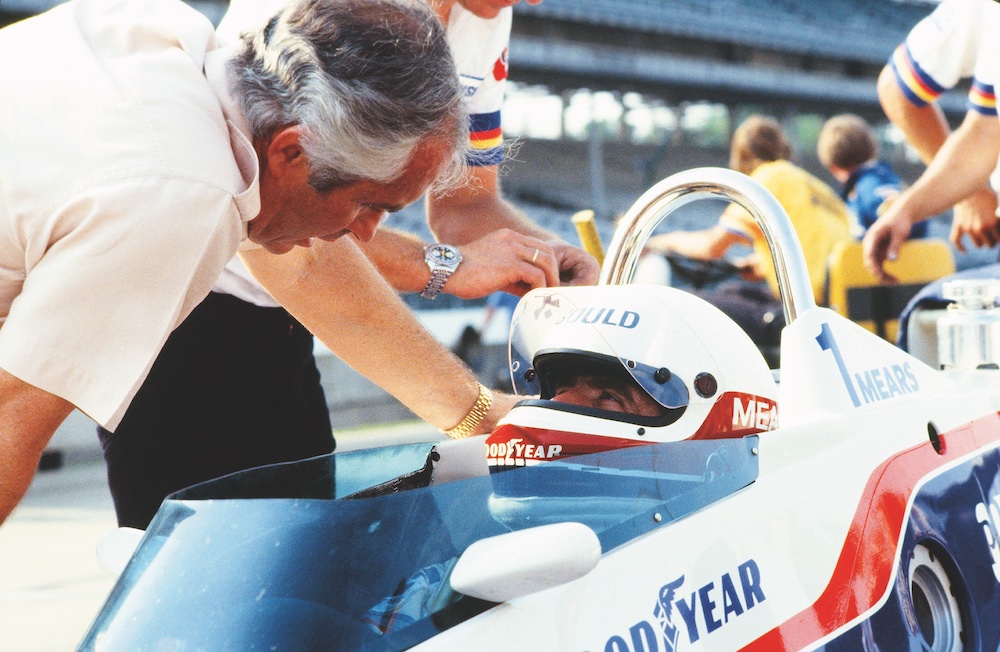
Mears made all 15 of his Indy starts with owner Roger Penske, delivering "The Captain" four victories. Peter Kirles/Motorsport Images
“The first time he drove one of our cars was at a test in Phoenix and he was able to run just as quick as (1977 national champion Tom) Sneva, and I knew right then he was going to be something special,” says Roger Penske, who was impressed watching Mears drive an old McLaren in 1977 and would run him from ’78 all the way until his retirement at the end of ’92. “He came from desert racing, but he understood shocks and roll centers and we learned a lot about aerodynamics together.
“At Indianapolis he could trim a car out and run it loose like few drivers, and I don’t have to tell you nobody raced any better at that place.”
A lot of good drivers from different disciplines failed at Indy because they couldn’t handle the speeds. Many crashed and others walked away before they did, so what made Mears such a natural at smoking into a turn three times faster than he’d ever gone in the desert?
“The Speedway’s long, fast corners just fit my natural driving style,” he replies. “I was more of a feel driver than a reflex driver, and that comes from dirt. In the desert, at Ascot, or Pikes Peak, the grip level’s always changing, sand to paved road to road with dirt, it’s constantly changing, so you’re always looking for places to find grip. All that is tuning your feel.
“Approaching a corner at Baja, you only got one time to get the most out of it, so you had to read it and figure it out. The key things that came from desert racing were focus and just car control in general. Dry desert, lake beds, snow storms, rocks, mud and cactus -- it kept you focused and concentrating because you couldn’t make a mistake or it was over.”
Winning a record six pole positions at Indianapolis required balls and brains, but spend an hour listening to Mears dissect a corner and you’ll understand why “The Rocket” excelled for four laps under the gun each May.
“Indy was my favorite track for qualifying,” he says. “It was the most satisfying thing I ever did. It was also the scariest and most difficult, which is why it was most fun. It was the little details, breaking each corner down, figuring out how to get more out of those four laps than the other guy. And how do I improve the corner next time?
“Horsepower was always the fun part, and I always argued about less downforce and more power, because the skill was in getting power to the ground without having a problem. Get off the corner faster than the other guy. That’s called driving, not guiding. That’s the fun part.
“I hear guys talking at Indy -- their car’s on top of the track, not down in the track. But if the car’s down in the track in qualifying, then there’s too much downforce. They talk about being on top of the track like it’s a problem. If I wasn’t on top, I wasn’t going fast enough. You had to get it uncomfortable, drive it with your fingertips. Drive with pressure (on the steering wheel) rather than movement. You drove it as if you were in the marbles, pushed up into the gray, hanging on the edge and riding it out, and hoping you don’t hit the wall on exit. Up on your tiptoes, where the car is free and you can’t make any sudden moves or you’ll spin -- that’s the limit. That’s qualifying at Indy.”
Yet with all his calculated risks, Mears never crashed at IMS until 1991, when his car broke and sent him into the wall, breaking his right foot. A little over a week later, he bounced back to win his fourth Indy 500, but to think about the thousands of laps he turned without losing control is almost as notable as his pole prowess.
“The big factor behind that is fear; I don’t like to crash,” he says with a laugh. “Taking a small step approach was a big thing with me. I used to get mad after somebody crashed and they said, ‘Well, he was trying; if you don’t crash, you aren’t trying.’ That’s BS. You don’t have to crash to find the limit. I never thought about it when I was running, but I looked at my stats the other day and thought, ‘Damn, that’s kinda cool; we did do something there.’”
But Mears disputes the notion he was always comfortable at the Brickyard.
“I don’t think I was ever comfortable at Indy, because it will bite you,” he explains. “I’ve never been a real confident person. I may have looked confident, but I never felt confident. People would ask, ‘How do you stay so relaxed on qualifying day?’ What do you mean? I’m upside down, I just internalized it and took a nap in the car.
“I go back to my motorcycle days on TT tracks. I could have won nine straight races, but I’d still feel like one of these guys is going to kick my ass. But I think that helped me. I always had a fear of getting beat, a fear of losing, and that’s a tool that makes you dig. Hell, I never felt like I was in the same class with A.J. or Al with four Indy 500 wins.”
Forty years ago, Mears drove into Indy’s Victory Lane for the first time in his second attempt. He did it again in 1984 and ’88, then added that fourth and final win in ’91. And he lost in 1982 by a car length. There isn’t a more humble and appreciative Indy legend than The Rocket. Nor is there a better story.
“I wasn’t doing anything to get into IndyCar; I was just having fun,” says Mears, who went from Formula Vee, to Super Vee, to a Formula 5000 test, to a USAC Champ Car in a year. “I’d drive anything, and I can see how that helped, because my name kept popping up in different places.
“But I look at it as a fairytale. I didn’t understand what that first win at Indy meant, but not because I didn’t appreciate it -- I just didn’t know what to appreciate. I didn’t know the history of Indy, I had no idea.”
And all Mears did then was make history...
ALRIGHT TURNING RIGHT
He was the “Oval Meister” and Indianapolis Motor Speedway was his kingdom, but Rick Mears had plenty of road racing skills that even got Formula 1 big cheese Bernie Ecclestone’s attention.
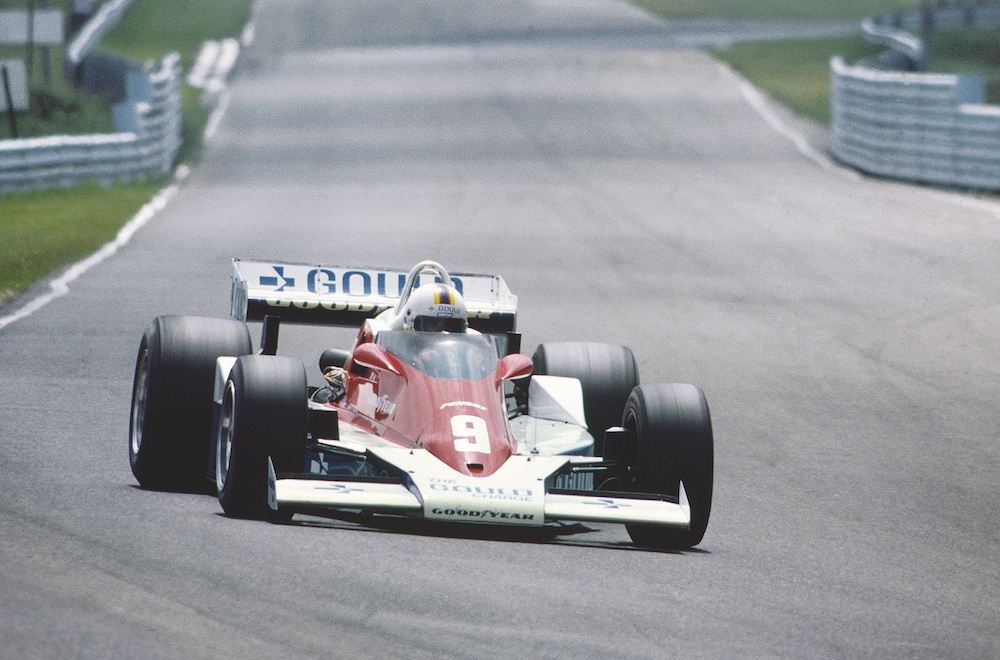
Rick Mears didn’t win a road course race in 1979, but his second-place finish at Watkins Glen proved crucial in a close-fought championship battle with fellow Penske driver Bobby Unser. Mears clinched the title by 240 points – equal to his Glen points haul... Hutson/Motorsport Images
Sure, only five of Mears’ 29 Indy car wins came while turning left and right, and four of those were prior to his devastating foot injuries in 1984 that basically cost him two years of his career, but he could road race.
“Ovals came more natural for me and the first few years I was learning,” says Mears when asked about being a road racer. “I had to work at a road course more, but I felt like we were learning. I still had a long way to go in my mind compared to where I was on an oval.
“But in ’84 I was at another level and making gains, learning from some of the road racing drivers that had come to CART. I had a good battle with Mario at Mid-Ohio and was in the process of picking up my road race game.”
Post-’84 Sanair Speedway crash, he didn’t road race again until ’86 and didn’t win again at that discipline until ’89 at Laguna Seca.
“To me, the accident was more of a media-based thing than facts about me and road courses. I got in the Penske PC-15 in ’86 and it simply didn’t work. Danny Sullivan, one of the best on road courses, would run the March and I’d continue developing PC-15, which automatically put him above me in terms of lap times. They’d say, ‘Rick is struggling with his feet.’ No, it’s the car. Then we come out with the PC-17 and I do quick times in practice at Long Beach and they ask, ‘OMG, what are you doing different?’ Nothing. I now have a car that stops and turns when I want it to.
“I did have some problems with my feet, but I just had to figure out how to drive around them. The nerve damage on my right foot, I had no response and couldn’t tap my foot, so I’d drive with my leg and foot together. It was hurting me to a small degree, so I had to treat it like turbo lag. If I wanted the throttle to be down, I’d start sooner to make sure it was at max point. I was behind, but I won the pole and race at Laguna in ’89, so that was very satisfying.”
But you only have to look at his 1980 test with Bernie Ecclestone’s Brabham F1 team to understand he was already highly regarded.
“I had an ego and I wanted to find out if they (F1 drivers) were Supermen like they thought they were. Until you drive one you never know,” says Mears, who was a half-second behind Nelson Piquet at Paul Ricard and then out-ran the soon-to-be world champion at Riverside a few months later.
“The money was going to be good if I went, but it didn’t appeal to me like IndyCar and I was already on the best team. But I got to satisfy my curiosity and prove it to myself.”
And the clincher on not heading to Europe?
“I liked having a 7-Eleven on every corner...”
Robin Miller
Robin Miller flunked out of Ball State after two quarters, but got a job stooging for Jim Hurtubise at the 1968 Indianapolis 500 when Herk's was the last roadster to ever make the race. He got hired at The Indianapolis Star a month later and talked his way into the sports department, where he began covering USAC and IndyCar racing. He got fired at The Star for being anti-Tony George, but ESPN hired him to write and do RPM2Nite. Then he went to SPEED and worked on WIND TUNNEL and SPEED REPORT. He started at RACER when SPEED folded, and went on to write for RACER.com and RACER magazine while also working for NBCSN on IndyCar telecasts.
Read Robin Miller's articles
Latest News
Comments
Comments are disabled until you accept Social Networking Cookies. Update cookie preferences
If the dialog doesn't appear, ad-blockers are often the cause; try disabling yours or see our Social Features Support.