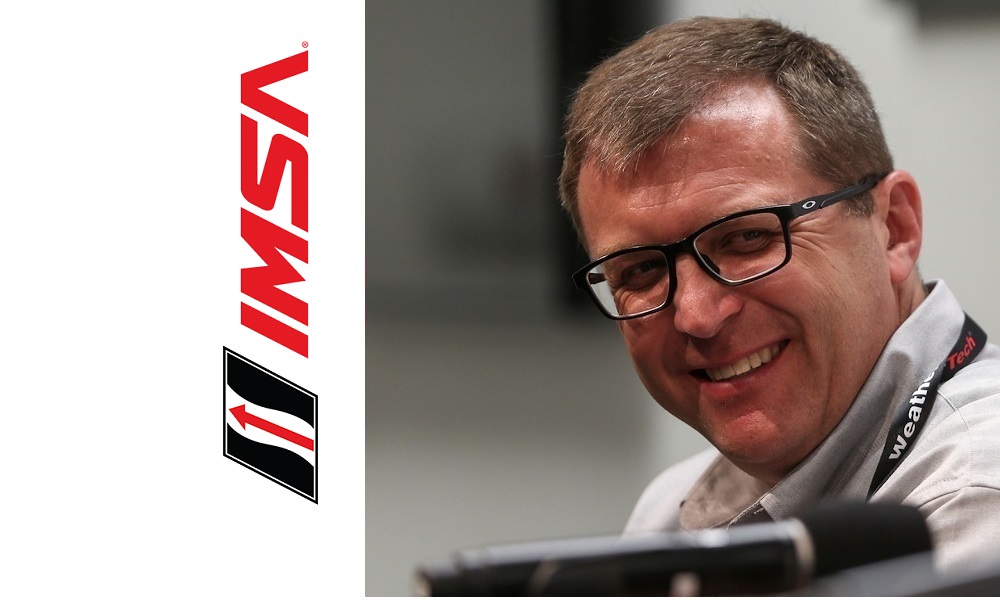
INTERVIEW: IMSA President John Doonan on LMH/LMDh and more
From rescuing convergence of the LMH and LMDh classes to establishing a new replacement class for the faltering GT Le Mans category with the upcoming shift to GTD Pro, IMSA has spent the 2021 season working to resolve a number of short-term needs for the WeatherTech SportsCar Championship.
In a wide-ranging interview with IMSA’s John Doonan, the series’ president walked RACER through some of the steps that led to harmony with the ACO -- organizers of the 24 Hours of Le Mans -- and the FIA World Endurance Championship, and other key topic afoot within the Florida-based sanctioning body.
RACER: John, we had a convergence announcement in 2020 at Daytona. We had the heads of the ACO and the WEC there, we had the heads of IMSA; you were there in a brand-new job, first event as IMSA’s president. A lot of photos were taken, a lot of handshakes and smiles, and there was hope that the work that took place before you were a part of the team would result in something immediate between the three organizations.
Here we are in July of 2021, and more than a year went by with no real progress until a new announcement arrived earlier this month. Reading through it, it comes across like a brand-new document, a brand-new accord. What was different between the first and second announcements to turn this latest effort into action?
John Doonan: Yeah, for many decades, there's been a lot of cultivating of relationships and overall cultivation going on to bring the same philosophies of Le Mans teams racing to the U.S. and U.S. teams racing to Le Mans, and to find a common set of technical rules and regulations. I think what Daytona 2020 represented was an agreement to officially plant seeds, water them, and see them grow with LMH and LMDh one day racing together.
A lot of work went in over the years before I arrived at IMSA to get us to that day. But the agreement that was reached, leading to what LMDh represents, is what the auto manufacturers in IMSA have been asking for over many years. That is, the ability to race their prototypes under the same set of technical regulations on both sides of the Atlantic. And so that was an incredibly special day to let the world know that our organizations have agreed to find a way to do that for them.

I grew up during the “heydays” of IMSA GTP cars where you had all the manufacturers battling, racing at Daytona or Le Mans, and that's what’s coming back. But on the timing from the first announcement to the most recent one, we had some outside forces beyond our control with COVID that became everyone’s priority last year. We all cancelled races and heavily adjusted our racing schedules, and that’s where a lot of the focus went instead of convergence. And our auto manufacturers also had a lot to focus on their industry and businesses that were hit hard, so that pushed convergence talks back.
Really, it took waiting until things got back to something more normal for everyone before convergence could become a priority again for all sides, and the manufacturers to come together and find some common ground on the rules and regulations. But, yes, there was a period where progress on convergence wasn’t where anyone wanted it to be.
So, I’m very thankful IMSA’s leadership, with (Chairman) Mr. (Jim) France, and (CEO) Ed Bennett entrusting me, and our technical staff, to work through the challenges with the ACO and the FIA WEC and get us to where we can make true convergence happen in the way we all imagined and ultimately through a technical solution.
RACER: The sticking point, as IMSA made clear since that Daytona press conference, was how the WEC’s LMHs would have an expected performance advantage over IMSA’s LMDh formula, and how the LMHs would have two years of racing experience in 2021 and 2022 that would be another advantage if and when they showed up to race against LMDhs at Daytona in 2023. How did that wall of concern get torn down?
JD: Well, it was really a function of the technical delegates from the manufacturers, and the technical departments at the sanctioning bodies getting us to a happy place. They were given a homework assignment to find and bring unity among the prototype brands. We've got these two platforms built to two different sets of regulations, so together, we built technical working groups from both sides, with the two-wheel-drive manufacturers and the four-wheel-drive manufacturers in separate teams. And those two technical working groups looked at both platforms, and came back to the table with solutions.
And you had representatives that agreed to do the work and come together and add a sense of unity that perhaps we've never seen in our sport, to do the right thing for all of the stakeholders, fans, and sanctioning bodies. It was truly remarkable; everybody put their hand in the middle of the huddle and said, “We're in this together, now we need to go to work.” That’s not something we really had, to that level, before this recent attempt to get convergence done and agreed upon.
The onus to have it come together was then on the technical committees, and to do the work to understand the different capabilities of the two platforms. And in a common-sense manner, determine a way that they could legitimately compete against one another. Despite the fact that they are quite a bit different. And that work was done.
I would say the major difference was a greater willingness for technical solutions to be found; it’s only natural for one side or one brand to push for whatever might be in their best interest, and maybe that slowed the process of convergence in the past. But I’m so proud of all the manufacturers, the ACO, the FIA WEC, and everybody that took part in these meetings who got us to a true solution.
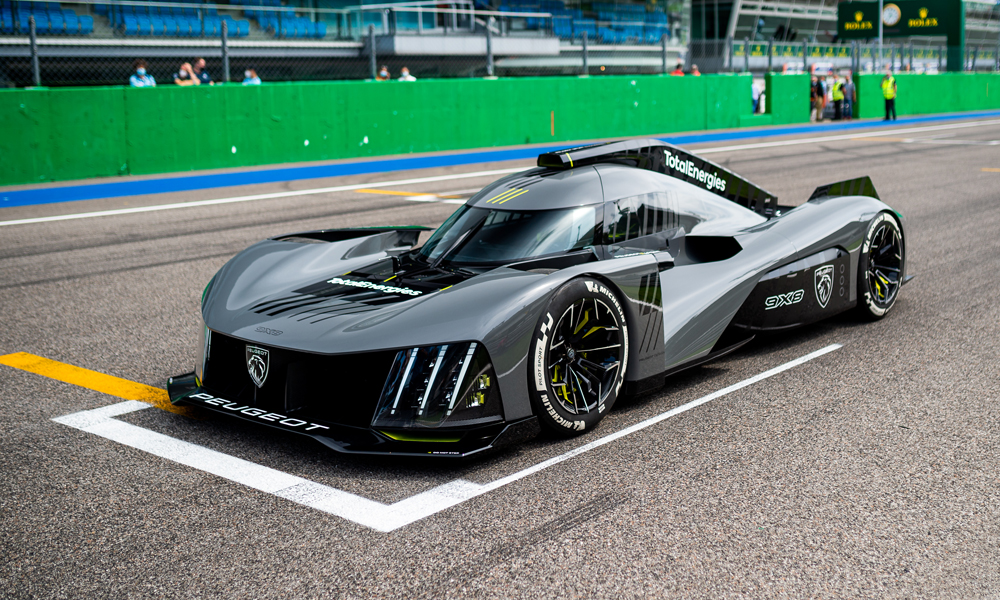
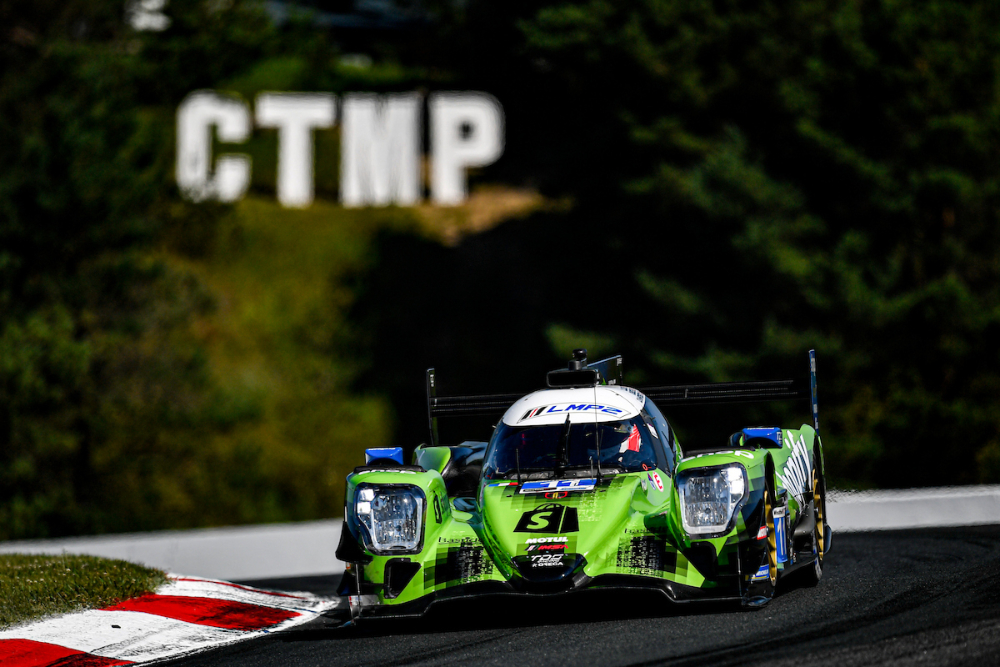
Peugeot 9X8 Hypercar has been suggested as a possible LMDh under different branding.
RACER: A cool part of convergence is it gives you the chance to talk with European manufacturers doing LMH programs to see how having the IMSA calendar being opened to them in 2023 might change or expand their plans. I know it’s still early days, but have you gotten any indication if some LMH brands might want to add part-time or full-time IMSA campaigns on top of their WEC programs?
JD: We sure hope so. I think the good news with a manufacturer like Toyota or Peugeot, they do have brand family options in North America. So it's their announcement to make if they elect to join us, but it certainly gives you hope that those folks that are interested in coming into the WeatherTech Championship have a marketing story that's going already in North America, perhaps with a different name plate from what they use in the WEC.
Time will tell but we do hope that anybody that comes in participates for a full-season effort as opposed to just picking some of the big-name races like the Rolex 24 or the 12 Hours of Sebring or Petit Le Mans. The beauty of being in the meetings together in June in Paris to get convergence over the goal line was we really got to know the people on the LMH manufacturers side, on a technical level, but also on a personal level. Some of our teams that have wanted to go compete at Le Mans, and also in WEC events, can do that, and there has been expressed to us a keen interest of WEC and Le Mans participants to come to IMSA.
Ultimately, we’ll continue to have dialogue with them about the values of competing in the WeatherTech Championship. The markets we visit and the major events that we host throughout the season are attractive, so we want to give them a chance to get with their boards of directors, both globally, as well as those in North America, and look how they can leverage and activate around racing here with IMSA.
RACER: Do you think we might see 15 to 20 prototypes in the top class in 2023 at Daytona? And if so, do you have a thought on what number might be LMH versus LMDh?
JD: That would be, perhaps, an answer to a dream for many people to see. You know that many prototypes competing in the top category is what we’re after, and that someday, we can see a field of half prototypes and half GT cars to give our fans an amazing show. But the announcements around exactly how many really depend on the manufacturers and the teams. Not only works teams, but customer teams, because I think many of the manufacturers in LMDh have talked about not only having works efforts, but someday having customer efforts and support as well.
So the potential of this is something I think beyond most everybody's dreams, or I guess, aligning with everybody's wishes over the years. Right now, based on the number of manufacturers that have committed to LMDh and the number of manufacturers that have committed to LMH, the numbers are out there. And it really depends on what each of the OEMs does in the way of customer cars. So it's hard to predict what the percentage breakdown will be. But I do hope that at some point, we can get to a place where 50 percent of the entire field in all the big events is prototype and the other 50 percent is GT. That to me is what everybody has hoped for a very long time.
RACER: Are you set on "LMDh" as the class name? It’s weird, with the lower case "h" that has no meaning, so far, that I know of. Can I submit a vote for a return of GTP?
JD: I know people ask “Why ‘LMDh?’” and obviously, the LM is for Le Mans, and the D is for Daytona, but there are ongoing discussions around the category for naming. But we're going to have to wait in terms of any announcement of changing from LMDh to anything else, if it happens at all.
As stewards of the sport, we need to make sure that when we name a category, it's crystal clear as to what it is, and we can educate not only our existing fans, but those that are prospective fans that we haven't engaged with yet. So I hope that we can come to an ultimate agreement that satisfies that goal of showing unity but also educating audiences as to exactly what the formula is all about.
RACER: Some of the biggest events the American Le Mans Series had were during the doubleheaders with IndyCar. Both series share a TV partner in NBC, so there’s a unifying party in the middle. Any thoughts on creating more open-wheel and sports car super events to go with what you two have at Long Beach and Detroit?
JD: We're obviously super proud of the long-standing relationships and sanctioning agreements we've had with Long Beach and the Detroit race. And those events certainly give a huge amount of variety to the fans, the sports car race on one day and an open-wheel race on the other. I think one of the challenges that we all run into is the having enough schedule time on a weekend to make sure that we get not only the major shows in, but many of the developmental series IMSA and IndyCar have.
We are continuing to talk about other potential venues that we could visit in the coming years. We're in long-term sanction agreements with most all of our partners in that regard. So it really comes down to what can get in on a weekend schedule. We've got a couple of pillars already in the schedule, and you never know what the future might hold.
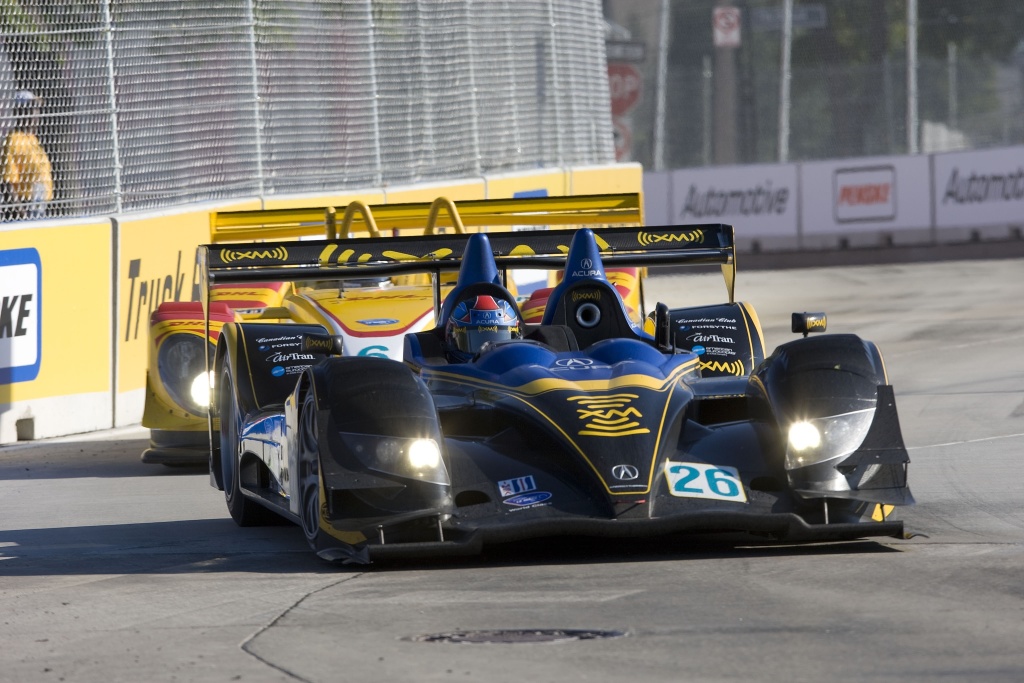
Andretti Acuras battled Penske Porsches in the ALMS, Could the good old days soon return? Richard Dole/Motorsport Images
RACER: It’s been great to see Rick Hendrick reconnect with IMSA after being away for 30-plus years as an entrant. You’ve got Andretti Autosport back in prototypes for the first time since 2008. Penske’s coming back after a short hiatus to lead Porsche’s LMDh deal. It feels like some powerhouse names are coming back or lining up for future returns; do you think we will see more join in as LMDh, and even GTD Pro next year, I imagine, start to get rolling?
JD: Earlier on when we were chatting, I was thinking about Dan Gurney, and looking back, his organization ran in sports cars, they ran in open wheel -- both IndyCar and Formula 1 -- and he was in NASCAR, Can-Am, Trans Am…you name it. How special is it when top-level organizations like that have multiple programs in several disciplines of the sport? And you use someone like Rick Hendrick, as an example, with the success that they've had in NASCAR Cup, and in sports car racing back decades ago, but now wanting to come back.
You look at an organization like BMW Team Rahal in IMSA, in IndyCar, or a Roger Penske, or Chip Ganassi and Michael Andretti, where they have successful programs in open-wheel and have these rich sports car histories, and when they see something promising here, they respond to it.
Once again, you're starting to see the best teams, the best drivers, and the best manufacturers all together in one place because of the platforms that have now been developed with LMDh and GTD Pro. Now you're giving further opportunities to introduce additional high quality teams from NASCAR, or IndyCar, who want to be part of IMSA’s future.
It's a really special time for the sport where teams are able to compete in so many different disciplines because of the capabilities that they have. Just the amount of multi-series teams that are here or are coming is something Mr. France and all the people at IMSA recognize and appreciate. When you stop and think about it, it really is an incredible set of circumstances that we're seeing now, that also shows how bright the future is for the WeatherTech Championship.
Marshall Pruett
The 2026 season marks Marshall Pruett's 40th year working in the sport. In his role today for RACER, Pruett covers open-wheel and sports car racing as a writer, reporter, photographer, and filmmaker. In his previous career, he served as a mechanic, engineer, and team manager in a variety of series, including IndyCar, IMSA, and World Challenge.
Read Marshall Pruett's articles
Latest News
Comments
Comments are disabled until you accept Social Networking Cookies. Update cookie preferences
If the dialog doesn't appear, ad-blockers are often the cause; try disabling yours or see our Social Features Support.