Image by Scott LePage/LAT
INSIGHT: A lifeline for prototype collaboration between IMSA and the ACO?
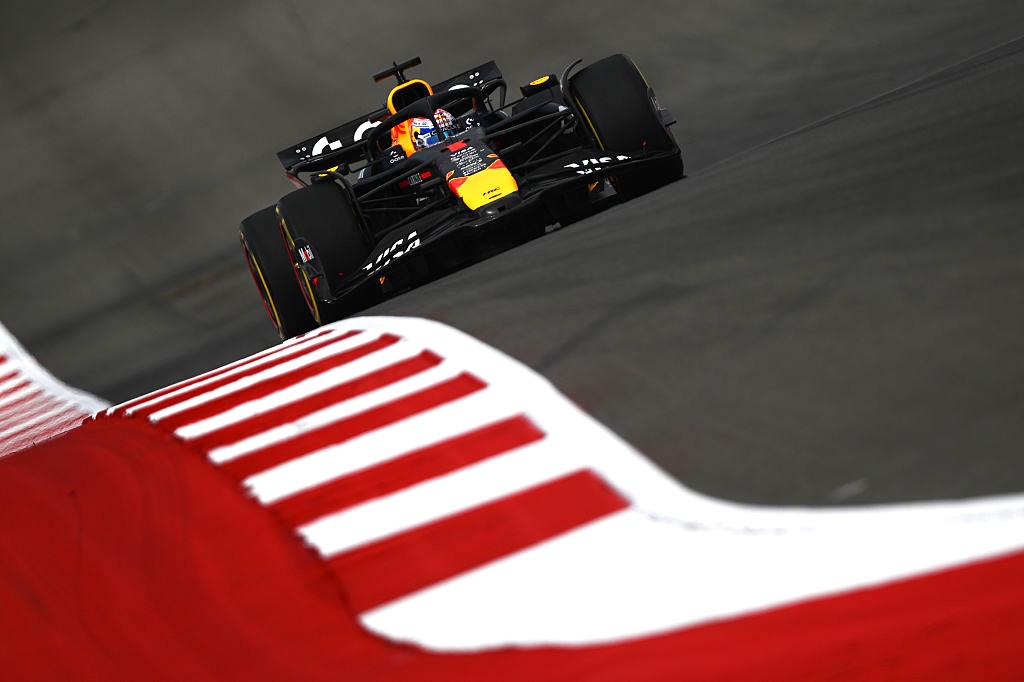
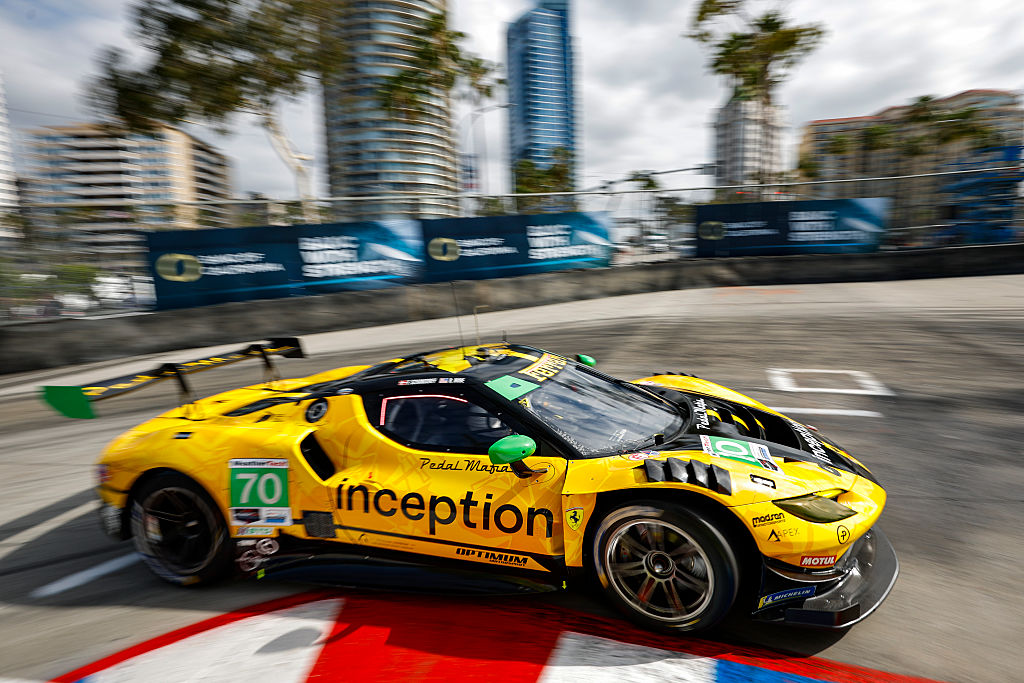
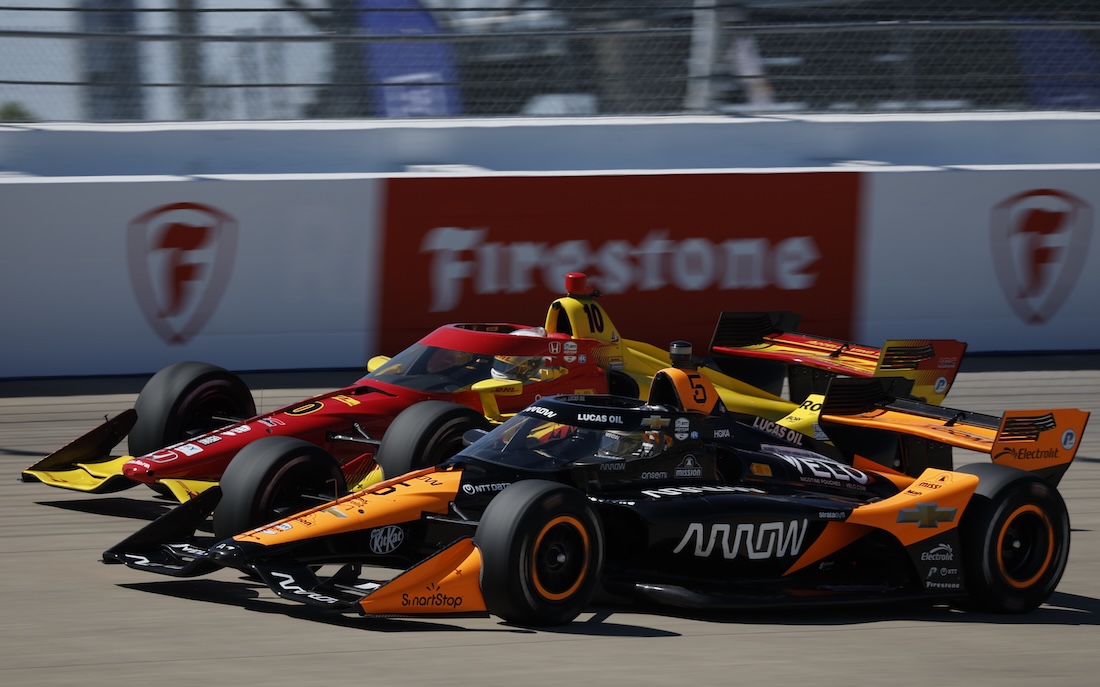
There could be hope for American and European prototype fans when the next set of regulations come to life. The FIA World Endurance Championship intends to launch its new ‘Hypercar’ formula in the latter part of 2020 as the replacement for LMP1. IMSA plans to update its DPi formula for 2022 to continue headlining the WeatherTech SportsCar Championship.
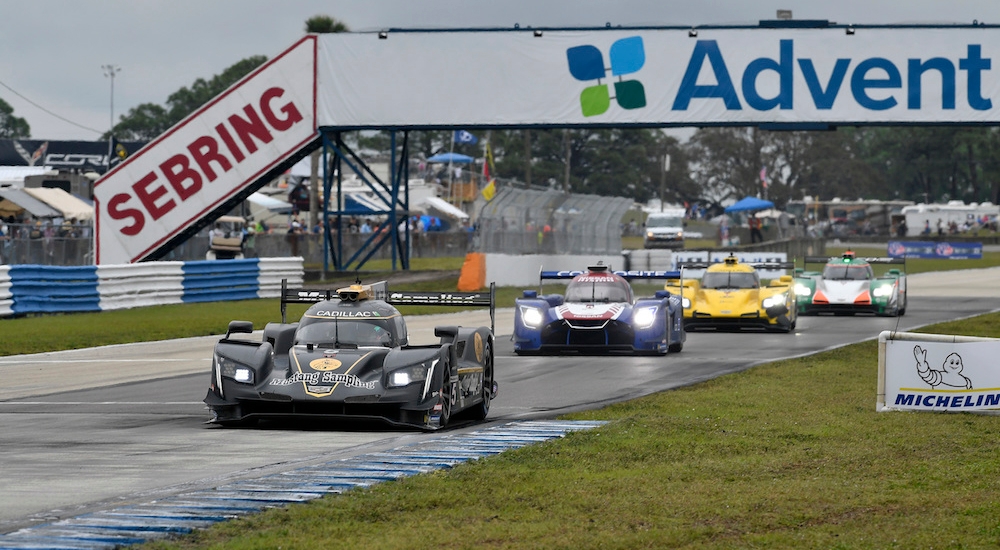
Until last weekend, there was a common belief, based on recent history, that both series would continue down diverging prototype paths where DPi 2.0 and Hypercars would never meet. From a small press briefing on Friday with the WEC’s leadership, series CEO Gerard Neveu expressed a new openness to having the future prototype share the same track, provided their performance levels were similar.
“Clearly the wish, from both sides since the beginning, [is] if we can find with each other, similar performance levels with the top categories,” Neveu said in Sebring. “It would be very helpful from the visibility and the stories and the future together. There is permanent dialogue and discussion both ways. We know the [next DPi] evolution is for January 2022. The fact is, if we can find a way to rejoin someday, this is what we are looking for. There is always a discussion going on.”
Compared to the WEC’s initial openness to the original DPi formula competing at Le Mans, which was slowly walked back to the point of being banned from the legendary 24-hour race and all WEC rounds, IMSA was caught off-guard – in a positive way – by the WEC’s warmer overtures in Sebring.
“It was a surprise,” IMSA president Scott Atherton told RACER. “I was not in the room when those words were spoken. Thankfully, we had a couple people from our communications team that were, because I immediately was getting inquiries from reporters to get a response. For sure, it's a positive. I think the devil's in the details, as always.”
With DPi 2.0 three years away, IMSA’s technical team has a long lead time ahead before solid regulations are needed by manufacturers. It means that while the WEC is close to locking down its regulations for 2020 Hypercar, IMSA is in no rush to define its next formula, which leaves a significant question mark in place on where the two prototype philosophies will land.
“The technical regulations of our next-generation top category have yet to be confirmed,” Atherton said. “We are in a very comprehensive process right now of fact finding that involves a very detailed questionnaire that went to our existing DPi competitors, our manufacturer partners, and our constructor partners, as well as others who are not currently active but have expressed interest.”
Drawing from the tone and language used by Neveu at Sebring, the WEC’s Hypercar formula is not expected to be adopted by IMSA as a replacement for DPi. When the Hypercar concept was originally revealed, there was hope for the WeatherTech Championship to join in and use the WEC’s formula, therefore uniting both series with a single top-tier prototype class.
Due to the extreme annual expenses projected for Hypercar – estimated to be triple the cost of a similar DPi effort – that were revealed in 2018, IMSA appeared bound to its P2-based manufacturer-branded cars for 2022.
Atherton says it’s still too soon to make that call, and with a tweak to the Hypercar rules earlier this month that will allow production-based Hyper cars to compete alongside racing-bred prototypes wearing Hypercar bodywork, IMSA will continue to monitor the formula as an option to consider.
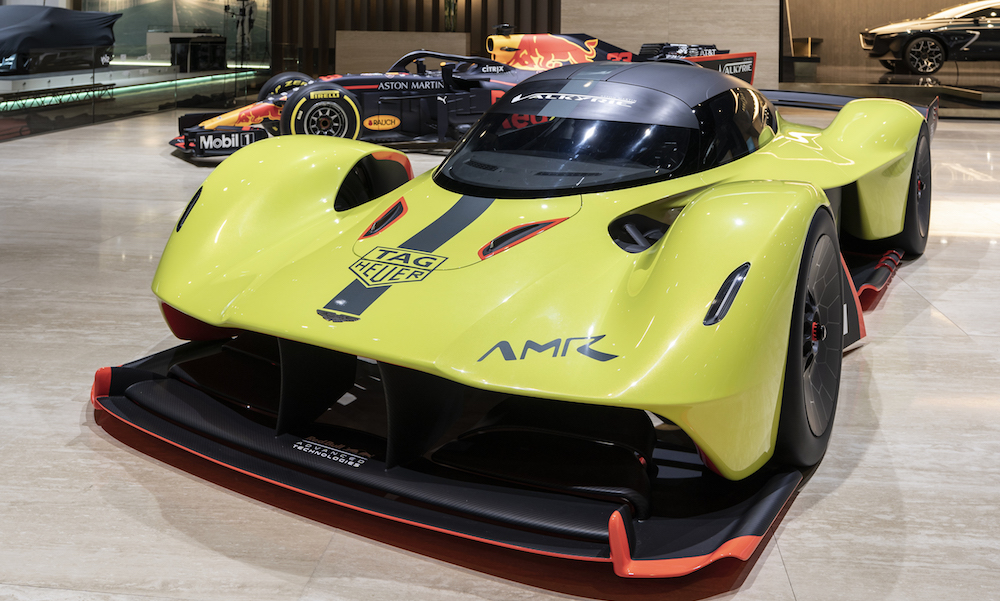
Stakeholders on both sides of the Atlantic are waiting to see what the final version of the Hypercar regulations might look like. Image by Aston Martin.
“Should those [Hypercar] regulations result in a [IMSA] car that is eligible to compete at Le Mans, it can only be described as a positive,” he said. “I won't speak on behalf of everyone within the organization, but on a personal level, I believe, based on the current state of the Hypercar and related regulations, i.e. the addition of allowing road car technology to be included in the mix, that perhaps there's still enough flexibility and enough of a desire by all involved that potentially – with a capital P – there could be a global solution. That may be wildly optimistic and naive, but I still hold out the hope.”
Whether Neveu’s unity-minded comments regarding Hypercars and next-gen DPis playing together were born from a place of genuine interest to see it happen, or were throw-away lines with no hope of coming to fruition, will be known in the near future. Either way, IMSA hopes the doors remain open to explore the topic.
“I would rank it as one of the more positive, and constructive developments of recent times,” Atherton said. “I think it also is a tangible example of what I've been saying all along, which is the relationship between IMSA and the ACO is strong, and has been strong. The dialogue continues to be meaningful and respectful; we're all seeking a next generation example that fits the profile of what each other needs for the sustainability, and growth, and prosperity of their respective championships. In a perfect world, that would be a one in the same example.
“If that's not an option, but their solution, and our solution can play well together, then that's a great second place. That's a great consolation prize. When you introduce the Balance of Performance element, I won't say that that means you can race anything and match it up. Because that, obviously, isn't accurate. But, if you look at the prescribed performance that's now been announced for a [Hypercar] lap time at Le Mans of being three minutes and 30 seconds ... I'm not the engineer in the room, but I believe others who have done simulations based on our current [DPi] platform, the performance of that car is right there.”
Continuing on the theme, Atherton believes IMSA would extend the same invitation to the WEC’s Hypercars to compete in the WeatherTech Championship, provided the cars could be aligned with reasonable BoP adjustments.
“No doubt some of our DPi competitors would embrace the opportunity to go to Le Mans aggressively and eagerly,” he said. “For sure, there will be examples of teams running at Le Mans, or within the World Endurance Championship if given an opportunity with their equipment to race at Daytona, Sebring, or anywhere in the WeatherTech Championship, it would be equally appealing. Those are all positives, but as I said before, and not to be repetitive, it's easy to talk about it.
“It is exceedingly difficult to deploy it at this level. The sophistication of the rules and regulations, and the work involved in creating a level playing field with diverse examples of technology, without going into too much detail, I'll just say it's much easier said than done.”
Although the WEC’s comments have been well-received, they will not lead IMSA to modify its approach toward creating the 2022 rules.
“We are absolutely staying the course on the process that we have been on, and have not altered,” Atherton said. “The conversations we had over the weekends with [the WEC], they were productive, and they were very enlightening in terms of us hearing some of the background of what led them to make the most recent changes that they have.
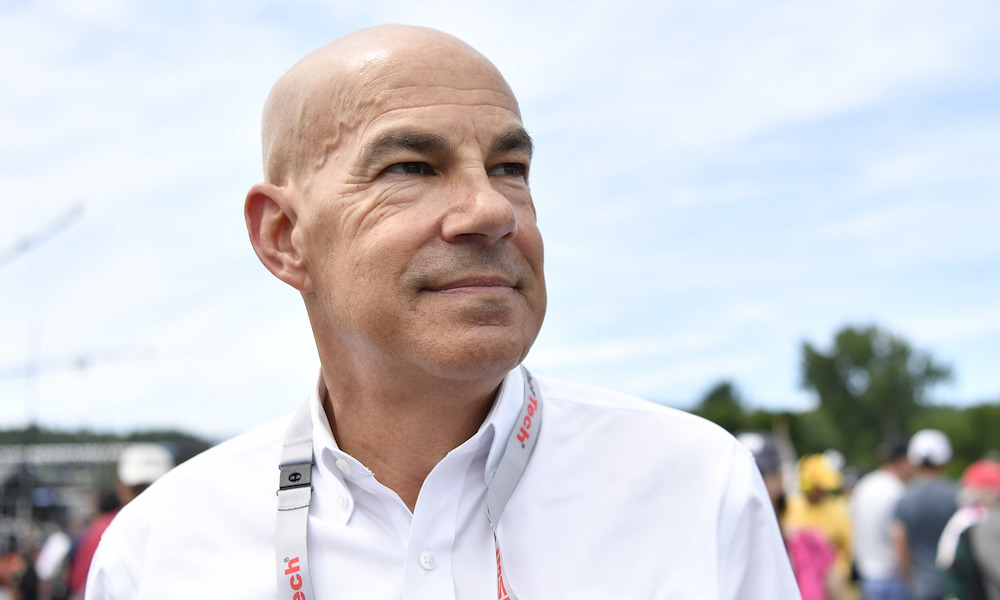
Atherton is cautiously optimistic about the ACO's overtures. Image by Dole/LAT.
“In turn, we gave them a very transparent update on where our process stands, which is being led by Simon Hodgson. But, we came away from this weekend with no alteration in our process. It doesn't mean that we're casting a blind eye to what could potentially evolve out of the past weekend's conversation. But, candidly, and with all respect, we have a commitment to our stakeholders to follow through on the plan that has been communicated to them.”
Just as the WEC has used the creative input from potential Hypercar manufacturers while forming its 2020 rules, IMSA has done the same with its four auto brands – and new prospects – for DPi 2.0.
“Really, as has been the case in the past, they are largely the architects,” Atherton said. “They being our stakeholders that are actively invested in this platform. They, in concert with IMSA, become the architects of the next generation regulations. Now, there will come a time when we, IMSA, will have to make the final decisions of what gets put in writing, and what gets left behind.
“Because, as you would expect when you have multiple responses, there are some common threads, but there's also some unique positions throughout that, some of which are in conflict with each other. But, I think the plan that IMSA is processing through right now is another outstanding example of how we get to an end result that is similar, if not even an improved example of what delivered the DPi that we know today.”
Atherton provided RACER with its most recent update on incorporating hybrid-electric power units to DPi 2.0 in a conversation captured in January of 2018. Since then, he confirms the likelihood of introducing electrification has only increased.
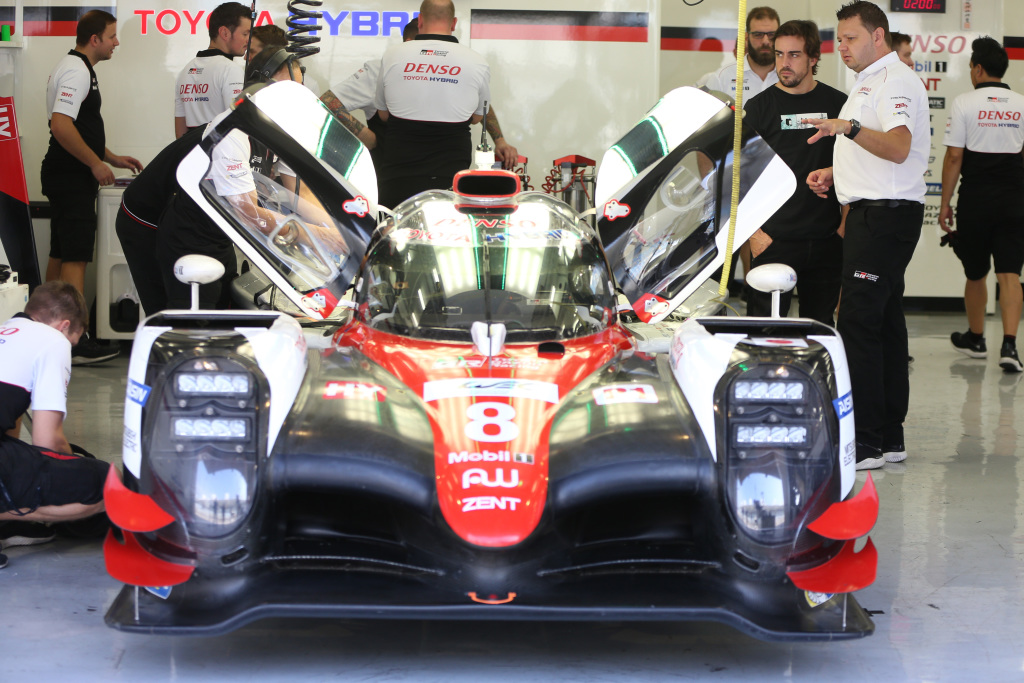
'Extreme' hybrid Prototypes like Toyota's may not be viable for IMSA, but Atherton feels some level of the technology could be. Image by JEP/LAT.
“Enthusiasm is building, and hybridization can take many, many different forms,” he said. “From a very mild, relatively low-power example all the way to the extreme. I would say today's benchmark extreme is what's found in the Toyota LMP1, which has, unfortunately, proven to be an unsustainable level of technology. That would certainly be the case for a continental championship. But, even I would say now knowing what we know today, it's not sustainable even at a global world championship level.
“But, when you think about a next generation technical regulation that will make its racing debut in January 2022 -- and here we are in March of '19 -- you can imagine at the pace the industry is evolving right now, and the embrace of electrification within the consumer products that are coming to market... Look no further than what was featured in Detroit, and what was featured recently in Geneva, it would be the exception.
“In fact, I'll say rare exception now, that manufacturers would not say that some form of hybridization must be a part of their future motorsports programs. Our mandate is to incorporate that level of technology in a form that's relevant, tightly controlled, both in terms of evolution, power, and, therefore, costs associated with it. But, it's relevant and meaningful. That's a very difficult balance to hit, but we're confident we can do it.”
Marshall Pruett
The 2026 season marks Marshall Pruett's 40th year working in the sport. In his role today for RACER, Pruett covers open-wheel and sports car racing as a writer, reporter, photographer, and filmmaker. In his previous career, he served as a mechanic, engineer, and team manager in a variety of series, including IndyCar, IMSA, and World Challenge.
Read Marshall Pruett's articles
Latest News
Comments
Comments are disabled until you accept Social Networking Cookies. Update cookie preferences
If the dialog doesn't appear, ad-blockers are often the cause; try disabling yours or see our Social Features Support.