Images courtesy Fox Sports
Interview: Mike Joy's four-plus decades at Daytona
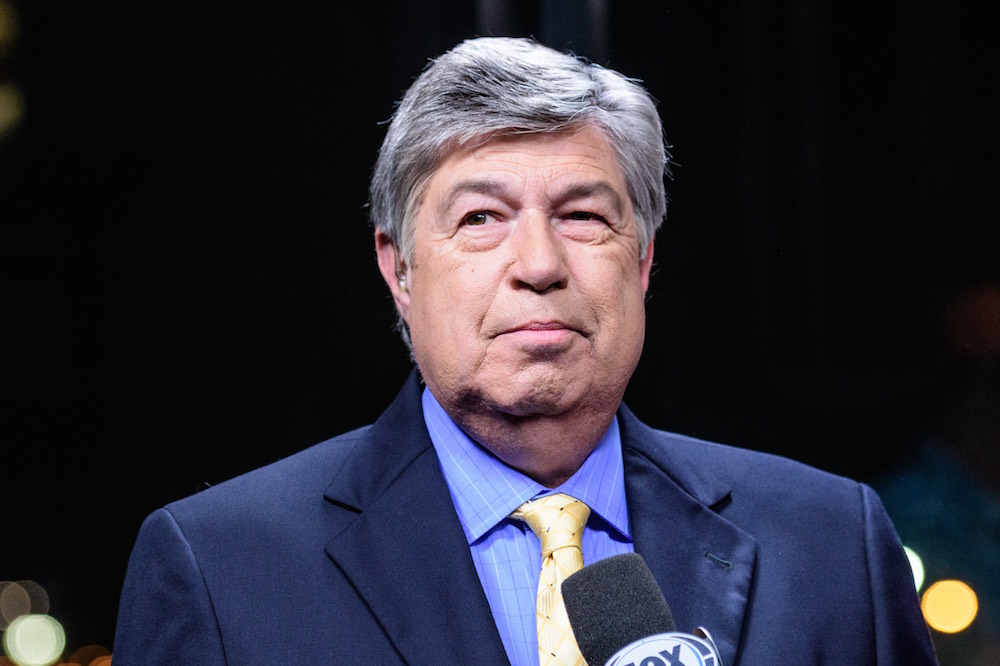
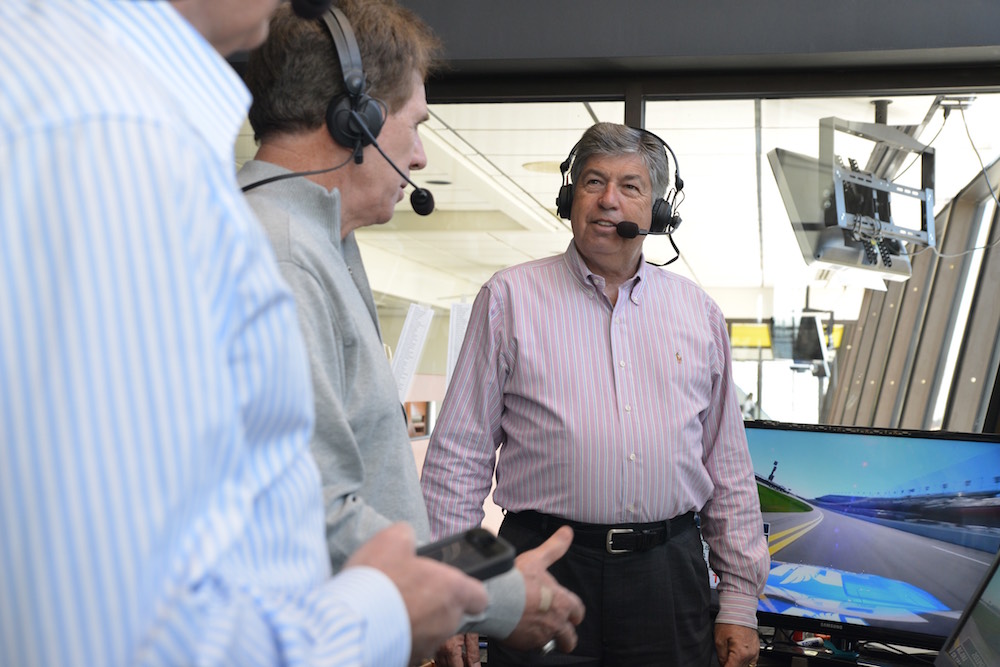
The voice of Mike Joy has become synonymous with the Daytona 500.
As the lead race announcer for Fox Sports, the 2019 NASCAR season will be his 19th consecutive year with the network. But even more impressively, Joy is about to make his 40th live call of the Daytona 500 when he steps into the broadcast booth alongside Jeff Gordon and Darrell Waltrip on Feb. 17.
Joy worked with MRN from 1977-83 when he was a turn announcer and anchor before turning to play-by-play action and pit reporting with CBS. The only time he wasn’t a part of the live Daytona 500 broadcast was the three years NBC carried the event (2002, 2004, 2006). But since 2007 it's Joy who has had the final call as drivers clinch the win in the Great American Race.
Ahead of what will be his 44th Daytona Speedweeks, Joy gave an extensive interview to RACER.
Q: Can you even put into words what it's meant to be involved in this race for so long?
Mike Joy: (Laughs) Not really. I think it’s a combination of love of the sport, of perhaps some skill. But television is a business and in any big business there are a lot of sometimes conflicting agendas, so to be able to say through MRN, CBS and Fox that I’ve been able to call this race for that many years, that’s kind of shocking even to me. But I’m very grateful because it has always been a lot of fun and everybody asks, ‘What’s your favorite Daytona 500?’ and I always say it’s the next one.
Q: There is that standard question -- what's your favorite 500 -- but I guess it’s a cheap way out, huh?
MJ: There are some that stand out. ’76, I was in the Wood Brothers pit when those cars (David Pearson and Richard Petty) spun off Turn 4 and listening to Ken Squier over the radio. Being high atop a scaffold in Turn 2 when Cale [Yarborough] and Donnie [Allison] crashed in ’79. And then [Dale] Earnhardt’s win in ’98 stands out. Everybody remembers the call, which is one thing -- but we had a great CBS crew and they worked all week coming up with things that Dale had and had not done at Daytona, so that at 20 laps to go I could say however many times Dale’s led the race at this point, and of course he was leading then. One of the neatest facts, there were only three individual laps of that race that Dale had never led and it was two lap numbers in the 90s and of course, Lap 200.
Other than that, he’d led every single lap of the race at least once. Which none of us knew going into that. So, to be able to have that play out the way it did was a great, great group effort. The thing that’s most memorable, which was Earnhardt pulling down pit road afterward to that giant receiving line, that was Jim Cornell our assistant director, who is in charge of getting us into and out of commercial break, and he told our producer, ‘Something is happening here, don’t go to break.’ We stayed, which cost the network a good bit of money, and watched Earnhardt come down and be greeted by all those crew men. Pretty unique. I don’t recall that before or since, so that was very, very special.
Q: You’ve done a little bit of everything in Daytona, but when you first started working the race did you realize how big it was then as it is now?
MJ: I think it was bigger. I think it was bigger because aside from the Super Bowl, sporting events don’t have the share of voice in the American consciousness that they did then. There were not many big February events on television. The NBA All-Star Game. The Daytona 500. That was about it. So I think it was easier for America to get excited about the Daytona 500 then whereas today, it’s another big event but people have so many big events in their lives and they have so many media choices that I think back then the event was bigger. I think the heroes were a little larger, larger than life let’s say, and every athlete’s life wasn’t picked apart every microsecond on social media or with every word they said or wrote or tweeted.
Q: Is there a common thought that comes to mind when it’s time for the Daytona 500?
MJ: I think the challenges for us as broadcasters is pretty much the same. Mainly it’s getting to know new drivers and their stories and their history, and finding ways to make people care about them. That’s always the challenge. The biggest single challenge for us is making sure we have the right drivers, the right crew chiefs, the right people in the right car, and the hardest thing to do is have a team where the car doesn’t change but the driver does. I think I spent half of last season putting Ryan Blaney in the 21 just because the car didn’t change and that’s where I was used to seeing him. So things like that are definitely a challenge.
And of course, unlike any other sport we start right off the bat with our biggest event. The way we used to do it with CBS back in the ‘90s, during practice Buddy Baker and I would hop in a car and go out and sit in the infield in Turn 3 and a car would go by and we’d name the driver. He would or I would just to keep double checking each other that we knew who was in what car. Now with Fox we’re watching practice but we’re also broadcasting practice, so the prep work is a little different and I just hope by Sunday we’ve got everybody in the right place.
Q: How do you balance telling the story of starting a new season but giving the prestige of the Daytona 500 attention?
MJ: When you watch the Super Bowl I don’t think Jim [Nantz] and Tony [Romo] are going to spend a whole lot of time talking about who caught a pass or dropped a pass in Week 13. It stands alone as the ultimate event of the session. Even though our season runs in reverse, I think we still have that same priority. During the 500 telecast you’re going to hear a lot more about what drivers have done in the 500 than you’re going to hear about championships won or Championship 4 or whether somebody is going to be good at Atlanta. I think we have two main goals, one is to tell the story of the biggest race of the year and the players in it, and second, because it is the biggest race of the year, to get a large percentage of the viewers to tune in next week and follow this series. To do that, you have to make them care about the drivers or the owners, the crew chiefs, the teams, the new cars. But mainly it’s about the drivers, and if I can get you interested in a driver there’s a high probability you will tune in next week and the week after that.
Q: When you’re calling a race are you focused on what you’re seeing on the monitor or are you bringing attention to what you see outside the window?
MJ: Artie Kempner is a great director and sometimes he’ll get in my ear and lead me, ‘We’re going to the battle for seventh,’ or ‘We’re going to so and so,’ but usually he’s relying on us because he can’t see the track, he can see the output of all of his cameras but he can’t see the racetrack. We’re mainly looking at the racetrack more so than we’re looking at the monitors. Unless there are graphics that need to be read or if something big happens. The booth probably drives the coverage more than the production truck, except when we get into features or we get into pit stops or we start moving the coverage around between battles. Usually it’s us looking at the track, and I’m on a talkback with (producer) Barry Landis and we have spotters on the roof who are not tied to cameras talking about what battles they’re seeing of interest that make a good story.
Q: You’ve made excellent calls over the years,. How much are you preparing ahead of time or does it come naturally in the moment?
MJ: You start thinking about that with 20 or maybe 10 laps to go and how you would frame it if Driver A or Driver B were leading. Now, if it’s a side-by-side battle like Denny Hamlin and Martin Truex (in 2016) you don’t have to. You call the finish. You call the action. It comes together in the last couple of laps when you know who’s out front. I knew what I’d say if Aric Almirola came to the line ahead of Austin Dillon. Then all hell breaks loose on the backstretch and suddenly it’s all different and all of 1998 just came back in the moment because I knew no matter what happened Artie’s cameras would be on the 3 as Austin Dillon brought it to the line. I guess one great ability in doing this, not just for me but anybody, is to switch gears on the fly and change the story, and that’s one reason I so love calling auto racing.
In football on a play from scrimmage there’s only three things that can happen: Somebody runs with the ball or somebody throws the ball or somebody drops the ball. And there’s only one ball. In the Daytona 500 there’s 40 of them bouncing around out there and the story can change from one to another in a millisecond. That makes it a great challenge but it makes it very, very satisfying at the end of the day when you feel like you’ve told their story.
Q: When going into a new season what do you look forward to covering or talking about?
MJ: One of the things we get really excited about is having a lot of question marks. How will Jimmie Johnson do? How will Chad Knaus do? Will the new Mustang be competitive right away? Have the Chevy teams equaled the Toyotas and the Fords in terms of development? What about the new aero package? What about the new horsepower package? What about some of these new drivers? What about drivers who changed rides? Can Martin Truex and Cole Pearn keep their success now that they’re part of the Joe Gibbs machine? There’s just so many stories and so many question marks, and the great thing is we’ve got 18 weeks to work all that out before we have to hand it off to NBC and they race for the championship. I think the more of those questions we have the better chance we’re going to have of a really interesting first half of the season. And boy, this year we’ve got plenty of question marks.
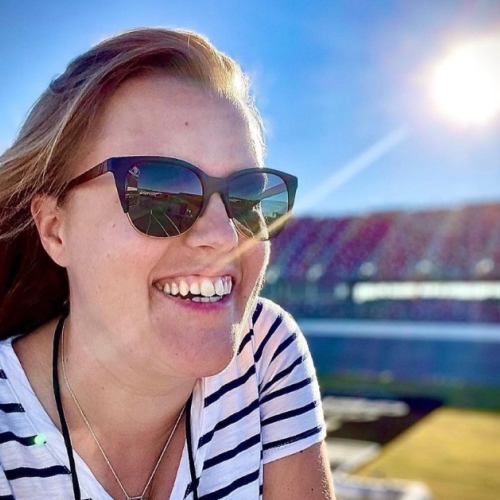
Kelly Crandall
Kelly has been on the NASCAR beat full-time since 2013, and joined RACER as chief NASCAR writer in 2017. Her work has also appeared in NASCAR.com, the NASCAR Illustrated magazine, and NBC Sports. A corporate communications graduate from Central Penn College, Crandall is a two-time George Cunningham Writer of the Year recipient from the National Motorsports Press Association.
Read Kelly Crandall's articles
Latest News
Comments
Comments are disabled until you accept Social Networking Cookies. Update cookie preferences
If the dialog doesn't appear, ad-blockers are often the cause; try disabling yours or see our Social Features Support.