Monday SCCA Runoffs notebook
News and notes from the SCCA National Championship Runoffs, set for Sept. 25-Oct. 1 at the Indianapolis Motor Speedway where nearly 1,000 drivers will compete for 28 national championships.
Connor Solis is looking for glory
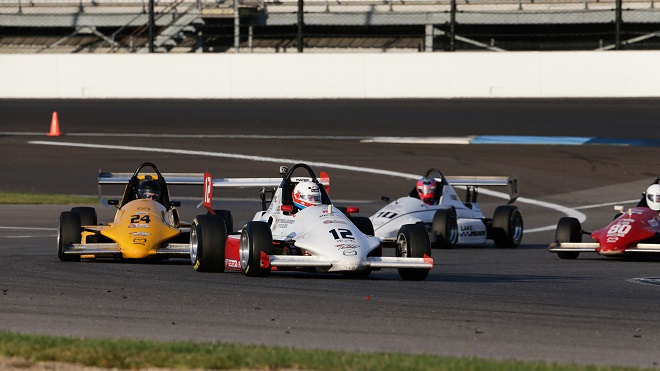
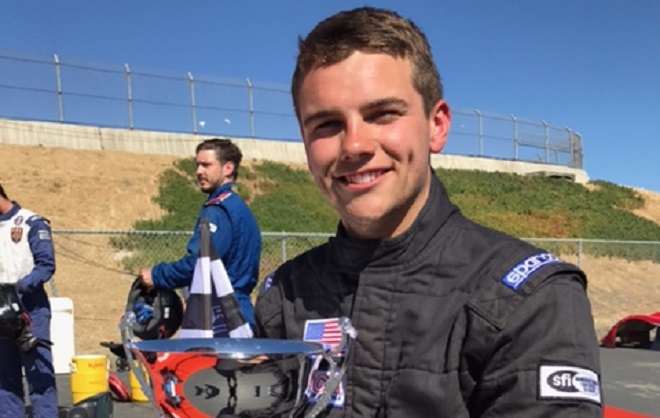
At age 20, Connor Solis of Prunedale, Calif., is looking to make his mark in SCCA history at this year's 54th SCCA National Championship Runoffs, being held this week at Indianapolis Motor Speedway. The young racer is looking for a championship to cap off his rookie year in SCCA Club Racing.
"This is actually my first year in Spec Racer Ford and in SCCA racing," Connor says. "It's been a very good year for me. I've got a really good crew backing me up."
While he has earned respect in his home region, Connor has not yet raced at the national level.
"I haven't raced against any of the past champions," he admits, "but I'm looking forward to that at the Runoffs. I haven't given my full potential yet, to show who I really am. My goals are: top five would be good, top three would be great, but I want to win."
Related Stories
"We took the last two races off to prep for the Runoffs," Connor says. "The car's already on its way to Indianapolis. I'm looking to become the national champion – I can't think of anything better than that."
Of course, Connor's racing career didn't start this year. He's been racing karts since age five, and collected 13 karting championships before transitioning to SCCA. And he's still racing karts alongside his SRF campaign.
"Kart racing keeps me sharp," he says.
For the future, Connor hopes to move up to IMSA or Pirelli World Challenge racing.
"It's not just showing who I am on the track," Connor says, "it's off track, too, showing that I can promote in an overall way."
The SRF national championship race is scheduled for Friday, Sept. 29 at 10:40 a.m. Eastern time. You can watch the race live online at www.SCCA.com.
Record turnout for the Runoffs
The 54th SCCA National Championship Runoffs has already made the record books with over 1,000 entries before the event. As of the beginning of the event, no-shows and dropouts have whittled that number to 982, but that's still enough to easily beat the old record of 709 starters set in 2004 at Mid-Ohio.
The most popular classes include Spec Racer Ford 3 at 101 cars, Spec Miata at 88 cars, Super Touring Light at 58 cars, and Spec Racer Ford at 50 cars. The road course at Indianapolis can accommodate up to 72 cars on course according to SCCA rules, so both Spec Racer Ford 3 and Spec Miata competitors will have to pay special attention to qualifying.
SCCA has decided that the top 60 qualifiers will advance directly to the championship race, while any additional qualifiers will compete in a special qualifying race on Thursday evening. The top-12 finishers of the qualifying race will advance to the last 12 grid positions for the championship race.
For a facility of the size of Indianapolis Motor Speedway, accustomed to hundreds of thousands of spectators, the Runoffs nevertheless pose a special challenge. While the facility is geared for huge numbers of fans, accommodating nearly 1,000 racecars and their support vehicles poses a new challenge. Parking in the infield is crowded this week, but as of Monday morning, everyone was inside the gates.
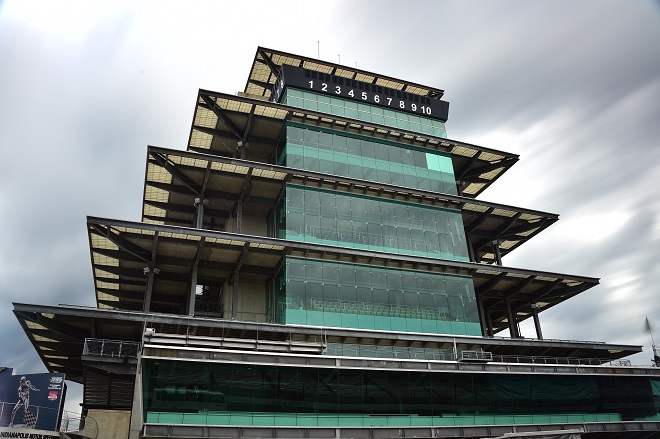 SCCA at The Brickyard
This year is not only the first time the SCCA National Championship Runoffs have been held at Indianapolis Motor Speedway, it's the first visit for SCCA Club Racing of any kind.
Construction of the Speedway began in 1909, and the facility opened for its first racing even in August of that year. The original surface was oiled rock chips, which proved to be dangerously unstable. After just a few races, the entire 2.5-mile oval track was resurfaced with 3.2 million bricks laid over sand and held in place with mortar. That earned the Indianapolis track its "Brickyard" nickname, and that tradition is maintained with a single yard of bricks marking the start/finish line.
The first Indianapolis 500 Mile Race was held on May 30, 1911. Ray Harroun won the event with an average speed of 74.602 mph in his Marmon Wasp. In addition to winning the first 500, Harroun's car featured the first known use of a rear-view mirror.
Over the next 106 years, the Indianapolis 500 was interrupted by World War I and II, but not by the Great Depression. Indy history includes the first diesel-powered Indy car in 1931, which finished the race without making a single pit stop. After World War II, the Indy 500 and the Speedway alike entered a golden era of growth and popularity.
The road circuit was created in 2000, utilizing part of the oval leading to an infield course. The road course has been used for Formula 1, IndyCar, motorcycles and professional sports car racing since that time, but never by SCCA Club Racing until this year's Runoffs.
Click here to listen to the audio commentary, follow live timing, and watch several static video feeds at the SCCA Runoffs

Latest News
Comments
Comments are disabled until you accept Social Networking Cookies. Update cookie preferences
If the dialog doesn't appear, ad-blockers are often the cause; try disabling yours or see our Social Features Support.