DPPI
Why the 2026 Le Mans race matters more than ever for Michelin
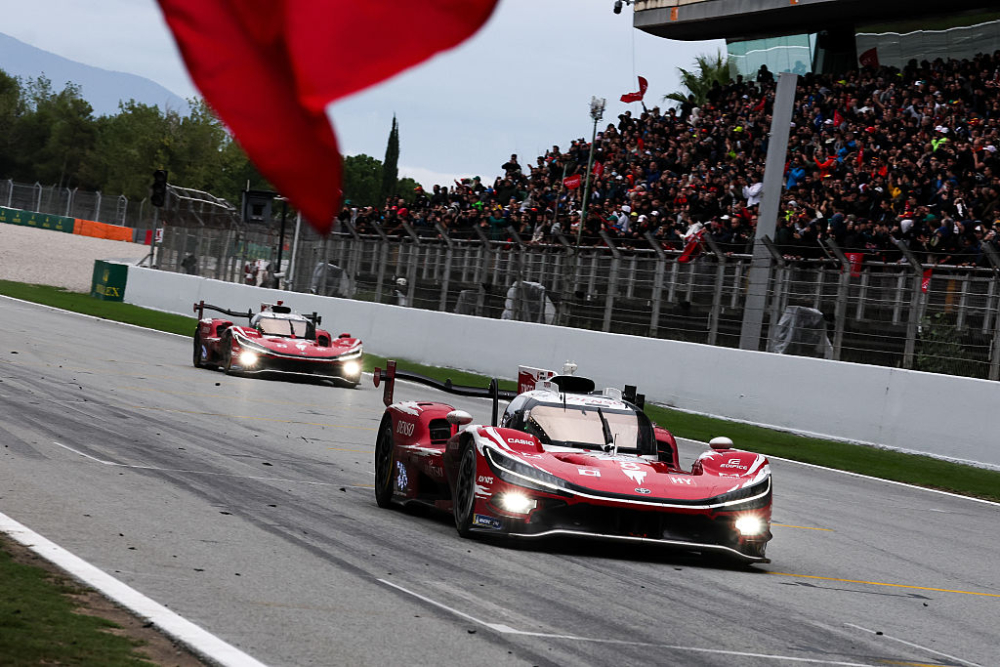
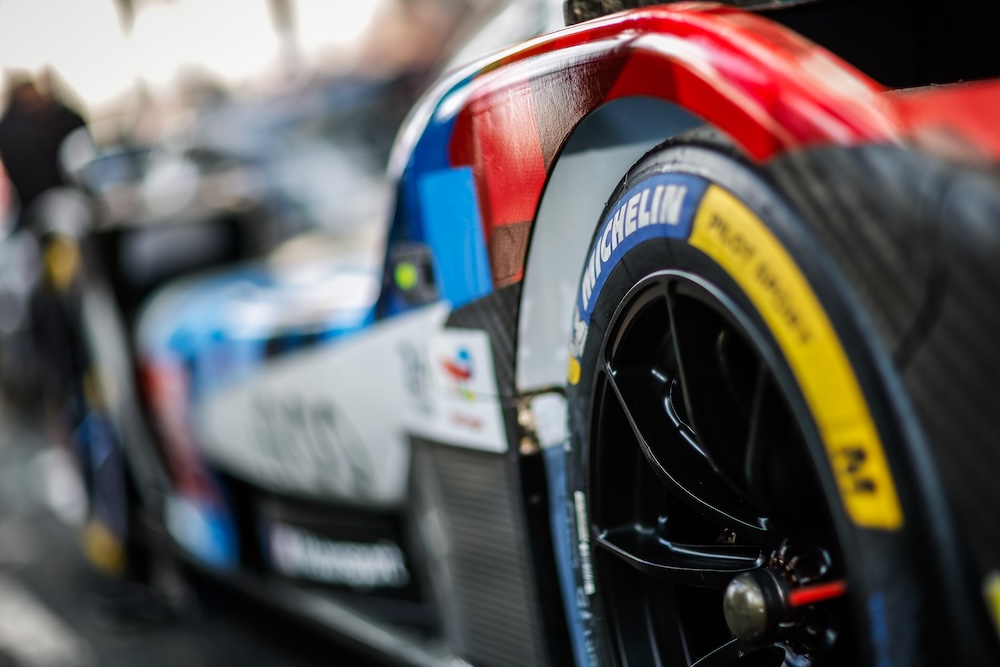
The 2026 Le Mans 24 Hours is a particularly important one for French tire constructor Michelin. This year, it has introduced its new range of Pilot Sport Endurance slicks for the top class, and this month’s race at La Sarthe, where Michelin will break Dunlop's record and become a 35-time overall winner (unless every single Hypercar hits trouble and/or retires), represents the biggest test yet.
So far this year, the Pilot Sport Endurance range, which contains 50 per cent renewable and recycled materials and boasts better warm-up and consistency, has been used in seven races across IMSA and the WEC with the GTP and Hypercar fields. Drivers have been pushing them to the limit on a variety of circuits and surface types, on the Daytona high banks, the punishing bumps at Sebring, the narrow streets of Long Beach and Detroit and the fast-flowing, iconic tracks at Imola, Laguna Seca and Spa-Francorchamps.
But Le Mans poses a different test, as for the first time, all three compounds – Soft, Medium and Hard – will be at the disposal of the 18 Hypercar crews in the race, and the Circuit de La Sarthe itself combines a permanent circuit with public roads, plus long straights and many technical corners. It’s a far more taxing circuit for a 24-hour race than Daytona, and the stakes for the teams are far higher. Teams will use all available track time from Test Day through to race day to see just how far they can push Michelin’s new rubber on the circuit for the first time and build their race strategy from there.
What’s most impressive about Michelin’s Pilot Sport Endurance slicks is that, through the opening stanza of their first year in competition, there have been few complaints. The aim was never to release a new set of tires that dramatically improves single-lap pace – GTP and Hypercar are BoP governed, after all – but taking strides forward with both consistency, durability and warm-up, all while incorporating new, more environmentally friendly materials, deserves recognition.
“It’s only the start of the season, but the 24 Hours of Daytona, the 12 Hours of Sebring in IMSA, as well as the 6 Hours of Imola and the 6 Hours of Spa went very well,” Pierre Alves, Michelin’s endurance racing program manager, tells RACER.
“Consistency has been significantly improved, without any drop in performance. We managed up to three stints at Imola; Toyota could have tried for four, and we’re aiming for at least the same at Le Mans. We can also confirm that the temperature range in which the medium compound operates is significantly wider compared to the 2025 tire.”
By hitting the 50 per cent mark for renewable and recycled materials, the Pilot Sport Endurance slicks are ahead of the Michelin group’s overarching sustainability targets percentage-wise, and streets ahead of its road car products on the journey to reaching 100 per cent by 2050.
On average, Michelin’s consumer tires contained 32 percent bio-based or recycled materials in 2025, up from 31 percent in 2024. Just a single percentage increase for its road range has a huge impact, as Michelin says that represents the use of an additional 30,000 ‘physical’ tonnes of renewable or recycled materials. That's why the tires we’ll see in action at Le Mans, which are produced in comparatively small quantities, are considered a valuable test bed for materials that may carry over to its mass-produced ranges.
The 30,000 handmade tires from the Cataroux plant in France that will be used by teams across 2026 (at the cost of a million Euros a year per team in fees) contain up to 200 ingredients and a cocktail of environmentally friendly materials. The list includes recycled steel and carbon black, pyrolysis oils, silica derived from rice husks, sunflower oil, orange and lemon peel, plus natural rubber. The carcasses are also produced partly from a recycling process, as they contain PET plastic used to make drink bottles.
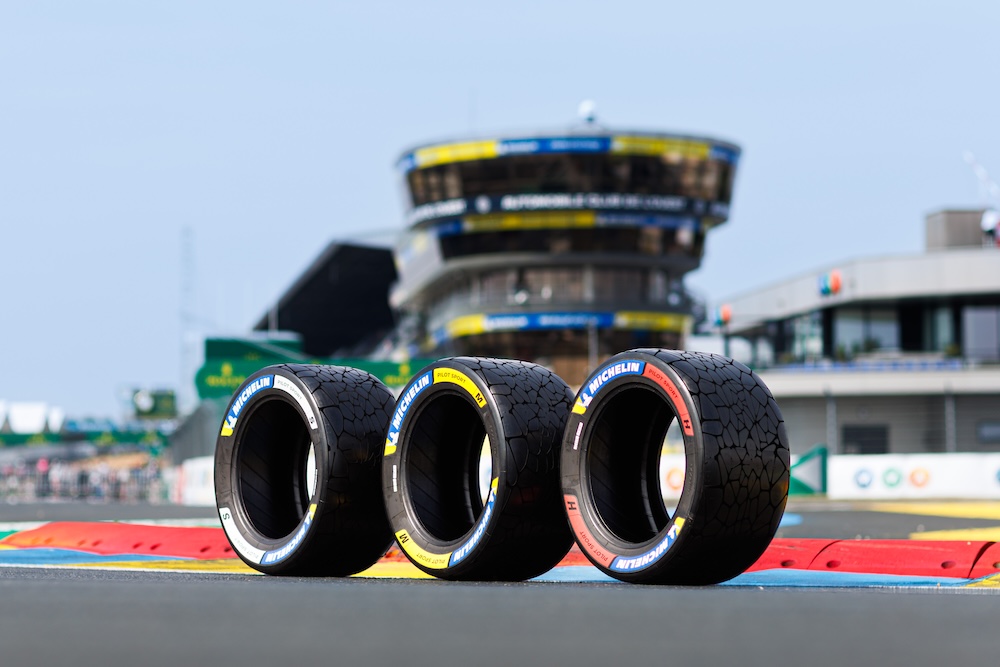
Le Mans will mark the first time that all three Pilot Sport Endurance compounds are deployed in a single race. Photo by DPPI
Critically, all materials used are traceable directly from suppliers and not purchased from other companies. The job of sourcing new materials, evolving them, testing them and then setting up a supply chain is hugely complex, but Michelin believes the efforts of its motorsport technicians will pay dividends in the long run.
“Endurance tires are entirely manufactured, in other words, made by hand,” Alves explains. “The various rubber compounds are introduced without a mixer, then the pre-formed rubber plies arrive in parallel, including metal wires and reinforcements. Several plies, made of different materials and at different angles, are combined into a single unit, which is then sent to an assembly station. The operator layers several plies using a laser guide to form the tire carcass. All these plies are positioned with extreme precision, with a tolerance of less than one-tenth of a millimeter.
“The carcass is a multi-layered structure comprising plies, cords and metal reinforcements, which are heat-sealed into a thin layer of rubber. Materials such as Kevlar are also used.
“Once the carcass is formed, the ‘sidewall’ rubber is added to the sides, which is different from that of the tread. This rubber is also highly technical, comprising a bead and a rubber layer that wraps around it to form a very rigid structure. This is the contact rubber, which comes into contact with the rim. The sidewall rubber is highly technical and acts as a shock absorber as it withstands all the flexing of the tire. It extends to the tire shoulder, where the tread rests.
“All the rubber components are bonded ‘wet’, then the tire is placed in a mold before being steam-cured for around 20 minutes at 180°C. This allows the rubber to bond together, forming a tire ready for the track.”
Throughout race week at Le Mans this year, Michelin’s engineers and technicians on site will be studying their performance and durability even more closely than usual, as it’s so early in the range’s projected three-year lifespan. This is partly to ensure there are no safety concerns on a new circuit, and also to gather valuable data to aid the development of its next generation of endurance racing tires, which it expects to launch in 2029.
“We pay very close attention to the condition of the tires coming off the track,” Alves adds. “The first step is a visual inspection. A hot tire doesn’t look the same as one that’s cold. Tire pressure, camber, the stresses the tire has undergone, the car’s settings… all of that comes into play.
“Next, we measure the tires using a laser and enter the data into our databases. Then we cut the tire, layer by layer, to ensure that nothing has shifted and that the carcass hasn’t been damaged. It’s a matter of verifying performance but also of safety.
“And then all the data collected is used to feed into a virtual tire model, which is constantly evolving and will help us define the next generation of tires. This is what we call track correlation, using a virtual tire model – a sort of digital twin – that evolves every day.
“There is a ‘signature’ wear pattern for each car and even for each driver. Our technicians are so highly trained and professional that they are able, much like a sommelier with wine, to recognize which car or even which driver used them when everyone is driving on the same track."

Stephen Kilbey
UK-based Stephen Kilbey is RACER.com's FIA World Endurance Championship correspondent, and is also Deputy Editor of Dailysportscar.com He has a first-class honours degree in Sports Journalism and is a previous winner of the UK Guild of Motoring Writers Sir William Lyons Award.
Read Stephen Kilbey's articles
Latest News
.png?environment=live)
Comments
Comments are disabled until you accept Social Networking Cookies. Update cookie preferences
If the dialog doesn't appear, ad-blockers are often the cause; try disabling yours or see our Social Features Support.