MEDLAND: Decoding F1's driver market
Formula 1's mandatory two-week shutdown during August means a rare opportunity for time on the beach for the teams. But with the driver market about to kick itself open, you can guess what a lot of team bosses are thinking about while lying in their deckchairs.
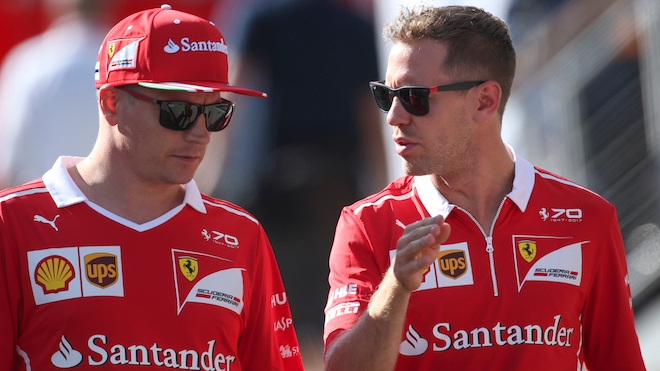
As it stands, three of the top four drivers in the drivers' championship - of which two have won races and all three have secured pole positions - are out of contract. There is a TBC against both Ferrari drivers as well as Valtteri Bottas at Mercedes, and it can all be traced back to 2 December, 2016.
On that day, Nico Rosberg uttered the line: "I have decided to end my Formula 1 career at this moment". He was the world champion, in a dominant car, and suddenly vacated a seat that every driver on the grid wanted – but few were in a position to claim.
Bottas got it, but only – initially – for one year. Mercedes wasn't expecting Rosberg's bombshell, but the situation left it analyzing the driver market moving forward, and it quickly identified that three world champions - Sebastian Vettel, Kimi Raikkonen and Fernando Alonso - are out of contract at the end of 2017.
Lewis Hamilton also becomes available at the end of next season, which means that Mercedes will want to get its 2018 driver decision right to allow for continuity should the Brit decide to leave. So Bottas was the best option for this year, but he was effectively put on trial when it comes to looking longer-term. With a potential Mercedes seat available, Vettel has yet to commit to Ferrari, and that means Raikkonen has been left waiting, too.
As is often the case, the rest of the market is in limbo while waiting to see whether Mercedes and Ferrari stick or twist. The more competitive teams have the more desirable seats, and drivers will accordingly hang on to see if they can secure a move up the grid rather than fold and confirm their future further down the pecking order prematurely.
The majority of observers would agree that Bottas has done enough to keep his seat for next year. He's proven he can win races and take pole positions, he is improving with each passing weekend, and he has shown he has the right temperament to work with Hamilton, exemplified by their position-swapping in Hungary.
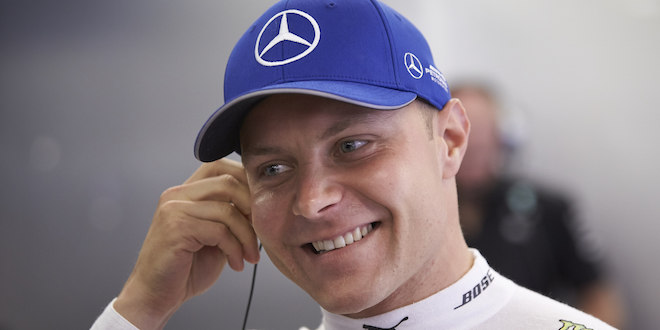
So it would be a surprise to not see Bottas retained. As great as it would be to watch Hamilton and Vettel going head-to-head in the same car, it would be massively difficult to make such a partnership work. The history between Hamilton and Alonso will also be a warning to Mercedes - despite the pair enjoying a much better relationship than a decade ago - and so everything points to keeping Bottas.
But Vettel holds the key to the whole market, because a German four-time world champion (perhaps even five-time by 2018) would be an attractive proposition for a German team. It has been reported he only wants a one-year extension at Maranello for now, and such a contract could result in Mercedes also limiting the length of its commitment to Bottas.
While Raikkonen is likely to get an extra year should Vettel stay - Ferrari's junior drivers Antonio Giovinazzi and Charles Leclerc not yet considered ready to replace him – a departing Vettel would leave Maurizio Arrivabene is searching for a new team leader, and Raikkonen isn't it.
That's exactly why there are so many drivers delaying a decision on next year. Alonso knows Mercedes is all but a closed door to him, but a return to Ferrari could appeal as unfinished business. Sergio Marchionne played down such talk recently and yes, it sounds fanciful – but so did a return to McLaren.
The only team sitting comfortably right now is Red Bull, with Daniel Ricciardo and Max Verstappen under contract for next season. But with only one and two years respectively left on their deals, Mercedes and Ferrari will be factoring both in when it comes to longer-term planning.
Williams is also unlikely to see much in the way of movement, with Lance Stroll staying put and Felipe Massa remaining alongside him as a benchmark. If there is a change, it could well be to bring Bottas back should the Finn be dropped by Mercedes, with Williams having originally announced a Bottas-Stroll pairing for 2017.
A very impressive season so far from Sergio Perez means the Mexican will feel he has a shot at a Ferrari seat, but Force India can remain somewhat relaxed in the knowledge it has marked itself out as his best option outside the top three teams. Esteban Ocon is likely to remain for a second year after signing a multi-year deal last winter, despite interest from Renault.
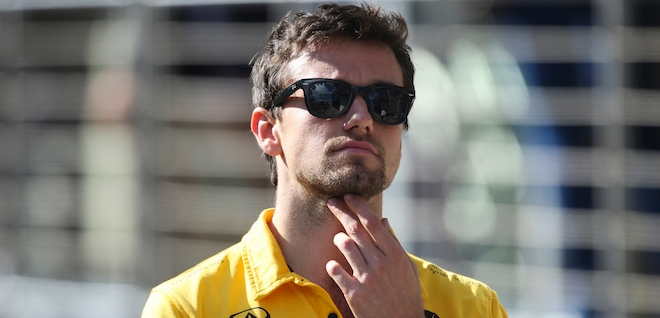
That Renault interest comes because it has one of the more obvious seats that needs filling. Jolyon Palmer earned a reprieve last year when Kevin Magnussen moved on, but he's failed to take that second chance. A match for Nico Hulkenberg is the target, and while Alonso will be tempting, a Robert Kubica comeback is an even better story. With Perez and Carlos Sainz already on the Renault shortlist, there's guaranteed to be action at Enstone regardless of what happens at the front of the grid.
Having confirmed Sainz for next year, Red Bull's Christian Horner then admitted the Spaniard would be available for the right price. The problem Red Bull has is a lack of talent waiting in the wings for a Toro Rosso seat, with Pierre Gasly still not guaranteed to replace Daniil Kvyat next year, having failed to overly impress in Japan's Super Formula this year so far. Behind Gasly, Red Bull's best-placed young driver is Niko Kari, currently 11th in the GP3 standings.
Magnussen will remain at Haas after signing for two years, but Romain Grosjean will do the same as Perez and play the waiting game. Gene Haas says he plans on keeping both drivers and its likely he'll get his wish, but the Frenchman will want both Ferrari seats to be confirmed before committing to Haas. Should he leave, both Giovinazzi and Leclerc have driven in FP1s for the team and would be the first picks to step in.
Those two Ferrari prospects are more likely to end up at Sauber following a recent power unit deal, with sources indicating that F2 title leader Leclerc is already provisionally confirmed at Hinwil. That throws Pascal Wehrlein's future into doubt: Force India is an option if Renault can get Ocon, although Wehrlein was overlooked when the team was searching for a replacement for Hulkenberg.
And then we get to McLaren. For once, the team isn't calling the shots. Stoffel Vandoorne should be safe, having shown good improvements recently, but it's Alonso who the team is worried about. The Spaniard's dissatisfaction with Honda has given him a lot of power, and his appearance at the Indy 500 proved that he's not afraid to use it.
McLaren isn't the attractive proposition it once was, and while it boasts some excellent young talent in the form of Lando Norris, 2018 is too soon to put the 17-year-old in a race seat alongside Vandoorne. Both sides know this, so Alonso is likely to get what he wants out of any deal, but he is likely to wait for the Mercedes and Ferrari seats to be finalized before committing.
It remains a waiting game, but the most likely outcome is for Mercedes, Ferrari and Red Bull to boast the same driver line-ups next year, which in turn would almost certainly lead to stability at Force India, Williams, Haas and McLaren, with only Toro Rosso, Renault and Sauber experiencing changes.
That said, it will only take one departure from either Brackley or Maranello for the whole stack of cards to come falling down.

Latest News
Comments
Comments are disabled until you accept Social Networking Cookies. Update cookie preferences
If the dialog doesn't appear, ad-blockers are often the cause; try disabling yours or see our Social Features Support.