How 2018 floor drives IndyCar underbody downforce increase
Changes to the floor on IndyCar's high-downforce 2018 bodywork highlight how the series is reshaping its aero identity.
At the onset of the 2018 project, the Verizon IndyCar Series stated a clear goal to lower its reliance on big front and rear road/street/short oval wing arrays to make the Dallara DW12 chassis perform. In concert with its move toward fewer topside wings, the series also expressed its desire to have the DW12's underwing play a greater role in making downforce.
Together, by lowering the amount of downforce and turbulence created by the exposed topside wings, and letting the floor do more of the downforce work, it will be easier for cars to follow closely and attempt more passes.
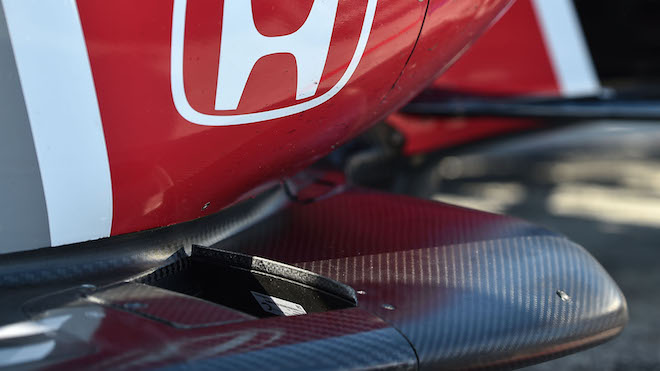
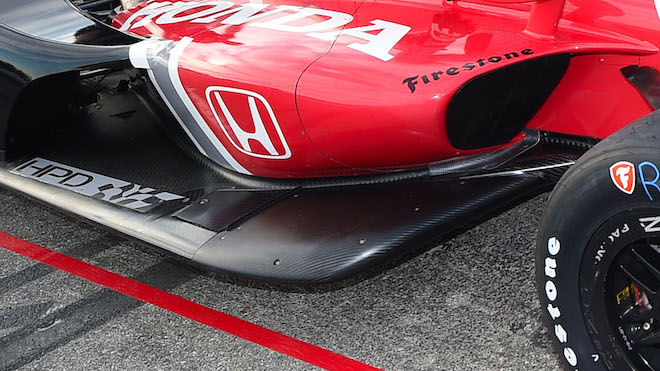
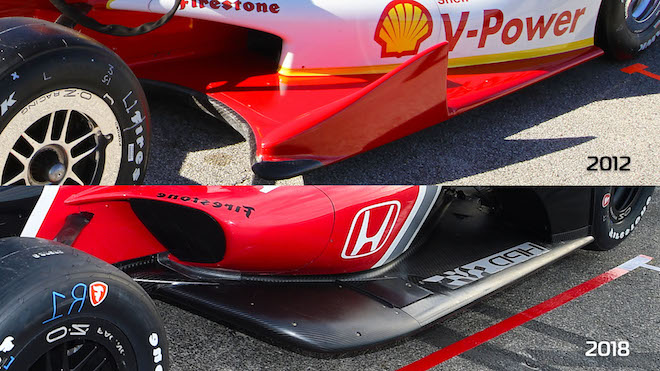
Looking at a timeline of how IndyCar and Dallara have used the DW12's floor to make or shed downforce, the original car was delivered with a wide, full floor that filled most of the void behind the front tires. At the floor's leading edge, the design had a modest radius that curled out to the edge where an anti-intrusion fin – the "sponsor blocker" as some team owners dubbed it – was located (below).
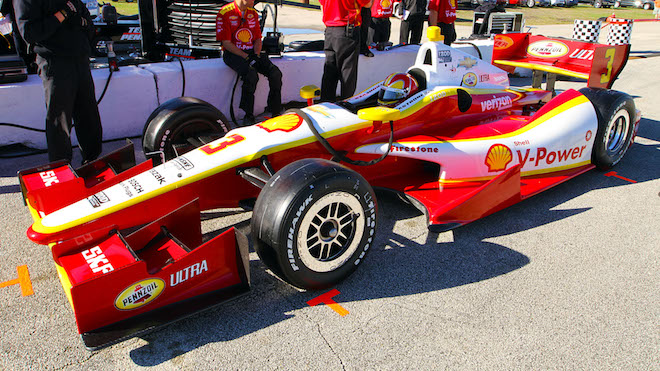
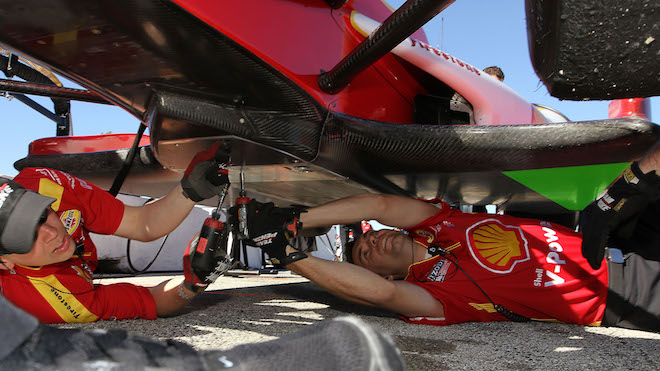
The original floor's radius at the leading edge was replaced by a straight piece that provided stability for the anti-intrusion fin, and altogether, the series managed to remove a modest amount of downforce while increasing turbulence.
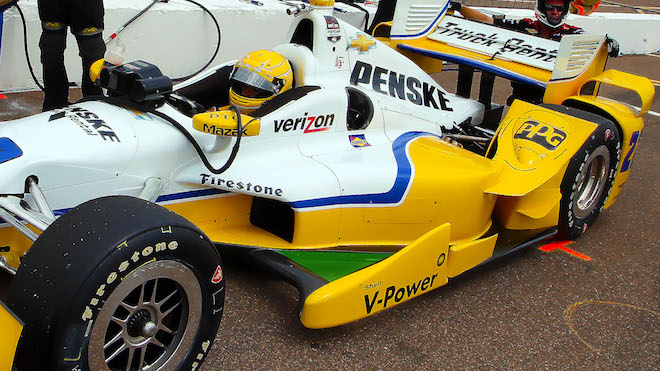
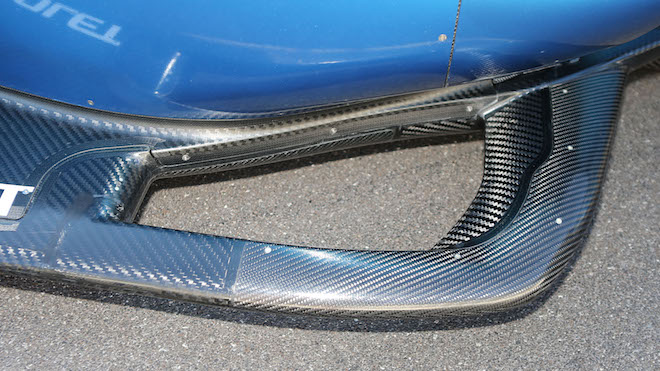
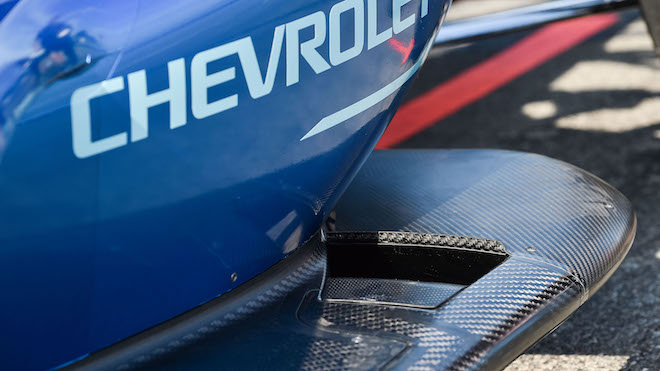
"Without the slot, the underwing was too wide and low, so the air did not want to flow well and choked," IndyCar aero director Tino Belli told RACER.
With the permanent holes added in 2015, some of that choking problem was alleviated, but the floor also lost approximately 140 pounds of downforce. With the new diffuser, IndyCar has taken back the 140 pounds of downforce it surrendered and added 140 more for 2018.
"With the slot and Gurney we have created a new front diffuser, which is where the extra 140 pounds of downforce comes from," Belli said.
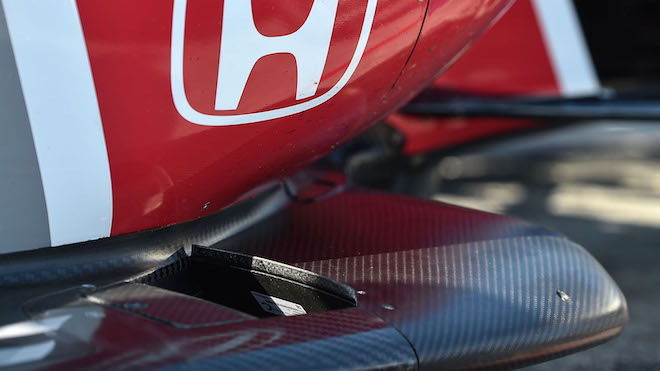
"We lost a lot of front downforce when we opened up the hole in the floor," Belli said of the 2015-2017 design.
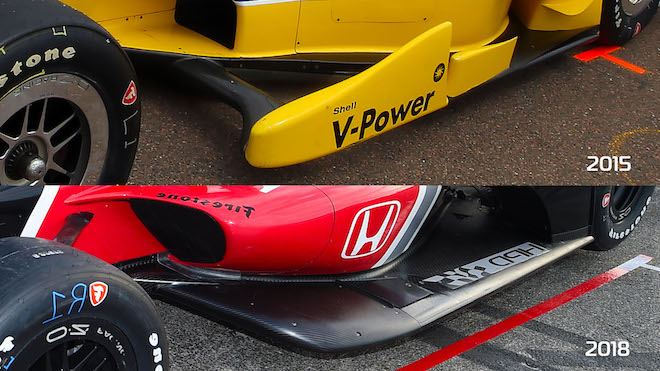
"And it is nice front downforce," Belli added. "We're reducing the reliance on the front wing, which should be good when following another car. Now you'll be able to get closer before the underwing gets affected by the wake of the car in front."
Presented by:


Latest News

Comments
Comments are disabled until you accept Social Networking Cookies. Update cookie preferences
If the dialog doesn't appear, ad-blockers are often the cause; try disabling yours or see our Social Features Support.