MEDLAND: Is Vasseur Sauber's savior?
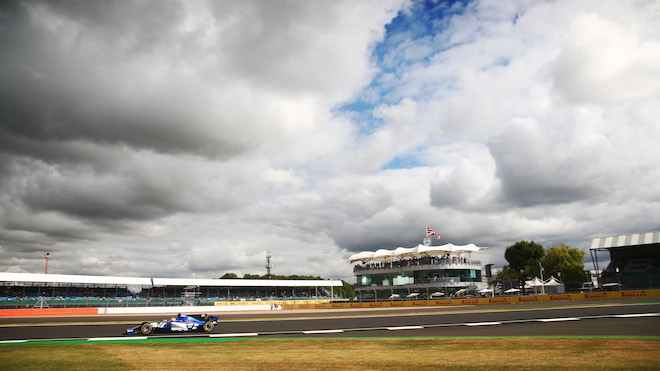
Amid all the excitement following the British Grand Prix, a small milestone went largely unnoticed some 700 miles away.
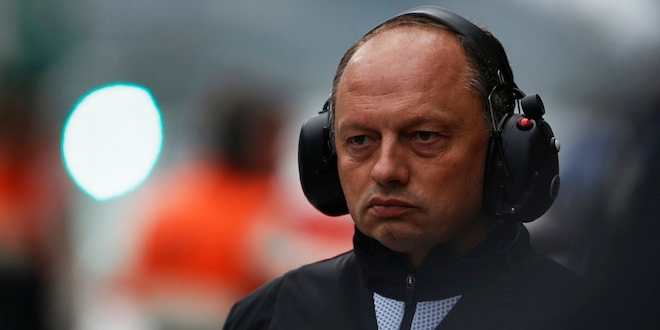
Frederic Vasseur will walk into the Hungaroring paddock tomorrow as the new team principal of Sauber, the same job he performed wearing the yellow of Renault less than a year ago. His first official day at Hinwil was the day after the race at Silverstone, just over six months after leaving Enstone.
In the immediate aftermath of Monisha Kaltenborn's departure from Sauber, a number of names were thrown around as her potential replacement, and some reported candidates caused a sense of panic among both those within the team, and among the many who want to see it prosper.
After just three weeks without a team principal, chairman Pascal Picci made what has proven to be a largely popular choice by installing Vasseur as managing director and CEO of Sauber Motorsport AG, as well as the F1 team principal.
Before he joined Renault, it had seemed only a matter of time before Vasseur became a household name in the F1 paddock. Impressive success with his multiple championship-winning ART team in junior categories over a number of years forged a strong reputation for the Frenchman, and the task of rebuilding Renault appeared to be the perfect opportunity to make the step up from the lower formulae.
However, the mix of Vasseur and Renault managing director Cyril Abiteboul didn't work, and the former left by mutual consent after just one season. At the time Vasseur pointed to different visions within the team's management as central to his decision to go, saying it is crucial that an F1 team has a clear leader with one obvious direction.
On the surface, it would appear Vasseur will be the man to set that direction at Sauber, having officially taken on so many senior roles within the team, but it remains to be seen if it plays out that way. Kaltenborn's departure was due to a lack of agreement between herself and Picci over the future direction at Hinwil. Sound familiar?
Of course, Vasseur will have been well aware of Picci's ideas and vision before accepting the job, so it would appear they are aligned in their idea of where Sauber should be heading. But even harmony at the top will not change that fact that the Frenchman has a major job on his hands.
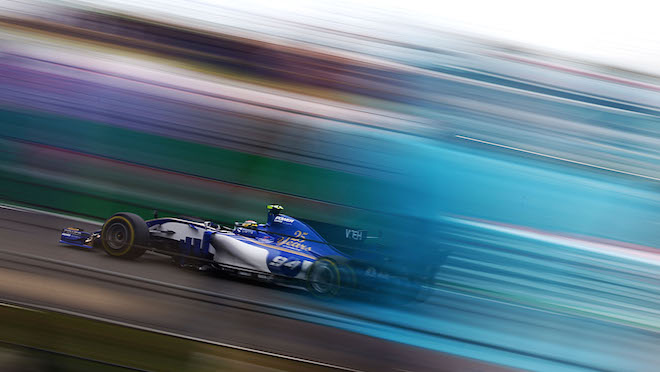
Sauber is now the fourth-oldest team in Formula 1 based on continuous entry, with its 25 years – emblazoned on the side of a largely sponsor-less car this season – only bettered by Ferrari, McLaren and Williams. To have achieved such longevity as a team based outside of the United Kingdom is hugely impressive when you consider that many of the brightest minds in the sport settled within a radius of roughly 60 miles around Oxford.
Attracting senior staff to Switzerland - despite the tax benefits - is a difficult challenge. During the recent years of financial concern, retaining them became even harder. Following the takeover of Sauber by Longbow Finance, Kaltenborn was able to sell a positive vision of a stable future to new recruits and quickly went about expanding a team that had been contracting for a number of years. Her departure may well have dented the confidence of some of those staff, and Vasseur will need to repair it.
Staff members are one thing; faith in next year's power supply deal is quite another. From the moment Kaltenborn left, the 2018 partnership with Honda was thrown into doubt. With just seven months until pre-season testing begins, that uncertainty is far from ideal.
Vasseur himself highlighted the power unit situation as one of his priorities when he started work at Sauber, and it appears to be an area where he will need to lay down a clear direction. With Honda management recently describing the chances of the deal going ahead as 50/50, there is obvious concern from some factions of the team over whether it is the right path for Sauber to follow next year. However, planning has continued and many team members have been planning with a Honda power unit in mind; recent meetings suggesting it is not as black and white as the Swiss side simply wanting to call it off.
With McLaren now limited to Honda and Renault as its two realistic options for 2018, Sauber is understood to have been eyeing the Mercedes supply that had potentially been earmarked for Woking. It makes sense on many levels, with Mercedes reserve Pascal Wehrlein currently driving for the team, and Vasseur enjoying a good relationship with Toto Wolff. Plus, ART has previously enjoyed tie-ups with Mercedes in both DTM and Formula 3.
Right now, a Mercedes supply looks attractive compared to a year-old Ferrari power unit, but it would offer quite a low ceiling of performance. In the V6 turbo era, Sauber has finished 10th in the standings twice, and eighth once. It is currently ninth in the constructors' championship this season, and you would hedge a bet that McLaren will overhaul it in the near future. Turning around such a performance is not going to be a simple matter of installing a Mercedes power unit with a much smaller performance advantage than it enjoyed in 2014. Solid foundations need to be set, and a different path to its midfield rivals could prove beneficial.
Mercedes could be a quick fix, but Vasseur will have to work out whether Honda could be a better long-term one. Recent signs of improvement from the Japanese manufacturer offer some – albeit limited – encouragement, and as one of a maximum of two teams to use a Honda power unit next year, Sauber could enjoy a much closer relationship than it would as one of three Mercedes customers outside the works team.
In a potentially best-case scenario, McLaren could cut ties with Honda and Sauber could find itself with a works partnership by default. But even if Vasseur felt it was a deal worth sticking with, would Picci agree?
Of course, the flipside is that a further year of Honda struggle would confine Sauber to another season fighting to avoid finishing bottom of the table. For all the disadvantages of the team's location and its recent problems, Sauber still has excellent facilities and many of the ingredients needed to claw its way back into the midfield. Right now, its power unit is not one of those.
With cost-cutting measures being analyzed following the last Strategy Group meeting, there are signs Sauber will have a more level playing field in the coming years, but there are unlikely to be any quick fixes.
In order to make his return to F1 a successful one, Vasseur is going to need patience. Potential rifts internally since Kaltenborn's departure will need to be fixed, and then a clear future direction must be put in place to convince the team's best assets to stay, and new recruits to commit.
It's a similar expansion job to the one Vasseur faced at Renault, although on a smaller scale. If he has full control, then the Frenchman has every chance of making it work. If not, then there could be shades of of deja vu on the horizon.
Presented by:


Latest News
Comments
Comments are disabled until you accept Social Networking Cookies. Update cookie preferences
If the dialog doesn't appear, ad-blockers are often the cause; try disabling yours or see our Social Features Support.