FIA offers background into Halo decision
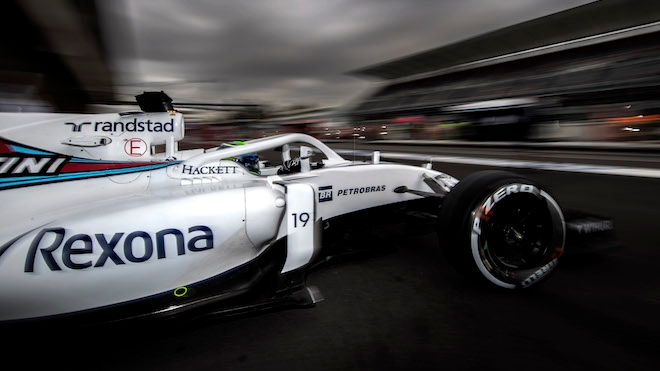
Amid ongoing debate following the decision made this week to mandate the Halo cockpit protection device in Formula 1 for 2018, the FIA has posted an explanation of the decision, with a recap of the events that led up to it, on its oficial website.
"Over the past decade motorsport has witnessed serious incidents that affected drivers," the governing body noted. "The severity of the incidents made it clear to the FIA that developing a solution to mitigate against frontal impact in the area of the cockpit is a research priority for the FIA to address this existing weak point. They were also a number of near misses accidents that highlighted the need for action.
"Following several incidents, the Grand Prix Drivers' Association also expressed to FIA President Jean Todt in July 2016 a request that some form of frontal cockpit protection be 'implemented as swiftly as possible.'
"A month later, following meetings of the F1 Strategy Group and the F1 Commission, the Commission confirmed a commitment to introduce 'some form of cockpit protection from the 2017 season,' assuring that 'all stakeholders are working together to make this a reality, with the "Halo" concept currently the preferred option.'"
Buxton: Halo goodbye
Lauda: New fan appeal 'destroyed' by Halo
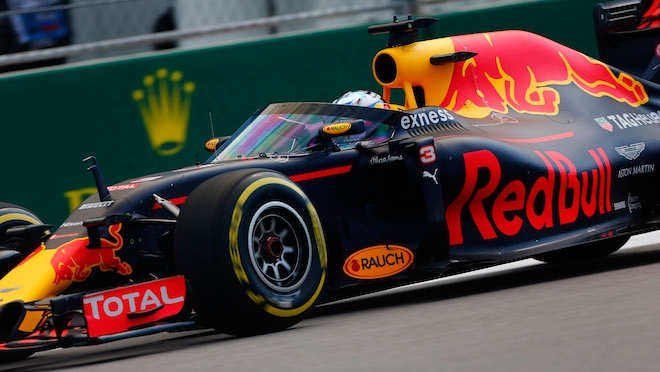
The FIA said that tests of the Halo have consistently proven more successful than alternatives like the "Aeroscreen" (pictured below), a windshield mounted on twin pillars on either side of the cockpit.
"In car-to-environment tests it was established that the Halo was able to prevent helmet contact with a wall or a barrier in many cases, using a selection of previous incidents as a reference.
"Finally, in the case of external objects the Halo was found to successfully deflect large objects away from the cockpit environment and also demonstrated an increased net level of protection against small debris.
"Furthermore, feedback from extensive track testing revealed that visibility was substantially unaffected, and there was no significant visual obstruction due to the central strut. Track testing also revealed no issues regarding egress from the cockpit and multiple extrication tests were conducted with the Halo in place, with a revised procedure formulated to ensure safe extrication."
Although the test results were promising, the F1 Strategy Group agreed last July to defer introduction of a cockpit protection system in order to provide more time to conduct track testing with the Halo device and to explore emerging alternative solutions. Following extensive testing, however, the Strategy Group concluded one year later that the Halo remained the preferred option.
"Intensive track tests took place across the second half of the 2016 season with a wide number of teams and drivers assessing the impact of the device on visibility. Simultaneously the FIA maintained its commitment to the introduction of a device for the 2018 season.
"Following these track tests and analysis of emerging alternative systems the F1 Strategy Group and F1 Commission decided, in April of this year, to "give priority to the transparent 'Shield' family of systems. The FIA aims to carry out track tests of this system during this season in preparation for implementation in 2018."
After static testing, the Shield system was given a short track test at the British Grand Prix earlier this month, with the device fitted to the Ferrari of Sebastian Vettel. Feedback from this test pointed up a number of concerns with such a system.
"In light of this and cognizant of the successful deflection tests conducted with the Halo system, the multiple successful track tests conducted with a wide variety of drivers and teams in the latter half of the 2016 season, and the need to implement regulations for the desired deadline of the start of the 2018 season, the Halo system represents the best solution to the issue of frontal cockpit protection currently in existence," the FIA concluded in its summary.
The latest design of the Halo will now be further refined ahead of its introduction in 2018 in a joint effort between teams, drivers and FIA.

Latest News
Comments
Comments are disabled until you accept Social Networking Cookies. Update cookie preferences
If the dialog doesn't appear, ad-blockers are often the cause; try disabling yours or see our Social Features Support.